

Home & Decor Blogs: DIY, Interior Design & Lifestyle Ideas
Right-Hand vs. Left-Hand Doors: Pros, Cons & How to Choose

Have you ever stood in front of a door, arms loaded with shopping bags, and felt like it was working against you? Maybe it swung the wrong way, bumping into a wall or forcing you to twist awkwardly just to get inside. That’s the sneaky world of door handing at play. If you’re remodeling your home, replacing an old door, or even building from scratch, understand right-hand vs. left-hand doors can save you headaches, money, and a lot of frustration. Determining whether a door is right-handed or left-handed (its handing) is crucial for ordering the correct hardware and replacement doors. Handing is always determined from the exterior of the room or building.
Understand the Basics What Makes a Door Right Hand or Left Hand
A right-hand door swings open to the right when you face it from the outside, with the hinges on the right side and the handle on the left. Push it, and it moves away from you to the right. On the flip side, a left-hand door swings to the left, hinges on the left, handle on the right. It’s all about the direction the door moves when you open it toward you or away from you.
This isn’t just some random label it’s tied to how the door is installed and functions in your home design door. Imagine you’re standing outside your front door, ready to enter. If you use your right hand to push it open and it swings right, that’s right-handed. Easy, right? But mix it up, and you could end up with a door that clashes with your furniture or even violates building codes.
How to Figure Out Your Door Handing Without the Guesswork
Determining if a door is right-hand or left-hand doesn’t require tools or a pro though calling one never hurts. Here’s a foolproof way stand with your back against the hinges, as if you’re about to open the door into the room. If the doorknob lands on your right side, it’s a right-hand door. If it’s on your left, you’ve got a left-hand one.
Face the door from the side where it swings away from you. Check the hinges: right side means right-hand, left side means left-hand. I once helped a friend replace a bedroom door, and we spent 20 minutes arguing about this until we tried the back-against-hinges method. Turns out, we had it backward the whole time lesson learned with a good laugh.
The Upsides of Choosing a Right Hand Door
Right-hand doors have their fans for good reasons. For starters, they often feel more natural for right-handed people, who make up about 90% of the population. You grab the handle with your left hand and push with your right smooth and effortless, especially when your hands are full. In many homes, this setup keeps the door from blocking high-traffic areas, like swinging away from a hallway into a room without hitting passersby.
Security wise, right-hand doors can offer a slight edge in some setups. If it’s an exterior door swinging inward, the hinges stay inside, making it tougher for intruders to tamper with them. Plus, in terms of flow, they align well with standard room layouts where light switches or furniture sit on the left wall. I’ve seen homeowners rave about how a right-hand front door just “feels right,” welcoming guests without awkward maneuvers.
The Downsides That Might Make You Rethink a Right-Hand Door
But nothing’s perfect. A big con is space obstruction if your room has a cabinet or shelf on the right side, the door might bang into it every time you open it wide. That constant thud? Annoying and potentially damaging. For left-handed folks, it can feel clunky, forcing them to reach across their body, which might lead to more wear on the hinges over time from uneven pulling.
Energy efficiency takes a hit too if it’s an outward-swinging right-hand door in a windy area the wind could catch it and slam it shut, letting in drafts or even causing seals to wear faster. And warranties? Some manufacturers warn that improper swinging (like outswing on wood doors) could void coverage due to warping from moisture exposure. It’s not a deal-breaker, but it adds a layer of caution.
Left-Hand Doors Shine in Certain Situation
Flip the script, and left-hand doors bring their own perks. They’re a godsend for left-handed users, allowing a natural grab-and-push with the dominant hand. In tight spaces, like small bathrooms or closets, a left-hand swing can keep the door flush against a wall, maximizing floor space and preventing that cramped feeling.
From a standpoint, they can enhance room flow in unconventional layouts. Think about a kitchen where the fridge is on the right a left-hand door won’t swing into it, avoiding dings and frustration. Safety gets a boost too; in emergencies, a left-hand outward swing might provide quicker exits if it aligns with escape paths. One homeowner I know switched to left-hand doors throughout their home and said it transformed how they moved around, making everything feel more intuitive.
The Potential Pitfalls of Going with a Left-Hand Door
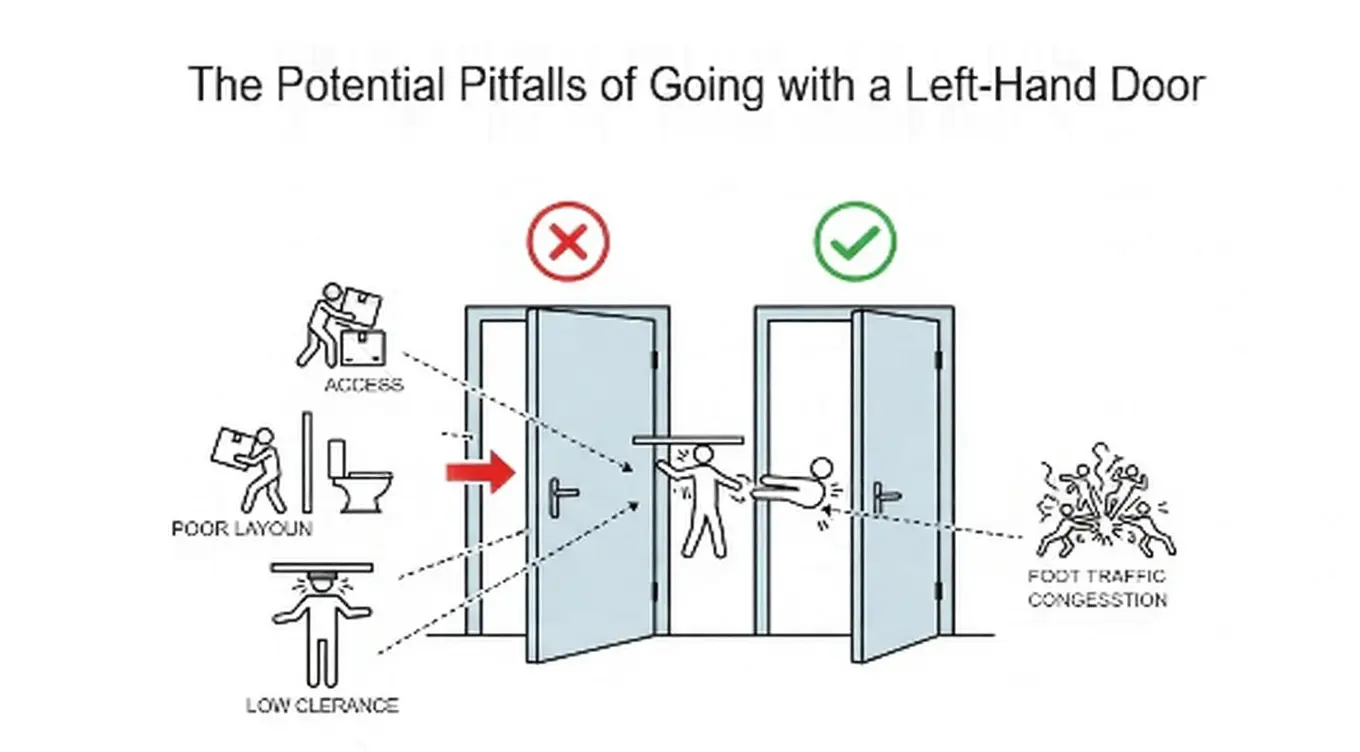
Of course, left-hand doors aren’t without flaws. For the majority right-handers, it might feel off at first, like writing with your non-dominant hand awkward and slower. If your home’s wiring puts light switches on the right, you’ll constantly reach over the open door to flip them, which is just inconvenient.
Obstructions are a risk here too; a left-side swing could block windows or vents, affecting ventilation or natural light. Security concerns arise if hinges are exposed on an exterior setup, making them easier to remove. Some buyers prefer standard right-hand configurations, so a full left-hand home might turn off potential purchasers who find it unfamiliar.
Key Factors to Weigh When Deciding Between Right Hand and Left-Hand Doors
Choosing isn’t just about flipping a coin think about your daily life. Start with your handedness: If you’re right-handed, a right-hand door might save you seconds each day, adding up over years. Room layout is huge; measure the swing path to ensure it doesn’t hit furniture or create bottlenecks.
Consider the door’s purpose. Interior doors prioritize convenience, while exterior ones focus on security and weather resistance. Budget matters too custom handing might cost extra if your home’s framing doesn’t match standard options. And don’t forget future-proofing: As you age, easier access could make a difference.
Navigating Building Codes and Safety Standards
Safety isn’t optional. Most building codes require outward swings for public bathrooms to prevent blockages in emergencies, but homes have more flexibility. In the U.S., the International Residential Code suggests inward swings for interiors to keep hinges secure, but check local rules California, for example, has strict egress requirements.
Fire safety plays in; doors should swing in the direction of exit travel. Ignoring this could lead to fines or insurance issues. I remember a story where a family renovated without checking codes and had to redo everything talk about a costly oops!
Making Doors Accessible for Everyone
Accessibility adds another layer. For wheelchair users, a door that swings away from the approach side (often right-hand for standard setups) provides better clearance. The Americans with Disabilities Act recommends at least 32 inches of clear width and easy operation, so handing affects that.
Universal home design principles suggest choosing based on user needs left-hand for lefties or vice versa. Adding lever handles instead of knobs can complement the right choice, making your home welcoming for all ages and abilities.
Energy Efficiency and Security Hidden Impacts of Door Handing
Your door’s handing influences how well it seals against the elements. An inward right hand door might resist wind better in stormy areas, reducing heat loss and bills. Security pros note that inward swings hide hinges, deterring break-ins, but outward ones allow faster escapes.
Materials matter: Steel or fiberglass holds up better in outswing configurations, while wood prefers inswing to avoid weather damage. Pairing the right handing with quality weatherstripping can boost efficiency by up to 15%, per some energy audits.
Installation Tips to Get It Right the First Time
DIY or pro? If you’re handy, start by removing the old door and checking the frame. Align hinges carefully—right for right-hand, left for left. Tools like a level and shims ensure it swings smoothly without sticking.
For pros, hire someone experienced; mistakes here can warp the frame. Test the swing multiple times before finalizing. And always lubricate hinges post-install to keep things quiet and easy.
Right-Hand vs. Left-Hand Doors at a Glance:
| Aspect | Right-Hand Doors | Left-Hand Doors |
|---|---|---|
| Natural for | Right-handed people | Left-handed people |
| Common Pros | Better flow in standard layouts, secure hinge placement | Maximizes space in tight areas, intuitive for lefties |
| Common Cons | May obstruct right-side furniture, awkward for left-handers | Feels off for right-handers, potential light blockage |
| Best For | High-traffic entries, security-focused exteriors | Small rooms, custom user preferences |
| Cost Impact | Standard, often cheaper | May require custom orders |
Final Thought
So, there you have it right-hand vs. left-hand doors aren’t just technical jargon; they’re about making your home work for you. Weigh the pros like natural flow and security against cons such as space issues, factor in safety, accessibility, and even a dash of culture, and you’ll land on the right choice. If you’re still unsure, sketch your room or consult a local expert they’ve seen it all. Remember, the best door is one that opens effortlessly to welcome you home.

 Decor & Improvement Accessories