

Home & Decor Blogs: DIY, Interior Design & Lifestyle Ideas
Smart Exterior Design Choices That Support Household Safety

Most people think about safety as an indoor thing. Deadbolts, alarm systems, maybe a Ring doorbell if you’re feeling fancy. But the choices you make outside your four walls, how you light your driveway, where you put your fences, what your entryway looks like from the street, those shape how safe your property actually is in practice. Not in theory. In the messy, real-world way, where somebody’s walking past your house at 11pm and deciding whether it looks like an easy target or not.
Exterior design is good in two ways together. It makes your residence appear as though someone cares (which already scares off most enterprising bad men), and it provides you with practical awareness of what is going on around your residence without transforming the place into a compound. That balance is everything.
Why What’s Outside Matters More Than You’d Think
Your outward appearance narrates itself to all who pass by the road or highway. Strangers, delivery drivers, neighbours. The sightlines, the grounds are well-maintained, and the lighting is deliberate, all of which indicate that someone is watching the place. This is a signal which is much more important than the average security gadgets.
Urban areas have made people more aware of safety beyond their own front door, too. Think about the overlap between home design and personal safety in wider situations. Consider Uber lawsuit cases, for instance, the Los Angeles Times reported on a woman who responsibly called an Uber instead of driving after having drinks, fell asleep in the car, and was assaulted by the driver. According to TorHoerman Law, attorneys working these cases often collect evidence from surrounding locations, street-facing cameras, exterior lighting footage, and security recordings from nearby homes. When properties around an incident have good exterior visibility features, they can end up providing critical evidence that helps victims build their cases.
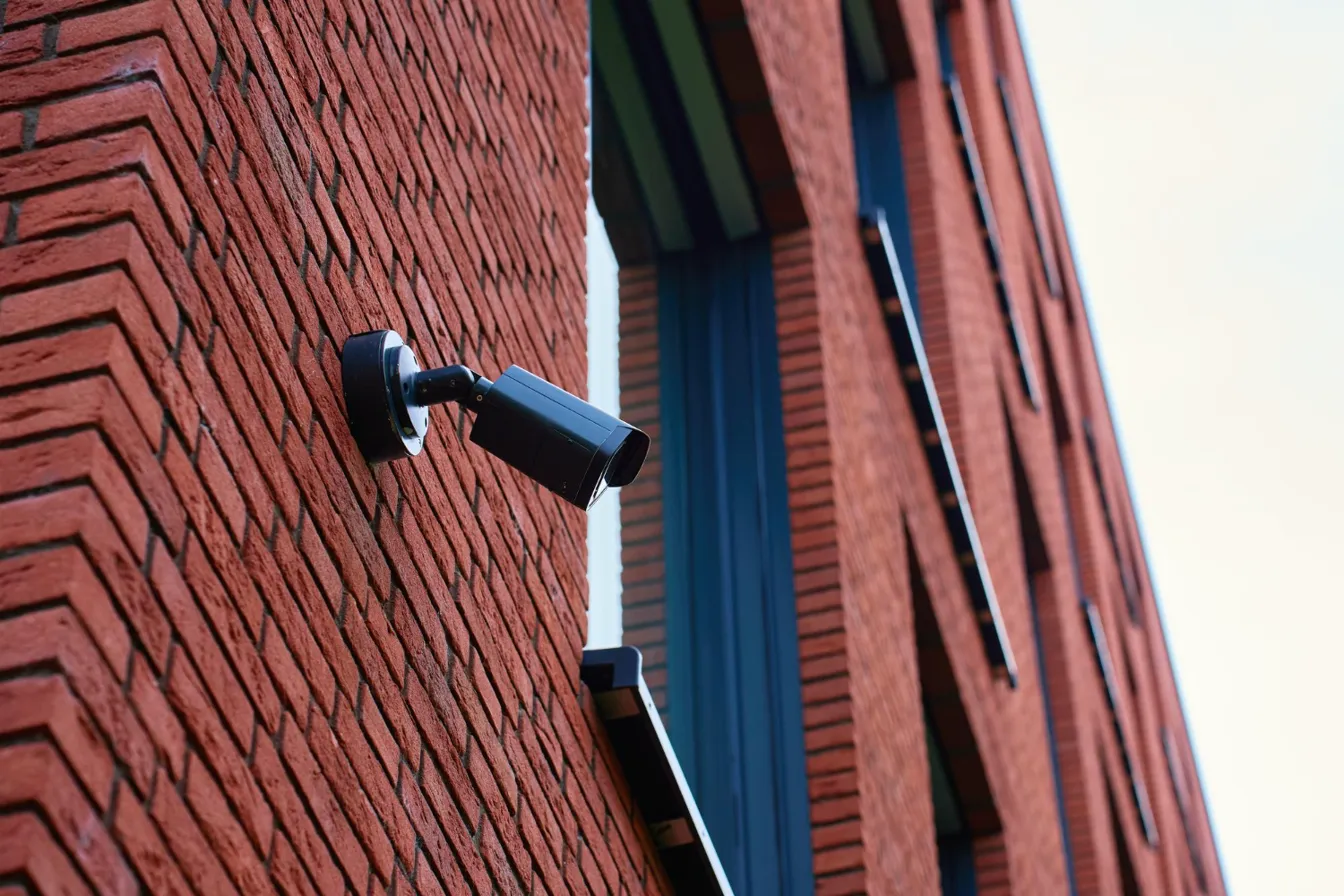
That’s an extreme example, but it illustrates something practical. Your well-lit front yard and visible camera setup don’t just protect you. They contribute to the safety of your whole street.
A house that looks cared for, with defined boundaries and decent lighting, naturally discourages people from doing things they shouldn’t. Not because of any single feature, but because the whole package says: this isn’t the place.
Getting Your Outdoor Lighting Right
The only exterior safety measure that is cost-effective to install is lighting, and most people do not get it right. Their problem is that they either come into the place like a football field, or they use a single dim bulb above the front door and declare it over.
Even well-placed lighting around entry points, walkways and driveways actually works. Not blind; not dark, but light enough so you can see clearly that somebody is coming towards you at a tolerable distance. Motion lights create an extra feature, especially in places which do not require lighting at all times, such as the side passages or the back yard.
The areas that benefit most from motion-sensor lighting:
- Side passages and alleyways between houses are common entry points for intruders and rarely need constant light
- Back garden doors and patio access out of sight from the street, so sudden illumination draws attention
- Driveways and garage approaches are useful for both security and convenience when you’re coming home after dark
- Walkways and steps reduce fall risk for family members and visitors, especially elderly relatives
A randomized controlled trial conducted across nearly 80 public housing developments in New York City found that improved outdoor lighting led to a 39% reduction in serious nighttime crimes, including robbery, aggravated assault, and property offences. That’s not some vague correlation; it was a six-month gold-standard RCT, the first of its kind to rigorously test lighting’s impact on crime.

Motion sensor lights specifically bring an interesting advantage beyond security. Studies indicate they can cut outdoor energy usage by 30% to 50% compared to conventional lighting that stays on all night. For the average household, that can translate to meaningful savings on your electricity bill while actually improving safety rather than compromising it. The sudden activation also startles anyone who wasn’t expecting it, which is exactly the kind of disruption that makes an opportunistic trespasser reconsider.
Placement is the thing most people overlook. Lights mounted too high create pools of shadow underneath the exact spots someone would want to hide. Too low and they create glare that actually reduces your ability to see. Aim for mid-height mounting, pointed downward, covering doorways and pathways without spilling light into your neighbours’ windows or up into the sky.
And here’s a detail worth knowing: the British Office for National Statistics data from 2010 to 2020 showed that 65% of all burglary incidents in the UK occurred after dark. Meanwhile, FBI data showed 34% of US residential burglaries happened at night. Lighting alone won’t stop a determined intruder, but when combined with other measures, such as cameras, good locks, and community visibility, it becomes a serious part of the puzzle.
Front Doors and Entryways
It is your entrance that is serving two purposes. It must be attractive to the folks you actually want flowing in, and it must convey the message that somebody is home and is listening to everyone.
An entrance that is easy to find, as it is visible on the street, well-lit and with a clear direction, will allow visitors to know where to go and at the same time warn them that this area is under surveillance and care. Such design elements as a visible house number, a bench, a coat hook by the door, a runner rug – all these details allow us to assure the visitors that they are comfortable and at the same time indicate that the space is regularly used and taken care of.
Smart locks have entered this discussion largely. The smart door lock industry is estimated to be 4.2 billion dollars in the world in 2026 and is expected to be $12.4 billion dollars in 2033 with a CAGR of 16.7%. Both broader use of smart homes and heightened fear of property crime are contributing to that growth. Individuals desire the keyless entry that is connected to their phone and their security cameras, and the technology has become stable enough that it can be affordable to the majority of homeowners.
Deadbolt smart locks dominate the market with roughly 40% of total product share, mainly because they’re compatible with existing door setups and provide the strongest physical barrier of any lock type. If you’re considering upgrading, a smart deadbolt that connects to your phone and logs entry activity is a solid starting point. You get the convenience of keyless access and the peace of mind of knowing exactly who opened your door and when.
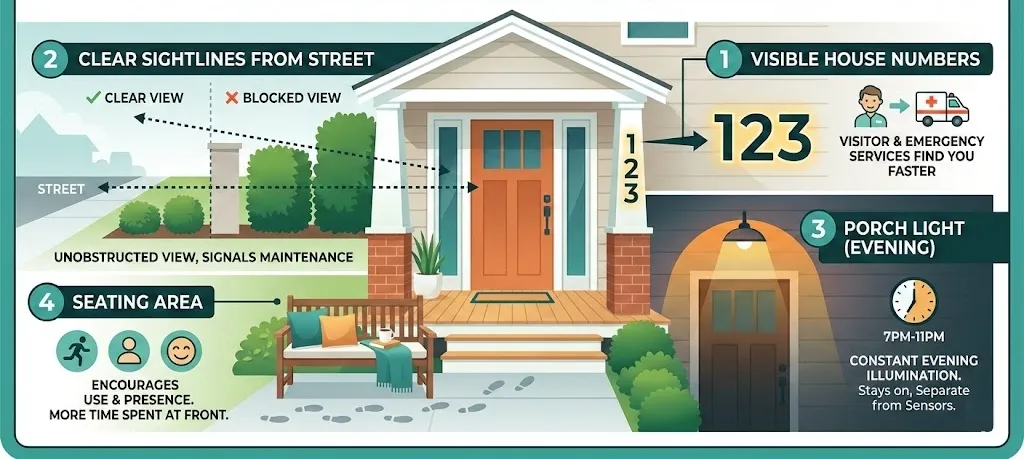
But smart locks aren’t the whole picture. The entryway design itself matters. A few things that make an entryway both welcoming and secure:
- Visible house numbers, emergency services, and visitors find you faster, and it signals the home is maintained
- Clear sightlines from the street to your front door, no tall bushes or pillars blocking the view
- A porch light that stays on during evening hours, separate from any motion sensors
- A bench or seating area near the entrance encourages you to use the space, which means more time spent at the front of the house
Recessed doorways or porches hidden behind tall bushes create blind spots where someone could stand without being seen from the street. If your entrance is obscured, trim back whatever’s blocking the view. A visible entryway is a safer entryway.
Fences, Boundaries, and How People Move Around Your Property
Boundaries do something psychological that goes beyond the physical barrier. A well-defined edge to your property, even a low one, tells people where public space ends and private space begins. That distinction alone changes behaviour.
You do not want a six-foot wall to achieve this effect. Space may be characterized by low fences, decorative gates, change of elevation, or even change of paving material, without making the place look like a fortress. It is not about not letting anyone in, but only about ensuring that it is very clear that a person crossing the border is making a conscious decision to get into your world.
The message of material choice is also communicated. A properly maintained wooden fence or a clean metal gate are some indications of permanence and fitness. An old chain-link fence, in a drooping condition, and with holes in it, tells the contrary. Whatever you install, it is of as much importance to maintain it well as it is at the outset.
Living fences are another option to consider in case you need a definition of boundaries with some environmental advantages. These consist of boundary hedging of the garden, consisting of dense hedge plants, boxwood, yew, holly, laurel, formed and clipped into a continuous hedge. The hedges enhance biodiversity in the environment around the hedge, give nesting areas to the birds, supplement the food of pollinators and the wildlife with berries, and give other small animals a pathway to move between gardens. They do not block out the wind, which helps to protect other plants more than a solid fence, and evergreen varieties are attractive all year round.
To provide further protection, such thorny plants as hawthorn, holly, or pyracantha make a fence that is literally undesirable to pass through. That is an inbuilt way of deterring it that does not incur any extra cost other than regular trimming.
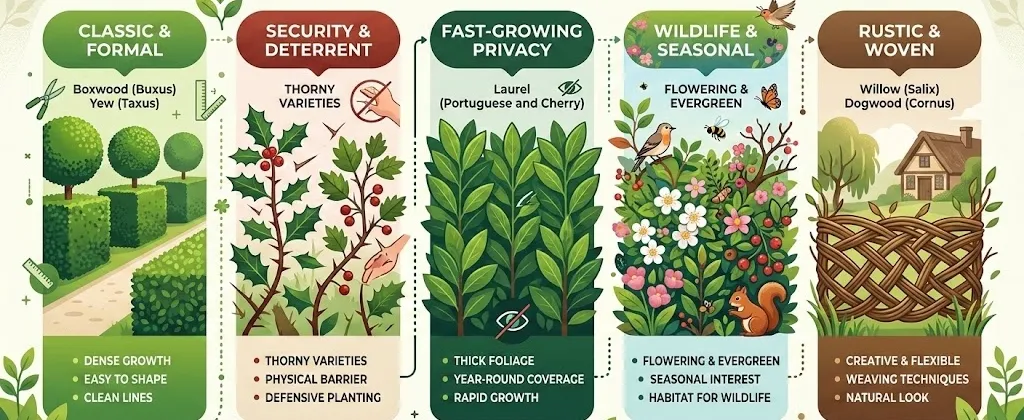
Some living fence options, depending on what you’re after:
- Boxwood or yew classic formal look, dense growth, easy to shape into clean lines
- Holly or hawthorn thorny varieties that double as a physical deterrent
- Laurel (Portuguese or cherry) fast-growing, evergreen, thick foliage for year-round privacy
- Mixed native hedging combines flowering and evergreen plants for seasonal interest and maximum wildlife benefit
- Willow or dogwood weaving more creative option, works well for rustic or cottage-style properties
The key with any boundary is that it should guide movement. People approaching your property should have an obvious path to the front door and no obvious path to the back of the house. Hedging along side passages, a gate on your driveway, even a low wall along the property line, these things channel foot traffic where you want it and create a psychological barrier around areas you’d rather keep private.
Neighbours Can See You (and That’s a Good Thing)
The best safety functionality of any house has nothing to do with the home technology or the home design decisions of the past. It’s visibility. When your neighbours are able to casually look over the front door, your driveway, and your main access points as they move about their day-to-day lives, then that is natural surveillance at work in the way it was designed.
The design decisions either favour or are against this. The front of the house is blocked by tall privacy hedges to keep the view of your neighbours. Dense solid fences to the street deny informal viewing of the street. Excessive landscaping provides shelters. They may seem to be privacy functions, but they are also safety compromises.
The sweet spot is an open front exterior that can be viewed naturally through the street, and neighbouring houses, and privacy is dedicated to backyards and inside areas. It is a low front fence, landscaped to keep the windows and doors in sight, an open porch or entrance to the house, that will provide you with the advantage of oversight, without the discomfort associated with a high fence.
Here, porches especially are useful. An outward front porch invites you to spend time at the front of your house, and this implies more people looking out the window, more informal contact with the neighbours, and more sense of community. There is no need for cameras or apps in any of this. Only a chair, a coffee, and a little walk outside.
Putting It All Together
None of these individual features is a silver bullet. A motion sensor light won’t stop a determined burglar. A smart lock can be bypassed. A hedge won’t hold back someone who’s really committed. Safety isn’t about any one thing, it’s about layering decisions that each make your home a slightly less attractive target and a slightly more visible, cared-for space.
The good news is that most of these choices also make your home look better and feel more comfortable to live in. Good lighting makes your garden usable at night. Well-placed boundaries give your outdoor space structure. A welcoming entryway is pleasant for you and your guests, not just a security measure. That’s the practical beauty of thoughtful exterior design. The safety benefits come almost as a side effect of just making good decisions about your space.
 Decor & Improvement Accessories