

Home & Decor Blogs: DIY, Interior Design & Lifestyle Ideas
Smarter Home and Garden Upgrades for Australian Conditions


Most home upgrade advice floating around online comes from the US or the UK. Lovely for them, but pretty useless when you’re dealing with western sun that turns your bedroom into a slow cooker, water restrictions that make traditional lawns a losing battle, and energy prices that seem to climb every quarter.
I’ve seen people throw thousands at solar panels while their single-glazed windows leak heat like a sieve. Others install fancy smart thermostats in homes where the real problem is a complete lack of ceiling insulation. The money goes out, the bills barely shift, and everyone blames the technology.
The issue isn’t the upgrades themselves. It’s the order people do them in.
This guide covers a practical sequence for NSW and Greater Sydney. Works for owners. Works for renters with some adjustments. We’ll go through the cheap weekend stuff you can knock out tomorrow, the bigger seasonal projects worth saving for, and when calling in professionals actually makes financial sense versus when you’re just paying someone to do something you could handle with a YouTube tutorial and a free afternoon.
Do an Audit Before You Buy Anything
People love to skip this part. It’s not exciting. Nobody posts their energy audit on Instagram. But without it, you’re basically guessing where to spend money.
Grab twelve months of electricity, gas, and water bills. You’re hunting for patterns. Summer spikes? Winter gas blowouts? Check your tariff structure too—some reward shifting usage to off-peak hours, others don’t care. If you’ve got solar panels already, look at when you’re actually using your own power versus exporting it for peanuts and buying it back at full price later.
Now walk through your place as you’ve never seen it before.
That west-facing room everyone abandons after 3 pm from November to March? That’s not just an annoyance. That’s data. The condensation running down your windows every winter morning? Also data. The lawn you’ve essentially surrendered by December each year? More data.
On a windy day, grab a lit incense stick or candle and hold it near door frames, window edges, and skirting boards. Wherever the smoke pulls sideways or the flame flickers, that’s conditioned air escaping. Your heater or air conditioner works harder to replace what’s leaking out through gaps you’ve probably never noticed.
Take photos of your north, east, and west walls around midday and again around 4 pm. Sounds tedious. Do it anyway. Those images show exactly where direct sun hits, for how long, and which windows are doing the most damage.
Sort what you find into three buckets:
Weekend fixes — under $300, stuff like LEDs, draft seals, showerheads
Seasonal projects — $300 to $3,000, external blinds, shade structures, heavy curtains, irrigation upgrades
Major works — over $3,000, heat-pump hot water, solar panels, double glazing, pergolas
Figure out who handles each task, roughly when it pays back, and which season makes sense for installation. Don’t book shade sail installation in the middle of winter when you won’t need it for months. Don’t plant a new garden during a February heatwave.
Weekend Fixes That Actually Work
One focused weekend. A few hundred dollars at most. Results you’ll see on your next bill.
Start with lighting. If you’ve still got halogen downlights anywhere, swap them for dimmable LEDs. The energy difference sits around 75%. Payback usually lands under a year. Stick motion sensors or timers on outdoor security lights so you’re not paying to illuminate an empty driveway at 3 am.
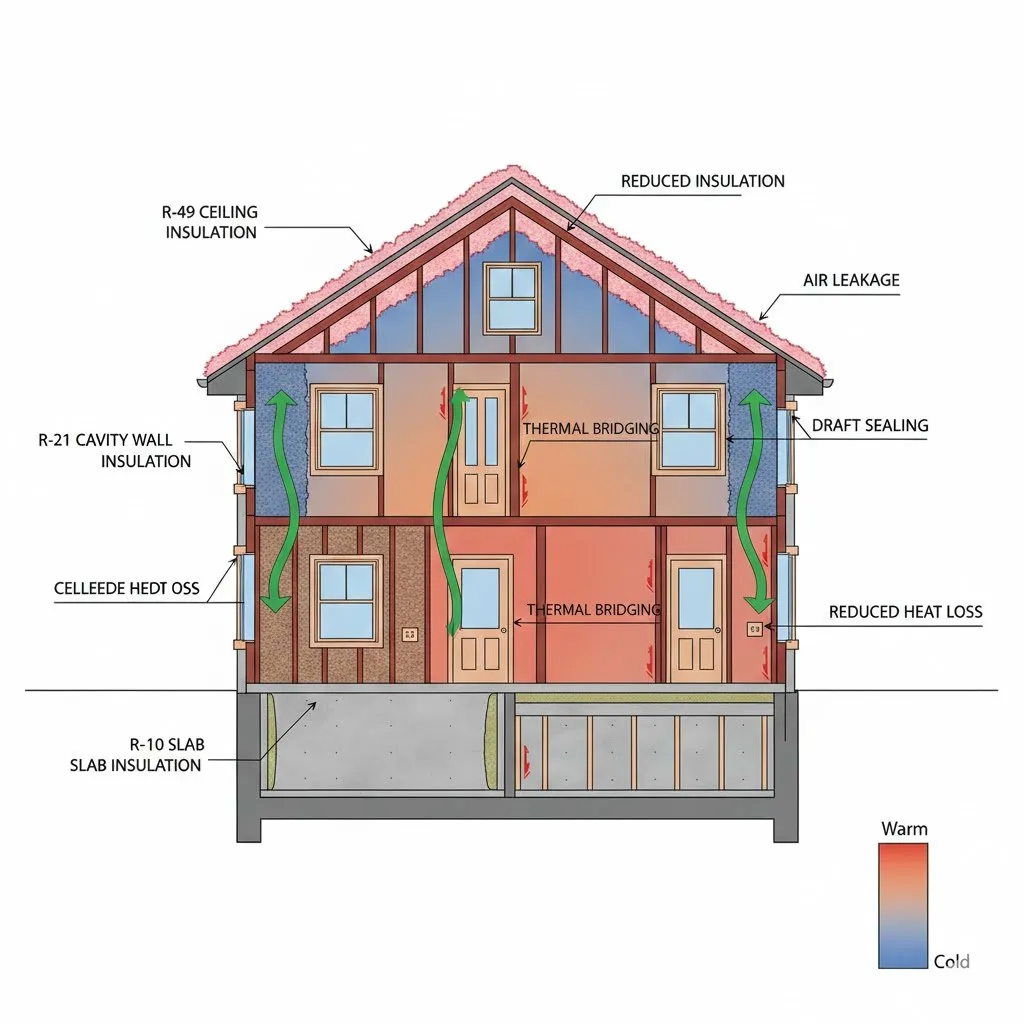
Draft sealing sounds deeply boring until you realise leaky doors and windows account for 15–25% of heating and cooling loss. Foam adhesive strips for hinged doors and windows. Brush seals for sliders. V-seals for window sashes. Backdraft dampers on bathroom and kitchen exhaust fans—otherwise, every time the wind picks up, your climate-controlled air gets sucked straight outside.
Ceiling fans cost almost nothing to run. Counterclockwise in summer pushes air down onto you. Clockwise in winter, gently circulates warm air that’s trapped up near the ceiling. Most people never touch that little switch on the motor housing.
Water heating chews through 15–30% of household energy. A four or five-star WELS-rated showerhead cuts that significantly without turning showers into a miserable trickle. Tap aerators throughout the house do the same job at sinks.
Standby power drain from devices left on at the wall adds up more than you’d expect. Smart plugs that kill power when devices aren’t in use. Or just switch things off manually at the outlet.
Got solar? Shift your flexible loads into daylight hours. Hot water timer set for mid-morning. Dishwasher running around noon. You’re using electricity you’ve already generated instead of exporting it cheaply and buying it back expensive in the evening.
Stop Heat Before Chasing It
Here’s a number to remember: up to 87% of summer heat gain enters through windows. In winter, untreated glass loses around 40% of your heating.
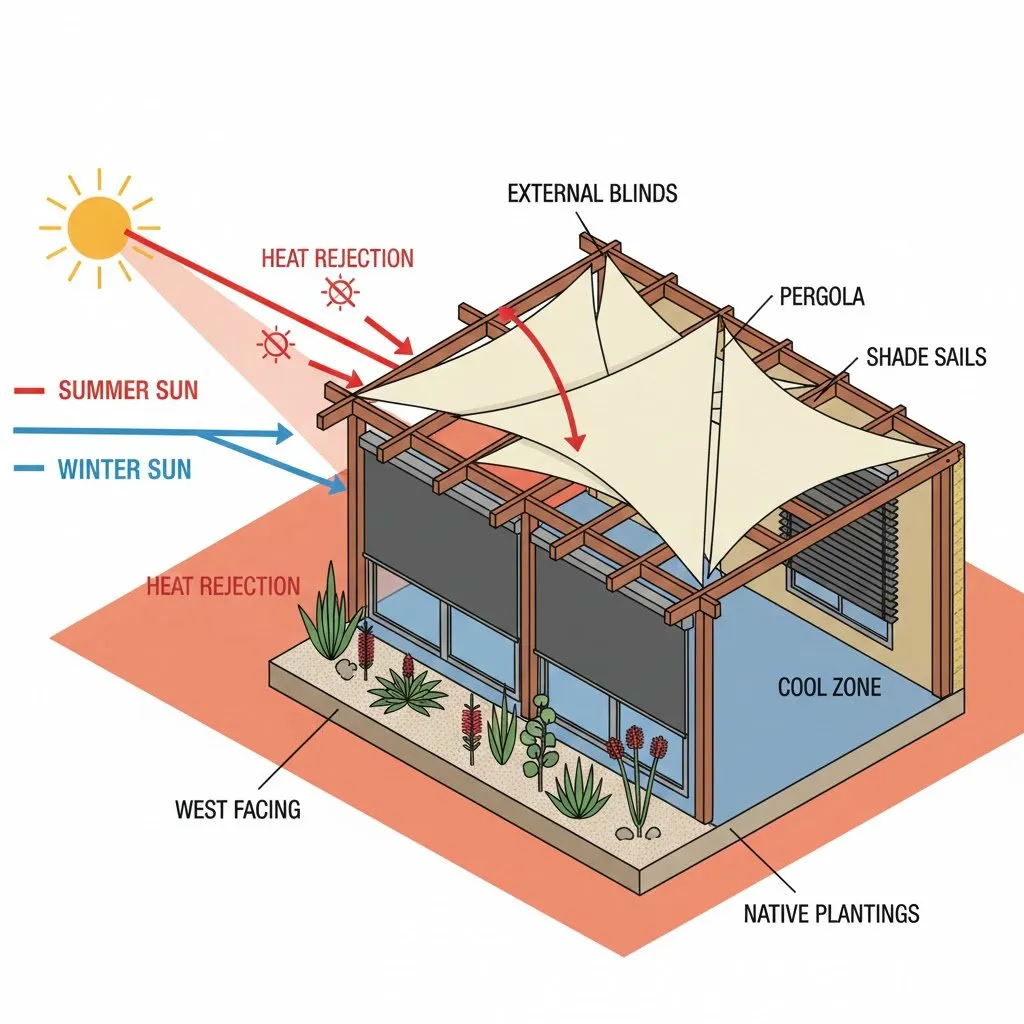
External shading blocks roughly 90% of that solar heat before it gets inside. Internal blinds? Maybe 40% if you’re lucky, and that’s after the heat’s already passed through the glass and entered your home. The horse has bolted.
People constantly do this backwards. They buy a bigger air conditioner to fight the heat that shouldn’t be entering in the first place. Then they’re stuck running an oversized unit that costs more to operate, forever.
The sequence that actually works: external shading first, then fix air leaks, then add insulation, then consider glazing upgrades, and only then worry about your heating and cooling systems.
North-facing windows suit horizontal shading. Fixed eaves, adjustable louvres, that sort of thing. The goal is blocking high summer sun while letting the lower winter sun through for free heating. For Sydney’s latitude, a projection of roughly 45–60% of the window height works as a starting point.
West and east windows are the real killers. Low-angle sun that slips under horizontal overhangs easily. West glass in particular cops brutal afternoon sun right when temperatures peak. These need vertical solutions—deep pergolas, external blinds, sliding screens, or strategically placed trees and dense shrubs.
Renters aren’t helpless here. Shade sails on balconies where the body corporate allows. Freestanding umbrellas over outdoor areas. Light-coloured internal blinds reflect more heat than dark ones. Heavy curtains on tension rods with pelmets reaching the floor trap still air and reduce heat transfer through the glass substantially.
Secondary glazing—essentially a second pane fitted inside your existing window frame—lifts single-pane performance for a fraction of full replacement cost. Worth considering before committing to completely new windows.
Electrify the Big Stuff
Once your home holds temperature reasonably well, efficient electric systems become worth the investment. Doing this first just means you’re buying oversized equipment to fight a leaky building. Expensive upfront and expensive to run.
Heat-pump hot water uses roughly 30% of the energy conventional electric storage does. Set it to run during solar generation hours, and running costs drop even further. Tank sizes around 250 to 315 litres suit most families of three to five people. Site the unit somewhere with decent airflow, away from bedroom windows (they make some noise), and check neighbour setbacks if you’re close to a boundary.
Small-scale Renewable Energy Scheme incentives through the federal government can knock around 30% off installed cost,s depending on your zone. Worth factoring in.
Induction cooktops run about 85% efficiency versus roughly 32% for gas. Water boils noticeably faster. Your kitchen stays cooler in summer. No combustion byproducts end up in your breathing air. The cookware question is simple—if a magnet sticks to the bottom of your pot or pan, it works on induction. Most stainless steel and cast iron already qualify.
Not sure if induction suits your cooking style? Grab a portable single-burner unit for under $250. Trial it for a few months before committing to ripping out your existing cooktop.
When You Actually Need a Builder
DIY handles a lot of home improvements. But some jobs genuinely require licensed professionals—not because regulations say so (though they do), but because getting them wrong creates expensive problems.
Load-bearing walls. Wet area waterproofing in bathrooms and kitchens. Upgraded glazing assemblies that need proper flashing and sealing. Whole-envelope improvements coordinating multiple trades. These aren’t YouTube tutorial territory.
Licensed builders handle concept design, engineering where required, council permits, trade sequencing, and code-compliant installation. The value isn’t just getting the work done—it’s getting it done in an order that makes sense, to standards that won’t cause issues down the track.
Timing matters here. Complete your audit first. Do your quick wins. Get the envelope performing decently. Then bring in professionals for bigger structural or system work. That sequence means any new HVAC equipment gets sized for your improved building, not your original leaky one.
For scope involving structural walls, upgraded glazing, wet areas, or multi-trade coordination, home renovation services through licensed builders like Go Build Co keep things compliant and on schedule.
Solar and Batteries
Australia passed four million small-scale renewable installations. Rooftop solar supplied around 12% of national electricity in 2024. Average household savings sit at over $1,500 annually.
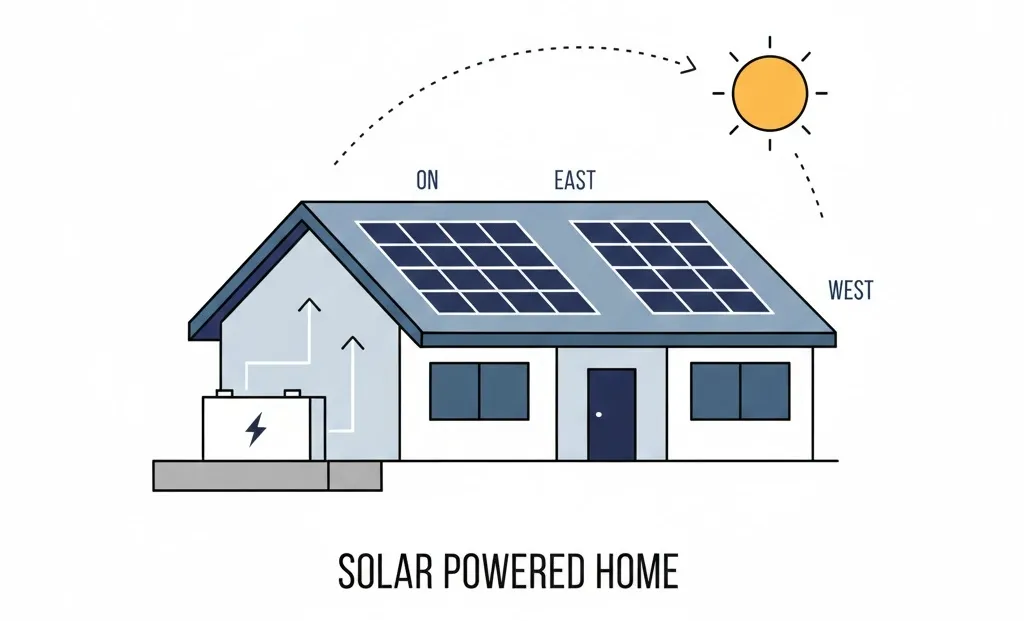
Most homes target 6–10 kilowatt systems, depending on roof space and consumption. Pure north orientation maximises peak output, but mixing north, east, and west panels often matches actual usage patterns better. You want generation when you’re actually using power, not just the biggest theoretical number on paper.
The real gains come from self-consumption. Use your own solar during daylight hours instead of exporting cheaply and buying back expensively later. Hot water timers. Midday dishwasher runs. EV charging if you’ve got one.
Batteries add backup during blackouts and push self-consumption higher. But payback periods stretch longer than panels alone. Model your specific situation—tariffs, usage patterns, how much you care about blackout resilience—before signing anything. Always use CEC-accredited installers with proper structural and electrical certification.
Water-Smart Gardens
Outdoor water use in Greater Sydney faces growing pressure. Restrictions tighten during dry periods. Climate variability means the old “water twice a week” approach doesn’t cut it anymore.
The fix isn’t giving up on gardens. It’s choosing plants that suit the conditions and delivering water more efficiently.
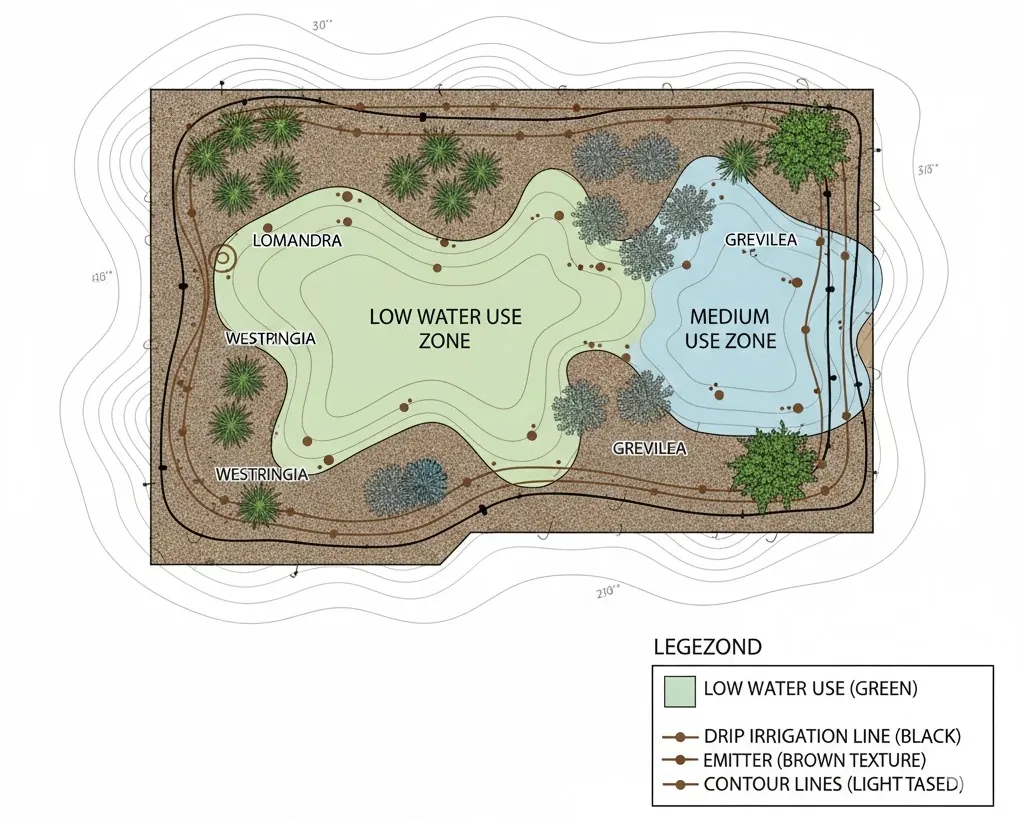
Native and waterwise species for Sydney: Lomandra longifolia, Westringia fruticosa, various Dianella varieties, Grevillea hybrids, drought-tolerant succulents like Carpobrotus. These develop root systems that handle dry stretches without constant babying.
Group plants by water needs. Thirsty stuff together, drought-tolerant stuff together. Don’t mix a Hydrangea bed with Lomandra and expect even results.
Soil improvement makes a massive difference. Compost increases water-holding capacity, so irrigation actually stays in the root zone instead of draining straight through. Mulch 75–100mm deep suppresses weeds, reduces evaporation, and keeps roots cooler.
Ditch the spray irrigation in garden beds. Convert to dripline delivering water directly to roots. Less evaporation, less waste, healthier plants. Smart controllers with rain sensors or soil moisture probes prevent watering during wet weather—a Perth trial found these cut garden water use by roughly 15% annually.
Consider replacing lawn areas that struggle every summer. Native groundcovers, stepping stones through gravel, and permeable paving. Still looks good, needs far less maintenance, and doesn’t brown out by December.
Professional Garden Design
A qualified horticultural designer does more than pick plants. Site assessment covering soil type, drainage, aspect, and microclimates. Plant selection matched to your actual conditions and how much maintenance you’re realistically going to do.
Deliverables from a proper design process include hydrozone mapping, irrigation layouts, controller programming guidance, and seasonal maintenance schedules. You’re paying for expertise that prevents expensive mistakes—like putting shade-loving plants in full western sun, or installing irrigation that doesn’t match your planting layout.
For Sydney yards needing a low-water transformation—natives, succulents, drip irrigation, structured hedging—gardening services Sydney through Succulent Designs delivers layouts specifically suited to Greater Sydney climate and soils. Schedule installation outside peak summer to reduce transplant stress and give plants time to establish before harsh conditions hit.
What It All Costs
| Tier | Cost | Examples | Payback |
|---|---|---|---|
| Weekend fixes | $50–$300 | LEDs, draft seals, showerheads, aerators, smart plugs | 2–6 months |
| Seasonal projects | $300–$3,000 | External blinds, shade sails, heavy curtains with pelmets, drip irrigation | 1–3 years |
| Major works | $3,000–$15,000+ | Heat-pump hot water, solar panels, double glazing, pergola structures | 3–7 years |
Schedule shading and insulation before summer peaks. Book heat-pump installations during shoulder seasons when installers aren’t slammed. Plant gardens outside heatwaves.
Start This Week
Pull your last twelve months of utility bills. Photograph sun patterns on your facades around midday and late afternoon.
Pick three weekend wins and get them done before Sunday. LEDs somewhere. A better showerhead. Draft seals on whichever door leaks most.
Choose one seasonal project and book it within eight weeks. External blind quotes. Shade sail installation. Drip irrigation conversion.
Track your bills through next season. Compare against your baseline. Actual measured results beat assumptions every time.
 Decor & Improvement Accessories