

Home & Decor Blogs: DIY, Interior Design & Lifestyle Ideas
The Emergency Started Before You Saw the Water
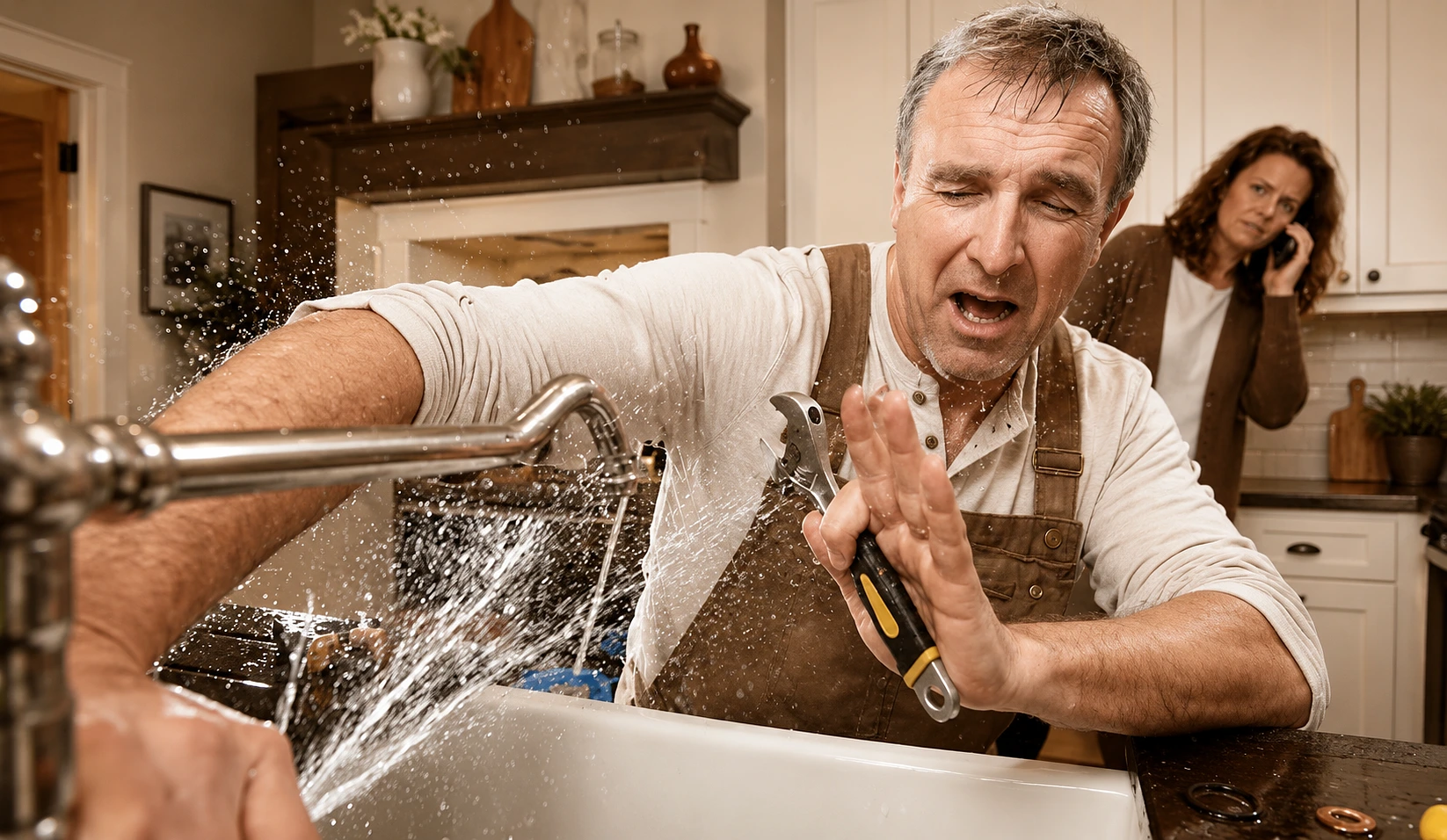
Most homeowners think the emergency starts the moment they see water pooling on the kitchen floor or hear it hissing behind a wall. That’s understandable but it’s wrong, and getting it wrong is the difference between a $2,000 problem and a $20,000 one.
The emergency actually started somewhere between two minutes and two hours before that. Somewhere upstream of what you can see, a fitting failed, a pipe split, or a joint gave way, and water has been running into your wall cavities, under your floorboards, or into your subfloor space that whole time. By the time it shows up on the finished surface where you notice it, the real work has already been happening. The plumber’s job when they arrive isn’t to fix the leak. It’s to stop the damage from getting worse than it already is.
The seven-tip industry articles never explain this properly, so here’s the honest version.
What the First Fifteen Minutes Actually Determines
Water damage doesn’t happen at a steady rate. It happens in a curve. The first fifteen minutes cause more damage per minute than the next three hours combined, because that’s when water is spreading laterally across surfaces, wicking into building materials, and finding paths of least resistance into places you’d never expect it to reach.
Hardwood floors start warping within an hour of sustained water contact. Drywall wicks moisture upward at roughly an inch every ten minutes once the paper facing is saturated. Timber subfloors (particleboard especially, which is standard in a lot of Sydney housing stock from the 60s onward) absorb water quickly and lose their structural properties even quicker. Once the subfloor is soaked, replacement is the only real fix. You can’t dry particleboard back to its original condition.
The first thing a professional does when they arrive isn’t reach for a spanner. It’s isolate the water at the mains, which most homeowners either can’t find or can’t turn off because the stop tap hasn’t been operated in fifteen years and it’s seized. Then it’s water extraction from the affected area before it has time to wick further. Then diagnostic on the actual failure point. The repair itself is often the smallest part of the job.
This is why the difference between calling someone in fifteen minutes and calling them in two hours shows up so clearly in the final restoration bill. In fifteen minutes, you’ve got contained water damage in one room. In two hours, you’ve got moisture in wall cavities two rooms over.
Where the Real Money Goes
Most homeowners assume the plumber’s callout fee is the main cost of an emergency. It isn’t. The plumber’s work is usually the cheapest part of the whole event.
A burst pipe repair in Sydney runs between $200 and $2,000 depending on where the pipe is and how much wall or floor has to come off to reach it. After-hours callouts add a premium of roughly $150 to $300 on top of that. Total plumbing cost for most residential burst pipe jobs stays under $2,500 even at 2am on a Sunday.
The water damage restoration bill is what actually hurts. Minor water damage confined to one room, caught early, runs $500 to $2,500 for professional drying and moisture treatment. A flood that affected multiple rooms and had time to soak into subfloor and wall cavities sits between $3,500 and $7,000. Severe cases where water was present for 48 hours or more, requiring structural material removal and mould remediation, push into $15,000 to $50,000 territory. The average insurance payout for water damage in Australia sits around $11,000 to $14,000, which tells you how often these events land in the middle to upper range once everything is accounted for.
Nick Connelly, Managing Director of NCP Plumbing, says the thing he tries to get through to people is that the phone call is the cheapest part of the whole event. Once he’s on the way, the water can be off within the hour and the damage is capped. Half the jobs he goes to on the Sydney North Shore, the homeowner spent an hour trying to fix it themselves first, and that hour is what turned a small repair into a restoration project.
That gap – what happens between the leak starting and the professional arriving – is where the entire cost variance lives.
The Electrical Bit Nobody Wants to Talk About
Water and electricity share space in more ways than most people realise. Power outlets in kitchens and bathrooms. Wall cavities where cables run alongside pipework. Ceiling spaces where downlights sit directly under bathrooms and upstairs plumbing. A leak in the wrong place doesn’t just wet the drywall. It tracks along cable runs into electrical fittings.
A working licensed plumber will isolate the water and check whether it’s reached anywhere it shouldn’t have. What they won’t do is touch anything electrical, because that’s a licensed electrician’s territory. What they will do is tell you honestly whether you need to switch the circuit off at the board before turning anything on, and whether an electrician needs to inspect the affected areas before power is restored.
The situation that catches people out is subtle. Water has tracked through a wall cavity and reached the back of a light fitting or a socket, but nothing is visibly wet on the finished side. The homeowner turns the light back on the next morning. Something short-circuits. Best case, the RCD trips and everyone learns a lesson. Worst case, arc fault in the wall, and now the plumbing incident has become a fire.
This is not a hypothetical. This is why Australian building code requires RCDs on all residential circuits, and why an emergency plumber who suggests you leave the affected circuits off until an electrician clears them is doing the job properly, not being cautious. Being cautious is a real thing here. Being casual is what turns water damage into house fires.
The Twenty-Four Hour Mould Window
Once water has been sitting for around 24 hours in warm conditions (and Sydney is warm conditions for most of the year), mould growth becomes possible. At 48 hours, it becomes probable. At 72 hours it’s established and requires professional remediation to remove, which adds thousands to the restoration bill and creates health issues for anyone in the house.
This is why the time from first sign of water to the plumber arriving matters so much. It isn’t just about capping the water damage. It’s about staying inside the window where the affected materials can be dried and saved rather than removed and replaced.
Category matters here too:
- Category 1 water is clean supply water from a burst pipe – the least problematic and typically the least expensive to restore.
- Category 2 is grey water from washing machines, dishwashers, or clean sinks that have been standing – moderate contamination, moderate cost increase for restoration.
- Category 3 is sewage or black water from toilet backflows or storm inundation, and the cost curve for that goes vertical because full decontamination is required, PPE-rated work, and often structural material has to be removed regardless of how quickly you caught it.
A category 1 leak caught in an hour is a plumbing repair with some drying. A category 3 leak that sat for two days is a full remediation project with a five-figure bill and weeks of disruption.
What Actually Helps Before the Plumber Arrives
The homeowner’s job isn’t to fix anything. It’s to reduce the damage curve while help is on the way. In order:
Turn off the water at the mains. If you don’t know where your stop tap is, find out now, before you need to know. It’s usually at the water meter near the front boundary, or inside the house at the point where the water supply enters the building.
Turn off the power at the switchboard if there’s any chance the water has reached electrical fittings. Don’t guess. If water is anywhere near lights, sockets, or the wall cavity next to them, kill the circuits.
Move furniture and soft furnishings out of the affected area if it’s safe to do so. Lifting things a few centimetres off the floor buys real time. Timber legs sitting in water are a write-off within an hour.
Start photographing damage from the moment you notice it, with timestamps. Every insurance claim runs better with clear documentation, and clear documentation starts before anyone has touched anything.
That’s it. Everything else, wait for someone qualified. Trying to open up walls or lift floorboards to find the source of the leak yourself doesn’t help the plumber. It creates more damage and gives them less to work with when they arrive.
The whole equation on emergency plumbing like Emergency Plumbing North Shore comes back to time. The pipe repair is the same job whether you called at fifteen minutes or two hours. The restoration project is completely different, and that difference is where the money either stays in your pocket or leaves it.
 Decor & Improvement Accessories