

Home & Decor Blogs: DIY, Interior Design & Lifestyle Ideas
Trisha TheHometrotters: Where Heart Meets Home Lifestyle
The Short Version, If You’re New Here
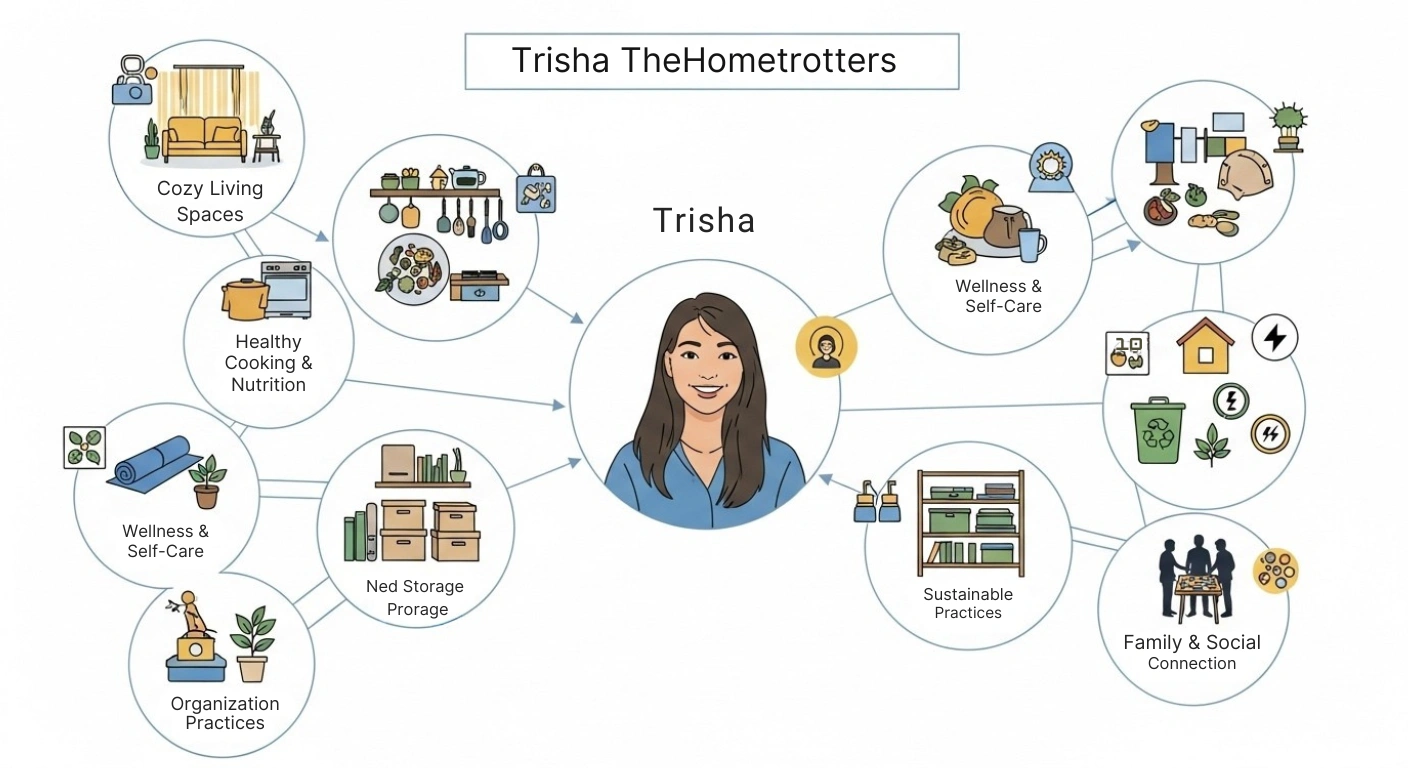
Trisha TheHomeTrotters started with a family toolbox and a budget. Built something real on the back of one viral kitchen post, a commitment to never pretending things are easier than they are and a genuine curiosity about how people live from Marrakech to a mid-terrace in Manchester.
The platform works because it was never built to impress. It was built to help. Those two things look similar from a distance. Up close, the difference is everything.
If your home doesn’t look like a showroom and whose does TheHomeTrotters is probably the most honest company you’ll find in this space. That’s not a small thing. In a corner of the internet full of aspirational unreality, it turns out that just being straight with people is still a remarkably effective strategy.
Most home décor influencers show you the after. Trisha TheHomeTrotters shows you the disaster in the middle the peeling paint, the miscalculated shelf, the Tuesday evening when the whole plan fell apart. That’s exactly why millions follow her. Trisha built TheHomeTrotters into one of the most trusted DIY and home decoration platforms online by doing the one thing most creators won’t: keeping it real, keeping it affordable and never once pretending her home looks like a hotel lobby.
What the Platform Actually Offers — And Who It’s Really Built For
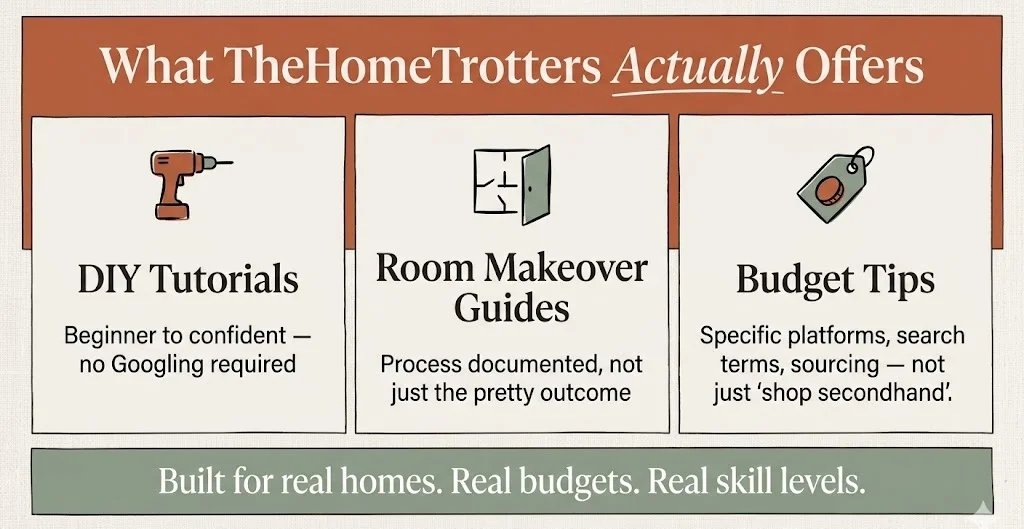
DIY tutorials, room makeover guides, budget tips. On paper that’s every home blog. In practice, TheHomeTrotters executes these differently specifically because the content is written for beginners without being condescending and for budget-conscious readers without being apologetic about it.
The tutorials are genuinely beginner-friendly. Not “beginner-friendly” meaning they skipped a few steps meaning someone who has never held a drill can follow along without Googling half the terminology. That’s harder to write than it sounds.
The room makeover guides document process, not just outcome. Readers see decisions being made in real time, why one approach got abandoned, what the cheaper option actually looked like versus the expensive one, what happened when the plan changed halfway through.
Budget tips aren’t vague. “Shop secondhand” isn’t advice, it’s a sentence. TheHomeTrotters gets specific: which platforms, which search terms, what to look for, what to avoid, how to refinish something you found for £15 so it doesn’t look like you found it for £15.
According to a Pew Research study on online learning, people are far more likely to complete self-directed learning when content respects their existing knowledge rather than over-explaining or under-explaining. Trisha’s calibration on this, knowing what to spell out and what to trust the reader with, is one of the less-discussed reasons the platform retains it’s audience.
From Family Toolbox to Viral Kitchen — How It Started
Trisha didn’t wake up one day and decide to become an influencer. The skills came first. Growing up, DIY wasn’t a trend in her household, it was just how things got done. Broken cabinet? Fix it. Ugly wall? Paint it. Limited budget? Figure it out. That hands-on upbringing stuck.
She started blogging in the early 2010s, quietly, the way most good things start. Then 2015 happened. A kitchen makeover post practical, budget-conscious, documented messily and honestly spread fast. Not because it was polished. Because it was useful. Real people in real kitchens recognized themselves in it.
That post didn’t just bring traffic. It clarified what TheHomeTrotters was actually for.
The Three Things TheHomeTrotters Never Compromises On
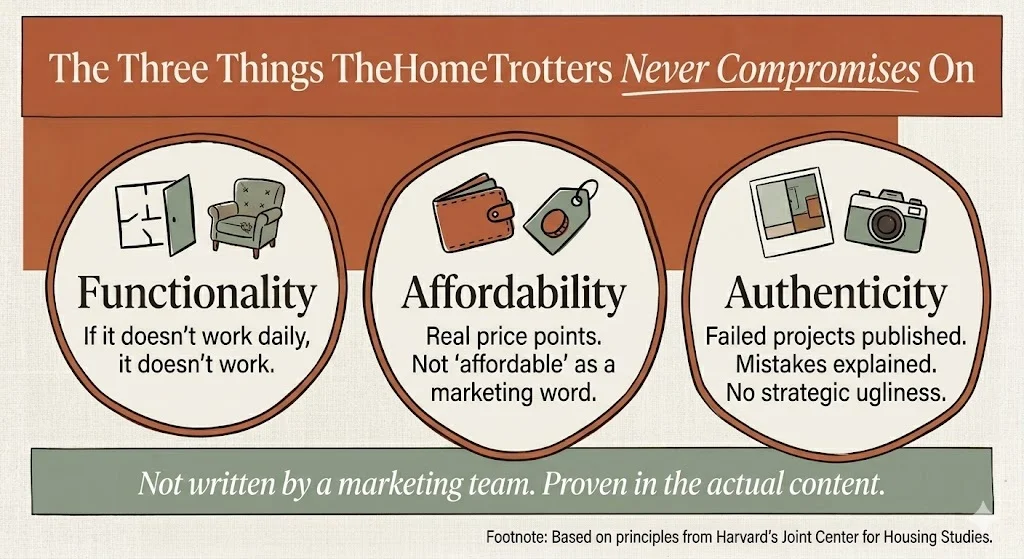
There’s a reason the platform hasn’t drifted into sponsored chaos or aspirational fantasy. Trisha runs TheHomeTrotters on three principles that shape every single piece of content published:
Functionality — A room that photographs well but works terribly isn’t a design win. Every tutorial, every makeover guide prioritizes how the space actually gets used day to day.
Affordability — Not “affordable” as a marketing word. Genuinely budget-conscious, with real price points, real sourcing suggestions and real acknowledgment that most readers aren’t working with a renovation budget. Research from Harvard’s Joint Center for Housing Studies consistently shows home improvement spending skews toward higher-income households — Trisha’s platform exists specifically to fill the gap for everyone else.
Authenticity — This one’s harder to fake and Trisha doesn’t try to. Failed projects get published. Mistakes get explained. The before photos aren’t strategically ugly, they’re just honest. That’s rare in a space full of carefully curated “humble” aesthetics.
These aren’t brand values written by a marketing team. They show up in the actual content, which is why the audience trusts them.
Why Her Honesty Is a Competitive Advantage, Not Just a Personality Trait
Most home décor content operates on a specific illusion, that the creator has taste you don’t, tools you don’t and a home that somehow always looks ready for a magazine shoot. Trisha blew that up deliberately.
She shares failures alongside successes. A tiling job that had to be redone. A color choice that looked nothing like the swatch. The Bali-inspired bathroom that took three attempts to not look like a theme park. Real families with kids, pets, limited closet space and IKEA furniture they’re not replacing anytime soon those are her readers and she writes for them, not above them.
According to Edelman’s Trust Barometer, consumer trust in media and content creators has been declining steadily but trust in “a person like yourself” remains among the highest-rated sources. Trisha’s content works because it reads like advice from someone in the same situation, not a lifestyle authority handing down recommendations.
There’s also something quietly subversive about it. In a space where failure is quietly edited out, publishing it consistently is a statement. It tells readers: you’re not bad at this, it’s just actually hard sometimes.
The Passport That Feeds the Platform — Trisha’s Global Design Inspirations
Here’s something that separates TheHomeTrotters from a hundred other DIY blogs, Trisha actually goes places and brings back more than photos. Morocco, Japan, Bali, Portugal, Paris. Each trip fed directly into the platform, not as travel content, but as design thinking translated into something a reader in a suburban semi-detached can actually use.
The Morocco influence shows up in her approach to textiles, layering patterns that shouldn’t work together but somehow do, sourced from local markets or budget alternatives found closer to home. Japan shifted how she thinks about storage and negative space. Not the minimalism-as-aesthetic trend that’s been done to death, but the functional logic underneath it wabi-sabi as a genuine principle, not a Pinterest board label.
Bali brought color confidence. Portugal, a grounding in tile work and tactile surfaces. Paris — predictably — sharpened her eye for proportion in small rooms.
None of it arrives on TheHomeTrotters as “get the Moroccan look.” It arrives as: here’s what I understood about how people actually live there and here’s how that changes the way I think about this corner of my living room. That’s the difference between inspiration and theft and Trisha understands it.
What’s Coming — The Eco Line, the Kits, the Book
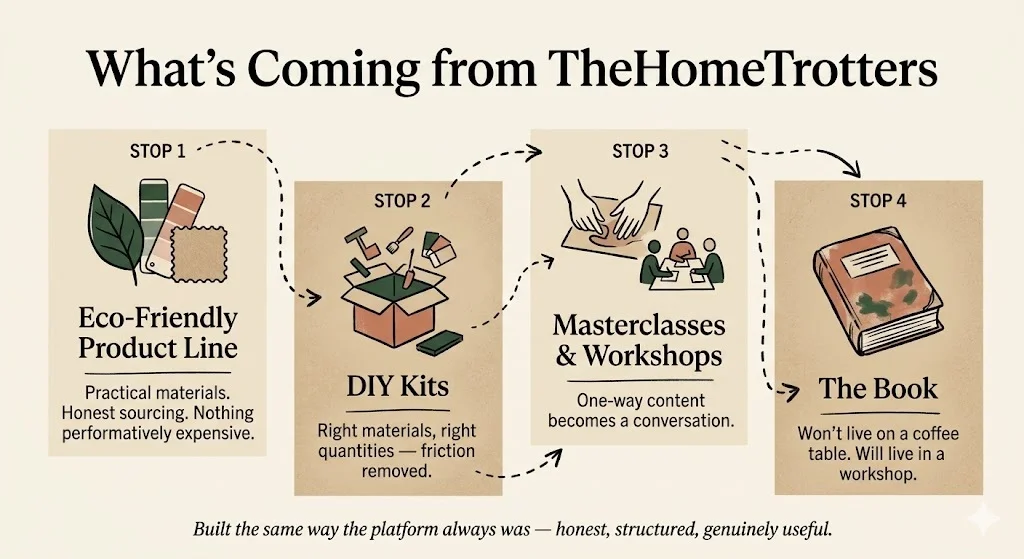
Trisha isn’t standing still. The next phase of TheHomeTrotters is already in motion and it extends well beyond blog posts.
An eco-friendly product line is in development, materials and sourcing aligned with the same values the platform has always pushed: practical, accessible, not performatively expensive. DIY kits are coming too, which makes sense. The tutorials already walk readers through projects step by step; the kits remove the friction of sourcing the right materials in the right quantities.
Masterclasses and workshops will take the one-way content model and make it interactive, readers becoming participants, asking questions in real time, working through projects with guidance rather than just documentation.
And then there’s the book. Details are still sparse, but given how the platform operates, honest, structured, genuinely useful — it’s safe to assume it won’t read like a coffee table showpiece. More likely something people will actually open with paint on their hands.
The Community She Built — And Why It Actually Sticks
Most platforms grow an audience. TheHomeTrotters grew something closer to a community of people who feel like they’re figuring it out together — which is a meaningful distinction.
The comments on Trisha’s content don’t read like typical influencer engagement — the fire emojis and “love this!” responses that mean nothing. Readers share their own versions of the projects. They report back when something didn’t work. They ask follow-up questions that go several replies deep. Some have been following since the early days, long before the 2015 spike, back when it was a smaller, quieter corner of the internet.
That kind of retention doesn’t come from an algorithm. It comes from consistently publishing content that makes people feel capable rather than inadequate — which, in the home décor space, is genuinely countercultural. A lot of that content implicitly tells readers their home isn’t good enough yet. TheHomeTrotters tells them what they can do about it this weekend with £40 and a free afternoon.
There’s real value in that. Research published by the American Psychological Association links creative, hands-on activity — exactly the kind TheHomeTrotters promotes — to measurable reductions in stress and increased sense of personal efficacy. Trisha probably didn’t set out to build a wellness platform. But that’s partly what it is.
Why TheHomeTrotters Holds Up Against Google’s Evolving Standards
This matters more than it might seem. Google’s Search Quality Evaluator Guidelines place significant weight on E-E-A-T — Experience, Expertise, Authoritativeness and Trustworthiness. For content to rank well and stay ranking well, it needs to demonstrate all four. Not perform them. Demonstrate them.
TheHomeTrotters holds up because the experience is documented, not claimed. Trisha doesn’t say she’s an expert at kitchen makeovers — she shows a kitchen, before and after, with everything that went sideways in between. That’s experience in the most verifiable sense.
The expertise isn’t academic. It’s accumulated and visible across years of published work — tutorials that have been tested, revised, updated when better methods emerged. The authoritativeness comes from the audience’s behavior: people return, people recommend it, people cite specific posts when asking questions elsewhere online.
And the trustworthiness — that comes back to the failures. Nobody who was manufacturing a persona would keep publishing the things that went wrong. That consistency of honesty, over years, is the hardest signal to fake and the one Google’s systems are increasingly good at identifying.
For anyone building a home-focused platform right now, TheHomeTrotters is genuinely worth studying — not to copy the aesthetic, but to understand what it looks like when content strategy and actual values happen to be the same thing.
The Short Version, If You’re New Here
Trisha TheHomeTrotters started with a family toolbox and a budget. Built something real on the back of one viral kitchen post, a commitment to never pretending things are easier than they are and a genuine curiosity about how people live — from Marrakech to a mid-terrace in Manchester.
The platform works because it was never built to impress. It was built to help. Those two things look similar from a distance. Up close, the difference is everything.
If your home doesn’t look like a showroom and whose does — TheHomeTrotters is probably the most honest company you’ll find in this space. That’s not a small thing. In a corner of the internet full of aspirational unreality, it turns out that just being straight with people is still a remarkably effective strategy.

 Decor & Improvement Accessories