

Home & Decor Blogs: DIY, Interior Design & Lifestyle Ideas
US Cities Where Modern Architecture Meets Natural Landscapes

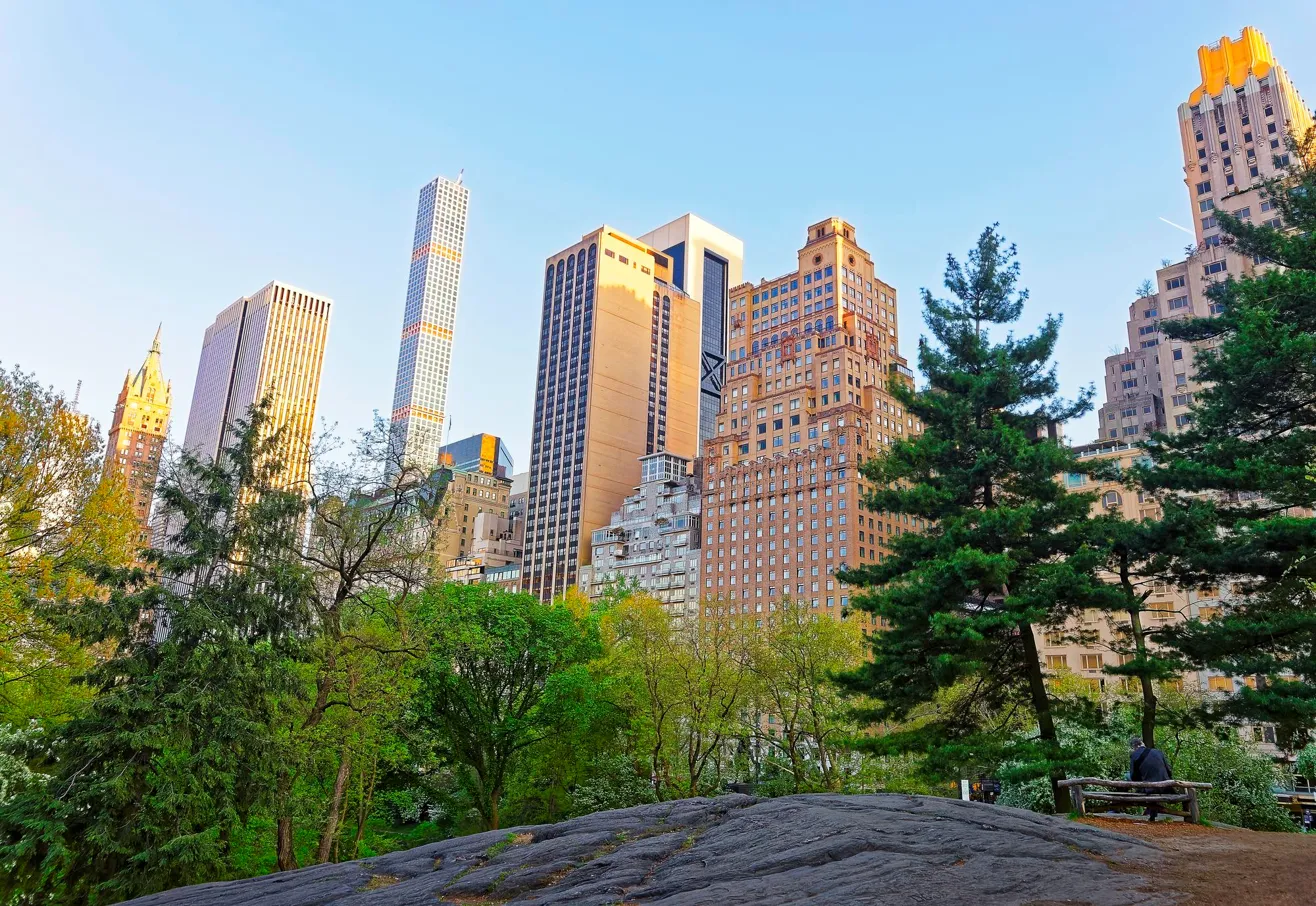
There’s a weird thing that happens with most American cities. They either go all-in on the skyline glass towers, steel, concrete everywhere and nature gets reduced to a couple of park blocks with some struggling trees. Or you get gorgeous scenery with buildings that could be anywhere. Strip malls at the foot of mountains. That kind of thing.
A handful of cities figured out the middle ground. Places where the architecture doesn’t just sit near nature but actually responds to it. Where somebody designing a building looked at the mountain or the bay or the forest and thought, yeah, that should be part of this.
Seattle, Washington
Seattle is squeezed between Puget Sound and Lake Washington with the Cascades filling up the background. Hard to ignore mountains when they’re staring at you from every window. Architects here have mostly stopped trying.
The Bullitt Center is the wildest example. A six-story office building in the Central District that opened in 2013, built from FSC-certified heavy timber. It runs on 575 rooftop solar panels and actually generates more power than it uses — the extra goes back to the city grid. Rainwater gets collected in a 56,000-gallon tank underneath, filtered, disinfected, piped through the building as drinking water. The toilets compost. Seriously.
Bullitt Center vs a typical Seattle office building:
| Bullitt Center | Average Seattle Office | |
|---|---|---|
| Energy use per sq ft | ~10,000 BTU | ~90,000 BTU |
| Power source | 575 rooftop solar panels | Municipal grid |
| Water | 56,000-gallon rainwater collection | City supply |
| Toxic chemicals used in construction | None — no PVC, lead, mercury, formaldehyde | Standard commercial materials |
Seattle passed legislation in 2009 incentivising Living Building Challenge certification first American city to do that. Washington state came in fourth nationally for LEED-certified green building space in 2023. The Museum of Pop Culture, that crumpled metallic Frank Gehry structure near the Space Needle, reflects grey sky and evergreen treeline depending on the angle. Even the corporate buildings — the Gates Foundation Campus with its glass facades are designed so the landscape bleeds into the interior.
Water defines everything. The contemporary towers downtown are positioned to preserve mountain view corridors. That’s not accidental. Mess up the street grid by a few degrees and those Cascade views vanish behind the next condo development.
Boulder, Colorado
Boulder has the Flatirons right behind it. Massive tilted sandstone formations jutting out of the Rocky Mountain foothills, visible from basically everywhere in town. That changes how you build a city.
CU Boulder’s campus covers 600 acres at the base of those formations. Architect Charles Klauder set the original design language in the 1920s sandstone walls, clay tile roofs, Tuscan feel and most buildings still follow that. But the newer stuff has gotten more ambitious. The CASE building earned LEED Gold with electrochromic glass on its south-facing terraces — the windows dim themselves as sun exposure increases, cutting heat without blocking the Flatiron views. The university now has 27 LEED-certified buildings total.
Limelight Boulder, a hotel that opened in 2025, was built to LEED Gold standards and calls itself the largest all-electric hotel in the country. Rooftop pool looks directly at the Flatirons. Native plants instead of manicured hotel landscaping. The Sundance Film Festival is relocating to Boulder in 2027, and the hotel couldn’t have timed its opening better.
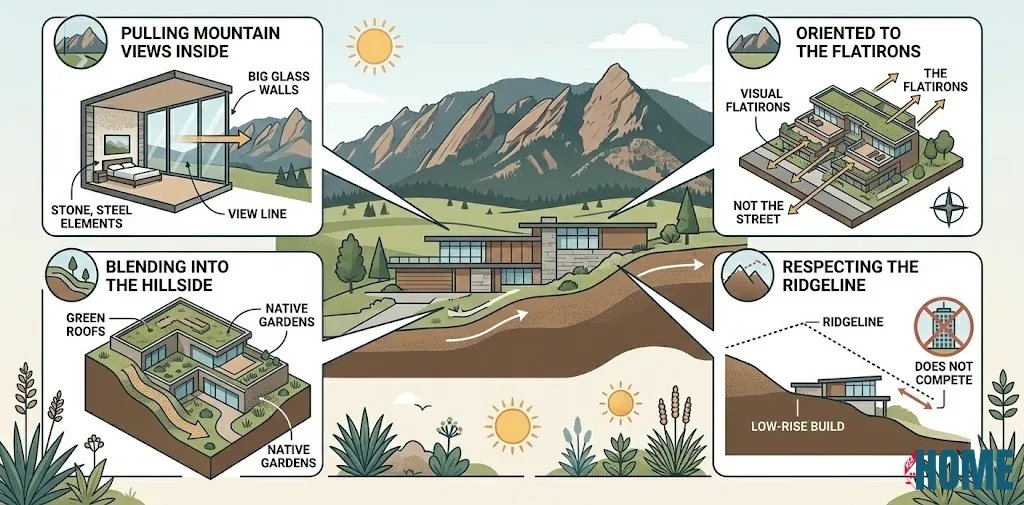
For those exploring houses for sale in Boulder, the residential architecture picks up the same thread. Homes on the foothills share a few patterns:
- Stone, steel, and big glass walls pulling mountain views inside
- Green roofs and native gardens that blend into the hillside
- Terraces pointed at the Flatirons, not the street
- Low-rise builds that don’t try to compete with the ridgeline
Downtown keeps things modest for the same reason. Even BioMed Realty’s new LEED Gold-certified research campus in East Boulder is laid out around shared plazas and landscaping instead of walling itself off. Three research buildings arranged around open space. Boulder protects its sightlines.
San Francisco, California
People call San Francisco a tech capital and leave it at that. Which is true but misses something pretty obvious — the city is built on steep hills on a peninsula surrounded by water on three sides. That geography creates views you can’t manufacture no matter how much venture capital you throw around.
Golden Gate Bridge. 1.7 miles of Art Deco suspension work connecting the city to Marin County, Pacific on one side, bay on the other. Still one of the cleanest examples anywhere of a structure that makes its natural setting better instead of cluttering it.
Twin Peaks, Coit Tower, Bernal Heights Park these are where San Franciscans go for panoramic views across the bay to Oakland. The Exploratorium at Pier 15 uses its waterfront location as part of the actual experience. Glass walls and open bays where fog, light, and bay water interact with the exhibits. That building wouldn’t make sense in Dallas.
The residential architecture deals with hills constantly. Houses stack along steep grades, and the good ones use elevation to layer views — bay, bridges, headlands, all at once. And then the fog rolls through and transforms entire neighbourhoods within an hour. Even a boring apartment building develops a shifting personality when the climate around it changes that fast.
Miami, Florida
Miami’s best architecture doesn’t fight the heat and the water. It uses them.
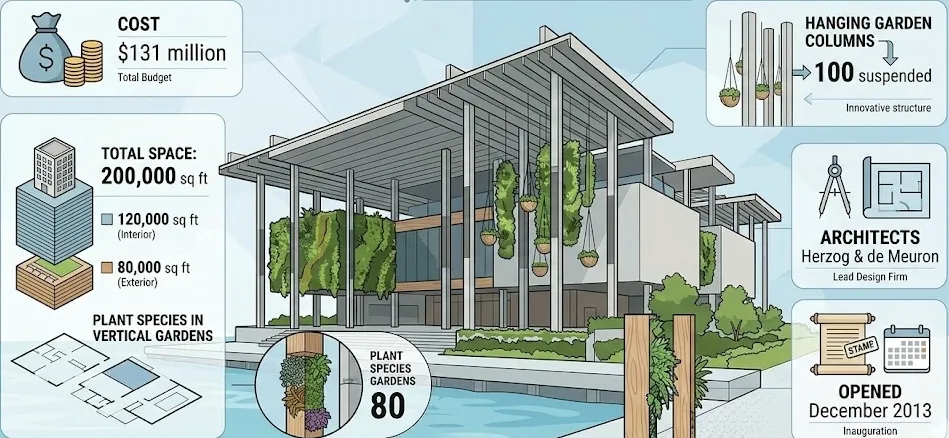
Pérez Art Museum Miami (PAMM) on Biscayne Bay is the building that proves this. Herzog & de Meuron the Swiss firm that designed it looked at Stiltsville, those wooden houses built on stilts off Key Biscayne, and worked from there. Raised terraces, broad overhanging canopies, the whole thing engineered for hurricanes and flooding while staying shaded and ventilated. French botanist Patrick Blanc designed the hanging vertical gardens 100 suspended planted columns using 80 plant species picked to survive subtropical heat and hurricane-force winds.
PAMM at a glance:
- Cost: $131 million
- Total space: 200,000 sq ft (120,000 interior / 80,000 exterior)
- Hanging garden columns: 100 suspended
- Plant species in vertical gardens: 80
- Architects: Herzog & de Meuron
- Opened: December 2013
The building captures rainwater and AC condensate to irrigate those gardens. Porous paving and rain gardens underneath funnel water into the ground instead of letting it run off into the bay. You can walk into the building from all four sides there’s no real front or back. Interior and exterior blur into each other, which is what Miami demands from architecture that actually belongs here.
Miami Beach piles on. Modern residential towers along the waterfront catch sunlight off the ocean. The Art Deco district set the template decades ago colour, light, climate as design materials. Newer buildings just have bigger budgets to work with.
Asheville, North Carolina
Asheville doesn’t show up on architecture lists often. That’s partly why it’s interesting. Blue Ridge Mountains in western North Carolina, a mix of old-money estates and arts culture, and a building approach that doesn’t need to announce itself.
The Biltmore Estate 250 rooms, America’s largest private house gets all the attention. But Asheville’s more relevant architectural story is what’s happened around the River Arts District and in the residential areas climbing into the mountains. Contemporary homes with panoramic windows and balconies that face outward. The building isn’t the point. What’s behind it is.
Pisgah National Forest and The North Carolina Arboretum are right there, minutes from downtown. That proximity means architects design with specific views in mind rather than generic “mountain-inspired” gestures. You’ll see houses oriented to frame a particular ridgeline or valley rather than just slapping big windows on the side that faces uphill.
Austin, Texas
Austin is right where the Texas Hill Country starts its westward roll. Most Texas cities are flat and spread out. Austin has topography to work with Lady Bird Lake cutting through the middle, Barton Springs Pool (a natural spring-fed swimming hole that’s been pulling people in since way before the tech boom), limestone bluffs along the creek corridors.
The Blanton Museum of Art on the UT Austin campus keeps things restrained. Clean geometry, careful material choices, doesn’t shout at you. The newer residential and commercial construction is where the sustainability push shows up rooftop gardens, green terraces, buildings that step with the hillside rather than grading it flat. Austin has grown so fast over the past ten years that there’s an enormous amount of new construction, and the projects that work best are the ones treating the lake and the terrain as assets to design around, not obstacles to engineer away.
Portland, Oregon
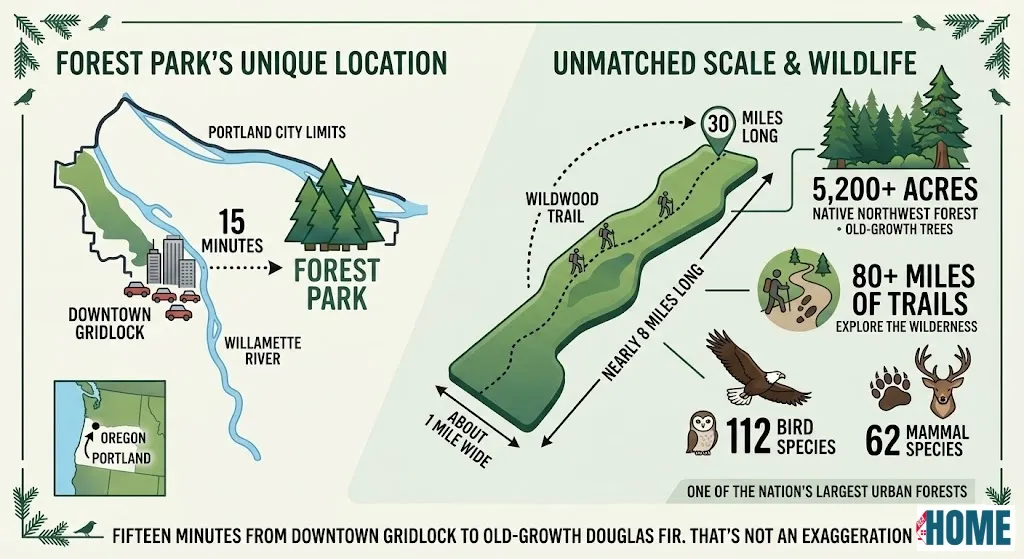
Portland takes this stuff further than anybody. Forest Park is inside city limits and it’s absurd how big it is:
- 5,200+ acres of native Northwest forest
- 80+ miles of trails
- Nearly 8 miles long, about 1 mile wide
- 112 bird species, 62 mammal species
- 30-mile Wildwood Trail running through it
Fifteen minutes from downtown gridlock to old-growth Douglas fir. That’s not an exaggeration.
Having that much forest within city boundaries changes the building culture entirely. Green roofs aren’t a novelty here they’re expected. Solar panels on houses don’t get a second glance. Portland Japanese Garden, 12 acres in Washington Park, is where architecture and landscaping stop being two separate things. The Oregon Museum of Science and Industry (OMSI) on the Willamette River’s east bank uses the water as part of what the place is.
But the residential side tells the bigger story. Homes across Portland orient themselves toward green space Forest Park, the river, a neighbourhood park, whatever’s close. Natural materials, maximum daylight, minimal fuss. Portland doesn’t produce many individual showcase buildings. What it produces is a city where the default approach to building includes nature in the equation, not as an afterthought or a selling point, but because that’s just how things are done here.
Quick Comparison
| City | Natural Setting | Architecture Worth Noting | Green Credentials |
|---|---|---|---|
| Seattle | Puget Sound, Cascades, Lake Washington | Bullitt Center, MoPOP | First US city with Living Building incentives; 4th in national LEED space |
| Boulder | Rocky Mountain Flatirons | CU Boulder CASE Building, Limelight Hotel | 27 LEED campus buildings; largest all-electric hotel in the US |
| San Francisco | Pacific coast, bay, steep hills | Golden Gate Bridge, Exploratorium | Fog, hills, water as active design elements |
| Miami | Biscayne Bay, Atlantic coast | PAMM by Herzog & de Meuron | Rainwater capture, hurricane-resilient, porous paving |
| Asheville | Blue Ridge Mountains | Biltmore Estate, River Arts District | Mountain-integrated residential design |
| Austin | Texas Hill Country, Lady Bird Lake | Blanton Museum of Art | Rooftop gardens, topography-driven design |
| Portland | Tualatin Mountains, Willamette River | Japanese Garden, OMSI | 5,200-acre urban forest; citywide green building culture |
What Ties These Places Together
Not a style. Not a price tag. Seattle and Miami have almost nothing in common visually. Boulder and Austin feel completely different on the ground.
What connects them is a decision conscious or forced by geography to let the landscape shape the buildings instead of the other way around. Most cities don’t bother. They build the same glass rectangle whether it’s next to a mountain range or a strip mall parking lot. These seven treated the mountains and the water and the forests like they actually mattered. The buildings are better for it. So is daily life in these places.
 Decor & Improvement Accessories