

Home & Decor Blogs: DIY, Interior Design & Lifestyle Ideas
What Burglars Told Researchers Actually Stops Them
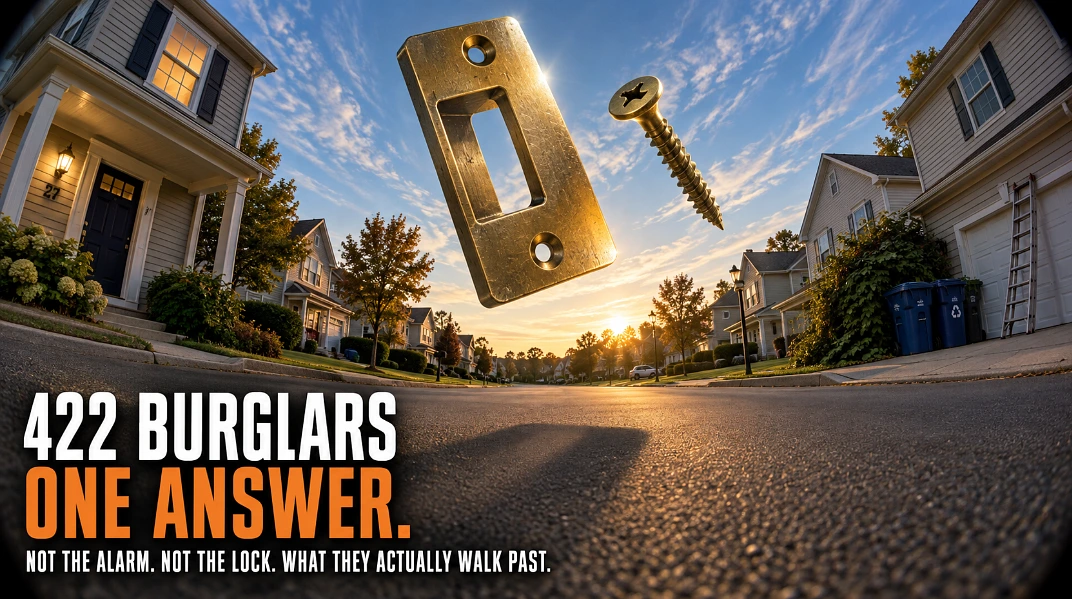
There is a study I had heard quoted so many times by alarm companies that I assumed it was a sales line, and then I read it. A criminologist at UNC Charlotte, Joseph Kuhns, went into prisons in North Carolina, Kentucky and Ohio in 2012 and had 422 convicted burglars fill in a long survey about how they picked a house, what made them skip one, and what they did once they were in. The alarm industry paid for it, which is worth saying out loud, and it is 12 years old now, and it is still the only piece of research of its kind, which is why every alarm company on earth is quoting it. So I sat down with it expecting a pitch and got something more useful than that, because the answer that came out on top was not a product.
What 422 Burglars Said Makes Them Walk Past
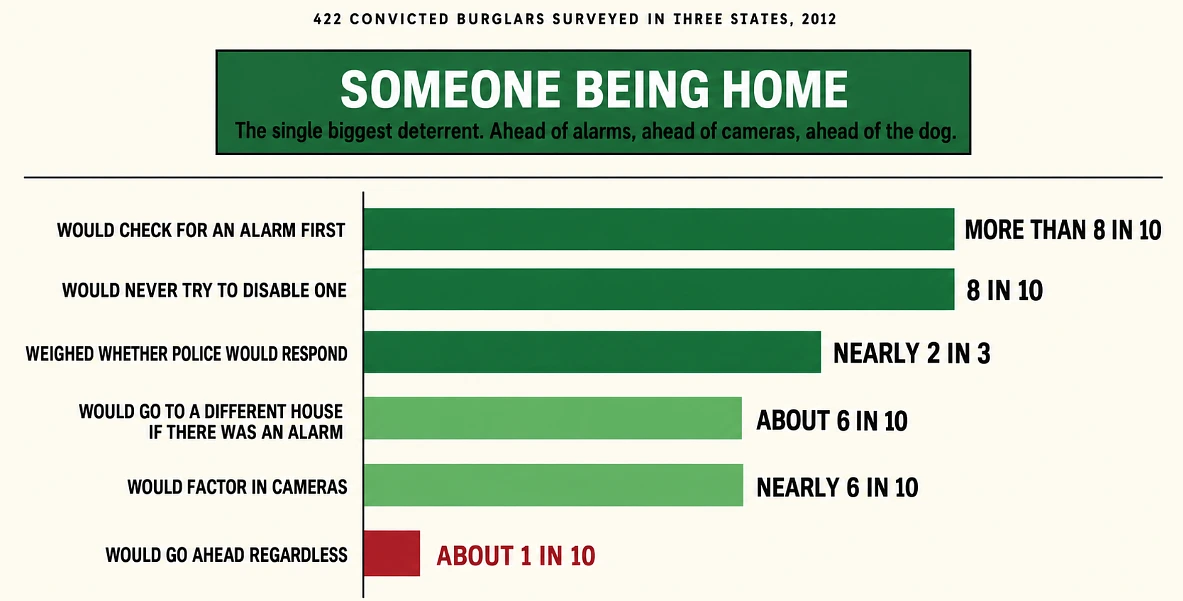
Someone being home. That was the thing they feared most, ahead of alarms, ahead of cameras, ahead of the dog, because a person in the house means getting hurt, getting caught, or getting a longer sentence, and none of those are worth a television. Everything else on the list is a way of looking occupied without being there.
The alarm came next, and the numbers on it are plain enough to give straight. About 6 in 10 said an alarm would send them to a different house, and more than 8 in 10 said they would try to find out whether there was one before they started. Only about 1 in 10 would go ahead regardless. The part I did not expect is that 8 in 10 also said they would never try to disable one, and nearly 2 in 3 thought about whether the police would actually turn up if it went off. So the sign on the lawn is doing a job, and the monitoring behind the sign is doing a separate one.
And the reason any of this works is that 4 in 10 of them said the burglary was spur of the moment. They were not casing anything for a week. They were walking or driving past, they saw a house that looked easy, and they went in that afternoon. Most of what stops a burglar is what they can see from the street in the 30 seconds it takes to decide.
Do Cameras Count As An Alarm?
To them, close to it. Nearly 6 in 10 said cameras or other surveillance would factor into whether they chose a house, which is the same share that would walk away from an alarm. A doorbell camera and a sign are the cheapest version of “someone is watching” a house can put on, and it is the watching that matters, because the ones who thought about it were asking whether anyone would respond, not whether the footage would be nice.
The Walk Past Itself
So think about your own house from the sidewalk, for the length of time it takes someone to walk past it, because that is the whole selection process for a lot of these people. What they are looking for is the easy way in and the sign that no one is around:
- A ladder left against the garage, or bins pulled up under a first floor window, which is a step to a window that is never locked because it is upstairs.
- Shrubs grown over a ground floor window, which is somewhere to stand and work on it without being seen from the street.
- Mail and packages piling up, a lawn a week overgrown, blinds in exactly the same position every day.
- The side gate that is never latched, because it leads to the back door, and the back door is where the work gets done.
- The key. Under the mat, in the fake rock, on top of the door frame. They check those first because those are where keys are.
None of that costs anything to fix and all of it sits in the good habits column, lock up, put the ladder away, cut the shrubs back to the sill, stop the mail. The survey is only telling you it is the first thing they look at, before any lock.
The 4 In 10 Who Come In Anyway
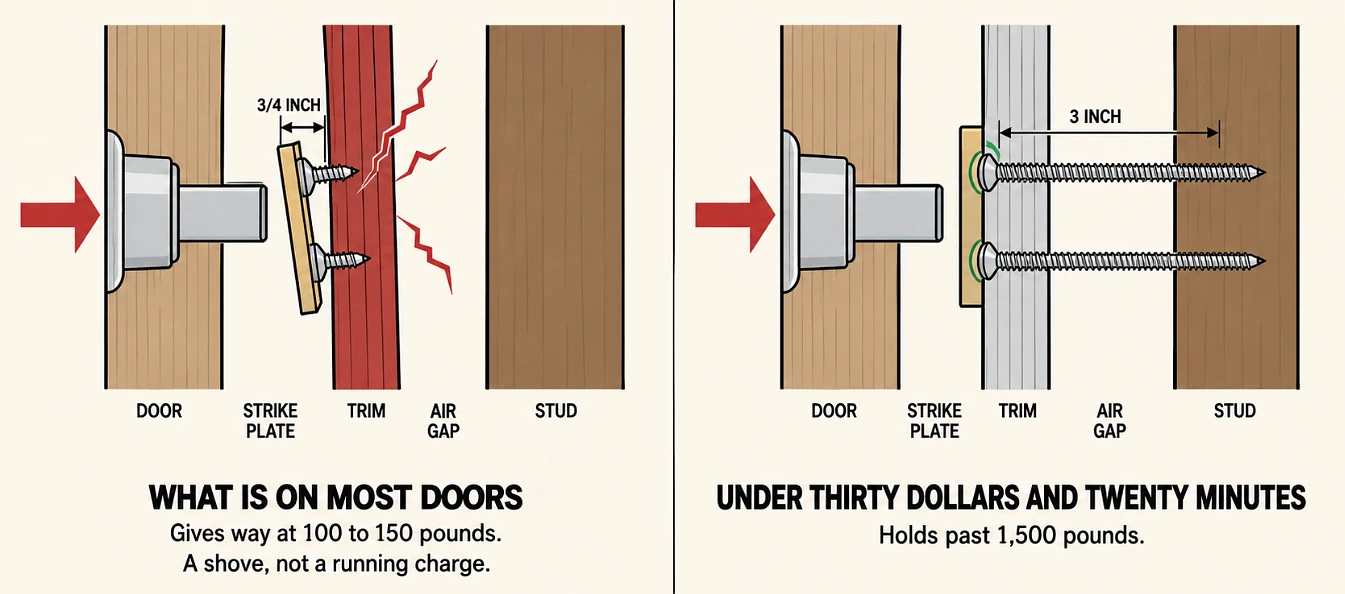
The survey stops at the door. It tells you what makes a burglar skip a house and nothing about what happens when one does not, so for that I went and opened my own front door and looked at the strike plate, the little brass plate the deadbolt slides into. It is held on with 2 screws about three quarters of an inch long, and they go into the door trim, which is a strip of soft pine tacked to the frame. That is what the lock is fastened to.
The front door is the most common way in, roughly a third of break ins in the FBI’s figures, and a standard door with standard hardware goes in at a kick of somewhere between 100 and 150 pounds, which is a shove, not a running charge. A locksmith who went through his own insurance claim files for forced entries found the frame, the strike plate or the hinges gave way in nearly every one and the lock itself in almost none. The deadbolt held. The wood around it did not.
The fix is 3 inch screws in place of the three quarter inch ones, through the strike plate and through the hinges, long enough to reach the stud behind the trim. That is under $30 of hardware and 20 minutes with a drill, and it takes the door from something a shove opens to something that holds past 1,500 pounds. It is the single best return in the whole subject and it is the one nobody sells, because there is nothing to sell.
Does A Smart Lock Change Any Of That?
Not the kick. A $250 keypad lock on a frame held with trim screws is a $250 lock on the floor after 1 kick, and that is the honest answer to whether the smart lock makes the door safer, it does not, the screws do. What the smart lock changes is what the burglar tests. The survey says they try the door and they look for the key, and a keypad lock with no keyway on the outside has nothing to try and no key anywhere on the property to find. Then it does the job it is actually good at, which is access. The dog walker gets a code that works between 2 and 3 on weekdays and stops on Sunday night, the cleaner’s code goes when the cleaner does, and the app tells you the kids came in at 3:40 and not 5.
Lance Peoples, who has run Davis Lock & Safe in Portland since 2014, the shop John Davis started in 1978, has the same rule for anyone asking about electronic door locks Portland wide, the door, the hinges and the frame get looked at before the lock does, because the best lock made is only as strong as what it is screwed into. It is the same thing the strike plate told me, said by someone who fits them for a living.
What Lights, Sensors And Cameras Are Actually For
They all serve the top answer in the survey, someone is home, or at least someone is watching. A motion light at the side gate says a person may look out. Door and window sensors on the garage, the shed and the back door say the house will make noise. A camera at the front says the 30 second decision is being recorded. None of them stops a kick either, but they are what make 6 in 10 keep walking, and the door screws are for the 4 who do not.
| What the burglars said | What gives them that signal | Rough cost |
| Someone home is the biggest deterrent | Lights on a timer, a car in the drive, a radio, a neighbor collecting mail | Little or nothing |
| 6 in 10 skip a house with an alarm | A monitored alarm and the sign that comes with it | Monthly fee plus hardware |
| Nearly 6 in 10 weigh cameras | A doorbell camera at the front, one at the side gate | Under $200 each |
| They look for the easy way in first | Ladder put away, shrubs cut back, gate latched, no key outside | A Saturday |
| They try the door | 3 inch screws in the strike and hinges, then a keypad lock with no outside keyway | Under $30, then the lock |
The study is 12 years old and no one has repeated it since, so these are the last people who were asked. Until someone asks again, the order they gave is the order to spend in.

 Decor & Improvement Accessories