

Home & Decor Blogs: DIY, Interior Design & Lifestyle Ideas
What EuroShield Roofing Actually Costs for Small and Large Projects

Roofing quotes have a way of making your stomach drop. You call a contractor expecting a ballpark number, and instead you get a range so wide it’s basically useless. EuroShield makes that worse because it sits in the premium tier you’re not comparing it to basic asphalt shingles, you’re comparing it to metal, cedar shake, and natural slate. Except it’s made from 95% recycled material, mostly old tires that would’ve ended up in a landfill.
The size of your roof is the single biggest factor in what you’ll pay. That sounds obvious, but the relationship between roof size and cost isn’t as straightforward as “bigger roof, proportionally bigger bill.” Small projects and large projects price differently for reasons that go beyond just needing more shingles.
What the Numbers Look Like Right Now
EuroShield rubber shingles run between $8.50 and $14.50 per square foot installed, covering both materials and labour. Some sources put the range slightly wider at $7 to $15 per square foot depending on the product line and your location. A more recent 2025 breakdown from New England Metal Roofing places premium EuroShield installations at $11 to $18 per square foot, which accounts for the higher-end slate profiles and complex roof designs.
To put real numbers on that: a 1,600 square foot ranch-style roof would cost roughly $11,760 to $19,000 for a standard EuroShield installation. Scale that up to a 2,500 square foot home with multiple levels and you’re looking at $21,250 to $36,250 at mid-range pricing.
For context, here’s how EuroShield stacks up against other materials:
| Material | Installed Cost Per Sq Ft | Typical Lifespan |
|---|---|---|
| Asphalt shingles | $3.50–$6.00 | 15–20 years |
| EuroShield rubber shingles | $8.50–$14.50 | 50+ years |
| Metal (standing seam) | $8.50–$14.50 | 40–70 years |
| Cedar shake | $25–$30 | 25–30 years |
| Natural slate | $15–$30+ | 75–150 years |
The comparison that matters most is lifespan versus upfront cost. Asphalt is cheap but you’ll replace it two or three times before a single EuroShield roof needs attention. Cedar shake costs significantly more and demands constant maintenance. Natural slate lasts forever but costs a fortune and might need structural reinforcement because of the weight. EuroShield’s Heritage Slate profile weighs just 2.45 pounds per square foot light enough for any standard roof frame without extra support.
Why Larger Roofs Don’t Just Cost More, They Cost Differently
A bigger roof needs more material, obviously. More EuroShield panels, more underlayment, more flashing. But there’s a wrinkle that works in your favour: economies of scale. Contractors mobilise equipment, set up scaffolding, and coordinate crews regardless of whether the roof is 1,200 or 3,000 square feet. That fixed overhead gets spread across more square footage on larger projects, which can bring the per-square-foot cost down slightly.
On the other hand, larger homes tend to have more complexity. More valleys, more dormers, more chimney penetrations, more vent pipes. EuroShield installations already require 30 to 50 percent more labour hours than comparable asphalt jobs because the material is heavier and the fitting is more precise. Add architectural complexity on top of that and the labour portion of your bill climbs.
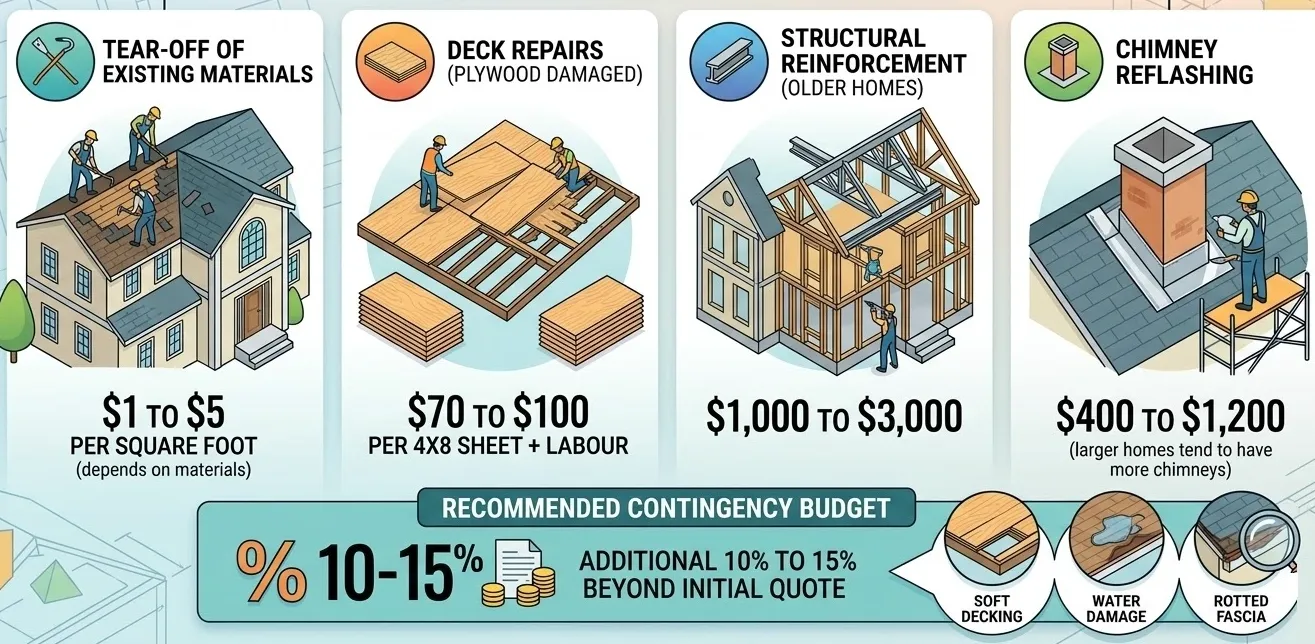
For larger projects specifically, watch for these cost additions:
- Tear-off of existing materials adds $1 to $5 per square foot depending on what’s already up there
- Deck repairs if plywood underneath is damaged run $70 to $100 per 4×8 sheet plus labour
- Structural reinforcement for older homes can add $1,000 to $3,000
- Chimney reflashing often costs $400 to $1,200, and larger homes tend to have more chimneys
Most contractors recommend budgeting an extra 10 to 15 percent beyond the initial quote for surprises that show up during tear-off. Soft decking, water damage, rotted fascia — you don’t know what’s hiding under the old roof until it’s gone.
Small Roofs Have Their Own Pricing Quirks
Smaller roofs cost less overall. Nobody’s arguing that. A 1,000 square foot bungalow isn’t going to hit the same dollar figure as a 3,000 square foot colonial. But the per-square-foot cost on a small project can actually run higher than a large one.
Why? The contractor still has to show up. Still has to bring a crew, haul materials, set up safety equipment, handle permits. Those fixed costs don’t shrink just because the roof does. On a small job, they get divided across fewer square feet, which pushes the unit price up.
Simple designs help offset this. A single-slope roof on a modest house with minimal penetrations (no skylights, one vent pipe, no chimney) is fast to install. Fewer cuts, fewer custom fittings, less waste material. A contractor can get a small, simple roof done in a day or two, which keeps labour costs manageable.
The sweet spot for small projects tends to be EuroShield’s more accessible product lines. Their Beaumont Shake and Harvest Shake profiles sit at the lower end of the pricing spectrum, while Vermont Slate and Heritage Slate command premium rates. Choosing the right profile for a small project can mean the difference between a $9,000 and a $14,000 bill.
What Actually Drives the Price Up (Regardless of Size)
Roof complexity matters more than most people realise. A 2,000 square foot roof that’s dead simple single level, moderate pitch, clean lines can cost less to install than a 1,500 square foot roof covered in dormers with a steep pitch and three skylights.
Pitch is a big one. Roofing labour costs climb with steepness because everything slows down. Steeper pitches need extra safety gear, crews move more carefully, and material handling gets harder. Medium-slope roofs (4/12 to 6/12 pitch) are fairly standard territory. Once you get above 7/12, expect premium pricing.
Euroshield roofing pricing also shifts based on your geographic location. Labour rates vary dramatically a roofing crew in rural Missouri charges less per hour than one in coastal California. Shipping costs for the panels factor in too, since EuroShield is a Canadian manufacturer and distance from distribution centres affects delivery pricing.
The product line you pick makes a real difference as well. EuroShield runs five profiles: EuroShake, Rundle Slate, Beaumont Shake, Harvest Shake, and Heritage Slate. The slate profiles that convincingly mimic natural stone cost more than the shake profiles. Premium profiles cost more per panel, but the visual difference is significant and since you’re looking at this roof for the next 50 years, the aesthetic choice carries weight.
The 50-Year Maths
EuroShield costs roughly 50% more than asphalt shingles upfront. That’s the number that makes people hesitate. But asphalt lasts 15 to 20 years on a good day. EuroShield’s warranty runs 50 years, non-prorated, with 2-inch hail coverage included. Their hail-proof (HP) models are warranted against hail of any size for the first 20 years.
Run the numbers on three asphalt replacements over 50 years versus one EuroShield installation and the picture changes. Factor in that EuroShield shingles can handle winds up to 160 mph, don’t crack in extreme cold, don’t warp, don’t rot, and resist UV degradation because of the high carbon content in recycled rubber. Maintenance is essentially cleaning with soap and water, plus checking for damage after major storms.
Insurance is another angle worth exploring. Because EuroShield products carry Class 4 impact resistance ratings (they’ve passed UL 2218 testing), many insurers offer discounts on premiums. The company also reports zero dollars in hail damage claims on their HP shingles to date. Your insurance company will care about that.
Getting the Quote Right
Whether your project is a small garage roof or a full residential replacement, the quote process matters. Get multiple estimates three minimum. Make sure each one breaks down materials, labour, tear-off, disposal, and any additional work separately rather than lumping everything into one number.
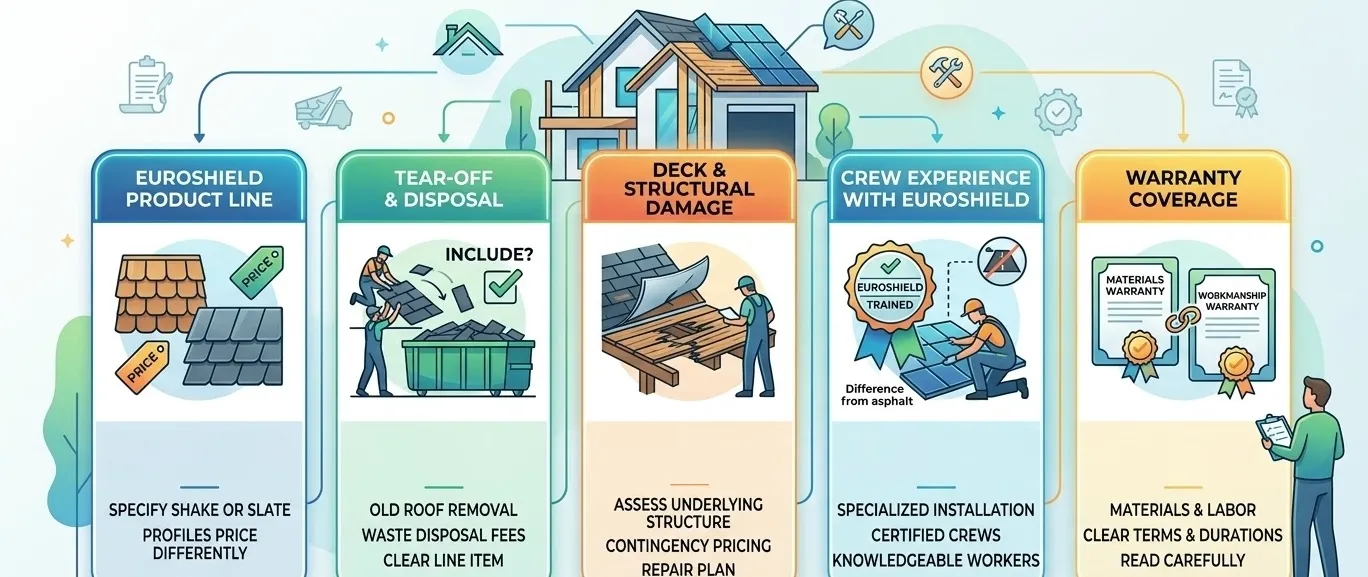
Ask specifically about:
- Which EuroShield product line they’re quoting (shake vs slate profiles price differently)
- Whether tear-off and disposal of old roofing is included
- What happens if they find deck damage or structural issues during tear-off
- Their experience with EuroShield specifically the installation isn’t identical to asphalt, and not every crew knows the product
- Warranty coverage on both materials and workmanship
EuroShield can be installed by contractors trained in asphalt shingle installation, which is a real advantage over metal roofing that requires specialised tools and training. But “can be” and “has been” are different things. A crew that’s done fifty EuroShield roofs will be faster, produce less waste, and catch fitment issues that a first-timer might miss.
The size of your roof determines the scale of the investment, but the quality of the installation determines whether that investment pays off over the next five decades. Bigger projects have more room for error and more opportunity for hidden costs to emerge. Smaller ones carry higher per-foot pricing but finish faster. Either way, the material only performs as well as the people putting it on.
 Decor & Improvement Accessories