

Home & Decor Blogs: DIY, Interior Design & Lifestyle Ideas
What Your Atlanta Rental Vacancy Rate Actually Says About Your Investment


Atlanta metro multifamily vacancy sits at 6.3 percent as of Q4 2025. Single family rentals track between 5 and 7 percent across most submarkets. Average lease time is 25 days for SFR, 28 days for multifamily.
If your number runs higher than that, you’re losing money in a way that compounds each month quietly.
What One Month of Vacancy Actually Costs You
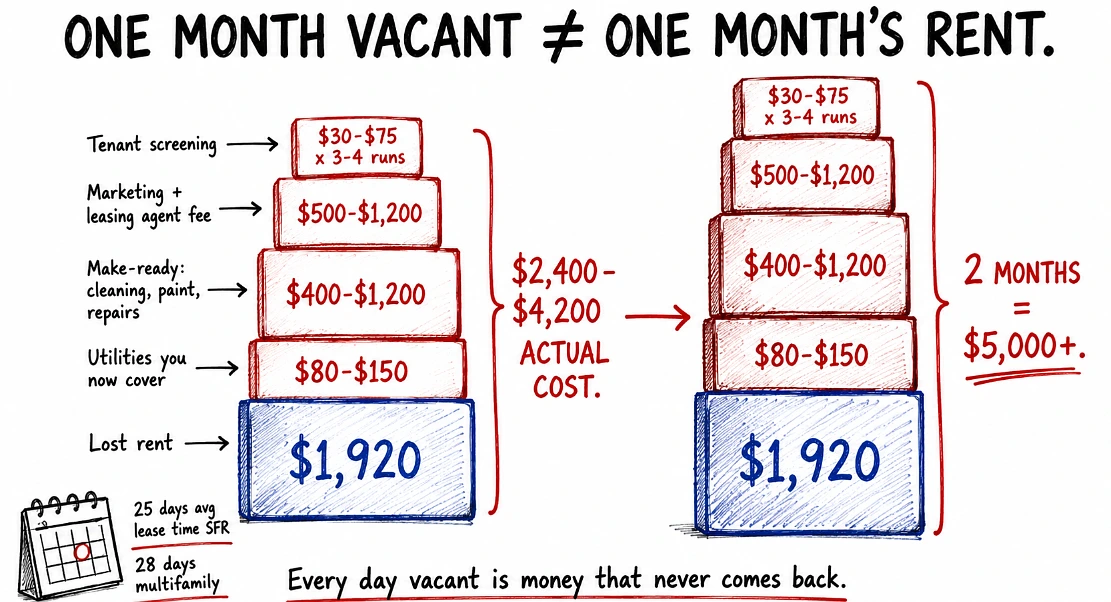
On a $1,920 Atlanta rental, one vacant month doesn’t cost you $1,920. It costs you closer to $2,400 to $4,200 when you add everything in:
- Lost rent: $1,920
- Base utilities you now cover: $80 to $150
- Make-ready between tenants: $400 to $1,200 (cleaning, paint touch-up, small repairs)
- Marketing and leasing: $500 to $1,200, or 75 to 100 percent of one month’s rent if you use a leasing agent
- Tenant screening: $30 to $75 per application, often three or four runs before placement
Two months vacant pushes you past $5,000 in actual cost.
How to Calculate Your Vacancy Rate
Single property: Days vacant divided by 365, multiplied by 100. A unit empty for 30 days last year = 8.2 percent vacancy rate.
Multi-unit time-based: Total vacant days divided by total rentable days across all units, multiplied by 100. One unit empty 90 days in an 8-unit building = 3.1 percent.
Multi-unit snapshot: Empty units divided by total units. One unit empty in an 8-unit building = 12.5 percent at that moment.
Lenders want time-based numbers. Buyers want snapshot numbers. Track both.
What a Healthy Atlanta Vacancy Rate Actually Looks Like
National average: 5 to 8 percent
Atlanta metro multifamily: 6.3 percent (Q4 2025)
Atlanta 5-year average: 5.7 percent
Tight Atlanta submarkets: 4 to 5 percent
Oversupplied Atlanta submarkets: 8 to 10 percent
The typical vacancy rate for rental property falls within the 5 to 8 percent range, but Atlanta submarkets vary widely. Buckhead and Midtown lease faster than Sandy Springs. Older Class B and C stock in outer counties runs higher than newer suburban builds.
Why Atlanta Vacancy Is Climbing Right Now
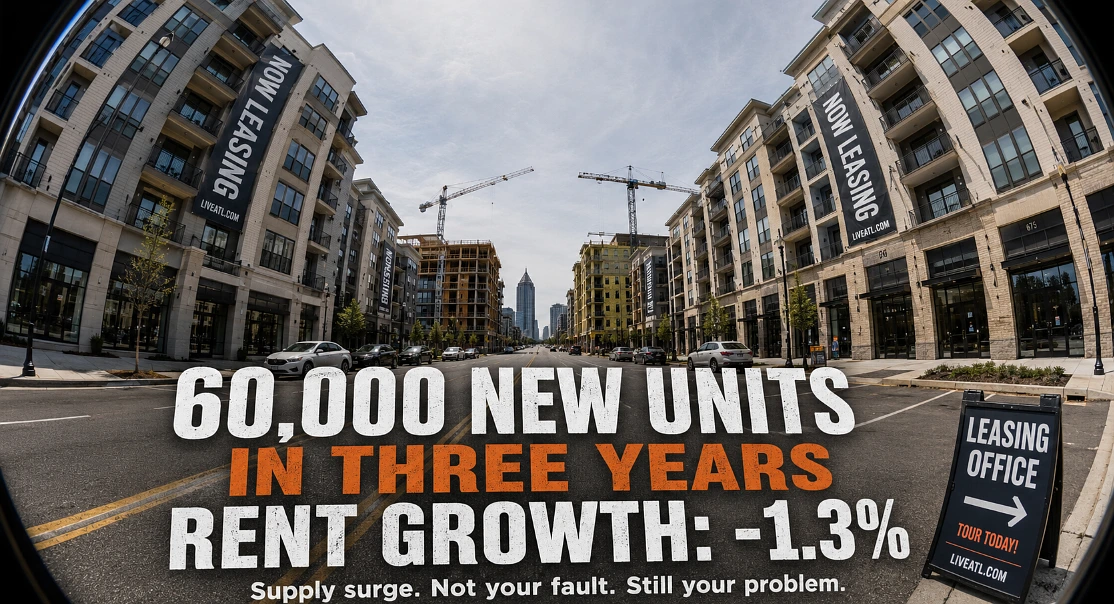
The metro absorbed roughly 12,500 to 15,000 new multifamily units in 2025, on top of similar deliveries in the two years prior. Total supply expansion over the 2023 to 2025 cycle exceeded 60,000 units. Annual rent growth went negative, sitting at -1.3 percent in Q4 2025.
That supply surge depresses vacancy performance across submarkets even when individual properties are fine. If your rate is climbing, check how many new units have come online within 5 miles of your property over the last 18 months.
Five Things That Actually Move Your Vacancy Rate
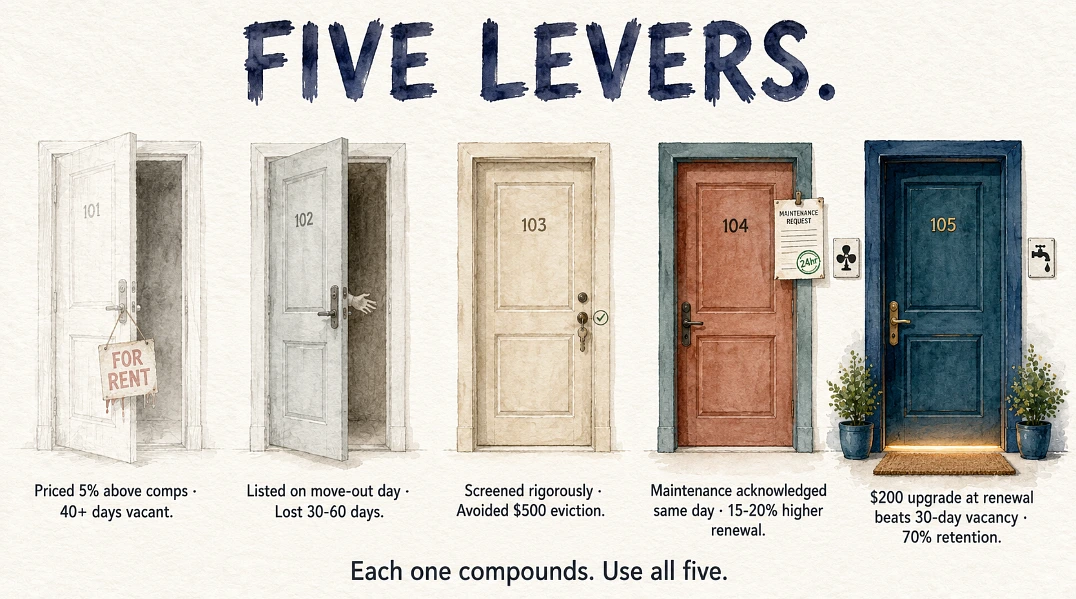
1. Price against real comps, not aspirational ones.
A unit priced 5 percent above market comps in East Atlanta sits vacant 40 plus days. The same unit at 3 percent below comps leases in 9 days.
2. Market before the current tenant moves out.
Most leases require 30 to 60 days’ notice. List the day you receive notice. Don’t wait until move-out day.
3. Screen rigorously even when desperate.
Georgia eviction costs $500 plus court costs and takes 6 to 8 weeks minimum. A bad placement costs more than a longer vacancy.
4. Respond to maintenance within 24 hours.
Same-day acknowledgement, not same-day repair. Tenants whose requests get fast acknowledgement renew at rates 15 to 20 percent higher than the market average.
5. Build small upgrades into renewals.
A $200 ceiling fan or kitchen faucet at renewal costs less than a 30-day vacancy. Systematic small concessions push retention toward 70 percent, which destroys vacancy mathematically.
When Hiring a Manager Makes Mathematical Sense
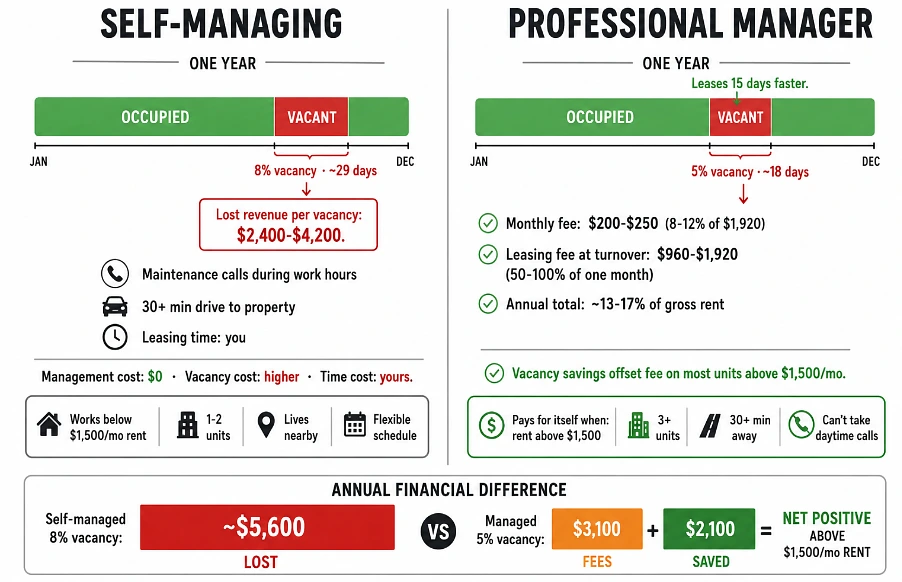
Atlanta property management fees: 8 to 12 percent of monthly rent
Leasing fees: 50 to 100 percent of one month’s rent on new placements
Total annual cost: roughly 13 to 17 percent of gross rent
On a $1,920 unit, that’s $200 to $250 monthly plus leasing fees at turnover.
The math favors hiring an Atlanta property manager when:
- Rent above $1,500 per month
- You live more than 30 minutes from the property
- You can’t take maintenance calls during work hours
- You have 3 or more units
A manager who leases 15 days faster than you can, and reduces annual vacancy from 8 percent to 5 percent, pays for themselves on most properties above that rent threshold.
What Your Vacancy Rate Is Telling You
Long vacancy, plenty of applicants: Your pricing is wrong.
Plenty of applicants, none qualify: Your screening or your marketing is reaching the wrong audience.
Tenants leaving at lease end: Your retention is broken. Either maintenance is slow or renewal increases are too aggressive for what tenants see in competing properties.
High turnover, short leases: You’re placing the wrong tenants under pressure to fill vacancies fast.
Track your rate monthly. Compare to your specific submarket, not the Atlanta or national average. When it moves in the wrong direction, identify which lever is broken before assuming it’s the market.
 Decor & Improvement Accessories