

Home & Decor Blogs: DIY, Interior Design & Lifestyle Ideas
Where in Canada to Find Spacious Family Homes With Open-Concept Layouts


Canada’s current national average residential house price stands at approximately 673,000 Canadian dollars, but this baseline data is almost entirely uninformative for homebuyers seeking to purchase a single-family detached home that is over 2,500 square feet in size and features an open main-floor layout. Price disparities across regions are extremely wide: such properties in Milton cost more than 1 million Canadian dollars, while equivalent homes in Edmonton cost less than half that amount; even larger versions of this same type of residence can be bought for even lower prices in small, niche communities in other provinces.
Here is the fast-forward if you want the numbers before the detail:
| City | Avg. Detached Price | Market Type | Months of Supply | Gender/First-Time Concessions |
|---|---|---|---|---|
| Chippawa, Niagara Falls | Low to mid-$500,000s | Balanced | ~3 | N/A |
| Milton, ON | $1M–$1.4M | Buyer’s (36% SNLR) | ~4 | N/A |
| Burlington, ON | ~$1.45M | Balanced | ~3 | N/A |
| Ottawa, ON | ~$698,400 (benchmark) | Balanced (3.3 mos.) | 3.3 | N/A |
| Calgary, AB | ~$642,000 (all types) | Seller’s | 2.8 | No provincial sales tax |
| Edmonton, AB | ~$471,000 (all types) | Seller’s | 2.8 | No provincial sales tax |
| Halifax, NS | ~$610,000 (all types) | Balanced | 4.8 | N/A |
Prices reflect early-to-mid 2026 data from CREA, local boards, and MLS sources. “All types” means the average includes detached, semi, townhomes, and condos — detached-only figures run higher.
This is a breakdown of seven communities across the country where spacious, open-concept family homes are actually the standard — not the exception. Each one includes what detached homes are actually selling for right now, what the neighbourhood is like for families, and what trade-offs come with the price.
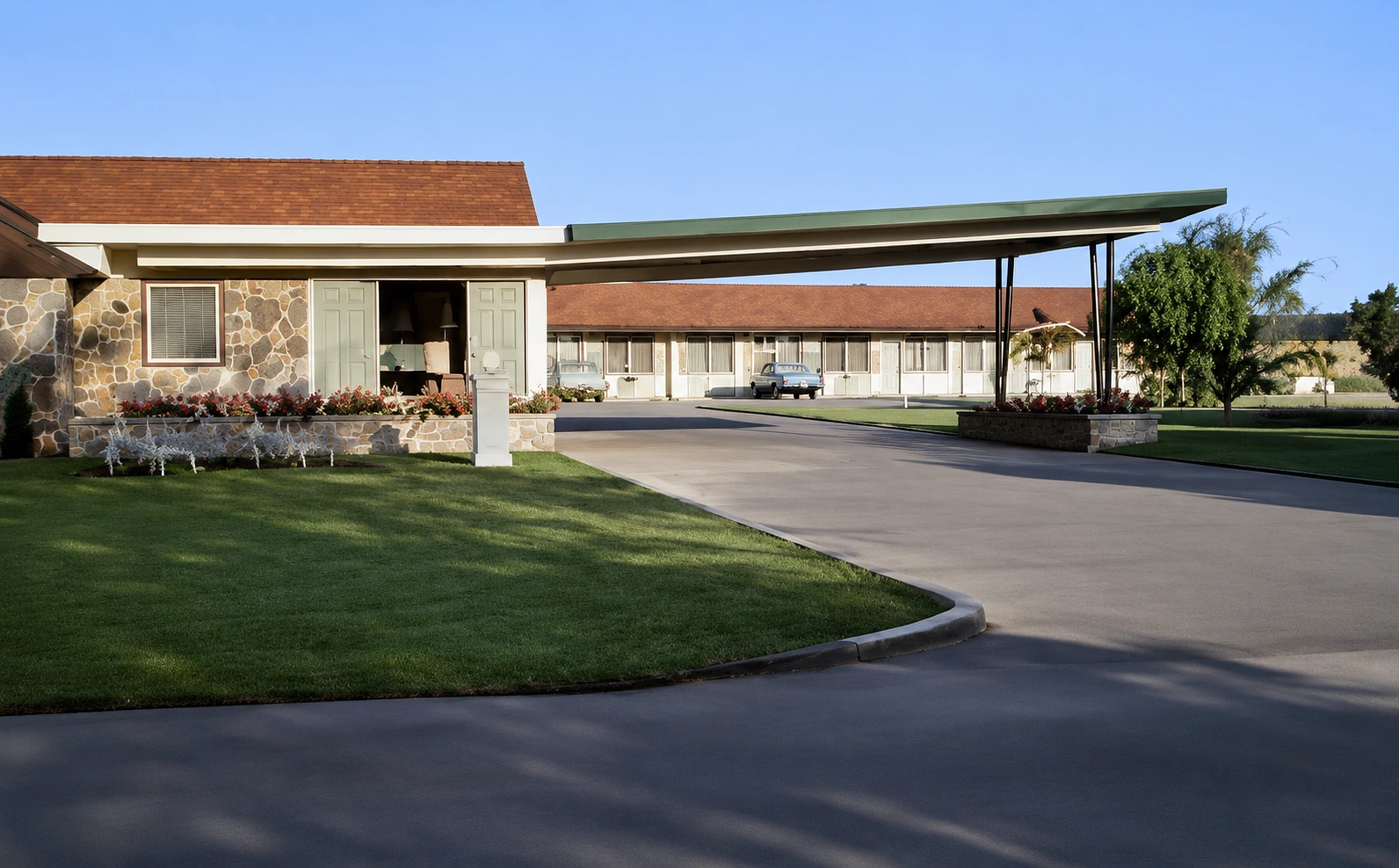
Chippawa, a small residential village located in Niagara Falls, Ontario, Canada, sits
Along the Welland River, roughly 2 kilometers upstream of Chippawa in Niagara Falls. Its atmosphere is completely distinct from that of the area’s well-known tourist strip. The average price of a single-family detached home in this village
is around 500,000 Canadian dollars, with most listed prices falling between 530,000 and 670,000 CAD, fluctuating based on a property’s age and size. Local housing prices are only half those of similarly sized properties in Milton and Burlington, and this huge price gap often surprises people who learn about the area for the first time. Properties sell in about three weeks on average, and most go for around 98% of the asking price — so it is not a distressed market, it is just genuinely more affordable than the GTA corridor.
The housing stock splits into two categories. The older village core along Main Street has classic single-family detached homes on generous lots, tree-lined streets, century homes mixed with mid-century bungalows. Then on the southern edge near Lyon’s Creek, newer subdivisions like Lyon’s Creek Estates have gone up with modern family homes — open-concept main floors, connected kitchen-living-dining layouts, the contemporary finishes that most families moving from GTA-area condos or townhomes are looking for.
What makes it work for families specifically is the density, or rather, the lack of it. Lots are wider. Backyards are actual backyards. Streets are quieter than anything you will find at the same price point inside the GTA, and kids are zoned into the District School Board of Niagara, which runs solid K-12 programs. Niagara Falls proper is minutes away from anything you need, and the QEW connects you to Hamilton and the broader GTA if commuting is part of the equation.
The trade-off is obvious — it is not Toronto, it is not even Burlington. If your job requires you in a downtown Toronto office five days a week, the commute does not work. But for remote or hybrid workers, or families where one or both parents work in the Niagara-Hamilton corridor, the math here is hard to argue with.
Milton — GTA Suburb Where Detached Homes Still Exist, But the Price Has Caught Up
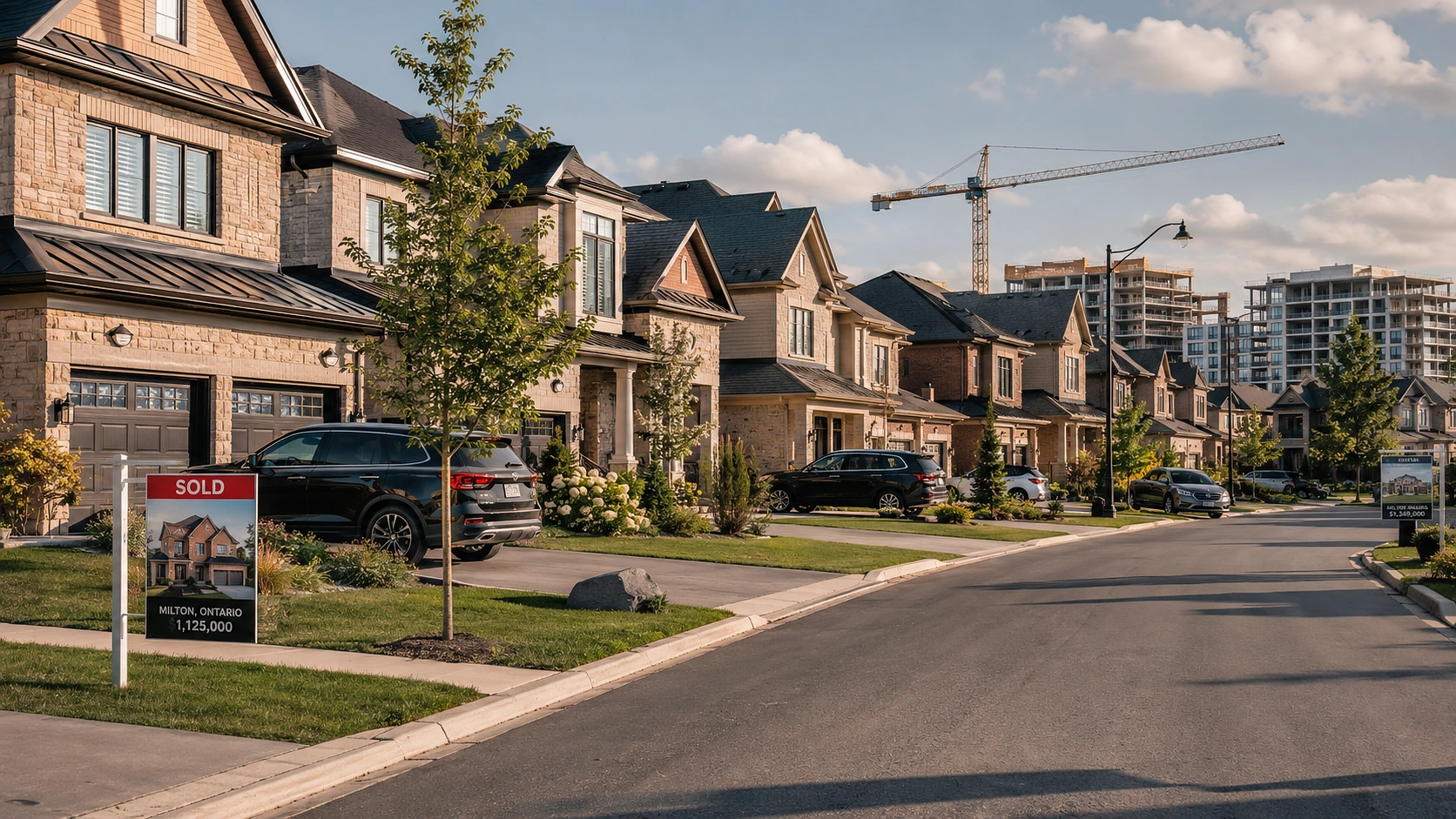
Milton grew faster than almost any community in Canada over the last fifteen years. The population roughly doubled since the mid-2000s, and most of that growth came as young families priced out of Mississauga and Oakville pushed west along the 401 looking for detached homes they could actually afford.
That affordability advantage has narrowed considerably. Detached homes in Milton are averaging around $1 million to $1.2 million right now, with newer or larger builds pushing toward $1.4 million. The median across all property types sits in the high $900,000s. Townhomes are running $750,000 to $900,000. Homes are spending about 25 to 30 days on market, and the market has shifted into buyer-friendly territory with a sales-to-new-listings ratio around 36%, so there is room to negotiate that did not exist two or three years ago.
The neighbourhoods families tend to land in are Hawthorne Village and Willmott — both planned residential communities built from the mid-2000s onward. Because the housing stock is relatively new, open-concept main floors are standard rather than something you have to renovate into existence. Connected kitchen, dining, and living areas, nine-foot ceilings on the main level, larger windows — these are builder defaults in Milton’s newer subdivisions, not upgrades.
Milton, situated in the western part of the Greater Toronto Area, is connected to Toronto Union Station via a direct GO Transit commuter rail line. Its commuter convenience far outpaces that of neighboring Burlington and Hamilton, and it also offers easy access to the core Highway 401 and Highway 407. Parks and natural reserves are scattered across the surrounding area. However,
housing prices in Milton have now risen to match the general level of the Greater Toronto Area. The once low-priced suburban detached homes in the city now cost more than one million Canadian dollars. When combined with current mortgage interest rates, this expense is unbearable for most families. That said, if you prioritize your need to commute to Toronto over maximum cost-effectiveness per unit area, Milton remains one of the high-quality options for homebuyers in the western Greater Toronto Area.
Burlington — Lake Ontario Access, Established Neighbourhoods, and a Price Floor That Reflects It
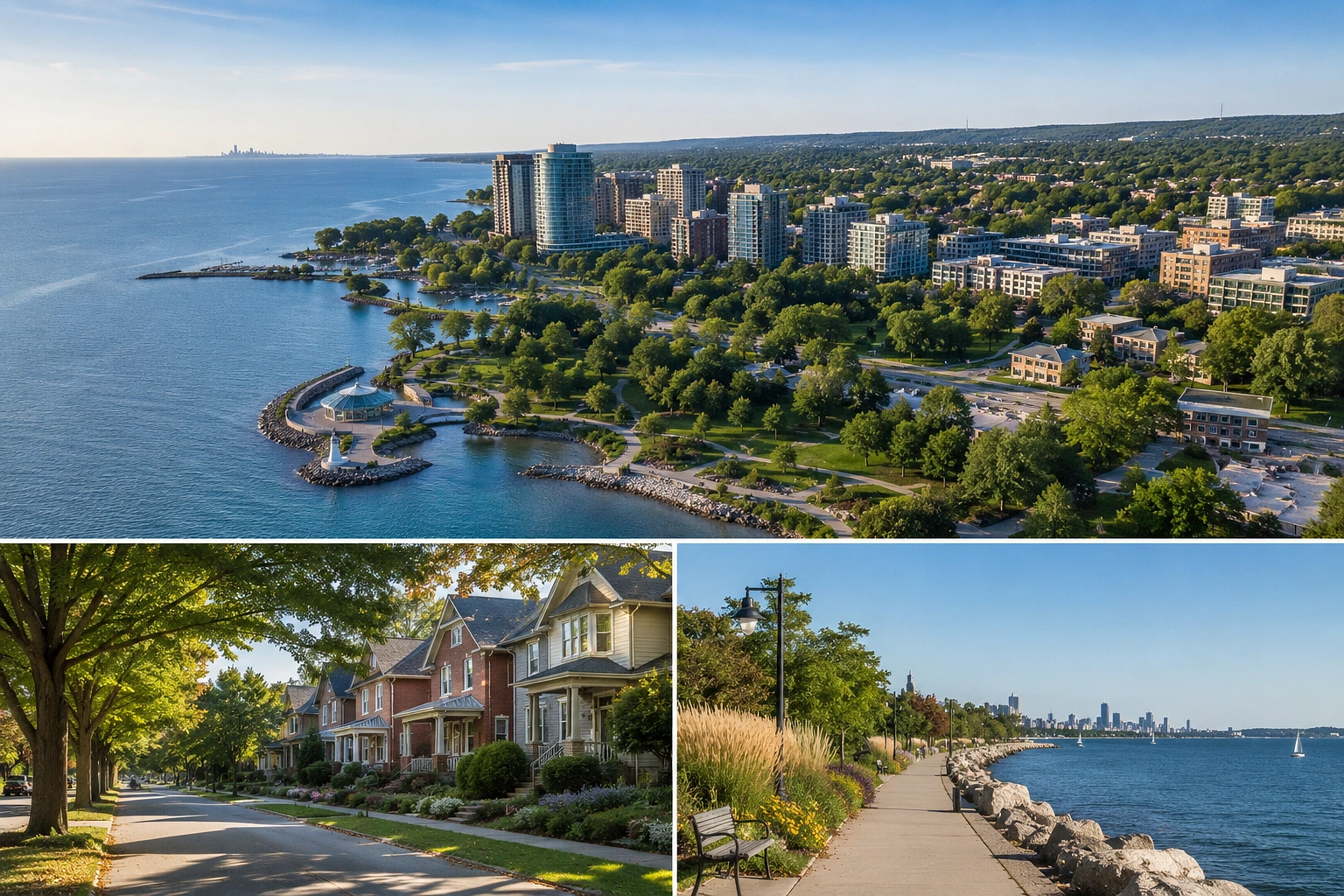
Burlington is the city people move to when they want the GTA commuter access but are done with the density. The average home price here sits around $1.1 million across all types, with detached homes averaging closer to $1.45 million. The median for single detached in the broader Hamilton-Burlington market is around $784,000, but that number includes Hamilton proper — Burlington on its own runs higher.
In Burlington, Canada, two residential neighborhoods, Alton Village and Millcroft, are the most sought-after locations for families seeking modern open-concept single-family detached homes. Even during periods of weak market performance, reasonably priced semi-detached and entry-level properties in Alton Village still occasionally attract multiple groups of competing bidders. Millcroft, which was developed earlier and has full, mature supporting amenities, features large
lot sizes and well-established landscaping that cannot be replicated by newly developed zones. Bordering its neighboring municipalities of Milton and Oakville, Burlington holds unique Lake Ontario waterfront amenities including Spencer Smith Park, a waterfront trail, and Beachway Park, which deliver extremely high value for families with children that regularly use outdoor spaces.
Central Burlington has been flagged by RE/MAX as one of the most desirable neighbourhoods in the Hamilton-Burlington region heading through this year, combining walkability with a small-town community feel that is increasingly rare at this price point. The real estate market overall has settled into balanced territory, homes spending about 27 days on market and selling at roughly 97% of asking price.
The trade-off: Burlington is expensive and does not pretend otherwise. If you need 2,500+ square feet of open-concept family home on a detached lot, you are looking at well over a million dollars. For families specifically comparing Burlington against communities further from the GTA, the price gap is substantial.
Ottawa — Federal Government City With Suburban Sprawl That Actually Works for Families
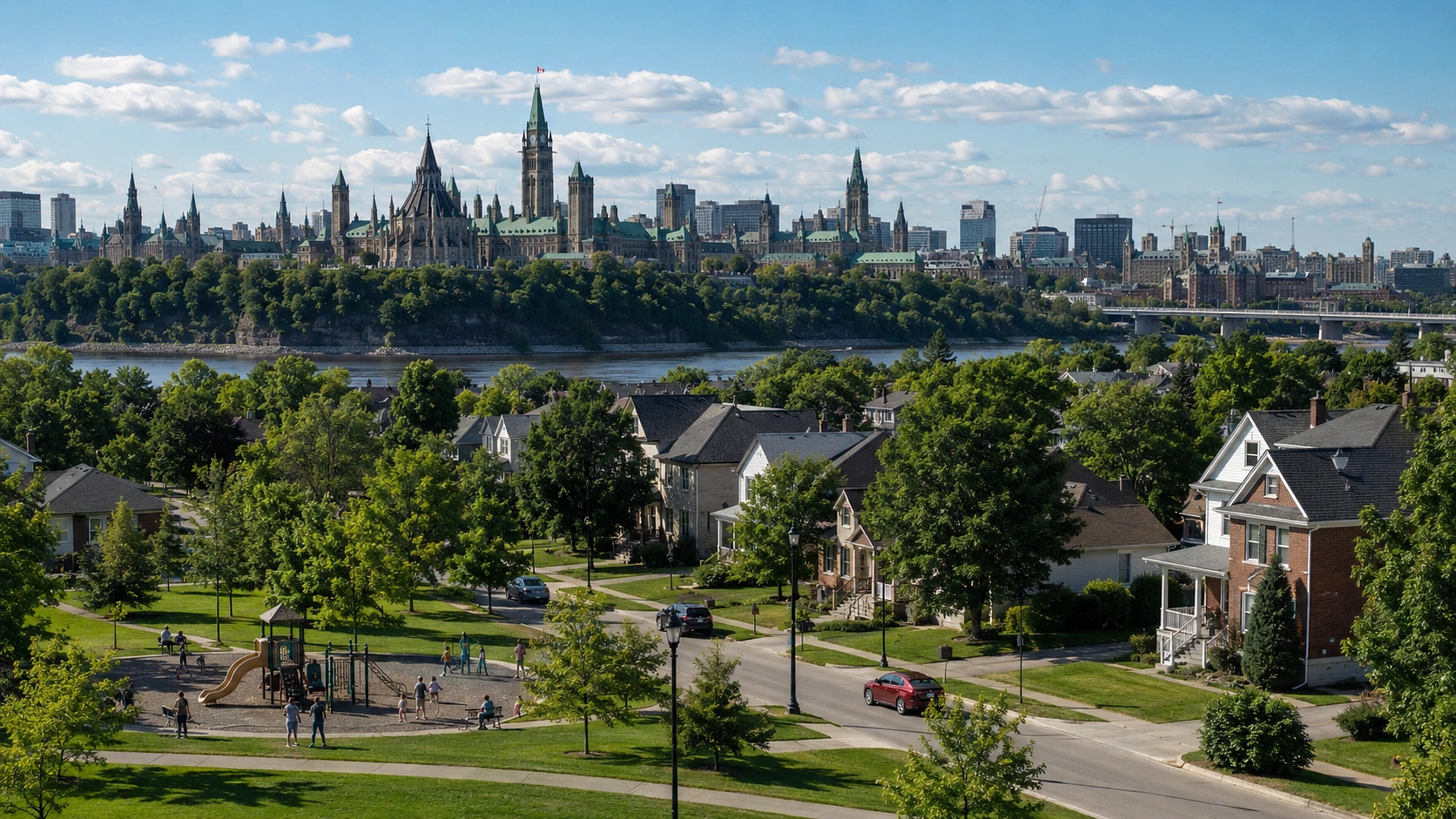
According to the latest Canadian real estate data, the current benchmark residential price in Ottawa is approximately 630,000 Canadian dollars. The interior floor area that can be purchased for the same price in the Greater Toronto Area
(GTA) is far smaller than that available in Ottawa, which highlights the high cost-effectiveness of housing in this core Canadian city. The three major suburban communities favored by local homebuying families each have unique core strengths: Barrhaven is a newly planned community with supporting amenities completed in advance, and all its units adopt open layouts; Kanata, supported by the northern science and technology park, gathers families of tech industry workers; Orléans straddles the border between Ontario and Quebec, and has a one-of-a-kind bilingual community atmosphere.
CMHC has flagged Ottawa as one of the slower-recovery markets this year, partly because the federal government’s labour market has softened. That is actually good news for buyers — it means less competition and more negotiating leverage than you would find in Calgary or Edmonton right now. Housing starts are expected to decrease from their recent highs, but the inventory of family-sized detached homes in the outer suburbs remains solid.
Lots tend to be larger than GTA equivalents at the same price. Yards are usable. The pace of life in Ottawa’s suburbs is noticeably slower than anything in the Toronto-Hamilton-Niagara corridor, and for families that is usually a feature, not a bug.
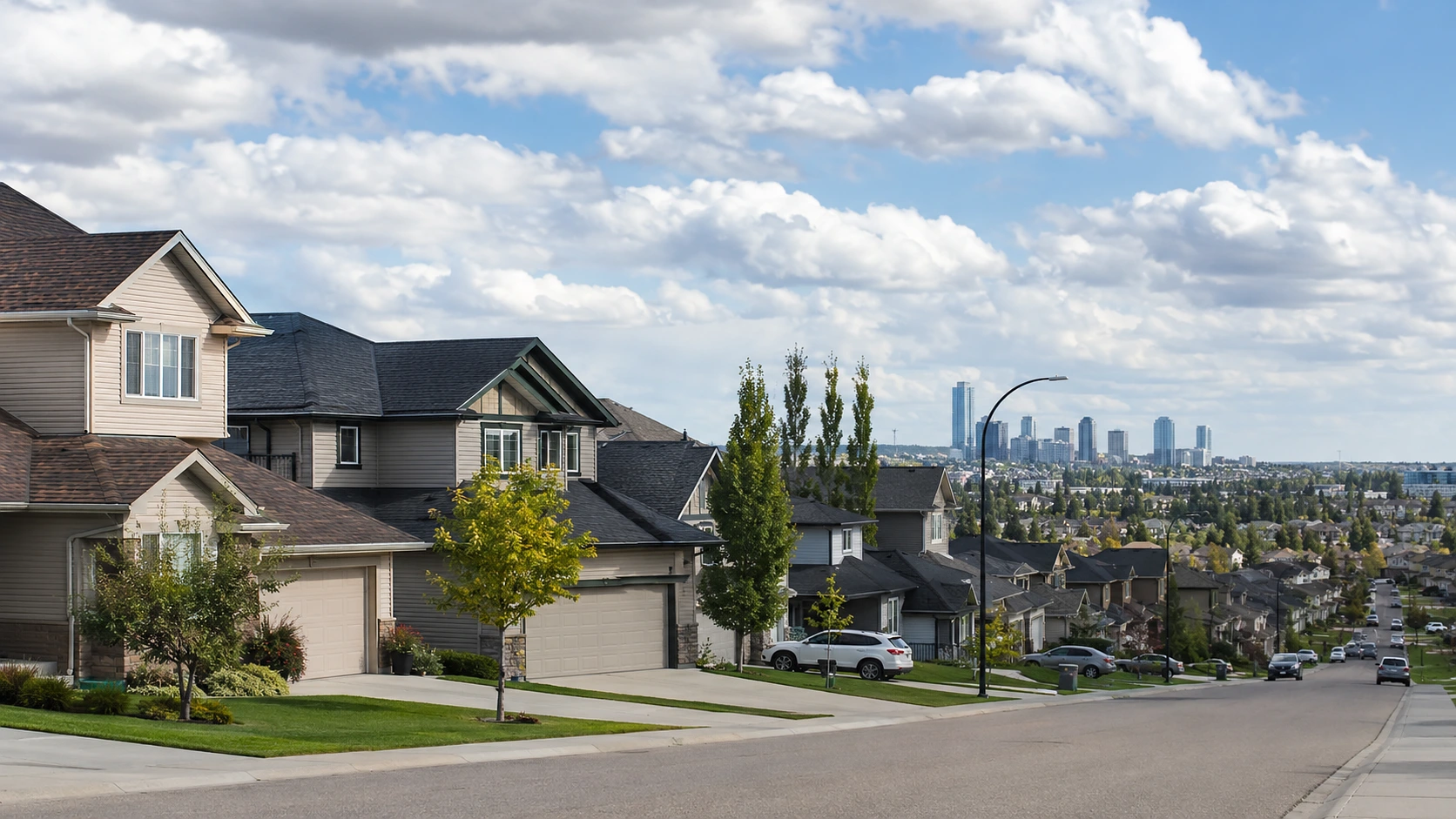
Calgary — Strong Economy, Modern Builds, and a Market That Is Still a Seller’s Market
Calgary’s average home price is around $642,000, up slightly year-over-year. The city is running at just 2.8 months of supply right now, which makes it one of the tightest housing markets in the country — not the easiest environment for buyers, but an indicator of how much demand exists.
The master-planned communities that families gravitate toward are Evanston, Sage Hill, and Legacy, all in the northern and southern suburban rings. These are relatively new developments — most homes built within the last ten to twelve years — which means open-concept layouts, higher ceilings, larger kitchens, and multiple living areas are standard builder specs rather than something you have to gut-renovate an older home to achieve.
Calgary’s value proposition compared to the GTA is straightforward: you get a bigger, newer home for significantly less money. A detached home that costs $1.2 million in Milton can often be matched in square footage and finish quality in Calgary for $600,000 to $700,000. Alberta also has no provincial sales tax, which affects the ongoing cost of living beyond just the mortgage.
CMHC’s outlook notes that Calgary’s housing starts will remain high but ease from the recent surge, with ground-oriented starts declining modestly. Rental vacancy rates are rising as new purpose-built rental supply enters the market, which indirectly benefits buyers by reducing some of the investor-driven competition for family-sized homes.
The trade-off is distance from Ontario. For families relocating from the GTA, Calgary means leaving behind proximity to extended family, established social networks, and the familiarity of Ontario’s systems. The interprovincial migration from BC and Ontario into Alberta has been one of the strongest trends in Canadian real estate recently, but it is still a big move.

Edmonton — The Most Affordable Major City for Large Family Homes, Full Stop
Edmonton’s average home price is around $471,000. The benchmark sits at roughly $414,000. Those numbers make it the most affordable major Canadian city for detached family housing by a significant margin.
What that money buys in Edmonton is genuinely surprising to anyone coming from Ontario. Detached homes in the suburban communities of Windermere, Summerside, and Laurel regularly offer 2,500 to 3,800 square feet of living space — open-concept main floors, high ceilings, large windows, double or triple attached garages. These are not entry-level starter homes, they are full-sized family residences, and they cost less than a townhome in Milton.
Edmonton shares Calgary’s tight market conditions at 2.8 months of supply, but prices have been increasing at a more modest pace — about 2.2% year-over-year. CMHC expects average prices to rise marginally through this year, with the resale market seeing modest declines from recent highs. For buyers, that translates to a market that is competitive but not frenzied.
Modern builders in Edmonton’s newer communities focus heavily on what gets called “family-first design” — main floor layouts where kitchen, dining, and living areas flow together without walls breaking up the sight lines, mudrooms sized for actual families rather than a single coat hook, and bonus rooms or flex spaces on the upper floor that adapt as kids grow.
The honest limitation is winter. Edmonton’s climate is genuinely harsh — long, cold winters that affect everything from energy costs to daily routines. Families relocating from milder regions underestimate how much that shapes daily life. The other consideration is the economy’s dependence on the energy sector, which creates employment volatility that Ontario’s more diversified economy does not have to the same degree.
Halifax — Atlantic Canada’s Growing Suburban Market at a Price That Still Surprises
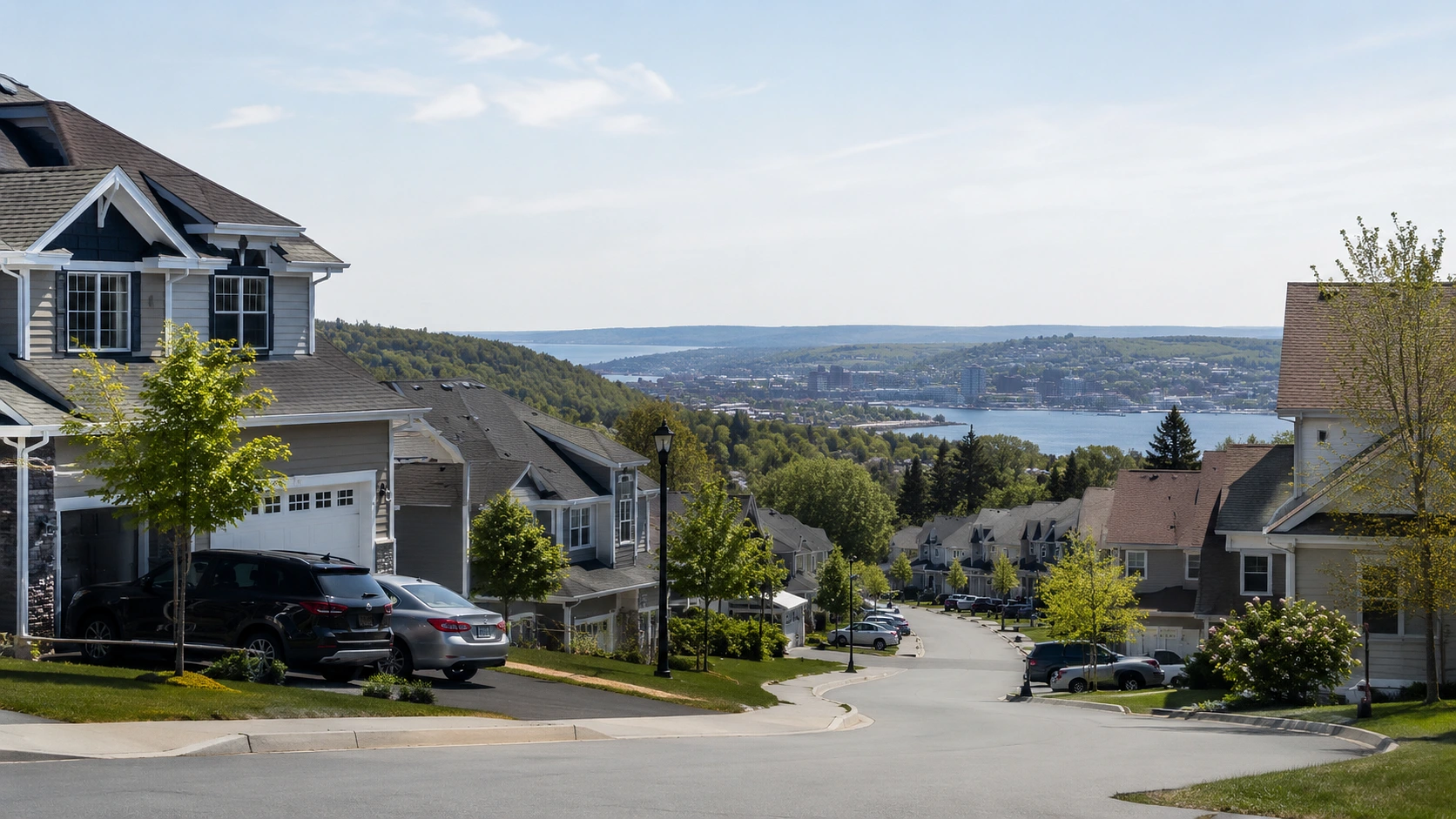
Halifax’s average home price has risen to around $610,000, up modestly year-over-year. With roughly 4.8 months of inventory, the market sits in relatively balanced territory — not as tight as Alberta, not as soft as parts of Ontario.
The suburban communities drawing family buyers are Clayton Park West, Timberlea, and Bedford. Newly built detached homes in these areas typically range from 2,400 to 3,200 square feet, with open-concept layouts where kitchen, dining, and family rooms connect across the main floor. Local builders have leaned heavily into spacious, layout-driven family housing in these communities, partly because the buyer demographic skewing toward families relocating from more expensive provinces has created consistent demand for exactly that product.
Halifax’s appeal for families goes beyond the price. Analysis of this study’s ranking of Canada’s livable cities shows that Halifax has a gentle pace of life and short commute times, with direct access to coastlines, provincial parks, and hiking trails. Its natural accessibility is only slightly inferior to that of Niagara. However, it has a relatively small urban scale, a limited job market, and its cultural and retail supporting facilities lag behind those of Toronto,
Calgary, and Ottawa. For families that take living space per unit cost and quality of life as their core settlement criteria, Halifax is a top-tier domestic livable choice in Canada. Even so, its current advantages—housing prices below the national average and an abundant supply of newly built large-sized housing units—will not persist, as growing interprovincial migration flows are gradually eroding these benefits.
The numbers tell the real story better than any general advice about “finding spacious homes.” Edmonton and Chippawa sit at one end of the price spectrum, offering the most square footage per dollar spent. Milton and Burlington sit at the other end, where you are paying a GTA premium for commuter access and established infrastructure. Calgary, Ottawa, and Halifax fall in between, each with a different balance of price, economy, climate, and lifestyle. Where the right fit is depends entirely on what your family actually needs day to day — not just what the house looks like in photos.
 Decor & Improvement Accessories