

Home & Decor Blogs: DIY, Interior Design & Lifestyle Ideas
Economy Home Décor: Circular Design for Sustainable Style

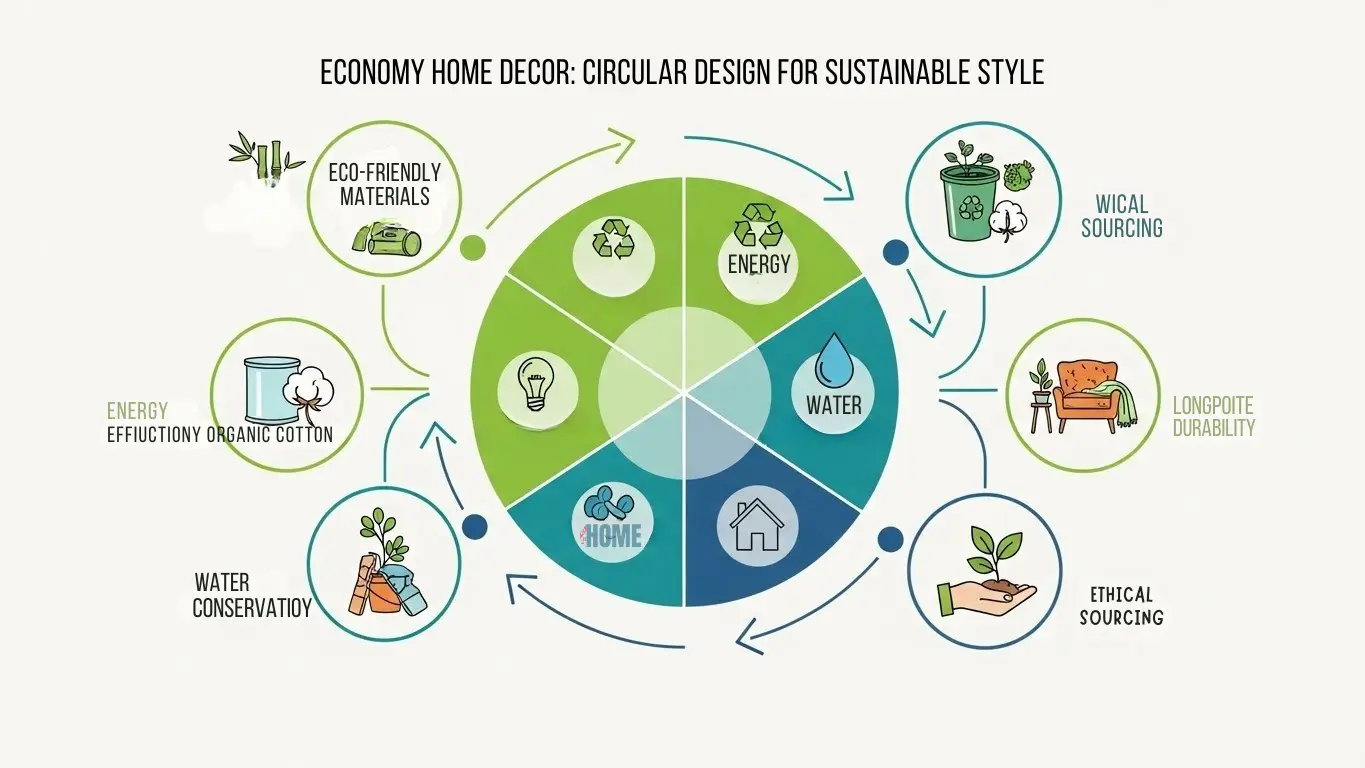
Economy home décor paired with circular design flips that whole mess on it’s head. You buy things that last. Fix what breaks. When you’re done with a piece, someone else gets it, not the curb. The EPA’s circular economy model has a fancier way of saying this: keep materials at their highest value for as long as possible. But really it just means your home ends up looking better and costing less over time. Not per purchase, over time. That’s the part most people miss.
How we buy furniture has changed.
Americans throw out over 12 million tons of furniture a year. The EPA tracked it, 80% goes straight to landfill. That number has ballooned 450% since 1960, which is wild when you think about it. The population hasn’t grown anywhere near that fast. So what changed?
What Does “Circular Design” Even Mean?
Three ideas, according to the Ellen MacArthur Foundation. Eliminate waste. Keep materials in use. Regenerate natural systems.
Sounds academic. It’s not.
You’ve got a scratched-up dining table. Do you junk it or grab sandpaper? That’s literally the whole concept. Your grandparents didn’t need a foundation to tell them this, they re-upholstered the couch instead of replacing it, passed the kitchen table down to whoever got married next. Nobody had a term for it. Furniture just wasn’t something you threw away.
The EPA started formalising this into federal policy back in 2021. Their furniture recycling numbers, though? Brutal. Think about what’s inside a single couch, wood, metal, foam, synthetic fabric, staples. Tearing all that apart for recycling costs more than any of those separated materials are worth. So nobody does it. Landfill wins.
Which is exactly the problem circular design tries to dodge entirely.
The $120 TV Stand Trap
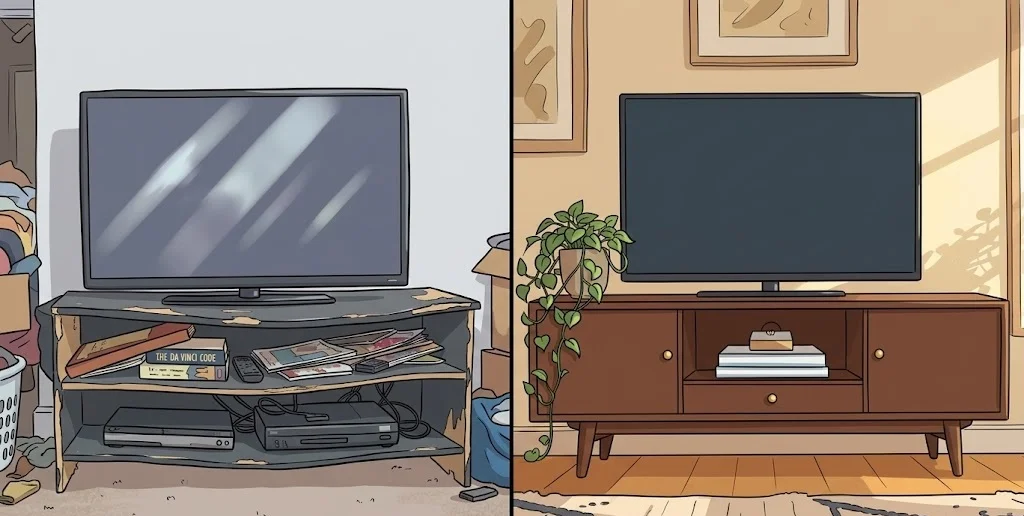
A friend, I’ll call her Sara, bought a TV stand off one of those big online furniture sites. It looked great in the photos. Within a year the shelves were bowing under a few paperbacks. She replaced it. Same brand, different model, same result.
The third time she went to Facebook Marketplace instead. Paid $180 for a solid wood console caked in ugly teal paint. Sanded it down one Saturday, walnut stain, brass knobs from a hardware store. Maybe $30 in supplies. Three years later it’s still the best piece in her living room.
The maths: three disposable stands cost $360. Sara’s console cost $210 total. And hers isn’t going anywhere.
IKEA figured this out too. Their Buy Back and Resell has now been a permanent program in 37 stores of the United States – bring your used furniture, earn store credit, your furniture is resold in the As-Is section. Over 430,000 items went through it in 2023. They have a second hand only store in Sweden which they opened in 2020 and want to be fully circular by 2030. When the world’s biggest furniture company builds infrastructure to buy it’s own products back, that tells you where the industry is headed.
What to Actually Look For in Materials
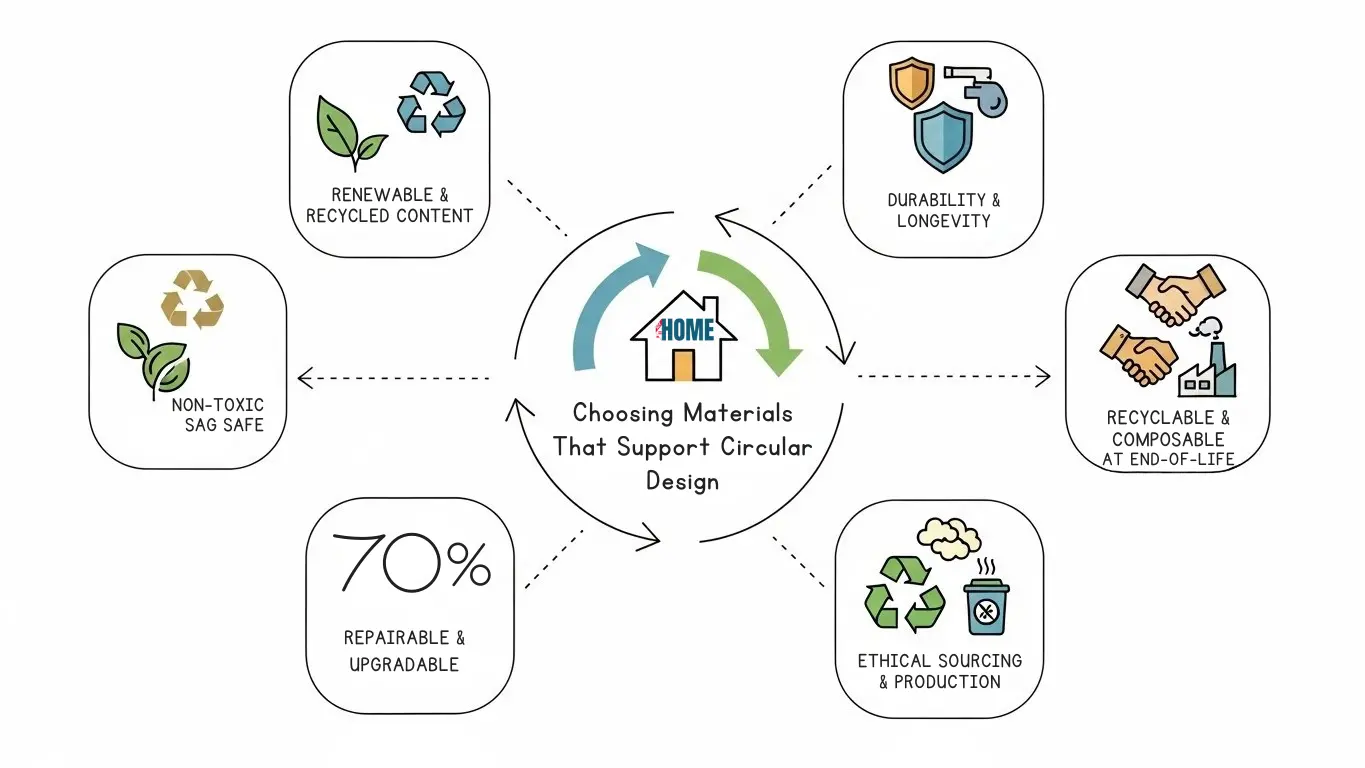
Oak. Walnut. Teak. Maple. Wrought iron. Steel. Boring list, maybe. But these materials get refinished over and over. A 1985 dresser with water rings? Sand it, stain it, swap the hardware. Weekend project. Looks like you paid custom money for it.
The particleboard can’t do any of that. Moisture gets under the laminate and it always does and the whole thing swells from the inside. MDF is the same. Once it starts crumbling, it’s done. No rescue.
Metal deserves more attention than it gets. Steel dents instead of shattering. According to Kyle Brotherton General Manager at Brotherton Painting you can spray-paint an old metal chair in an afternoon. Wrought iron bed frames outlive the house they’re in. The market reflects it, metal is the fastest-growing secondhand segment at 6.15% annual growth through 2030. Wood already dominates, pulling 39% of resale revenue in 2023.
Chipped ceramic? Look up kintsugi. Japanese technique, fill the cracks with gold-laced lacquer. The piece ends up more interesting than before it broke. Starter kits run $25. YouTube has dozens of walkthroughs.
Glass is the exception here. Looks clean, wipes down fast, works in tight spaces. But cracked glass is just… cracked glass. No fix. If you go that route, protect it, felt pads, smart placement, away from wherever the kids do art.
Upcycling: The Part Where You Get Creative
Upcycling isn’t recycling. Recycling breaks materials down. Upcycling takes the thing as-is and turns it into something better.
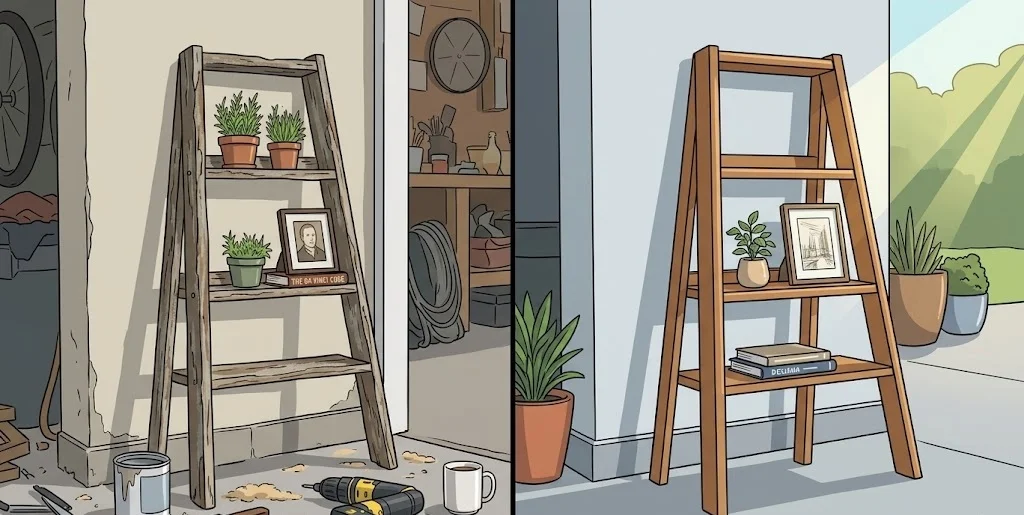
Old wooden ladder collecting dust in the garage? Lean it against a bedroom wall, instant towel rack. Or a bookshelf. A beat-up dresser with solid bones? Rip the top drawers out, drop a sink basin in. Bathroom vanity for under $100. People pay contractors thousands for that exact look.
You don’t need to be handy. Chalk paint on a tired side table. New fabric stapled over worn chair cushions. Mason jars with labels soaked off become herb planters. None of this requires a workshop or special skills.
The real appeal? No two upcycled pieces look the same. They can’t. That’s what makes them interesting and why guests always ask about them.
Thrifting: Where the Good Stuff Actually Lives
This isn’t a niche hobby anymore. The global secondhand furniture market crossed $40 billion in 2024. Growing at 8% a year. Nearly 90% of Americans say they’d look at used options before buying new. That’s not a trend, that’s a permanent shift in how people shop.
Estate sales are the real goldmine. Thrift stores too. Facebook Marketplace, Craigslist, solid wood tables and mid-century chairs end up there constantly. Built better than anything arriving flat-packed today, at a fraction of the price.
Here’s what matters when you’re browsing: ignore cosmetics. Paint changes. Fabric swaps out. Hardware costs nothing. Focus on bones. Push on the frame, does it wobble? Tap the surface, real wood sounds dense, laminate sounds hollow.
Best find I’ve heard about? Solid walnut dining set at Goodwill. Seventy-five bucks. The original owner paid fifteen times that.
Repair First. Replace Almost Never.
Wobbly chair leg? That’s a loose joint. Wood glue, a clamp, twenty minutes. Fixed.
We’ve been trained to see damage as a reason to buy something new. It almost never is. Scratch on a wood surface? Rub walnut oil into it, the oils darken the exposed grain and the mark basically disappears. Loose hinge screws? Stuff the hole with a toothpick dipped in wood glue, let it set, re-drive the screw. Holds better than it did originally. Sagging sofa cushions? Replacement foam costs $30-50. Cut it to size with a bread knife. Not kidding.
Something shifts when you start fixing things yourself, though. You stop treating furniture like it’s disposable. That chair you re-glued? You actually notice it now. The table you refinished carries a story. Your home starts feeling assembled rather than purchased.
Making It Last (Without Overthinking It)
Circular design sounds like a philosophy. Honestly it’s just common sense wrapped in a newer label. Buy less, buy better, fix what breaks, pass things along when you’re done. Your wallet benefits. The landfill gets a little less full. Your home ends up with pieces that actually mean something to you instead of a rotating cast of disposable stuff you forget buying.
You don’t need a big budget to start. One thrifted side table. One dresser you refinish instead of replacing. One chipped mug you glue back together because you like it. Small moves compound.
The homes that feel warmest, the ones people walk into and immediately say “I love this space”, are rarely the ones filled with brand-new matching sets from a single retailer. They’re the ones where every piece got there differently. A chair from a flea market. A shelf someone’s dad built. A lamp that survived three apartments. That mix is what gives a room character. You can’t buy it in a catalogue.
Circular design just gives you permission to do what already works.
Smart Economy Décor Tips That Actually Save You Money
- Tap the surface before handing over cash. Sounds weird, but it works. Real wood gives you a deep, dull thud. Laminate? Hollow and tinny. Two-second test that’ll save you from a purchase you regret in six months.
- Structure matters more than looks. Bad paint, ugly fabric, outdated knobs — you can fix all of that for the price of a pizza. But a frame that wobbles when you lean on it? That’s not fixable. Not worth your time. Move on.
- Keep a bottle of walnut oil around. About $8 at any hardware store. When wood gets scratched — and it will — rub some into the mark. The oil darkens the exposed grain and the scratch basically disappears. Feels like cheating.
- Ask yourself one question before replacing anything. Can this be fixed, repainted or re-covered? Be honest. The answer is almost always yes. Most people skip this step entirely and that’s where the money goes.
- Hit estate sales before you ever walk into a store. Furniture from 30-40 years ago was built from stuff that today’s mass-market brands don’t even offer. Better joints, thicker wood, heavier hardware. And someone’s selling it for a fraction of retail because they just want it gone.
- Do the per-year math on everything. One solid table you keep for a decade will always cost less than three flimsy ones you cycle through. Cheap per-transaction isn’t cheap per-year. Completely different calculation.
- Pick one room and start there. Thrift a single piece. Refinish something you already own. Rearrange what’s sitting there. You don’t need a full-house makeover — you need one visible win that makes you want to keep going.
 Decor & Improvement Accessories