

Home & Decor Blogs: DIY, Interior Design & Lifestyle Ideas
The Indoor Air Problems Worth Fixing First (And What Each One Costs)
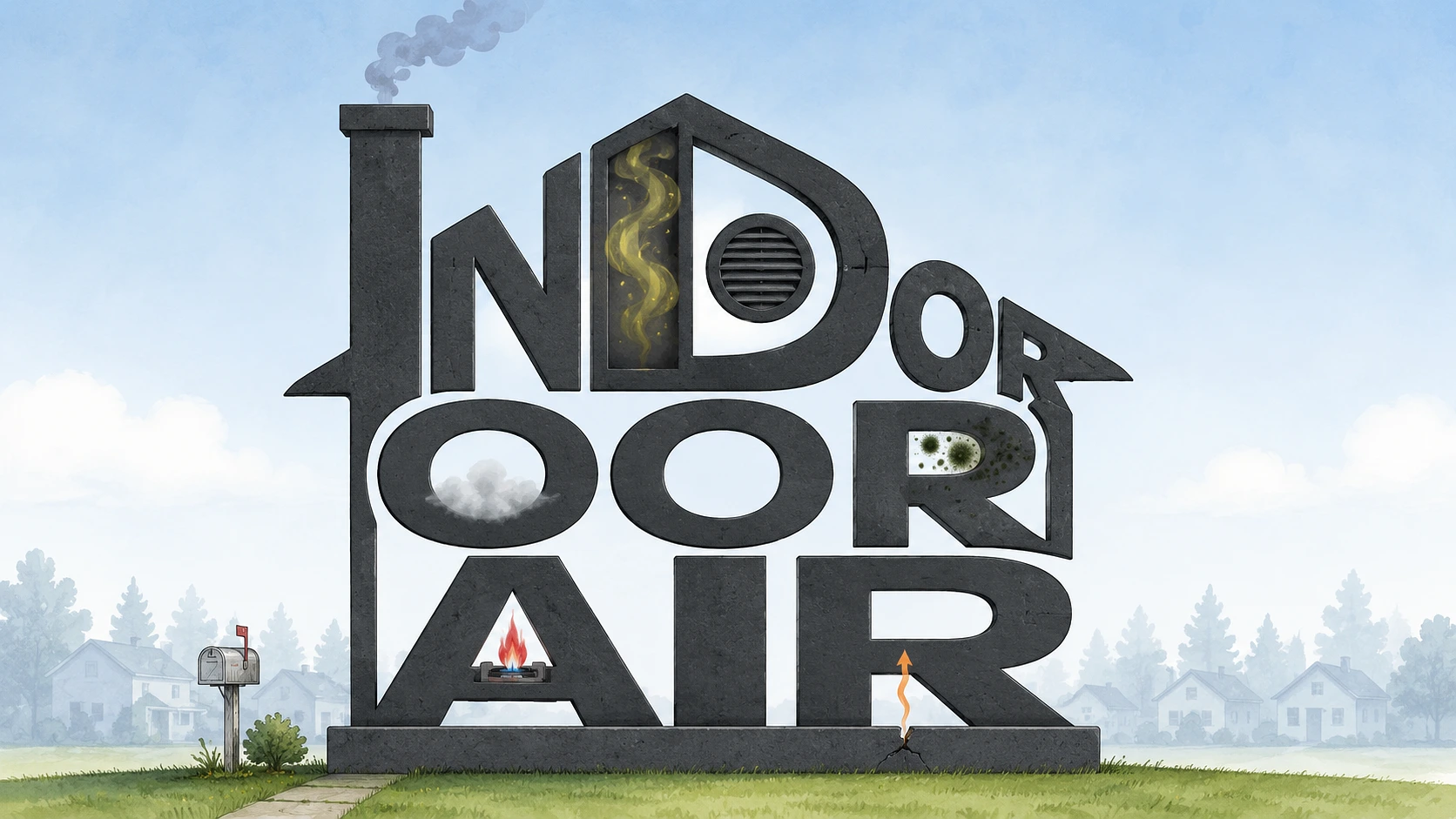
The EPA has measured indoor air at 2 to 5 times more polluted than outdoor air, and during cooking or off-gassing events, up to a hundred times worse. Here are the five problems that actually move the needle, what each one costs to test for, and what it costs to fix.
Carbon Monoxide and Radon Kill the Most People, And Most Homes Are Not Tested for Either
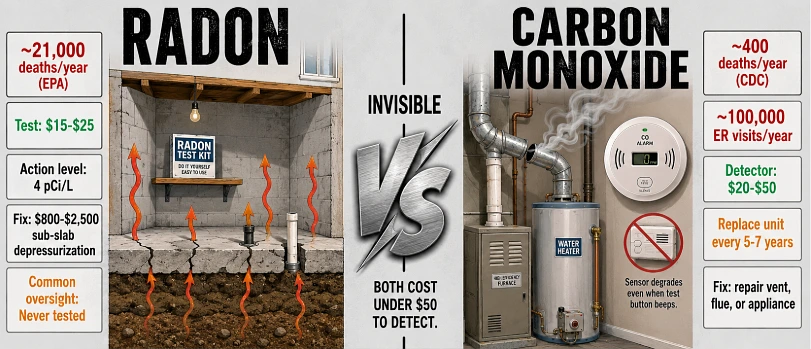
Both are invisible. Both kill people every year. Both cost almost nothing to detect.
| Radon | Carbon Monoxide | |
|---|---|---|
| US deaths per year | ~21,000 (EPA) | ~400 (CDC) |
| ER visits per year | N/A | ~100,000 (CDC) |
| Test cost | $15 to $25 (short term kit) | $20 to $50 (detector) |
| Action level | 4 pCi/L (EPA), 2.7 pCi/L (WHO) | Any reading on a working detector |
| Fix cost | $800 to $2,500 (sub slab depressurization) | Repair vent, flue, or appliance |
| Common oversight | Never tested | Detector older than 7 years |
Two CO detector rules most homeowners miss: replace batteries twice a year, and replace the entire unit every 5 to 7 years because the electrochemical sensor degrades even when the test button still beeps.
The Off-Gassing from New Furniture, Cabinets, and Paint Lasts Longer Than the Smell
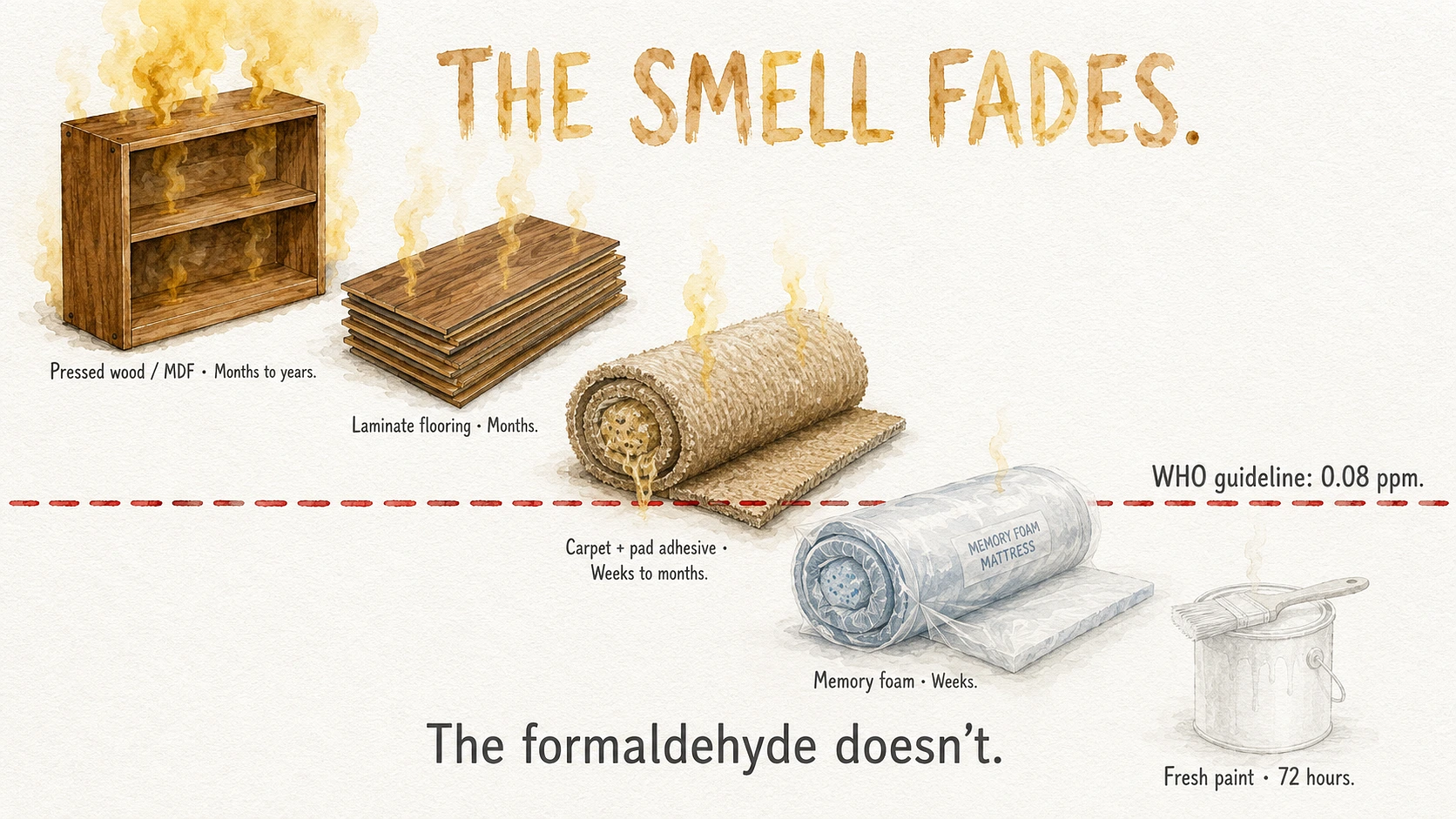
The smell goes away in days. Formaldehyde release continues for months to years, especially from pressed wood and MDF furniture made outside California’s CARB Phase 2 standard.
WHO guideline: 0.08 ppm averaged over 30 minutes. New manufactured homes have measured above 0.1 ppm for the first one to two years.
Ranked by how much they typically release:
- Pressed wood and MDF furniture with urea formaldehyde resin.
- Laminate flooring installed without acclimation.
- Carpet and pad adhesives.
- New memory foam mattresses (isocyanates).
- Fresh paint, but most VOCs evaporate in the first 72 hours.
Look for the CARB Phase 2 label when buying. Zero VOC paints from major brands cost roughly the same as standard paint now, so the upgrade is free.
Your HVAC System Decides How Bad Every Other Pollutant Gets
This is where everything else either gets fixed or gets worse.
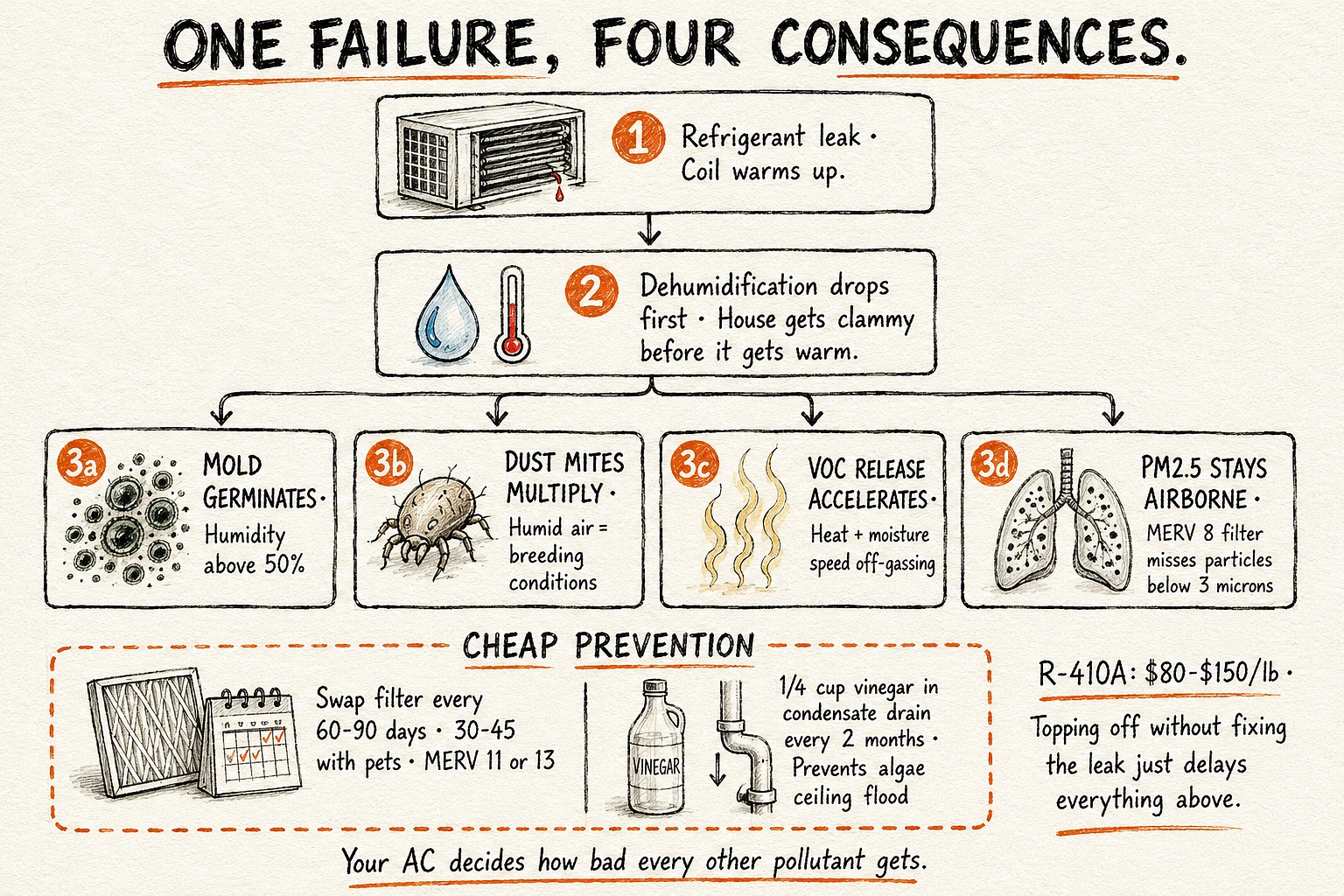
A working AC does three jobs at the same time: cools the air, dehumidifies it (water condenses on the cold evaporator coil), and filters it. When the system loses refrigerant, the coil warms up and dehumidification drops first. You will feel the house get clammy before you feel it get warm.
That clammy air is the start of the chain. Indoor humidity creeping above 50% lets mold germinate, lets dust mites reproduce, and speeds up VOC release from furniture (heat and moisture both accelerate off-gassing). One mechanical failure quietly multiplies four other air quality problems.
If your AC runs constantly without reaching setpoint, the air handler is icing up in summer, or the house feels sticky despite cool air, that is a sign of a refrigerant leak and the system needs a technician to find the leak point, repair it, and recharge. Topping off without fixing the leak just delays the problem, and R-410A runs $80 to $150 per pound.
The filter is a separate fix. Most homes ship with MERV 8 filters that catch dust but miss most allergens, mold spores, and PM2.5 from cooking. Going to MERV 11 or MERV 13 captures particles down to one micron. Older systems can struggle with MERV 13 because of static pressure on the blower, so check with a tech before upgrading.
Two cheap habits prevent expensive problems:
- Change the filter every 60 to 90 days in normal homes, 30 to 45 days with pets or allergy sufferers.
- Pour a quarter cup of vinegar into the condensate drain access every couple of months to prevent algae clogs that back water up into the ceiling.
Gas Stoves Without Real Ventilation
The question that matters: Does my range hood actually vent outside?
If not, it does almost nothing for combustion gases. Recirculating hoods with charcoal filters catch grease and odor but do not capture NO2 or CO.
If yes, turn it on before you light the burner and leave it on for at least 5 minutes after you finish cooking.
A 2022 Stanford and PSE Healthy Energy study measured indoor NO2 above 100 ppb during gas stove use, exceeding the EPA’s outdoor air standard. A 2013 meta analysis in the International Journal of Epidemiology found children in gas stove homes had 42% higher rates of asthma symptoms than children in homes with electric cooking.
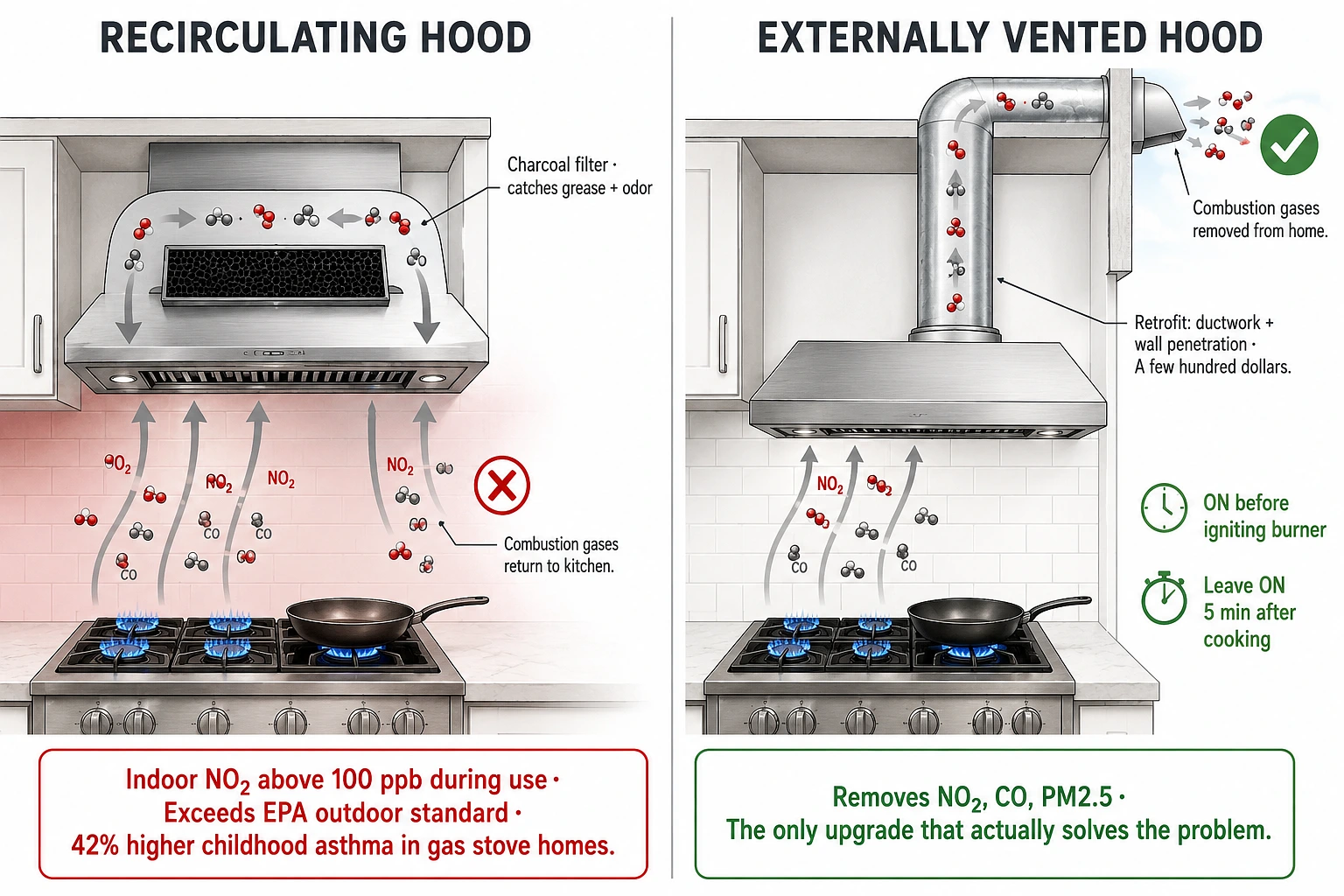
If your hood recirculates instead of venting outside, that is the next renovation upgrade worth budgeting for. A few hundred dollars of ductwork and a wall or roof penetration solves the problem.
Mold Is Almost Always Bigger Than What You Can See
By the time you spot black patches on the wall, the colonization behind the drywall has typically been growing for weeks or months.
The hiding places homeowners miss:
- Behind kitchen cabinets where the supply line under the sink drips slowly.
- Under bathtubs where the drain assembly seal failed and water has been wicking into the subfloor.
- Behind washing machines where the cold water hose has a slow weep.
- Inside attic insulation under bathroom exhaust fans that vent into the attic instead of through the roof (common in homes built before 2000).
- Around window sills in winter where condensation pools.
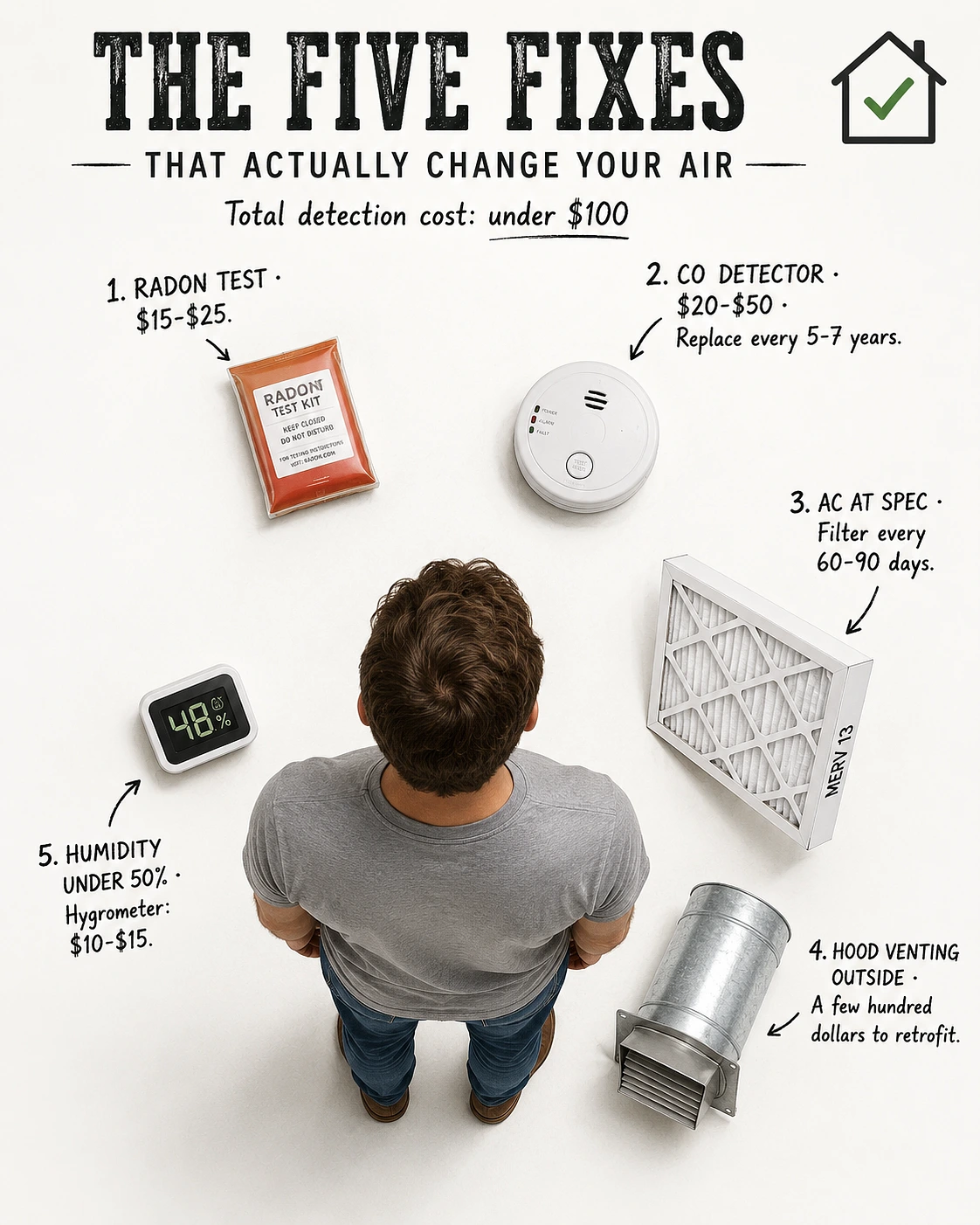
Indoor humidity below 50% year round prevents most mold germination. A hygrometer costs $10 to $15 and tells you whether your home is currently in mold territory. Early remediation runs $500 to $1,500. Hidden mold caught after months of growth runs $3,000 to $10,000+ because the wall cavity, insulation, and adjacent framing usually need to come out.
Cleaning Products
This one does not need the long version. Switch to fragrance free or third party certified products (Green Seal, EcoLogo, not vague “natural” claims). Vinegar and baking soda handle routine cleaning. Open a window when you spray anything. That is the whole conversation.
The five fixes that actually change your indoor air: tested radon, current CO detector, AC working at spec, range hood venting outside, and humidity under 50. Everything else in this article is a smaller adjustment on top of those.

 Decor & Improvement Accessories