

Home & Decor Blogs: DIY, Interior Design & Lifestyle Ideas
Upgrading Kitchen Cabinets on a Budget: Five Real Options and How to Pick Yours

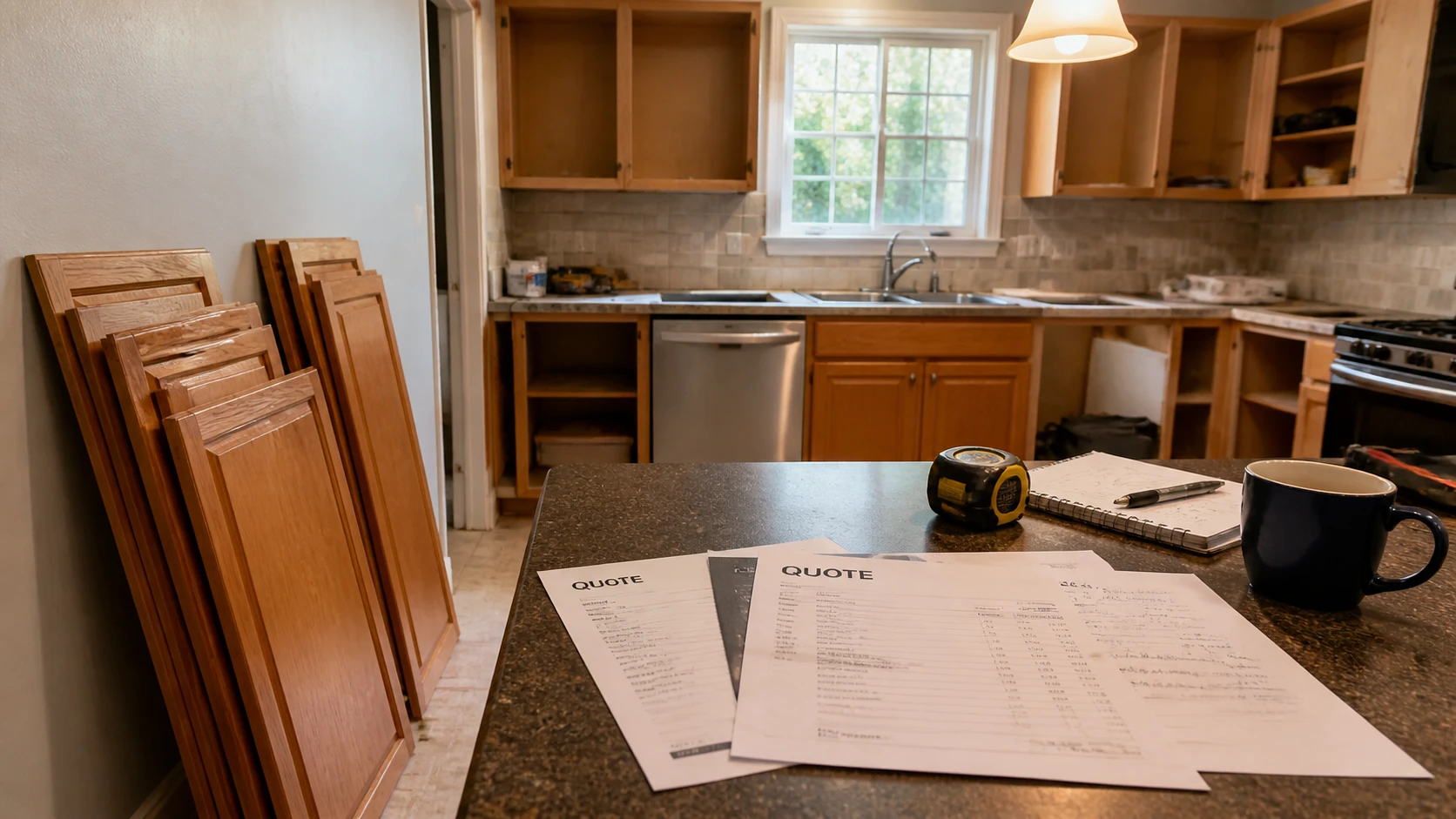
You see, you want to upgrade your kitchen cabinets without going crazy on the spend, and the quotes you keep getting are all over the place — eighteen hundred from one guy, then seventy-four hundred from another, then twenty-two thousand from a third who used the same words as the first two. I have spent the better part of fifteen years watching homeowners go through this, and the spread is not by chance. All those numbers are quoting completely different jobs, and nobody bothers explaining that to you unless they actually take you through it right.
Most people do not even know which problem they are trying to solve until somebody breaks it down honestly. So let me share what I have learned about the five budget paths that do make sense, what they tend to run lately, and how to figure out which one actually fits the kitchen you already have.
1. Hire a Real Cabinet Painter, Not a Wall Painter
Is paying a pro to paint your cabinets actually worth it when YouTube makes the job look so easy?
There is a huge disparity between a cabinet painter and a general painter, and most people do not understand it until they have already paid the wrong individual.
I had a client outside of Indianapolis a couple of summers back who hired the same guy who had painted her foyer to also do her kitchen. About six months later, the cabinet doors were chipping around every handle, and she ended up paying twice — first the foyer guy, then a real cabinet specialist to strip everything down and start over. She was furious, and rightly so.
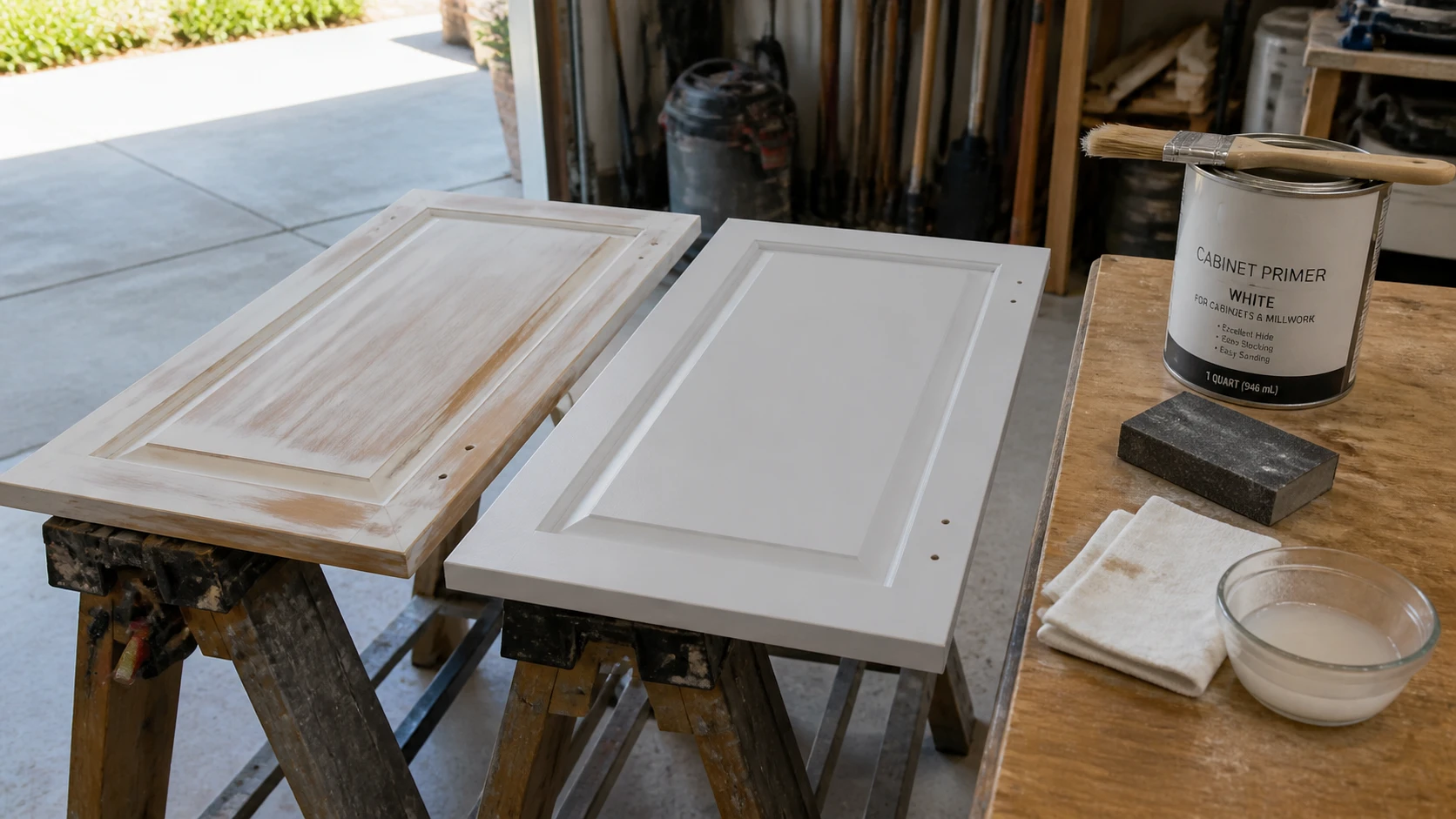
Cabinet painting is another beast altogether. You have to degrease everything with TSP, sand down the old finish so the new one will take, apply a primer designed for slick surfaces, then two coats of cabinet-grade enamel with a decent cure time before anything goes back on the hinges. Skip any of those steps and within six months you will see chips around the handles, and that is a certainty.
Hiring it out usually runs about fifteen hundred to four thousand for a standard-size kitchen, depending on how many doors you have and whether they spray off-site or brush in place. Spraying gives a smoother finish but it costs more, because the doors are hauled to a shop and back.
Good candidates for this route:
- Solid wood doors, oak or maple or cherry, even older birch
- Boxes still square with tight joints
- No swelling near the dishwasher or the sink base
- A layout you actually like
Skip this route if:
- Your thermofoil doors are peeling at the edges
- The particleboard has water damage
- Doors no longer sit flat on the box
- You are after a complete style change, not just a color change
A real cabinet painter will tell you upfront which primer they are using — INSL-X Cabinet Coat or Stix are both good signs. They will tell you whether they are spraying or brushing without you having to ask, and how many days they wait between coats. A general handyman who normally does walls begins to hedge as soon as the questions get specific. That is the way you tell which one of them is in your driveway.
2. The Hardware Swap That Punches Above Its Price
Honestly, this one used to surprise me. I figured hardware was barely worth talking about, just knobs and pulls, who really cares. Then a friend of mine in Atlanta swapped out the old brass pulls on her cream-colored shaker cabinets for matte black bar pulls a couple of summers ago, and the kitchen looked like a completely different room. Total damage was maybe a hundred and forty bucks for the hardware and another two hours of her husband’s time on a Sunday afternoon.
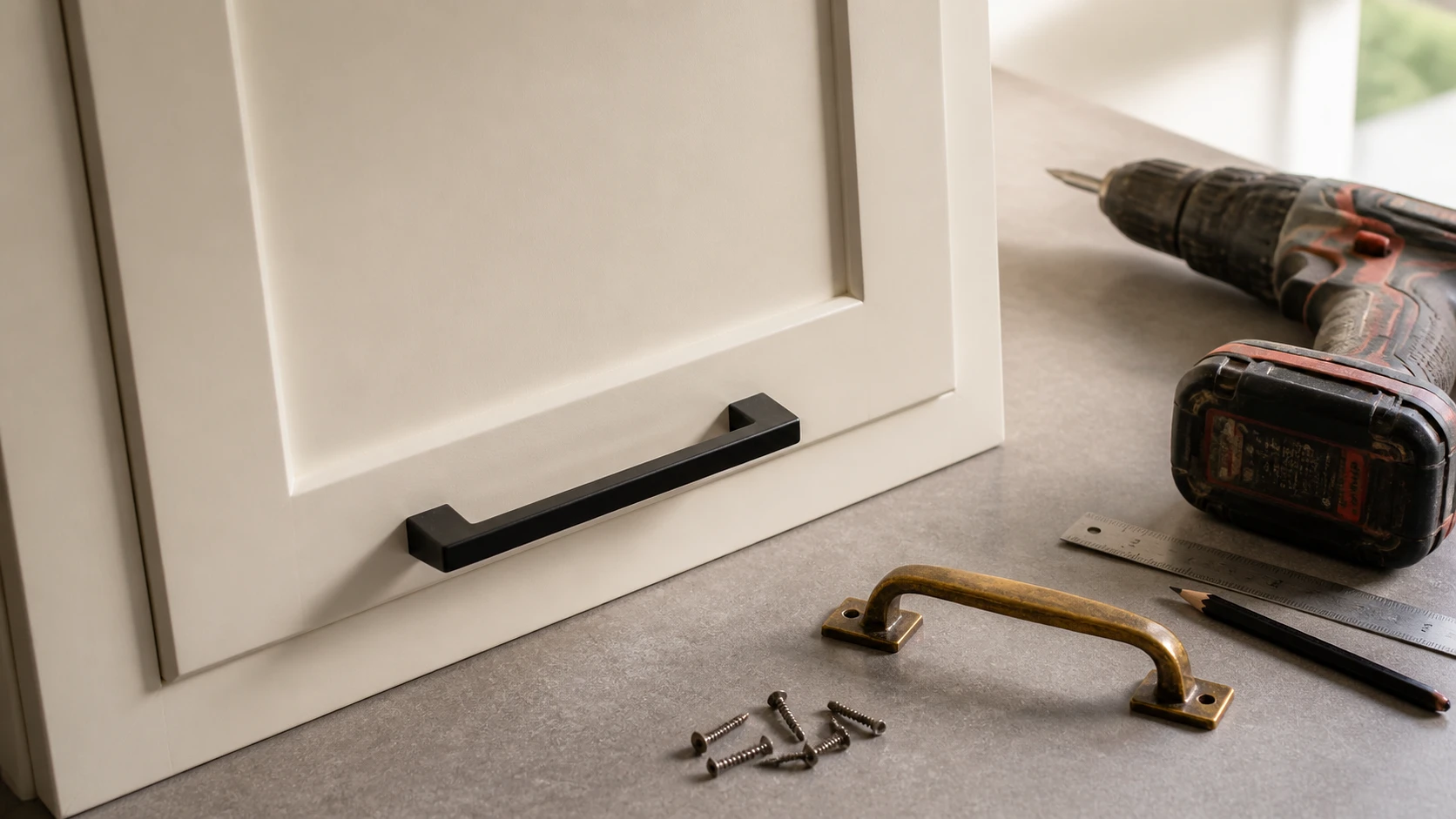
Now, the catch is that hardware on its own does not actually do all that much. New pulls on tired cabinets just make the cabinets look more tired. But pair it with a paint job or a fresh refinish, and the visual jump is way bigger than what you actually paid for. A handyman or carpenter normally charges around one fifty to four hundred for the labor on a full kitchen, plus whatever you spend on the hardware itself. Decent pulls run four to twelve dollars each on Amazon or Wayfair, and the designer ones at showrooms run twenty to sixty dollars per pull. The visible disparity between a six-dollar matte black pull and a forty-dollar one is way smaller than what the showroom wants you to believe.
Where this gets tricky:
- Old screw spacing has to match the new hardware. Older cabinets often have 3-inch centers, and the new pulls are metric like 96mm or 128mm, so a mismatch means drilling, patching, and touch-up paint.
- Cheap powder-coated finishes hold up fine. Spray-painted ones start chipping near the thumb rest within a year.
- Knobs are easier than pulls because they only have one screw hole to align.
One thing most articles will not tell you — if your hinges are visible on the cabinet face, swap those at the same time. Worn brass hinges on freshly painted cabinets honestly look worse than they did before the paint job. Ask the carpenter to switch to concealed European hinges, or matching face-mount ones, while they are already there. The extra labor is minimal because the cabinets are already open anyway.
3. Cabinet Refacing — The Middle Path Worth Understanding
I was helping my buddy in Milwaukee last fall figure out what to do with his late father’s kitchen. The boxes were original 1978 oak — solid plywood, square, joints still tight after almost fifty years of daily use. The doors though, those looked every bit of fifty years old. Dated, scuffed, the laminate trim peeling at the corners. He was getting full-replacement quotes at fifteen, eighteen, twenty thousand dollars. I told him to slow down and look at refacing.
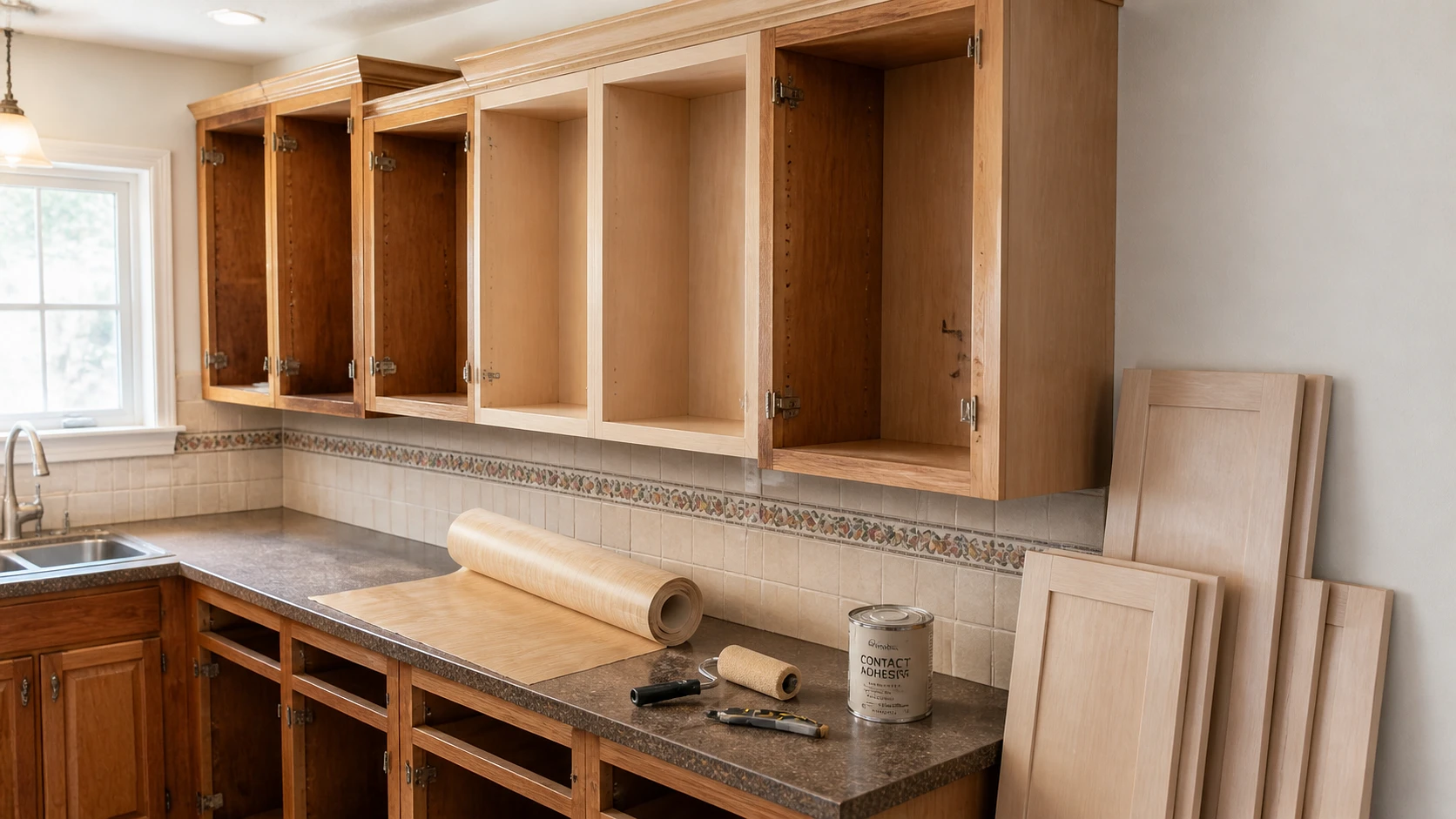
Refacing means brand new doors, new drawer fronts, and a thin veneer applied over the visible cabinet boxes. The old boxes stay, but everything you actually look at gets swapped out. It confuses a lot of people because they hear refacing and assume it is basically painting at a higher price. It is not. You are not painting old surfaces, you are replacing them.
Pricing for a standard kitchen lately runs four thousand to ninety-five hundred, with most jobs landing around sixty-five to eighty-two hundred. Solid wood doors push the bill toward the high end. Thermofoil or laminate brings the number down. The whole job wraps in three to five days, which is one of the biggest reasons people pick it over a full replacement, because you do not lose your kitchen for two weeks.
The reason this works really well in older homes is that cabinet boxes built before the early two thousands were often solid plywood, sometimes even hardwood, way better material than what stock cabinets ship with today. The doors are usually what looks dated, not the box underneath. Refacing keeps the good bones and replaces the dated face.
My buddy ended up using one of the cabinet refacing services in Milwaukee that knew the older housing stock around there. A lot of the local outfits are used to those same solid 70s and 80s boxes paired with doors that have aged badly, so they could quote him without a lot of back and forth. He paid right around seventy-two hundred all in. Job took four days. The kitchen looks brand new and his dad’s old cabinet boxes are still doing what they have always done.
Before you sign a refacing contract, ask whether the doors are solid wood, MDF with veneer, or thermofoil, because each one ages differently. Ask what the warranty is on the door finish — anything under five years is a red flag. Ask whether sink-base reinforcement is included if the floor of that cabinet has gone soft from a slow drip nobody noticed, since that is a common find on older sinks. And ask whether crown molding and toe-kick covers are in the price or extras, because that is where contractors quietly pad the bill.
4. Replacing Just the Doors and Drawer Fronts
There is an option between full refacing and just painting that almost nobody knows about. You order new doors and drawer fronts built to fit your existing cabinet boxes, without the box veneer step that full refacing adds. Companies like Conestoga and Cabinet Door World, plus a number of regional shops, will build doors to your exact dimensions, and a local carpenter can hang them in a day or two.
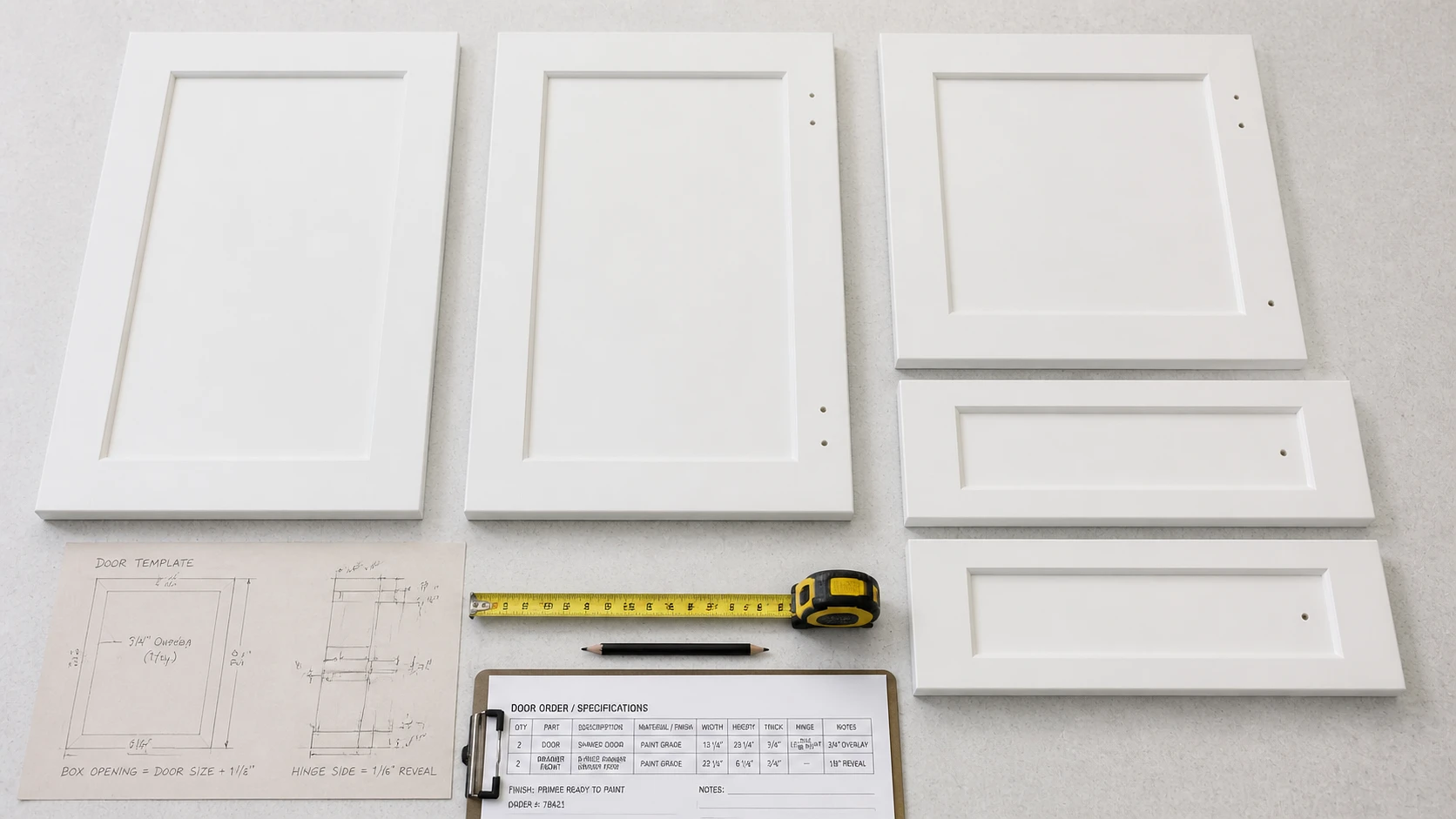
The cost typically lands around twenty-five hundred to six thousand for a standard kitchen, depending on door style and material. It is cheaper than full refacing because you are skipping the veneer labor and materials.
This option really shines when your box exteriors are already a color you can live with, or when the boxes face into corners and against walls so the side panels barely show anyway. It also works if you like the existing color but you cannot stand the door style, like maybe your kitchen has flat slab doors and you actually want shaker. Perfect use case.
Where it falls short is when your box exteriors are visible and dated, in which case full refacing is the better call. It also does not work if your boxes have ended up different colors from each other after years of mixed repairs, which I have seen more often than you would think.
The thing nobody warns you about is that measuring for replacement doors is brutally precise work. A carpenter who has done it before will charge for the measurement step separately and will stand behind the order. A cheap quote that skips professional measurement usually means the homeowner ate the cost of a wrongly sized batch and quietly did not tell anyone. Always ask who is doing the measuring, and whether there is a remake guarantee if a door comes back wrong. That single question separates the careful pros from the rest of them.
5. Replacing Only the Cabinets That Are Actually Failing
The last option is partial replacement, and contractors rarely lead with this because there is less margin in a small job than a big one. But if you have one cabinet sagging from a slow leak and another delaminating near the stove, ripping out the bad ones and keeping the rest is often the smartest move when money is tight.
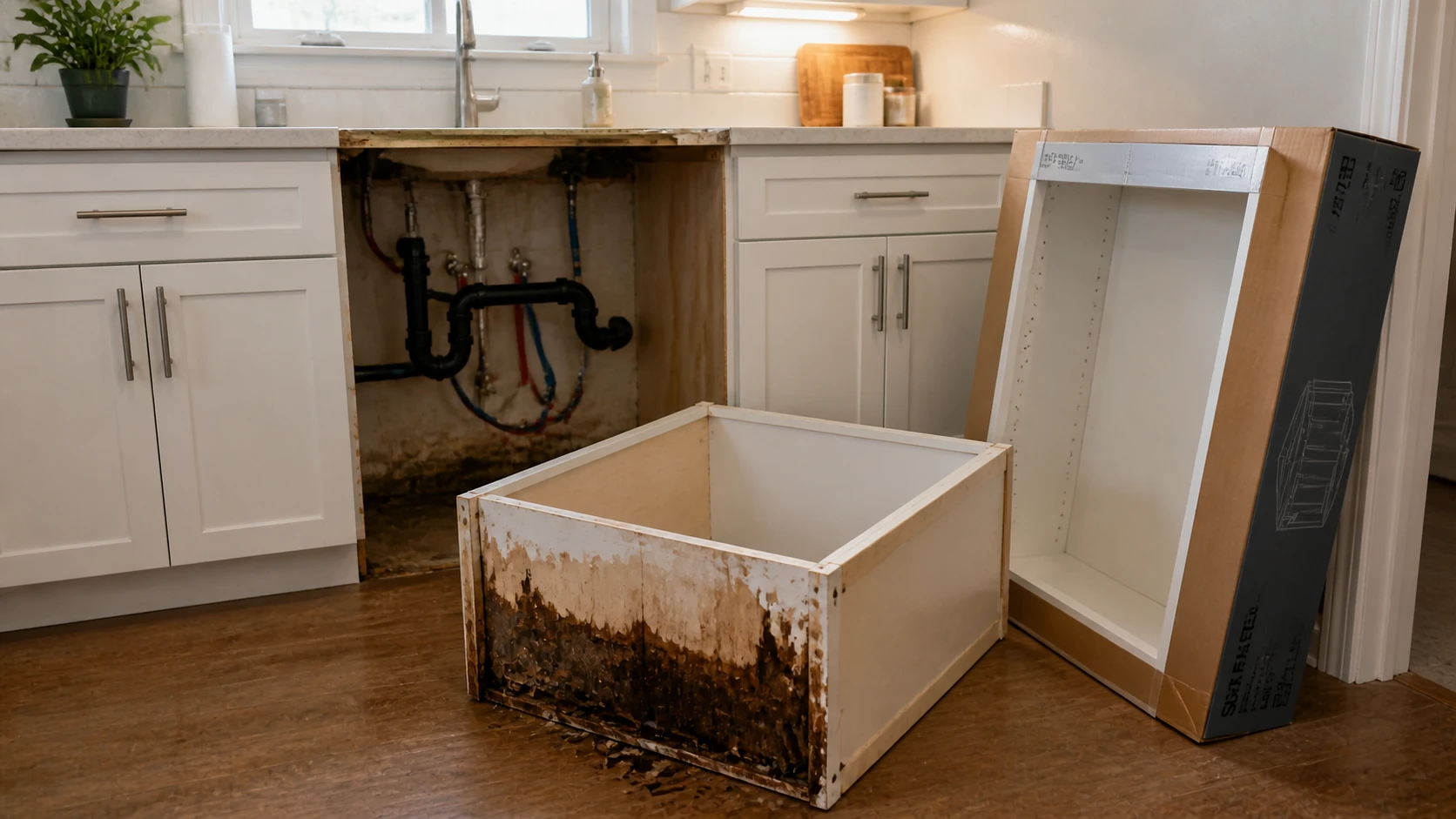
Replacing two stock cabinets from a big-box store runs around four hundred to twelve hundred installed for the pair. Repainting or refacing the rest of the kitchen brings everything into visual harmony for way less than tearing the whole room out. The total project usually lands somewhere between three thousand and seven thousand, depending on how many cabinets you swap and what you do with the survivors.
The catch is matching. Stock white shaker cabinets vary in white tone between brands, so bring an existing door to the store before ordering anything. Stain colors are nearly impossible to match exactly on existing wood, so if you are going this route, plan on painting everything to bring it together. Cabinet box depth has been a standard 24 inches for decades, but height and width still vary by brand, so measure carefully before assuming anything.
This works really well for homeowners who have one or two specific problem cabinets and a layout they otherwise like. It is also a smart move for sellers who need the kitchen to read as well-maintained before listing in the next year or two. A contractor you can actually trust will look at your kitchen and tell you straight up which cabinets are worth keeping. If they push for a full replacement before pulling a single door off the hinge, get a second opinion. Some kitchens genuinely do need everything replaced. Most do not.
None of this really matters if the contractor walking into your kitchen has already decided which path they want to sell you. Most of them have, in my experience. Knowing the difference between the five at least means you can push back when the number on the quote does not match the job you actually need.
 Decor & Improvement Accessories