

Home & Decor Blogs: DIY, Interior Design & Lifestyle Ideas
How Denver Painters Actually Build a Quote, and Why Two Bids on the Same House Can Be $4,000 Apart

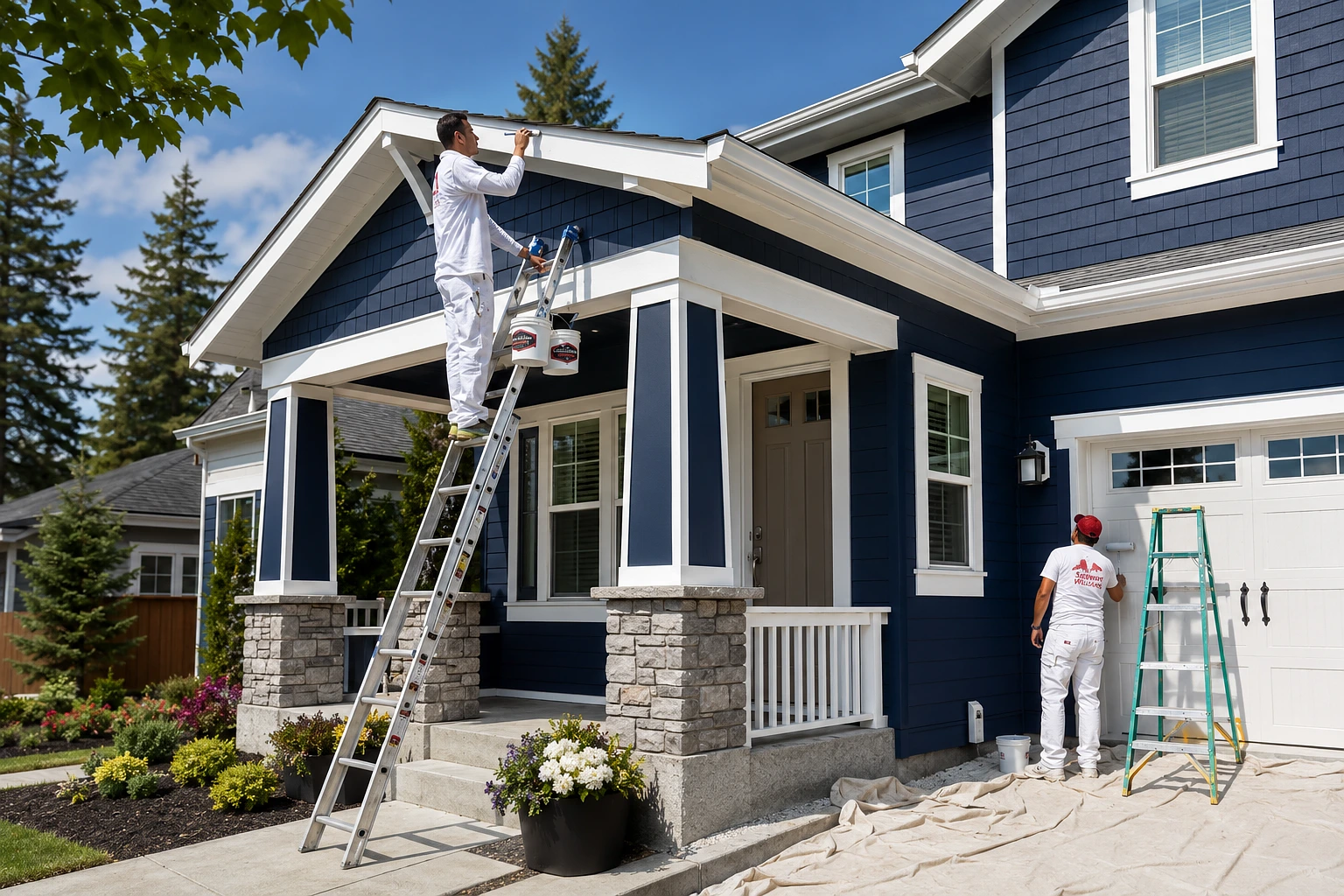
You called three painters. One said $6,200. One said $9,800. One said $13,500. Same house, same square footage, same week. The instinct is to assume someone is gouging you and someone is being honest. That is almost never what is happening.
What is happening is that three painters looked at the same house and saw three different jobs. The cheap bid is for a one-coat refresh that ignores caulk failure and UV-exposed wood trim. The middle bid includes proper prep and two coats of mid-grade product. The expensive bid is pricing for what your specific siding, sun orientation, and the last paint job’s failures actually require. The number gap is real because the scope gap is real.
What the Numbers Actually Look Like in Denver Right Now
For 2026, professional exterior painting in the Denver metro runs $3.50 to $6.10 per square foot of finished wall, with the average single-family repaint landing at $5,200 to $11,400. That is roughly 12 to 18 percent above the national mean, on par with Salt Lake City, lower than Boston or San Francisco, higher than Dallas.
A more granular breakdown by house type, drawn from contractors actively quoting work in the Front Range:
- Standard two-story home, moderate prep, good existing condition: $9,800 to $12,500
- Architecturally detailed homes, Craftsman-style trim, UV-damaged areas: $13,500 to $16,000
- Restoration projects with structural repair, coating removal, multi-story access: $18,000 to $30,000+
So how much does it cost to paint a house in Denver? and trying to match it against the bids in front of you, the question isn’t really which painter is cheapest. It is the painter who priced your actual house honestly, and who priced a fantasy version of it.
The rest of this article is about what they were actually looking at when they walked the property.
The Altitude Problem: Most Quotes Bury in the Margins
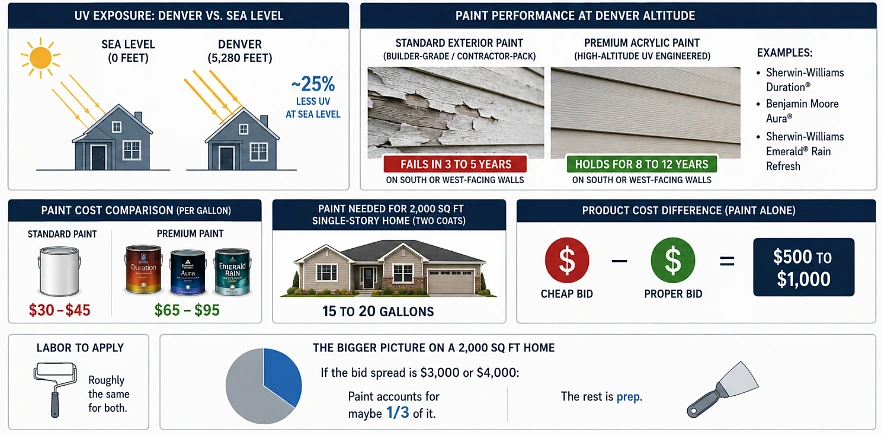
Denver sits at 5,280 feet. The atmosphere up here filters roughly 25 percent less UV than at sea level. That single fact is the most important thing about pricing house paint in this city, and it is the thing that explains roughly 60 percent of the bid spread you are seeing across estimates.
Standard exterior paint, the kind sold as builder-grade or contractor-pack, is formulated for the UV exposure of a sea-level coastal market. Use it on a south or west-facing wall in Denver and it commonly fails in 3 to 5 years. Use a premium acrylic engineered for high-altitude UV, like Sherwin-Williams Duration, Benjamin Moore Aura, or Sherwin-Williams Emerald Rain Refresh, and the same wall holds for 8 to 12 years. The premium product runs $65 to $95 per gallon versus $30 to $45 for the standard stuff.
A 2,000 square foot single-story home uses 15 to 20 gallons for a two-coat job. The product cost difference between the cheap bid and the proper bid, on paint alone, is $500 to $1,000. The labor to apply it is roughly the same. So if the bid spread on a 2,000 sq ft house is $3,000 or $4,000, the paint accounts for maybe a third of it. The rest is prep.
Sun-Baked Caulk Is the Failure Nobody Quotes For
There is a quote that comes up regularly from Denver painters: “Half my callbacks on cheap repaints aren’t paint failure, they’re sun-baked caulk failure. At this elevation, butyl and silicone joints fail two years before the paint does. If a Denver bid doesn’t itemize fresh caulking, it’s not a real bid.”
This is the part nobody wants to hear because it makes the cheap bid look bad. Caulk failure at Denver altitude is not a maintenance issue. It is a primary failure mode that drives water into your siding, behind your trim, and into the substrate that the new paint is supposed to be protecting. A painter who walks your house and notices the brittle, separating caulk lines around windows and trim and quotes for it is not upselling you. The painter who ignored it gave you a price for painting over a problem that will fail the new paint in two years.
What to look for in an itemized estimate:
- Caulking, line itemized separately from paint application, with a stated product type (acrylic latex caulk for substrate joints, polyurethane or hybrid sealant for window perimeters)
- Spot-priming of bare wood and previously failed areas, not a single primer coat across the whole house
- Pressure washing with a specified PSI range, typically 1,200 to 2,000 PSI for residential siding
- Scraping and sanding of failed coating, with hours or square footage estimated separately
Bids that bundle “prep work” as a single line at $800 or $1,500 with no breakdown are doing one of two things. Either the painter is going to do as little prep as possible because they have not committed to anything specific, or they are honest but disorganized and you cannot evaluate what you are actually paying for. Neither is good.
How Painters Look at the Walls Themselves
The actual structure of the house drives more of the price than the marketing materials usually admit. A 2,000 square foot ranch with vinyl siding, single story, easy access, no significant trim, painted with a premium product runs $6,000 to $8,500. A 2,000 square foot two-story Capitol Hill Victorian with wood lap siding, corbels, dentil molding, porch detail, and active wood rot runs $13,500 to $18,000. Same square footage. Triple the price. Both are honest quotes.
The factors painters are actually measuring:
- Siding material. Vinyl and fiber cement take paint with minimal prep. Wood siding requires scraping, sanding, spot-priming, and often selective replacement of failed boards. Stucco requires patching of cracks and absorbs 20 to 30 percent more paint per square foot than smooth siding. Brick painted previously is a different conversation entirely and frequently the painter will recommend not painting it.
- Trim detail and color count. A Denver Square with one body color and one trim color is fast. A Wash Park Craftsman with body, trim, accent, and a separately-painted door is brush time multiplied. Capitol Hill and Cherry Creek Victorians with extensive wood trim, corbels, dentil molding, and porch detail commonly add $1,800 to $4,500 to the base figure purely because of brush hours.
- Height and access. Two-story work adds 20 to 30 percent for safety equipment and slower production. Steep grades, tight lots, and heavy land that has to be protected push it further. A three-story home with bay windows and limited side-yard access is a different equipment package than a one-story ranch on a corner lot.
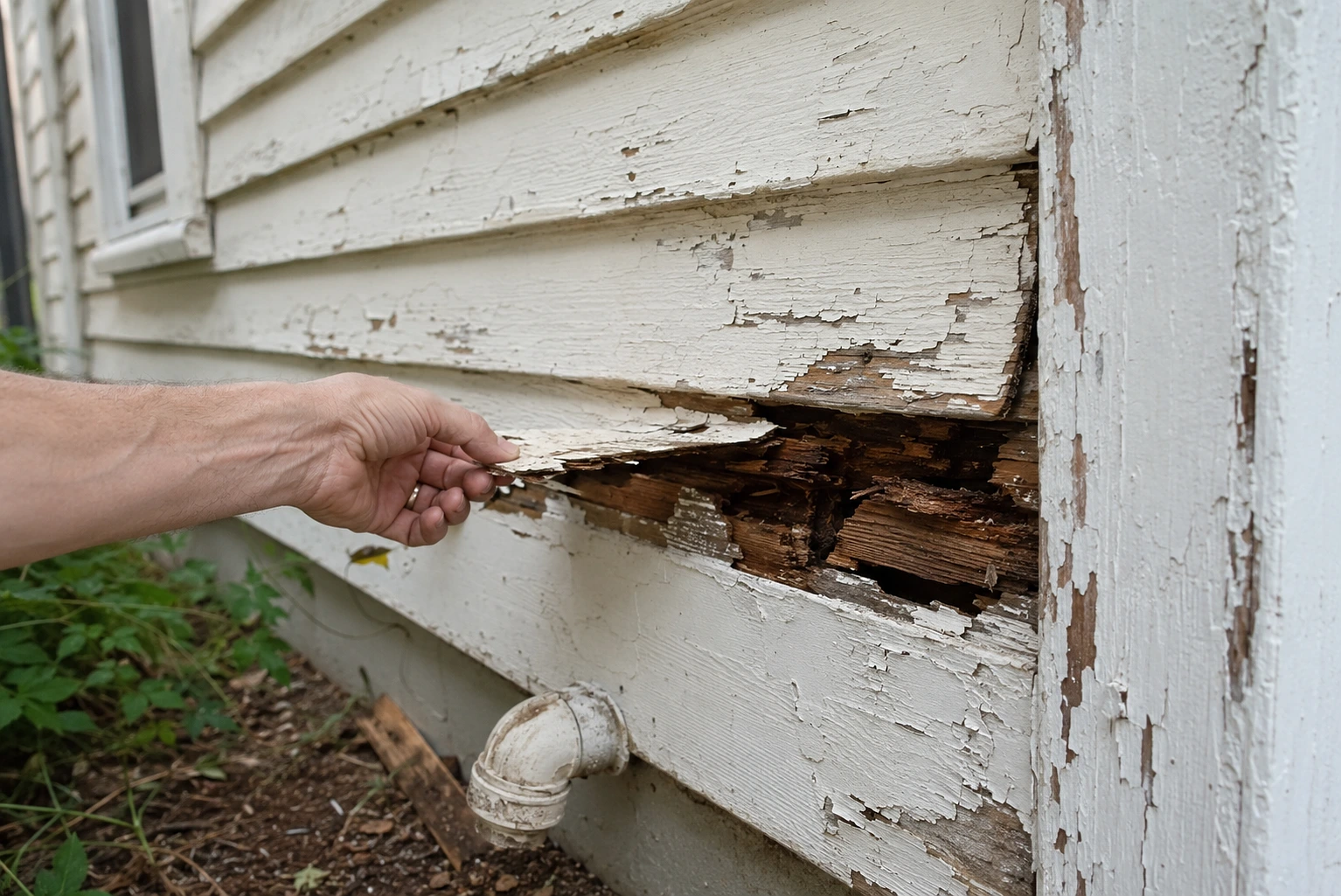
- Existing condition. Wood rot from south and west-facing UV exposure, common in Denver, adds $300 to $3,000 depending on the extent. The painter cannot know this from photos. They have to put their hands on the wood.
What the Painter Is Doing on That Walk-Through
The walk-around is not a formality. The painter is looking for:
- Direction of failure. South and west walls fail first in Denver because they take the worst UV. If only the south wall shows chalking and fade, prep is concentrated there.
- Chalking versus peeling versus cracking. Chalking means the binder has UV-degraded but the substrate is intact. Peeling means moisture got behind the coating. Cracking, particularly horizontal cracking on wood siding, means the substrate is moving and a recoat won’t fix the underlying issue.
- Caulk condition at every joint. Around windows, doors, trim returns, and corner boards. A painter running their fingernail along caulk lines is checking adhesion and flexibility, not being weird.
- Substrate moisture. A pin-type moisture meter on suspect wood is a sign of a painter doing their job. Above 15 percent moisture content, paint will not adhere properly and will fail within a year.
Lead Paint and the Pre-1978 Tax
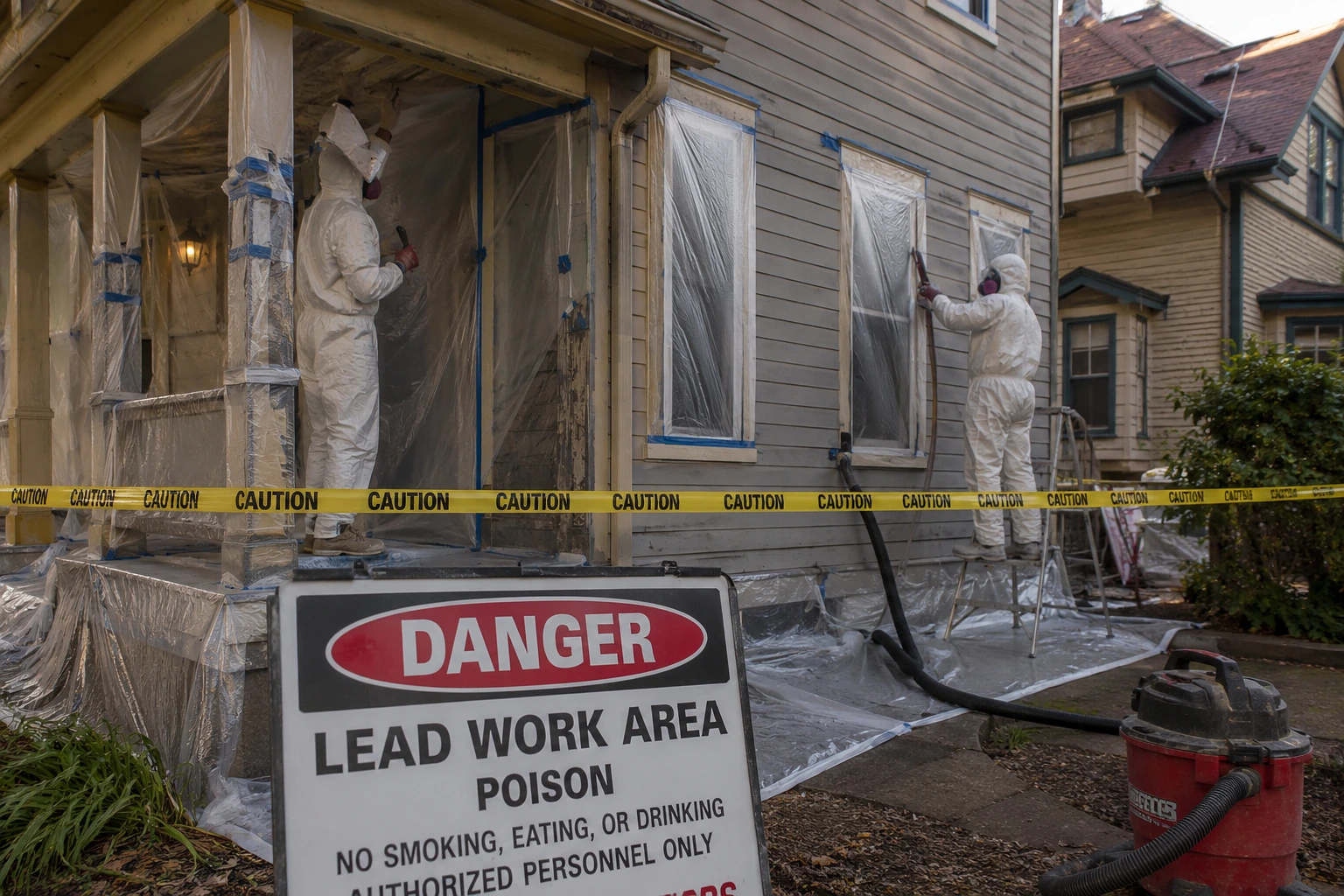
If your house was built before 1978, the price calculation changes meaningfully. Federal regulation requires lead-safe work practices through the EPA’s Renovation, Repair and Painting (RRP) certification program. A bid for a pre-1978 home that does not mention RRP certification is either ignoring the law or assuming you will.
Lead-safe work means containment with plastic sheeting, HEPA-vacuum cleanup, protective suits, respirators, and documented disposal. The work itself is the same. The protocol around it adds $1,500 to $3,500 to a standard exterior repaint. Very few painting companies in Colorado carry this certification, and the ones that do are not cheap. The ones that quote a pre-1978 Capitol Hill home at standard rates are skipping a federal requirement that protects you, your neighbors, and the workers on the job.
This is the cleanest example of the cheap-bid problem in Denver painting. The $6,200 quote on a 1912 Wash Park bungalow is not a deal. It is a bid that ignored a legal requirement and a real cost.
Why the Booking Calendar Is Part of the Price
The Denver metro has roughly 1,400 licensed residential painting outfits, ranging from one-truck operations to franchise crews. That sounds like plenty of supply. It is not, because the entire industry compresses into roughly 5 months of working weather.
The viable exterior painting window in Denver is April through October. Outside that window, overnight temperatures drop below the 35°F to 50°F range that acrylic paints require for proper film formation. Cold-weather paints exist but are not the standard product line, and most premium UV-resistant formulas need warmer temperatures to cure properly.
What this means for pricing:
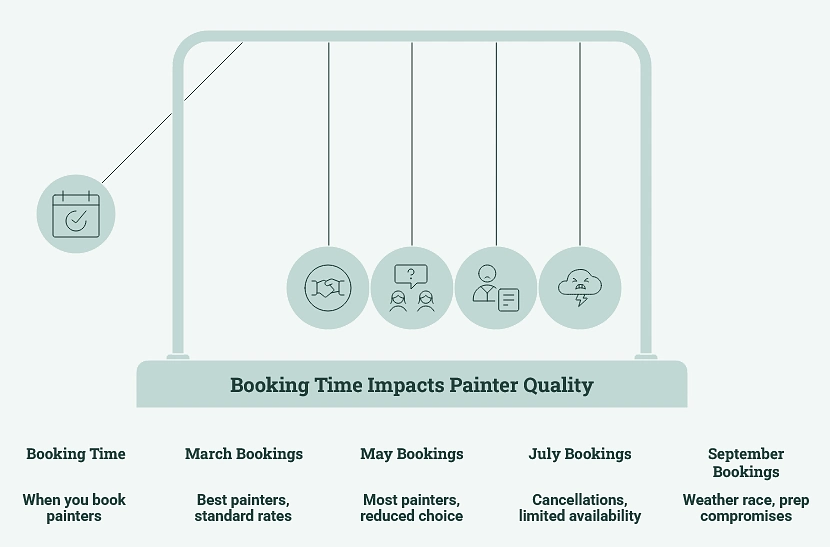
- March bookings for May work get the best painters at standard rates
- May bookings for June work get most painters but reduced choice on the best crews
- July bookings for August work are working with whoever has cancellations
- September bookings are racing the weather and accepting compromises on prep time
The 5 to 9 week booking pipeline is real. Painters who can promise you next week starts in July are either between jobs because they keep losing clients, or they are squeezing your job into a window that does not allow proper drying time between coats. Both of those are quality risks priced into fast availability.
If you are getting bids in February for May work, you have leverage. If you are getting bids in late June and need it done before a July party, you do not have leverage and the painters know.
What an Honest Estimate Looks Like Compared to a Bad One
Three things separate a real Denver painting estimate from a number scrawled on a clipboard.
Itemized line items, not bundled totals.
A real estimate breaks out pressure washing, scraping and sanding hours, caulking by type and linear feet, primer by product and coverage, paint by product name and gallons, labor by phase, and access equipment by type. A clipboard number with “exterior paint job” and a dollar figure is not a quote. It is a promise of an argument later.
Paint product specified by the manufacturer and product line.
Not “premium paint.” Not “Sherwin Williams.” Sherwin Williams sells products from $25 a gallon to $95 a gallon, and they perform differently in Denver UV. If the estimate says “two coats of Sherwin-Williams Duration in Satin sheen, Manufacturer Lifetime Limited Warranty,” you know exactly what you are getting. If it says “premium SW exterior paint,” you do not.
Warranty terms in writing, separate for labor and product.
Paint manufacturer warranties cover product failure. Contractor warranties cover application failure. These are different things. A 15-year manufacturer warranty on Duration paint means nothing if the contractor walks away after year two and the application failure is not on the manufacturer. A 5-year labor warranty from the contractor means the painter is standing behind their prep and application.
Beyond the document, verify two credentials before signing anything:
- Colorado general liability insurance and workers’ compensation, current dates, not expired
- EPA RRP Lead-Safe Certification for pre-1978 homes, federally required, not optional
Reject any bid that does not itemize prep, caulking, primer, and paint product by name. Not because the painter is necessarily bad, but because you have no way to compare it against the other bids you are evaluating, and you have no way to hold them to a scope when the job is half done.
The $4,000 spread between your three quotes is the real cost of asking three painters what your house needs. The cheapest one priced what you wanted to hear. The middle one priced what a competent crew can do with reasonable prep. The expensive one priced what your specific house, at this elevation, with its specific age and orientation, actually requires to hold paint for the next decade. The job is figuring out which of those three is closest to honest.
 Decor & Improvement Accessories