

Home & Decor Blogs: DIY, Interior Design & Lifestyle Ideas
Why a Gas Fireplace Insert Cuts Your Utah Heating Bill More Than People Expect


Most Utah homeowners treat their fireplace as decoration. The math says it should be doing more.
Here is the answer up front. An open masonry fireplace can send up to 90% of its heat straight up the chimney. A modern direct vent gas insert converts up to 85% of fuel into usable room heat. In Salt Lake County, swapping the open hearth for a sealed insert typically reduces central furnace runtime by 25% to 35% during peak winter months and saves roughly $200 to $600 across a single heating season depending on home size and insulation.
That is the case. Below is why the numbers hold up in Utah specifically.
What changes when the fireplace gets sealed
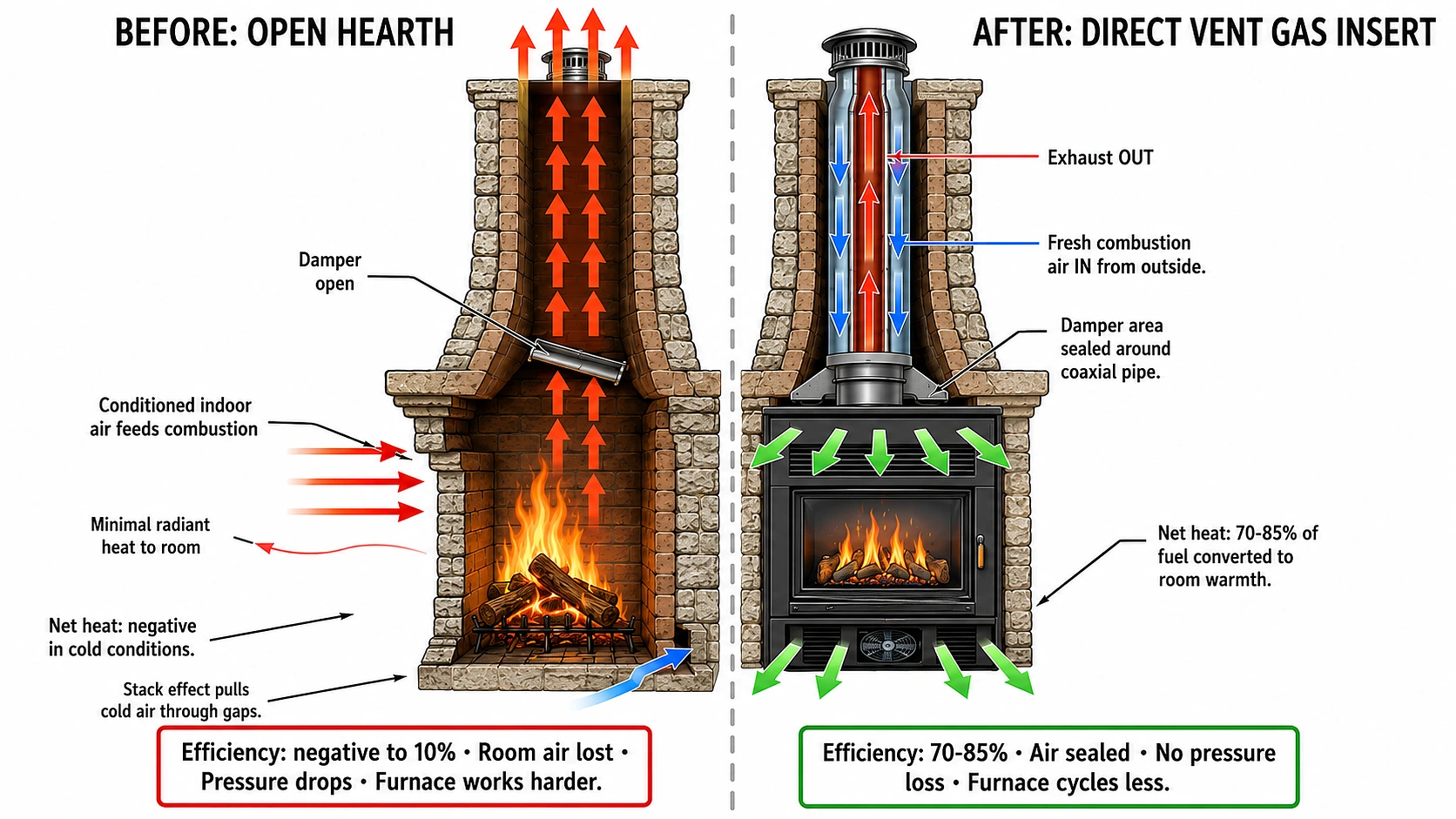
Open hearths pull heated room air into the firebox to feed combustion, then send that warm air up the flue with the smoke. You lose pressure and conditioned air every minute the damper is open.
A gas insert closes that system off. The unit is a sealed firebox that sits inside your existing fireplace opening. Combustion air comes from outside through a coaxial pipe, the burn happens in a contained chamber, and a fan pushes warmed air out into the room through vents in the trim kit. Your indoor air never feeds the fire and never escapes up the chimney.
That is why an open wood-burning fireplace measures negative efficiency in cold conditions (it loses more heat than it generates) while an EPA-certified direct vent gas insert runs 70% to 85%.
Why does this matter more in Utah than nationally
Three factors stack here:
Long heating season. Salt Lake City averages 120 to 130 nights per winter below freezing. Park City and the Wasatch Back run longer. The longer the season, the more an inefficient fireplace compounds the cost.
Rising gas rates. Enbridge Gas (which acquired Dominion Energy Utah) had its base rate adjustment approved by the Public Service Commission effective January 1, 2026, a 4.8% increase. Natural gas in Utah is billed volumetrically by the therm or decatherm, not by a flat daily fee, so any tool that delivers more usable heat per therm shows up directly on your bill.
Wasatch Front no-burn days. The Utah Division of Air Quality enforces mandatory wood-burning bans along the Wasatch Front (Salt Lake, Davis, and Utah counties) from November through March during winter inversions. Gas inserts are exempt because they produce minimal PM2.5 emissions. Your wood fireplace is unusable on the coldest red air days. Your gas insert is not.
How zone heating cuts the central furnace bill
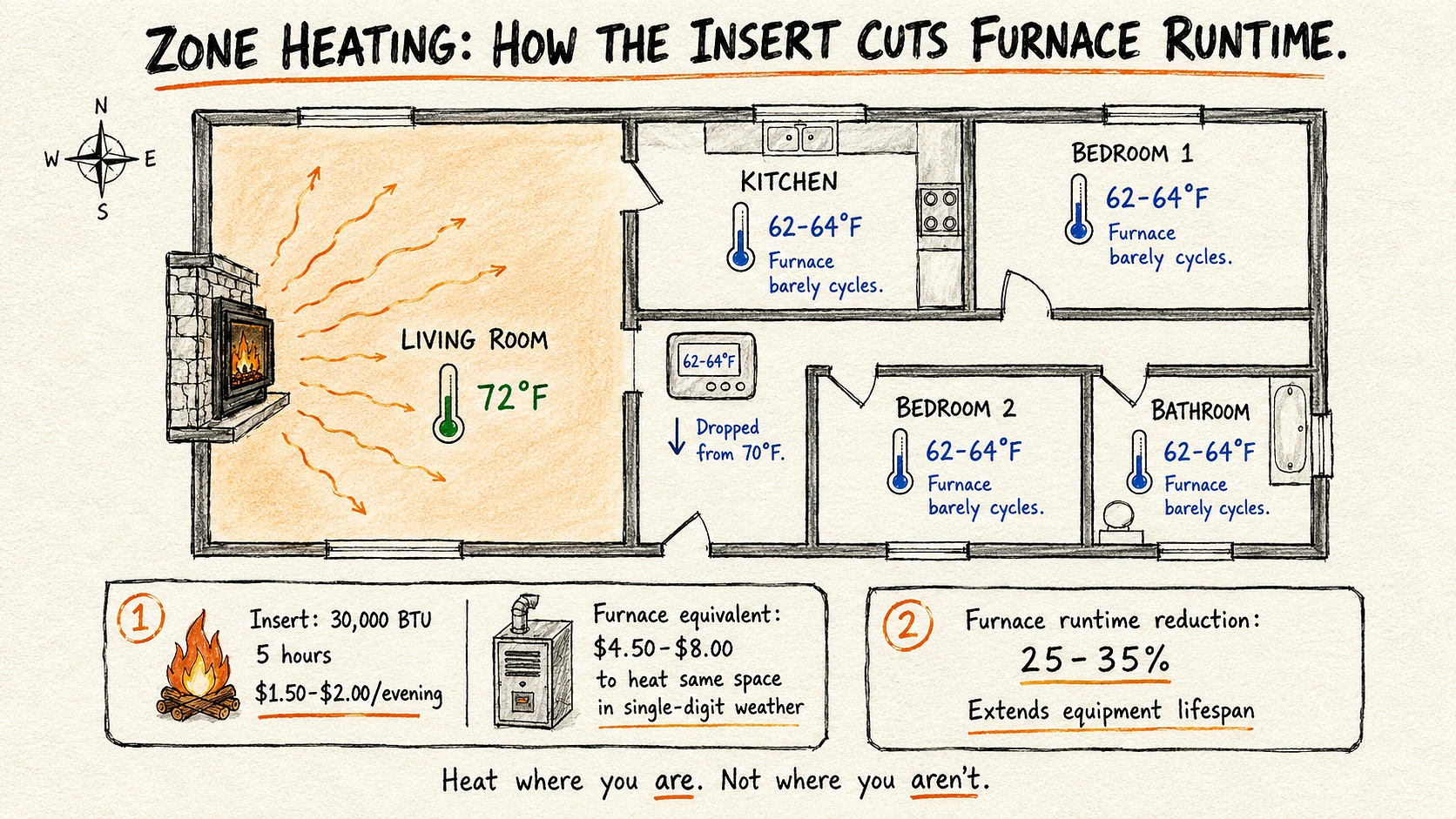
A central furnace in single-digit weather runs constantly trying to heat the entire house, including the rooms nobody is in.
Drop the thermostat to 62 to 64 degrees and run the insert in your main living area. A 30,000 BTU/hour insert holds a 1,000 to 1,500 square foot space at 70 to 72 degrees, which keeps the central thermostat reading warmer and cycles the furnace far less.
Running cost of a 30,000 BTU insert for 5 hours per evening: roughly $1.50 to $2.00 in gas consumption. Running your furnace to deliver equivalent heat to the same square footage in single-digit weather can cost 3 to 4 times that.
The altitude factor most national guides ignore
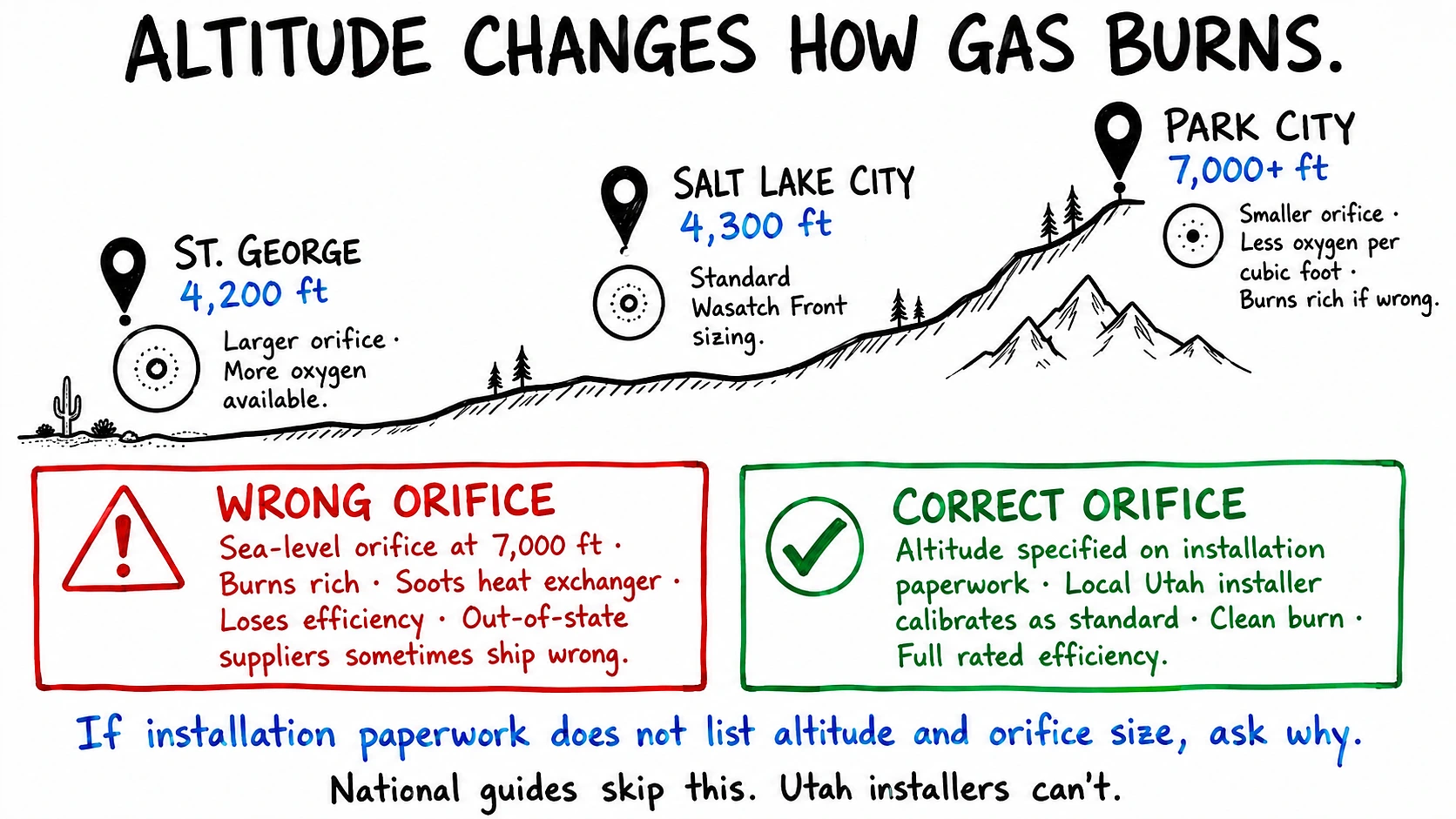
Utah sits between 4,200 feet (St. George) and 7,000+ feet (Park City, Heber). Natural gas combustion at altitude behaves differently. Less oxygen per cubic foot of air means the insert needs to be orificed for the elevation it is installed at, or it burns rich, soots up the heat exchanger, and loses efficiency.
A unit installed in Park City needs different orifice sizing than the same unit installed in St. George. National installers and big-box buying guides do not always account for this. Local Utah installers who only work in this region do. If you are sourcing a unit, work with someone who specifies altitude on the installation paperwork. Gas fireplace insert utah specialists handle altitude calibration as standard practice because they have to. Out-of-state suppliers sometimes ship sea-level orifices and leave you to deal with the consequences.
What does the math come out to
Installed cost typically runs $3,500 to $7,500 including unit, gas line work, and venting.
Seasonal savings break down roughly like this for an average Salt Lake County home:
- Furnace runtime reduction: 25% to 35%
- Monthly heating bill reduction (December through February): $40 to $80
- Insert running cost during the same period: $30 to $60 per month
- Net monthly savings during peak winter: $50 to $150
- Total seasonal savings range: $200 to $600
Payback typically lands in the 6 to 12 year range on utility savings alone. Faster if you factor in the extended furnace lifespan from reduced runtime.
The comfort improvement does not show up on a spreadsheet but it is real. Salt Lake homes with high ceilings or basement family rooms have known cold-spot problems that central heating fights with. An insert in that room solves the problem directly.
The fireplace opening is built. Either it sits there as a heat-losing hole in the wall, or it pulls its weight as an actual heat source.
 Decor & Improvement Accessories