

Home & Decor Blogs: DIY, Interior Design & Lifestyle Ideas
Why Two Doors With the Same Glass Can Make a Small Room Feel Completely Different
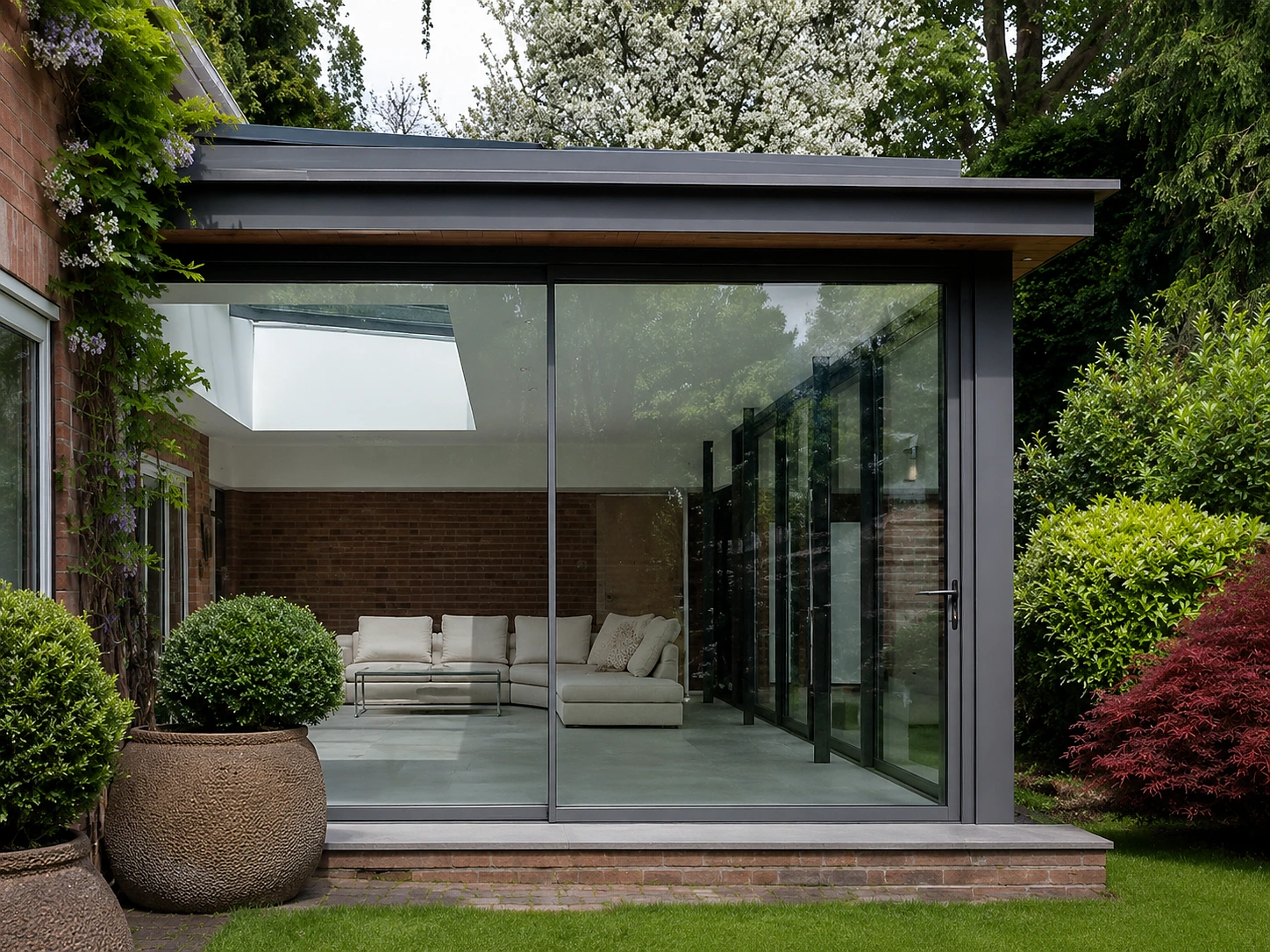
Put two exterior doors side by side with the exact same amount of glass and one will make a small room feel open while the other still feels boxed in. Most people put the difference down to light. It isn’t the light. What actually decides whether a small room feels bigger is where your eye stops, and the door controls that more than almost anything else in the room.
That’s the whole thing worth getting, because once it clicks you stop shopping for doors by how much glass they’ve got and start shopping for the bit that actually does the work.
A small room feels small because your eye hits a wall and stops
A room feels its size based on the furthest point your eye can travel before something stops it. In a small room that stop is usually a wall a few feet away. Your eye lands on it, halts, and the brain reads the space as small because that wall is the edge of everything you can see.
A door only changes that if it shifts the stopping point past the wall and out into whatever’s beyond, the garden, the patio, the yard. Do that and the room borrows the depth of the outside. The eye travels through the glass, past the boundary, lands somewhere much further off, and the room reads as bigger even though not one dimension actually changed.
So the question for any door isn’t “how much glass.” It’s where does the eye stop when you look at it. And that’s down to the frame, not the glass.
The frame is the stop, which is why slim profiles actually matter
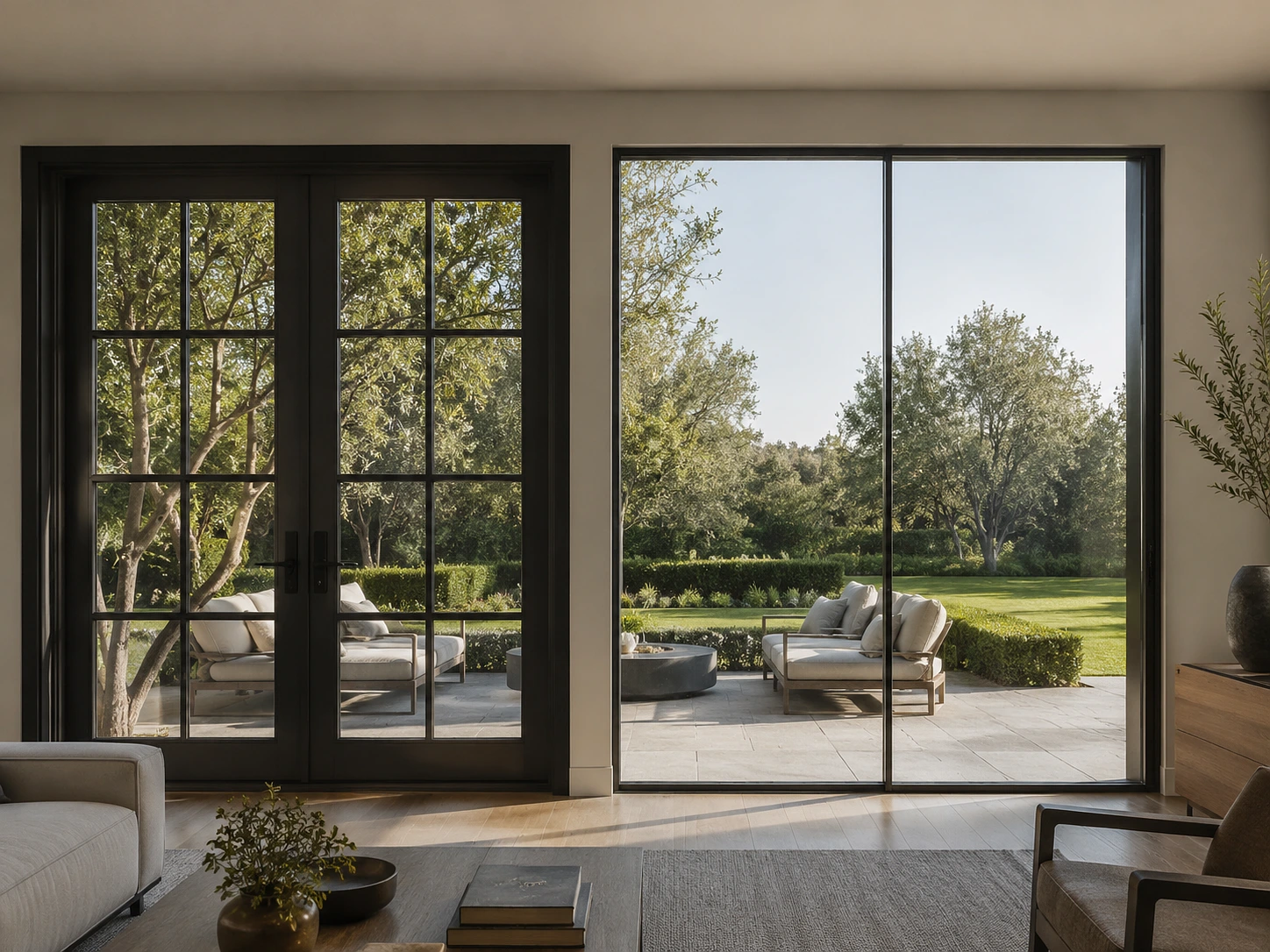
This is where the same-glass puzzle sorts itself out. Two doors can have identical glass area, but if one has thick frames and chunky dividers your eye catches on those bars, stops at the frame, and reads the door as a wall with holes in it. The glass barely matters at that point because the eye never makes it through cleanly.
A slim-framed door does the opposite. Less frame to catch on, so the eye slides straight through to the outside and keeps going, and the slimmer the frame the further it travels and the bigger the room feels. That’s not a styling preference, it’s the actual physics of it. When someone says a door “feels more open,” what they’re reacting to, usually without clocking it, is how little the frame interrupts the view.
It’s why minimalist large-pane door systems read so differently from a traditional framed door with the same glazing. Comes down to how much frame is sitting between you and the depth outside.
The floor space a swinging door quietly steals
There’s a second, more practical way the wrong door shrinks a small room, and this one you can actually measure.
A standard hinged door swings through an arc and that arc is dead floor. Nothing can sit there permanently, no chair, no plant, no storage, because the door has to pass through it. In a small room that swept area runs somewhere around 6 to 10 square feet of floor held hostage by one door, and in a really compact space that’s a proper slice of your usable footprint sterilised by the way the door opens.
Sliding and folding systems hand that floor back, because the panels move parallel to the wall instead of swinging into the room. A specialist in slim-framed folding systems, as the door by Slide & Fold does two jobs in one here, the slim frame keeps your sightline running out into the garden, and the folding action gives back the floor a hinged door would have eaten. Visual depth and physical space in the same move, which is exactly what a small room needs most.
A quick way to see it for yourself before you spend anything:
- Mark the swing arc on the floor with tape and stand in it. That’s a floor you’ll never use if you fit a hinged door there.
- Check the frame thickness against the glass. Put your eye where you’d normally stand and notice whether it lands on the frame or travels through. Thick bars stop you, slim ones don’t.
The threshold detail nobody mentions
The floor. That’s the small thing that makes or breaks the whole effect and almost no article touches it.
A raised step, a threshold lip between the inside floor and the outside, and the eye registers a break. Inside and outside read as two separate places, and you lose a chunk of the “the room extends outdoors” illusion right there. A flush, level threshold where the inside floor runs straight out to meet the patio with no step does the reverse, the floor reads as continuous, and that continuity is half of what sells the feeling of a bigger space.
So if you’re going to the bother of slim frames and big glass to push your sightline outside, don’t let a raised threshold quietly undo it. Level the floor through the opening and the effect actually lands.
The honest catch: it works in daylight, less so at night
A big glass door that makes a room feel open and airy through the day can do the exact reverse after dark. Once it’s black outside all that glass turns into a mirror reflecting the room back at you, and a wall of reflected interior can genuinely make a small space feel more closed-in at night than a solid wall would.
Not a reason to avoid glass doors, the daytime gain is usually worth it, but a reason to plan for it. Decent blinds or curtains that shut the glass off in the evening let you keep the open feel by day and a contained, cosy room at night. Anyone telling you big glass is pure upside hasn’t lived with it through a winter evening.
So what actually makes the small room feel bigger
It’s not the glass area everyone fixes on. It’s three things working together: a frame slim enough that your eye travels through instead of stopping on it, an opening style that doesn’t steal your floor, and a threshold flush enough that inside and outside read as one continuous space.
Get those three right and a small room genuinely feels bigger, not because you changed its size but because you moved the point where the eye comes to rest from a few feet away to somewhere out in the garden. That’s the trick, start to finish. The glass was never the answer on its own.

 Decor & Improvement Accessories