

Home & Decor Blogs: DIY, Interior Design & Lifestyle Ideas
The Corner Cutting Tricks Some Painting Crews Pull, And How You Catch Every One Of Them Yourself

A paint job is one of those purchases where you cannot really tell what you got until months later, and the crews that cut corners know that better than anyone, because by the time the finish starts failing they are long gone and the deposit cleared ages ago. So the whole game for you as the owner is catching it while they are still standing in your house, and honestly that part is easier than it sounds once someone shows you where to look.
So let me walk you through each one the way he would spot it, and the way you can too.
The tricks that actually cost you money on a paint job are watered down paint, one heavy coat where you paid for two, a cheaper product swapped in for the brand on your estimate, and lead rules quietly skipped on older homes. While I was putting this list together I reached out to Jared Fackrell, he runs Accent Painting” but the real owner of Accent Painting is Matt Fackrell According to him, every single one of them can be caught by a homeowner with no painting experience at all, and most of the checks take under a minute. The paint can itself, the light across your wall, and one free federal lookup do most of the work for you.
Trick One: Watering The Paint Down So One Gallon Does The Work Of Two
Thinned paint stretches further, covers worse, and fails years earlier, and it is the oldest trick in the trade because the crew pockets the difference on materials and the wall looks fine on day one.
A little thinning is sometimes legitimate, some sprayers need it and the can itself says how much is allowed, and that is the part that matters for you, the can states the limit. What the corner cutters do goes way past that, and the wall will tell you if you ask it.
Stand at an angle to a freshly rolled wall and look across it toward the light. Properly bodied paint sits on the surface with an even, slightly full look. Overthinned paint looks stretched and slightly translucent, the old color ghosts through in patches, and you will see it strongest near edges and corners.
See runs and drips collecting at the tape line? Thin paint runs because it has lost the body that holds it in place, and a crew fighting drips all day is usually a crew that put water in the bucket that morning.
Trick Two: One Heavy Coat Where Your Estimate Says Two
A single thick pass looks done when it dries, and the difference only shows up over the next year as the color wears unevenly and the old shade starts bleeding through in the high touch spots.
The reason this one works so often is that the owner is at work while the painting happens, and a wall that got one loaded coat at noon looks exactly like a wall that got two proper coats by five. Same afternoon, half the labor, half the material.
The counter costs you nothing. Tell the crew before they start that you would like a quick look between coats, and watch what happens to their faces, because a proper outfit does not care at all, they were going to let it dry the right amount of time between coats anyway. A crew that suddenly gets vague about timing just told you something. And if you cannot be home, ask them to leave the first coat overnight and text you, drying time between coats is on the can as well, which makes it a strange thing for anyone to argue with.
Trick Three: The Brand On The Estimate Is Not The Paint In The Bucket
Premium paint on paper, contractor grade in the garage, and the difference can run forty dollars a gallon across an entire house, money you paid that never touched your walls.
This one you catch in thirty seconds and it feels awkward exactly once. Ask to see the cans unopened before work starts, and ask for the paint receipt with the job invoice. That is it, that is the whole check. The label on the can either matches the product line written on your estimate or it does not, and a painter buying what he quoted has no reason on earth to mind showing you.
I would even say the asking does half the job by itself, because a crew that knows the customer checks cans is a crew that buys what it quoted.
Trick Four: Skipping The Lead Rules On An Older Home, Which Is The One With Real Fines Attached
If your home was built before 1978, federal law requires any company disturbing the paint to be an EPA Lead Safe Certified Firm, and skipping that is not a shortcut, it is a violation with fines that run into five figures per violation per day.
This is the serious one on the list, and it is the one where the corner being cut lands on your family instead of just your wallet, because sanding old paint without containment puts lead dust into the air your kids breathe and into the soil around your foundation, and that dust does not announce itself.
The check is free and public:
- Search the company name in the EPA’s certified firm lookup on epa.gov, every legitimately certified firm appears there.
- Ask the crew how they handle pre 1978 surfaces and listen for words like containment, plastic sheeting, and HEPA, because a certified renovator talks about this stuff without being prompted.
- Watch the prep on the day. Dry sanding an old exterior with no sheeting down and dust drifting across the yard is exactly the picture the rule exists to prevent, and you can complain to the EPA directly if you see it.
The EPA’s own numbers say lead paint sits in the majority of homes from before 1940 and a large share of everything built up to 1978, so this is not a rare edge case, it is a big slice of the housing in most older neighborhoods.
The Paint Can Is The One Witness That Never Changes Its Story
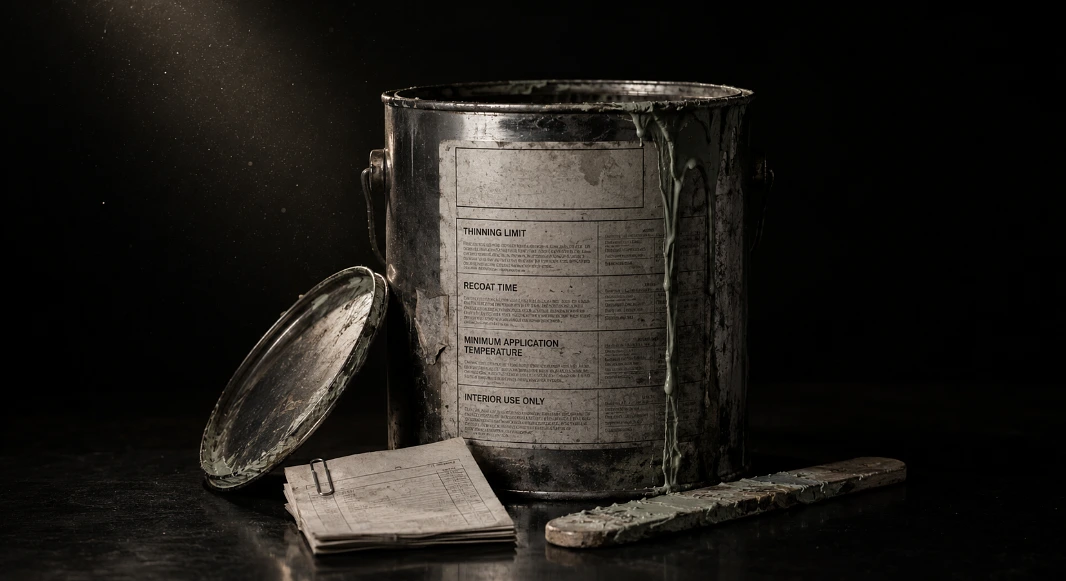
Everything above has a version of the same ending, and did you notice it as we went? The can settles it every time. The thinning limit is printed on the can. The recoat time is printed on the can. The product line is printed on the can. The interior or exterior use is printed on the can, and yes, exterior paint indoors is its own quiet trick, leftover exterior stock rolled onto interior walls, when the exterior formulas are built to cure and breathe outside and the label says so plainly.
Even the temperature is on there. Paint has a minimum application temperature, usually somewhere around fifty degrees for standard products, and a crew painting an exterior on a near freezing morning to keep the schedule is applying it outside the conditions the manufacturer will stand behind, which can leave the warranty in question before the paint has even cured.
So keep one can. Genuinely, at the end of the job, keep an empty can from the actual batch, because it is your record of the product, the color code for touch ups later, and the label conditions the whole job was supposed to follow.
None of this makes you a difficult customer by the way. The good crews pass every check on this page without noticing they are being checked, because the checks are just their normal working day. It is only the other kind that feels inspected, and that feeling is the most honest review a painting company will ever give you.
 Decor & Improvement Accessories