

Home & Decor Blogs: DIY, Interior Design & Lifestyle Ideas
What Are the Best Decorative Swimming Pool Design Ideas for Any Backyard?
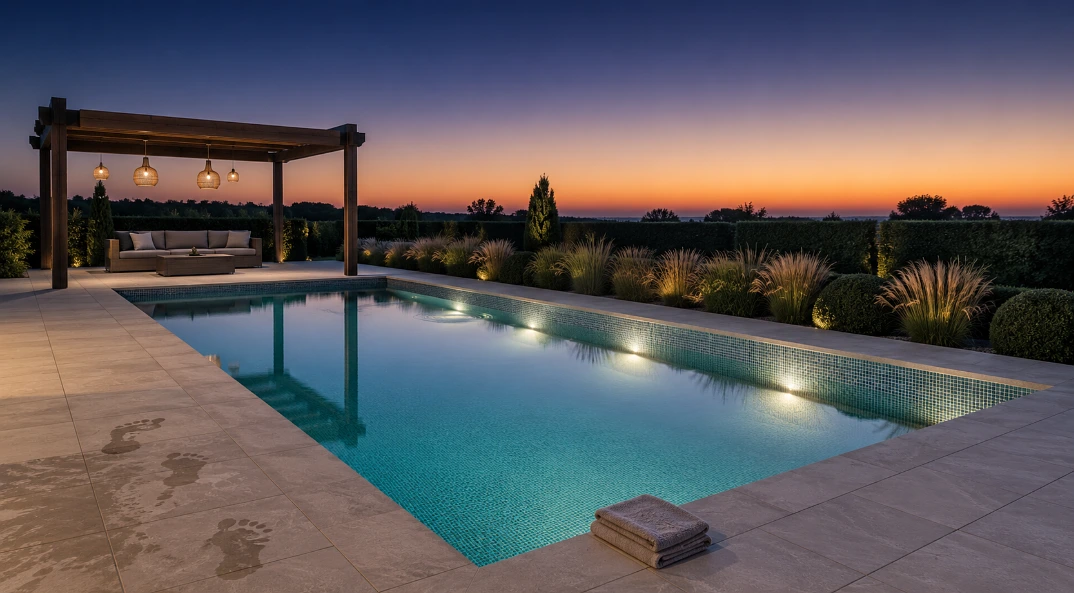
A decorative swimming pool turns a plain backyard into a calm, resort-style retreat. The best ones blend the right shape, tile finish, lighting, and surrounding landscape into one coherent design rather than stacking trendy features on top of each other. This guide covers the design styles that work, the decorative elements that deliver the most visual impact, and the trade-offs most homeowners only discover after construction.
To ensure the design guidance and pool tile information in this article is accurate, we consulted with the team at Mineral Tiles, a U.S based online tile shop with over 20 years of experience and 15,000+ verified customer reviews. Their published installation guides, pool design resources, and hands-on work with homeowners, pool builders, and architects help to ensure the information in this article is reliable.
4 Decorative Swimming Pool Design Styles
Minimalist Geometric

Rectangular or square pools with clean edges and neutral tile. Works well with modern and contemporary homes. Straightforward geometry can simplify automated cleaning and cover installation.
Infinity Edge

Water appears to flow seamlessly into the horizon. Requires carefully controlled elevations and structural stability to maintain a consistent overflow edge, particularly on sloped or elevated sites.
Natural and Tropical

Rock features, cascading waterfalls, and lush surrounding plants create a resort feel. This style requires the most ongoing maintenance of any design approach.
Compact Plunge or Courtyard Pool

Small, deep pools designed for tight spaces or urban backyards. Punches above its size in visual impact when finished with quality materials.
The Decorative Elements That Create the Most Visual Impact
Tile Finish and Color
Tile has a stronger influence on a pool’s overall appearance than almost any other single design choice.
Glass mosaic tile produces the reflective, iridescent effect most associated with decorative pool design. It works particularly well for waterline bands, steps, and feature areas where visual depth matters most.
Before choosing a tile color, it helps to establish the broader color palette of the home and outdoor space so the pool complements the existing architecture rather than becoming a separate visual element.
Porcelain pool tile can provide a durable, relatively low-absorption option in designs where a more uniform or stone-inspired appearance is preferred. Both materials are available across a wide range of palettes and formats suited to decorative applications.
Dark tile interiors (deep blue, charcoal, black) create a dramatic, jewel-toned water appearance. Calcium deposits, staining, and surface imperfections are more noticeable against dark finishes, making consistent water chemistry and routine maintenance particularly important for keeping the surface looking its best.
How tile color affects water appearance:
| Tile Color | Water Appearance |
| White or pale blue | Classic turquoise, resort-style look |
| Mid-tone blue or teal | Rich aqua, Mediterranean feel |
| Dark blue or charcoal | Deep ink-blue, dramatic effect |
| Black | Deep, near-mirror water appearance |
Mosaic art tiles on the pool floor (medallions, marine motifs, geometric patterns) create a focal point that is visible from above and from surrounding deck areas. Homeowners narrowing down a palette can browse swimming pool tiles to compare glass, porcelain, recycled glass, and decorative mosaic options across formats and colors.
Water Features
Waterfalls, sheer descents, and deck bubblers add both visual and acoustic interest. Moving water increases aeration, which can accelerate carbon dioxide loss and cause pool pH to rise. Pools with frequently operated spillovers or waterfalls may require more frequent pH monitoring and adjustment than standard pools.
Sheer descents and slot waterfalls integrate cleanly into a wall or raised edge and generally have a simpler visual and maintenance profile than elaborate rock waterfall installations.
Lighting
Underwater LED lighting is one of the most effective ways to change the appearance of a pool after dark without altering its physical footprint. Color temperature is adjustable: a cooler white for evening swimming, warmer tones for entertaining.
Ambient perimeter lighting extends the decorative effect beyond the water and helps define pathways and seating areas after dark.
Surrounding Areas and Landscaping
| Element | Generally Suitable | What to Avoid |
| Deck material | Large-format porcelain pavers, concrete | Mixing too many materials in the same space |
| Plants near pool | Low-shedding plants suited to the local climate | Plants that drop heavy leaves, fruit, pollen, or flowers directly into the pool |
| Shade structure | Pergola, shade sail | Overhanging tree branches above the water |
| Seating | Freestanding outdoor furniture | Fixed underwater bar stools (debris collects around the bases) |
Planting too close to the water line is a common design mistake. Fallen leaves, pollen, and other organic debris increase the maintenance and chemical demand of a pool and can contribute to water-quality problems if they accumulate. Low-shedding plants placed with a buffer between planting beds and the pool edge solve the aesthetic and maintenance problem at the same time.
Design Mistakes That Make Decorative Pools Look Cheap or Cost More to Run
Mixing too many materials. Combining brick, stamped concrete, multiple stone types, and colored tile in the same space makes even an expensive pool look cluttered. The strongest decorative pools commit to one or two primary materials and let them do the work.
Undersizing the pool’s mechanical system for the planned features. Complex water features may require dedicated or separately controlled hydraulic circuits depending on their flow requirements. The pool builder should account for the feature’s flow requirements when sizing pumps, filtration, and plumbing rather than treating the feature as an afterthought.
Choosing dark finishes without planning for maintenance. Dark plaster and dark tile interiors look exceptional when maintained correctly. Maintaining the water within the manufacturer’s recommended chemistry ranges helps reduce the risk of scaling, staining, and surface deterioration that dark finishes make more visible.
Skipping corrosion protection in saltwater pools with metal accents. Saltwater pools with metal accents, rails, light components, or other exposed metal parts may require additional corrosion protection. A sacrificial zinc anode is one option used in some saltwater pool systems. Whether one is appropriate depends on the equipment, bonding system, and manufacturer’s recommendations.
Quick Planning Reference
| Decorative Feature | Visual Payoff | Key Trade-off |
| Glass mosaic tile | Very high: reflective, iridescent finish | Requires installation materials and grout compatible with the specific tile and submerged application |
| Rock waterfall | High: natural, resort feel | More complex construction and maintenance profile than simple water features |
| Infinity edge | Very high: luxury visual effect | Requires careful structural and hydraulic design to maintain the overflow edge consistently |
| LED pool lighting | High: transforms night appearance | Adds electrical components that require proper installation and ongoing maintenance |
| Dark tile interior | Very high: dramatic water color | Calcium deposits and surface imperfections are more visible on dark finishes |
| Potted tropical palms | Medium-high: lush resort look | Require climate-appropriate care and secure placement near water |
The Design Principle Behind Every Good Decorative Pool
The pools that consistently look best are the ones that choose a clear visual direction and execute it with consistency. One dominant material, one accent, consistent lighting temperature, and plants that complement rather than compete with the water. The decorative impact comes from coherence, not from the volume of features installed.

 Decor & Improvement Accessories