

Home & Decor Blogs: DIY, Interior Design & Lifestyle Ideas
You Think You Beat the Moths in Spring. That’s the Mistake.

Ask most people about moths and you’ll get the same rough story back. Warm weather brings them, spring’s the danger, it fades once autumn shows up. Fine. For a good chunk of the year that story even holds.
But it’s hiding something.
Sitting right inside that warm stretch there’s a second surge, a real one, documented, and it isn’t arriving in the spring you were watching for. It’s landing in August and September, the exact weeks you’ve stopped thinking about it. You packed the woollens away, nothing looked wrong, you moved on. And that’s the wave that gets people, because it turns up after everyone’s already decided the job’s done.
The Real Peak Comes Late, Not in Spring
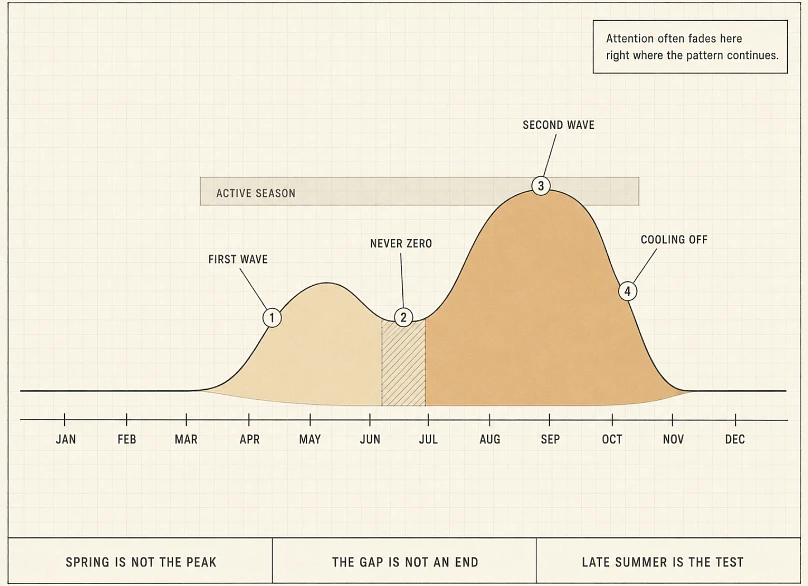
Clothes moths are on the move from about May through October, and they breed happiest between fifteen and thirty-five degrees, though plenty of sources pull that tighter, twenty-one to thirty-two, which is more or less where a lot of homes are sitting right through late summer. Somewhere inside that long window a second peak is building, and it’s showing up in August and September while the first lot are still going.
And this is the bit that’s catching everyone flat.
By high summer people are relaxing. The thinking goes that if spring passed quietly, the worst is behind them. It isn’t. It’s in front of them, and it’s been getting ready the whole time you weren’t looking.
Those Eggs Weren’t Doing Nothing. They Were Waiting.
The reason this second wave even exists comes down to patience, the moths’, not yours. Eggs that got laid back in April or May, when the females were first going hunting for somewhere quiet to settle, don’t always hatch on cue. They’ll sit there. Weeks, sometimes months, holding off, waiting until the heat and the damp around them are landing just right.
Then summer’s delivering exactly that, and the whole dormant batch is coming alive more or less together.
So the house that saw nothing through June isn’t a house without moths. It’s a house where the moths just weren’t hatching yet. Big difference, and you’re only finding out which one you’ve got when the wardrobe’s already been feeding them for a fortnight.
Heat Speeds Them Up. Heat and Damp Together Take Over.
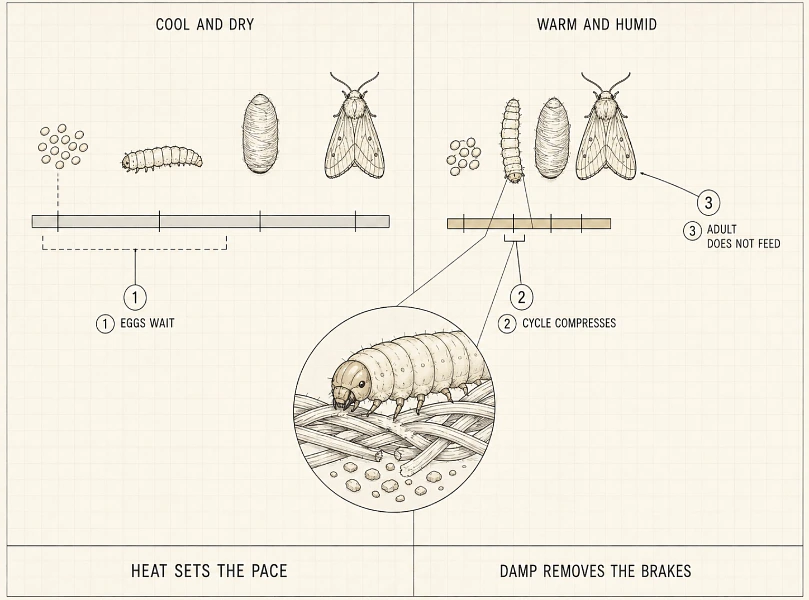
Warmth on its own is already pushing them along, because a moth’s running at whatever pace the air sets, cold-blooded, no say in the matter. But you pair the heat with humidity and the whole cycle is collapsing inward. What normally takes months, egg through to grown adult, is getting cut right down, and eggs that would’ve been sitting for ages are hatching inside a week.
The one thing worth getting straight here is that people are blaming the wrong culprit. The moth flapping round your lamp at night isn’t eating anything. It’s the larvae doing the damage, and they’re the ones racing ahead once the warmth and the wet are turning up together. They’re going for the dark, still, stuffy corners, the spots where wool and silk and fur have been sitting untouched for months.
Which is, more or less, a description of the box you shoved to the back of the wardrobe in spring.
The Box You Sealed in Spring Is Feeding Them Right Now
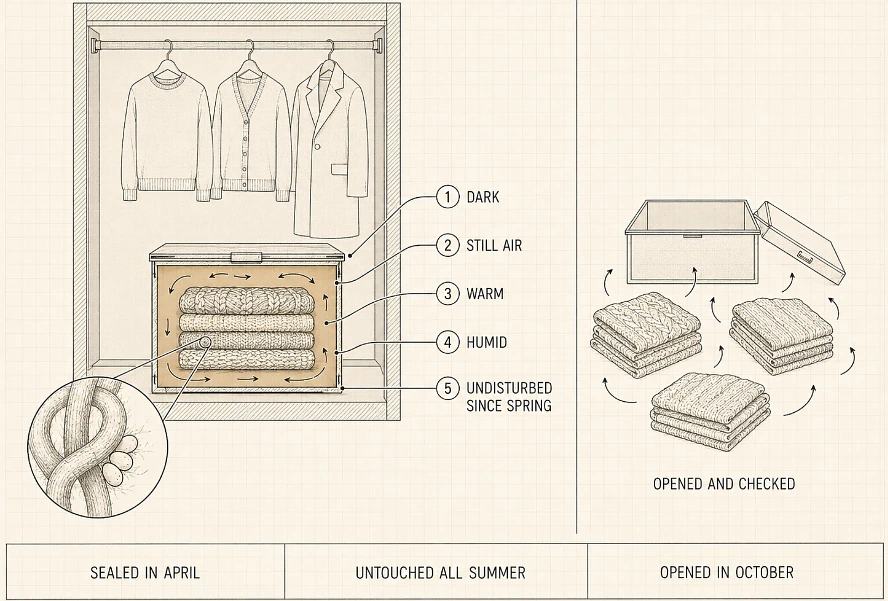
What’s happening here is that the calendar and the way a normal house runs are lining up badly. You pack the winter jumpers away sometime in spring, into a box, into the back of the cupboard, fully planning to leave them be until the cold comes round again. Dark, still, warm, humid, undisturbed for months. Read that back. You didn’t store your clothes. You built the moths a nursery and posted them the address.
And the cruel part is the quiet. You sealed it in April, nothing looked wrong, so you’re assuming nothing is wrong. Meanwhile whatever got laid in there, or the small crowd that was already moving in, has been sitting the whole summer waiting for late-summer conditions to arrive. By the time you’re finally lifting that lid, the holes have been coming for weeks.
Go and Look Today, and Here’s What Gives Them Away
Don’t wait for a moth to flutter past before you’re taking it seriously. One or two near a lamp doesn’t prove an infestation, though it usually means eggs have gone down somewhere nearby. What you’re actually hunting for is steadier than a stray adult.
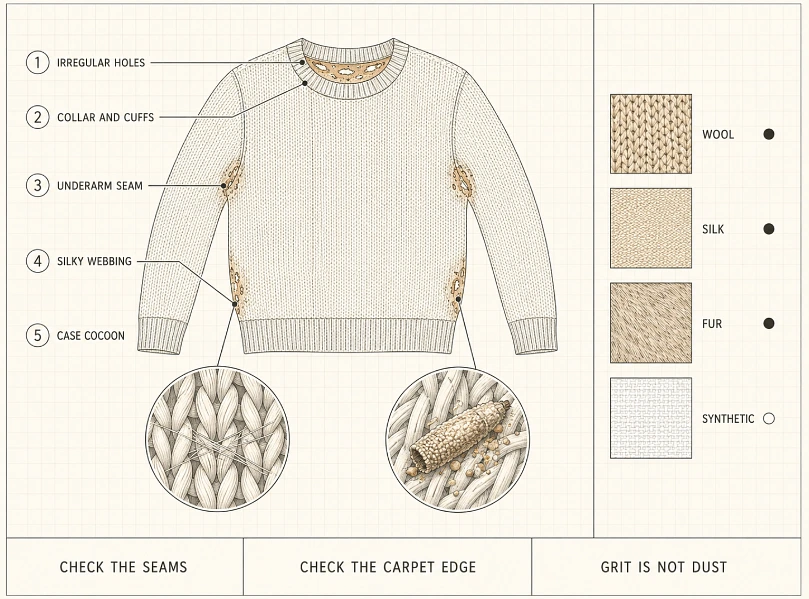
You’re looking for irregular holes, and they cluster where you’d guess, collars, underarms, anywhere the fibres rub as you wear the thing. Run your eye along seams and into carpet edges for fine silky webbing or little case-shaped cocoons, that’s where the larvae shelter while they feed. Trust your nose too, a musty closet is a signal, especially when it comes with a fine sandy grit that isn’t dust, it’s droppings. And check what’s being eaten. Wool, silk, fur, feathers get hit. The synthetics mostly get left alone, which itself tells you what you’re dealing with.
Open that box now, while the second wave’s peaking, and actually go through it rather than glancing in and shutting it. That’s the difference between one ruined jumper and a problem that’s crept through everything stacked around it.
When You’re Past the Point of Sorting It Yourself
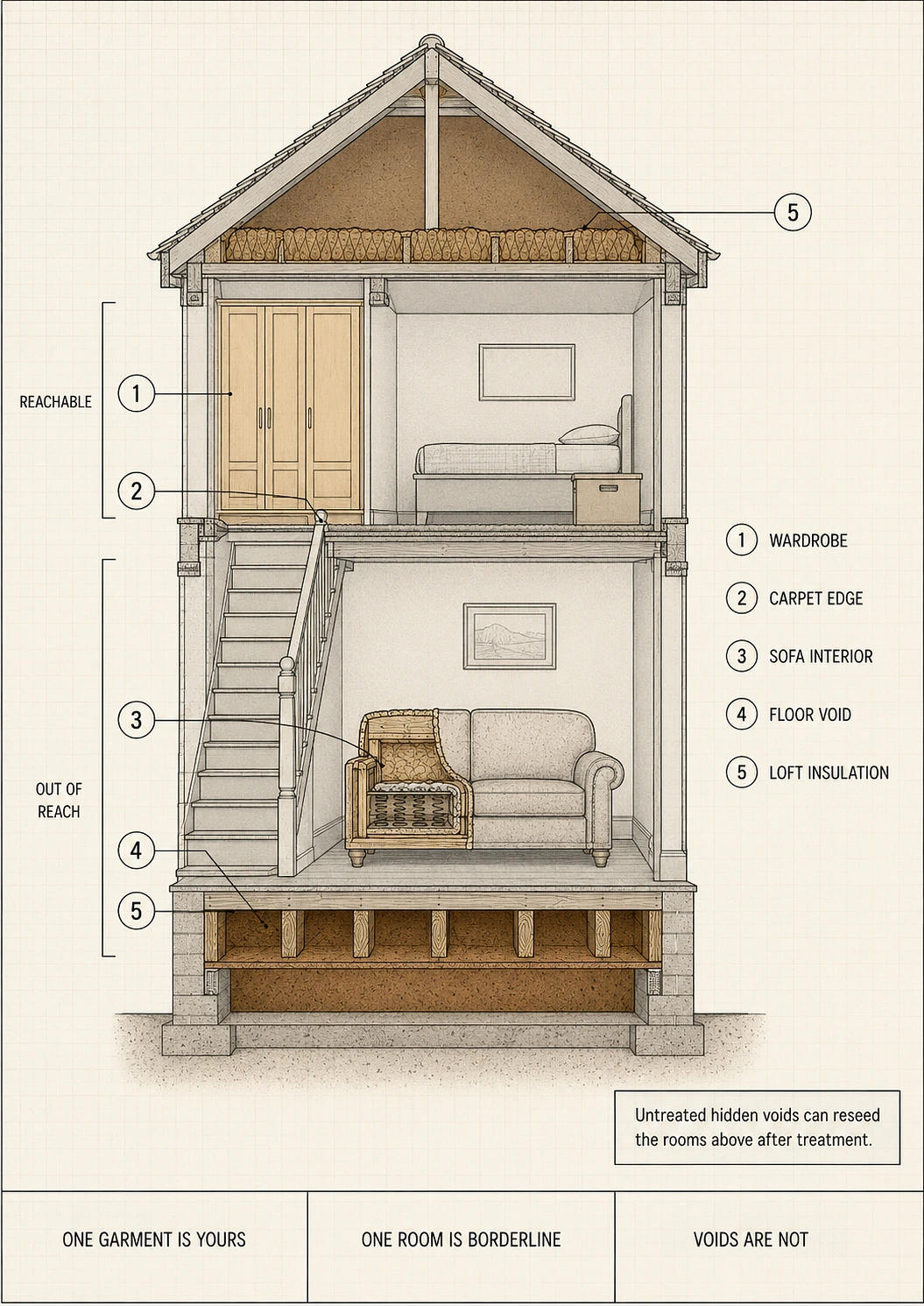
One jumper, caught early, you can handle. Wash it, vacuum properly around where it was, keep things sealed from then on. Done.
What you can’t really chase down alone is the version that’s already spreading, several rooms in, or gone somewhere you simply can’t get at, up inside the sofa, under the floorboards, into the loft insulation where you couldn’t even tell how far it’s gone if you tried.
That’s when professional moth control services stop being over-the-top and start being the quicker way out, because the people who are doing this all day already know the hiding spots you’d walk straight past, and they’ll treat for the species you’ve actually got rather than throwing something generic at it and hoping.
So the wardrobe that’s been shut since spring. Open it this week. Not in October when it’s cooled off and the damage has had all summer to settle in without a sound.
 Decor & Improvement Accessories