

Home & Decor Blogs: DIY, Interior Design & Lifestyle Ideas
Why Pressure Washing Is One of the Smartest Investments a Property Owner Can Make

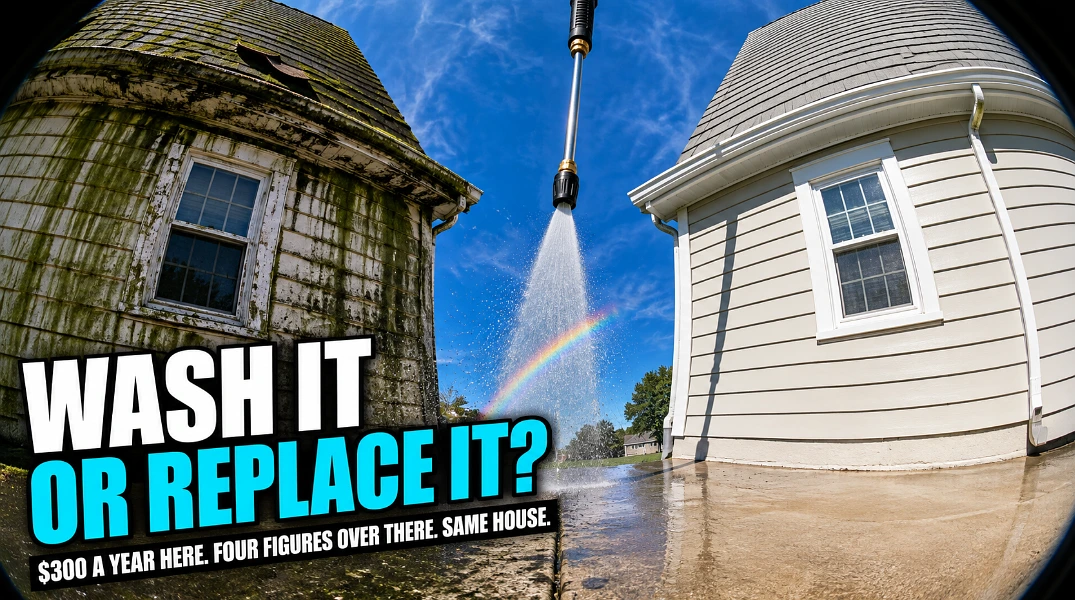
Most people file pressure washing under cosmetic, somewhere near mowing the lawn and painting the front door, and that is roughly where the misunderstanding starts.
The stuff building up on your siding and your driveway is not dust sitting there politely. Algae, mildew and moss are alive, and they hold moisture against whatever they are growing on, which is what turns a cleaning job into a repair bill if it gets left long enough. Wood stays damp and starts to rot. Paint fails from underneath. Concrete stays wet through freeze cycles and spalls.
So the case for cleaning is not really about how the house looks on a Saturday. It is that a few hundred dollars spent regularly keeps you away from the four and five figure version of the same problem.
Which Surfaces Give You the Most Back
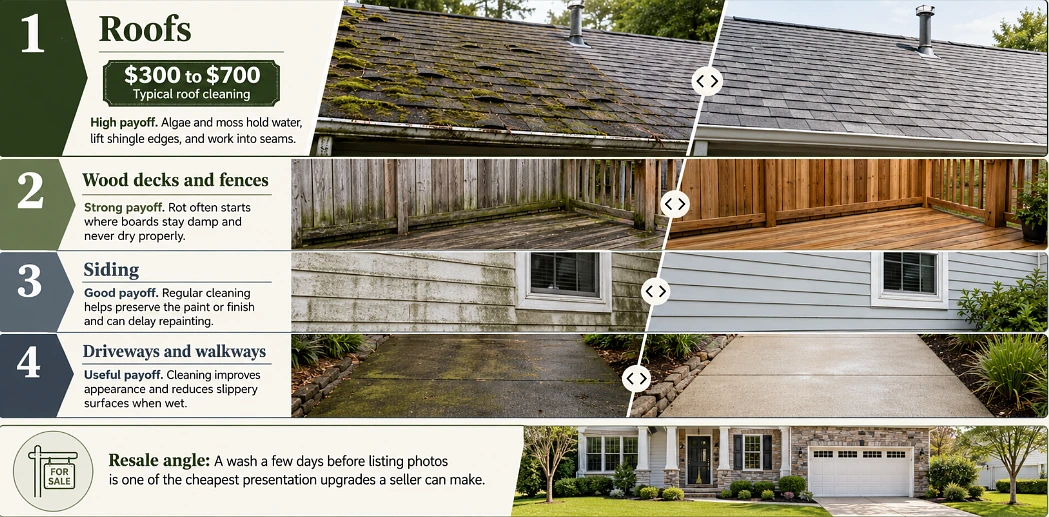
Not every surface repays cleaning equally, and it helps to know which ones are doing the real work for you.
Roofs are the big one. Algae and moss on shingles hold water against the mat and lift the edges, and moss roots into the seams. Roof cleaning runs $300 to $700 in most cases. Replacing a roof early does not.
Wood decks and fences come next, because that is where rot tends to start, usually at the boards sitting closest to the ground where they never dry out properly.
Siding is mostly about the paint or the finish underneath the mildew, so cleaning it every year or two is what buys you the extra few years before repainting.
Driveways and walkways are partly appearance and partly safety, since algae on a hard surface gets genuinely slippery once it is wet.
There is also the resale angle, which is worth a sentence. A house being photographed for a listing benefits enormously from a wash a few days before the photographer shows up, and that is one of the cheapest presentation upgrades available to anyone selling.
What Can Be Cleaned Safely, and at What Pressure
This is the part most people get wrong, and it is where the damage comes from.
Pressure is not one setting. A garden hose puts out around 50 PSI. A pressure washer runs anywhere from 1,500 to 4,000, and pointing the wrong end of that range at the wrong material is how people wreck their own houses.
- Concrete, brick and stone take the high end, up around 3,000 PSI, which is why driveways clean up so well.
- Vinyl siding wants something more like 1,300 to 1,600 PSI, and never angled upward, because water forced up behind the panels ends up in the wall.
- Wood decking and fencing sits lower again, roughly 500 to 1,200 PSI with a wide fan tip, and anything above about 1,500 will erode the timber and raise the grain.
- Roofs and painted surfaces should not be pressure washed at all. They get soft washed instead, which is under 500 PSI with a cleaning solution doing the actual work while the water only rinses.
- Windows never get a direct spray, because the seals go and then you have a fogged double glazed unit to replace.re
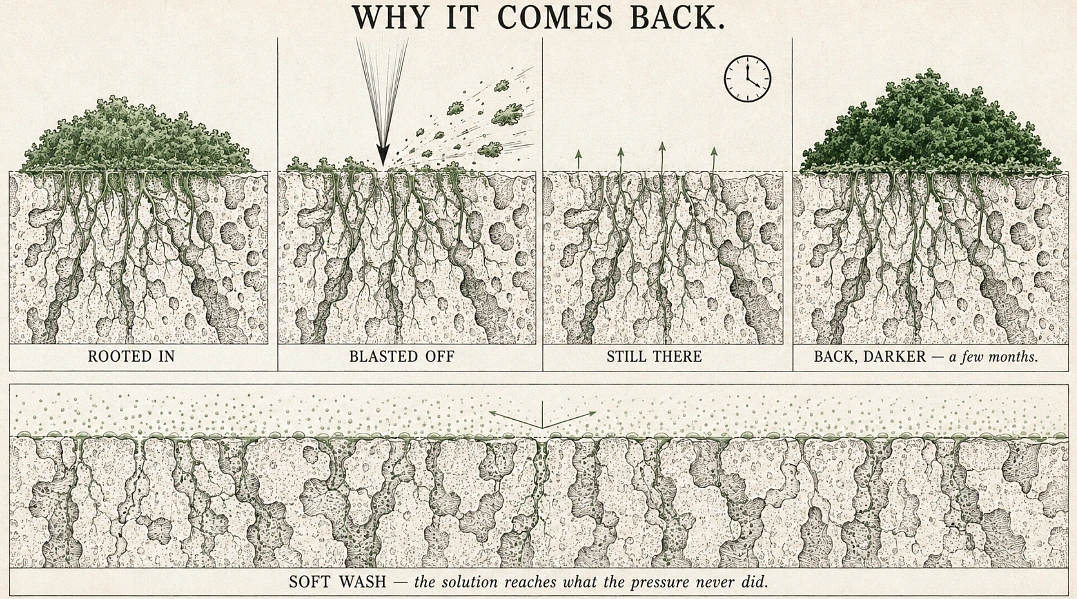
That soft washing distinction matters more than people expect. On anything organic, the growth has roots in the surface, so blasting it off just removes the visible part and it grows back darker in a few months. The chemistry kills it. The pressure only cleans up afterwards.
Common Mistakes That Turn a Cleaning Job Into a Repair
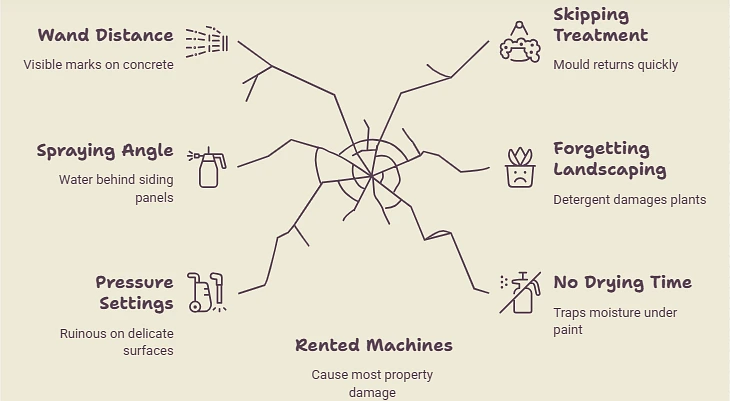
Rented machines cause most of this, and it is rarely the machine’s fault.
- Using one pressure setting for the whole property, which is fine on the driveway and ruinous on the deck.
- Spraying siding at an upward angle so water gets driven behind the panels and sits in the wall cavity.
- Holding the wand too close, which leaves visible wand marks on concrete and gouges on wood that do not come out.
- Skipping the pre treatment on organic growth, so the mould is back before the season ends.
- Forgetting the landscaping, since the runoff carries detergent and plants sitting next to a driveway take the worst of it.
- Washing straight before painting without leaving proper drying time, which traps moisture under the new coating.
Worth adding that pressure washers send more than six thousand people a year to emergency rooms, mostly through lacerations, which is a genuinely surprising number for a tool people treat as a garden gadget.
What It Costs, and When Doing It Yourself Makes Sense
Professional work generally runs $0.10 to $0.50 per square foot, with a typical house wash landing somewhere around $250 to $600 and a driveway around $100 to $250. Most companies have a minimum call out of about $100, which is why bundling matters, since booking the driveway, the walkway and the house together usually saves 15 to 25 percent against doing them one at a time.
Renting a machine costs $45 to $250 a day plus detergent and your Saturday.
The honest split is this. A concrete driveway or a patio is a perfectly reasonable DIY job, the surface is tough, the pressure is forgiving, and the worst outcome is uneven cleaning. Anything else, roofs, siding, wood, anything at height, is where the professional version earns its money, because the rental wand does not come with the judgment about which surface tolerates what, and the repair for getting it wrong costs more than the job would have.
If you are hiring out, ask which surfaces are getting pressure and which are getting soft washed before anyone quotes a number. That one question sorts the crews quickly. A reliable power washing team will explain the difference without being prompted and will adjust the settings surface by surface, while anyone who talks about pressure washing your roof is telling you exactly what you needed to know.
How Often to Do It
Once a year for the whole property is the standard, with driveways and walkways getting a second pass if they see heavy traffic or sit in shade.
Spring suits most people because it clears the winter grime and the pollen residue in one go. Autumn works too, and there is an argument for it, since going into the wet months with clean surfaces means there is less organic material sitting there feeding growth all winter.
Anything getting painted, stained or sealed gets washed first, always. Coatings do not bond to mildew, and a paint job over dirty siding fails years early, which turns an eighty dollar cleaning into a wasted three thousand dollar paint job.
That is really the whole argument. The cleaning is cheap and predictable, and everything it prevents is expensive and unpredictable, and the gap between those two numbers is where the return sits.
 Decor & Improvement Accessories