

Home & Decor Blogs: DIY, Interior Design & Lifestyle Ideas
Five Things That Happen After Your Committee Signs For Maintenance Software

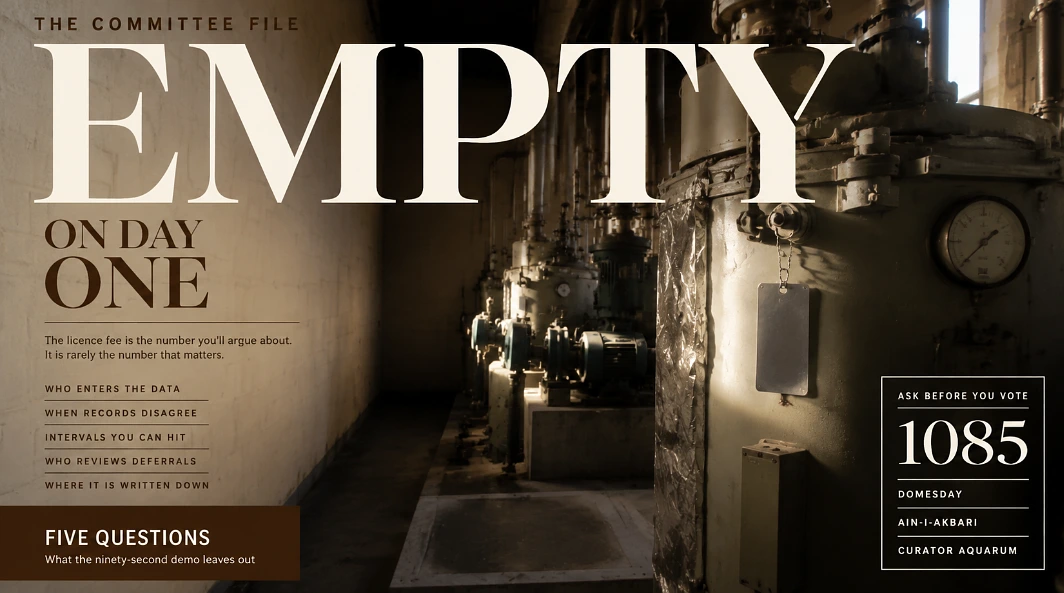
This one is for anyone sitting on a building committee or an owners’ union that is about to put maintenance software in.
I sat through one of these demos not long ago and they are always good, because that is what a demo is for. Somebody shares a screen. A work order appears, a technician on the far side of a fictional building accepts it on a phone, a photo gets attached, the job closes, and a dashboard goes from amber to green.
Ninety seconds. Amber to green. Everyone nods.
Someone on the call said it looked a lot better than the spreadsheet and they were right, because it is, and that part is not in dispute anywhere in this article.
There is an English proverb kicking around since the 1300s about a kingdom being lost for want of a horseshoe nail, and maintenance is one of the few subjects where that chain runs literally rather than poetically. A washer fails, a valve weeps, a ceiling stains, a tenant complains, an insurer asks a question, and now the committee is sitting in a meeting none of them wanted to be in. Anything that catches the washer earns its licence fee.
What follows is the five things that turn up afterwards, which a ninety-second demo has no particular reason to raise.
The Software Turns Up Empty And Filling It Is The Real Job
The licence fee is the number your committee will argue about for an hour, and it is rarely the number that matters.
What lands on day one is an empty database. Every boiler, pump, extract fan, fire damper, lift, roof unit and backflow preventer has to be typed in by a human being, with its location, model, serial, install date, service history and whatever paperwork still survives in a folder somewhere. On a mid-sized building that is weeks of somebody’s life, and it never appears in anyone’s job description.
Let me go sideways for a second, because history has already run this experiment twice and both results are worth knowing.
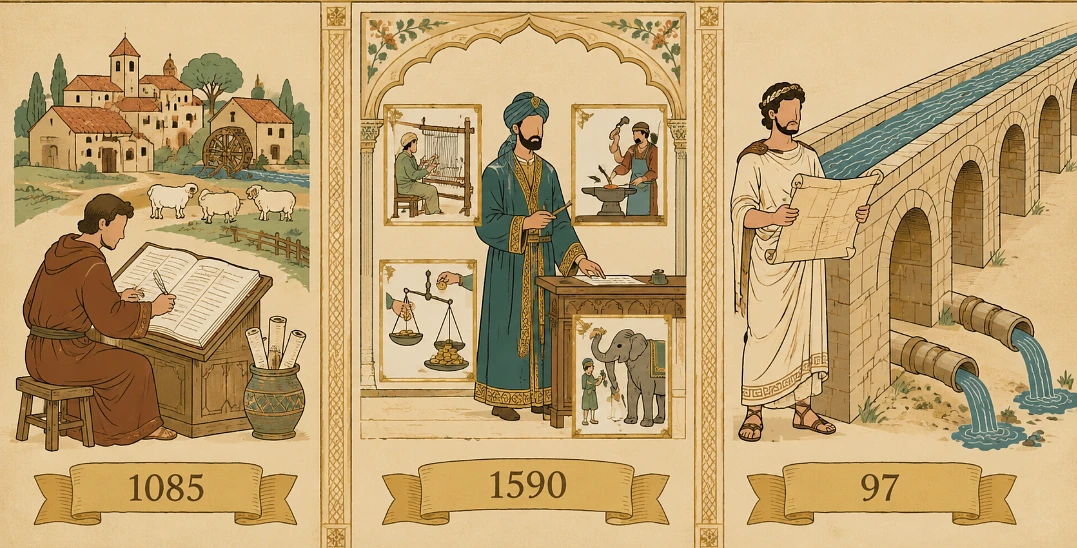
William the Conqueror wanted to know what he actually owned, so in 1085 he sent commissioners across England, and the survey they came back with covered more than thirteen thousand places and took the better part of a year. The Domesday Book gets remembered as a book. It was a data entry project with a very motivated sponsor.
Then there is Akbar’s court. Abu’l Fazl compiled the Ain-i-Akbari between 1589 and 1596, and the level of detail in it is honestly a joy to read about. More than a hundred imperial karkhanas with production, inventory and wages tracked. Building materials, labourers’ wages, estimates for house construction, even the food given to the elephants. All of it written down and kept current, in the 1590s, with no database anywhere in sight.
And the reason it worked was that a man had the title. The Mir Saman ran it. Not a volunteer with a spare afternoon, an official with a name, a salary and the responsibility sitting on him.
Your building needs a Mir Saman. That is the whole lesson, four hundred years early.
Ask this from the vendor directly, who is entering your data, whether it sits inside the quote, and what go-live looks like if it is only half finished. A half-filled system is worse than the spreadsheet, since the spreadsheet at least never claimed to be complete.
Year One Will Show You That The Records And The Building Disagree
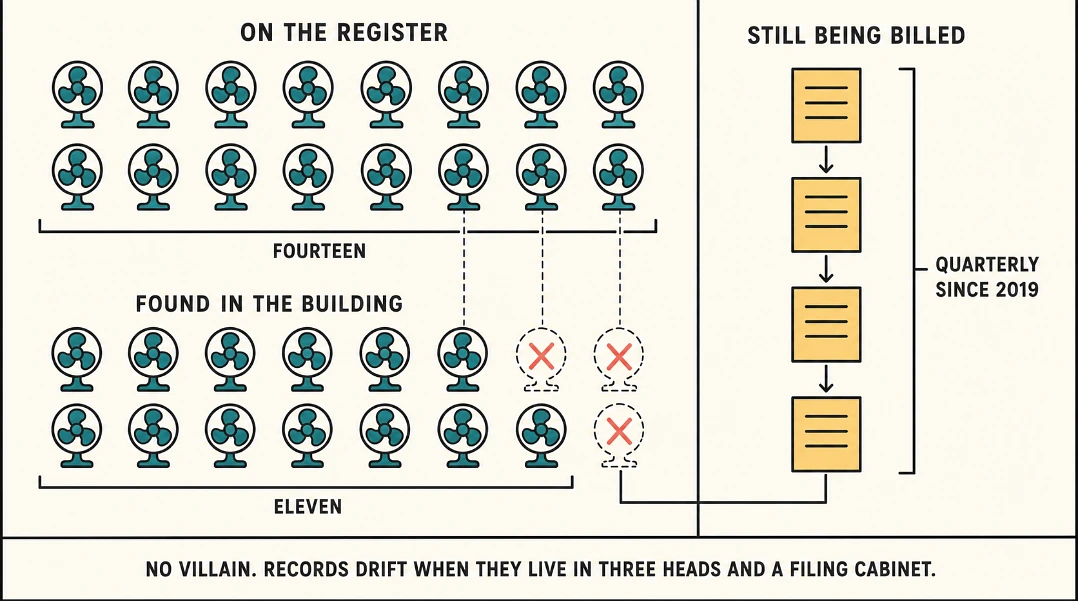
Committees read this as the software failing, and it is the software working. Showing you the gap between what everyone believed and what is actually screwed to the wall is the single most useful thing it will ever do for you.
In 97 CE a Roman called Frontinus took over as curator aquarum, which put him in charge of the water supply for the whole city, and he repaired nothing to begin with. He made maps, surveyed the intake and the delivery on every line, and then sat down with the discrepancies, because the water going into the aqueducts and the water arriving where it was meant to arrive were not the same quantity at all. Some of that was neglect and plenty of it was people quietly tapping the line with pipes wider than they were entitled to. He wrote it all up, and it still reads clearly today.
Yours will be duller and shaped the same way. The register says fourteen extract fans, the technician finds eleven. A service contract has been quietly billing quarterly visits to a unit that was pulled out in 2019. There is no villain in any of it, records drift when they live in three heads and a filing cabinet, and that first reconciliation is usually where the money hiding in your building turns up.
Schedule Too Tightly And The Dashboard Becomes Wallpaper
Here is a self-inflicted one I have watched happen more than once.
Fresh system, everyone keen, and the preventive schedules get built to the interval the manufacturer’s manual recommends rather than the interval your team can genuinely deliver. Monthly checks on things that in practice get looked at twice a year, quarterly tasks across forty assets, and six weeks later there are two hundred overdue items sitting on the screen.
A permanently red screen stops being read. The one genuinely urgent item is now sitting in the same red list as a filter change that was never realistically going to happen on time, which makes it invisible for exactly the same reason a smoke alarm that chirps every night ends up with no battery in it.
Start loose. Tightening an interval later is easy, and loosening one after the committee has watched a red dashboard for a quarter is a much longer meeting.
Everything Logged Can Be Read Back To You
The recordkeeping question gets far less airtime than scheduling and probably carries more risk, so let me put it plainly rather than cleverly.
Once your building has a searchable, timestamped record, it has a searchable, timestamped record. That is wonderful when you need to prove the fire damper inspection happened last October, and equally wonderful for the other side when a technician logged “roof unit bearing noise, recommend replacement” in March, the committee deferred it twice, and the thing failed in August. Before the software that conversation lived in somebody’s memory, and afterwards it lives in a database with a date attached.
The database is still worth having. It does mean every deferred item needs an owner and a review date, rather than a shrug and a hope.
Whoever Sets It Up Will Eventually Leave
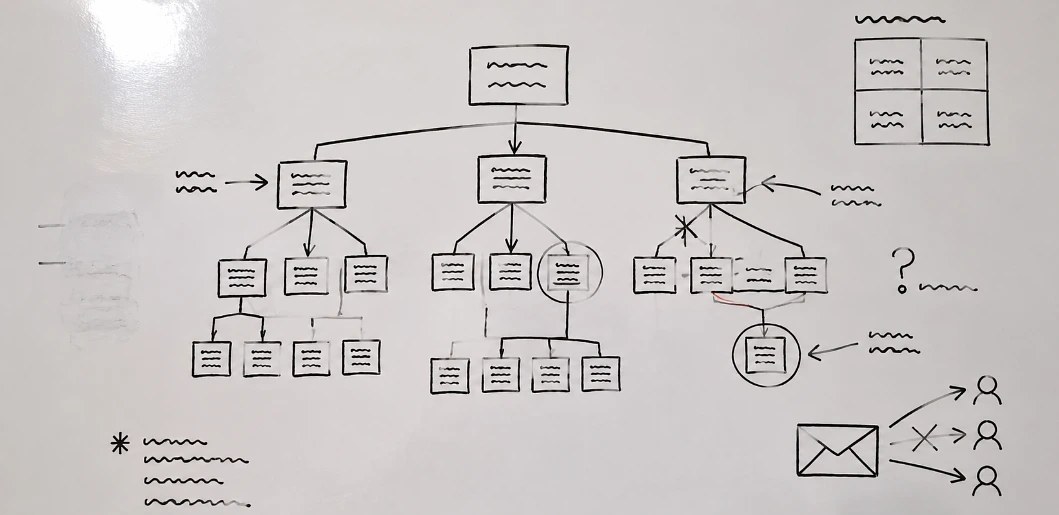
Someone on your committee or in facilities becomes the person who understands the system. They build the asset hierarchy, settle the naming convention, decide who gets notified about what, and carry roughly forty small decisions in their head that never got written down anywhere. Then they retire, or move house, or step off the committee, and what stays behind works perfectly and cannot safely be touched, because the reasoning for why the boilers are grouped like that and why the lift contractor is copied on some tickets and not others has walked out of the building with them.
The fix costs an afternoon. Write the conventions down. How assets are numbered and why, who receives which notification, what each priority level means in practice, which fields are mandatory and what belongs in them. One document, filed with the handover pack.
Which brings us back to the Mir Saman, honestly. The role survives the person, or it does not survive at all.
What To Take Into The Meeting
None of the five is a reason to stay on the spreadsheet. Buildings running on shared memory and good intentions lose the horseshoe nail eventually, and decent building maintenance software genuinely does catch it before the ceiling stains.
They are five questions worth asking out loud before anyone votes. Who enters the data and is it quoted. What happens in year one when the register and the building disagree. Which intervals can the team realistically hit. Who reviews the deferred items, and how often. Where the configuration is written down.
Ask those in the room and you will get a far more honest demo than the one where everything goes green in ninety seconds. And if the vendor shifts a bit in his chair around question one, that is worth more to your committee than the entire rest of the presentation.
 Decor & Improvement Accessories