

Home & Decor Blogs: DIY, Interior Design & Lifestyle Ideas
Why Heat Pump Repairs Belong With Certified Technicians
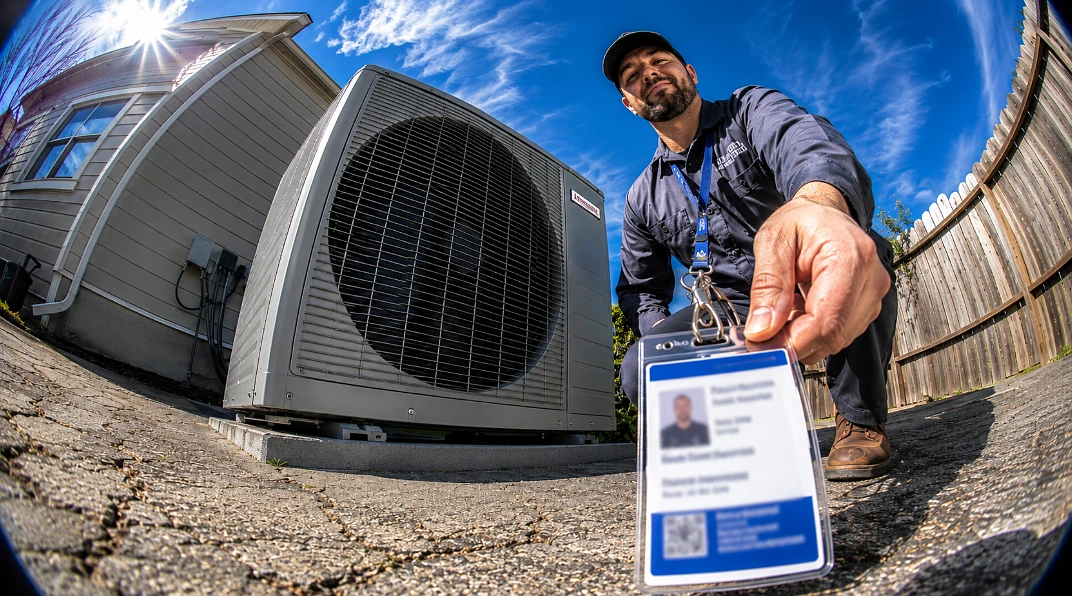
Certification sounds like marketing until you see what it covers. For heat pumps it means three concrete things: the legal right to open the refrigerant circuit at all, working knowledge of parts no furnace or plain AC has, and a paper trail your warranty may depend on. Skip all three and repairs get expensive in a very specific way, the wrong part gets replaced first. A typical repair runs $150 to $650 with a $75 to $250 diagnostic fee up front, and the certificate is largely what determines whether that fee buys a diagnosis or a guess.
The Certificate Is Federal Law Before It Is a Skill
Under Section 608 of the Clean Air Act, anyone who opens a refrigerant circuit on a heat pump must hold EPA certification. That is not an industry preference, it’s federal law, with civil penalties that can pass $44,539 per day per violation, and suppliers are only allowed to sell refrigerant to certified technicians in the first place. So an uncertified repair that touches the sealed system is illegal before the first gauge gets connected. Here’s the catch though, EPA 608 tests safe refrigerant handling, not diagnostic skill. It proves someone can legally work on your system, not that they can figure out what’s wrong with it. That gap is where the rest of this article lives.
The Parts Only a Heat Pump Has
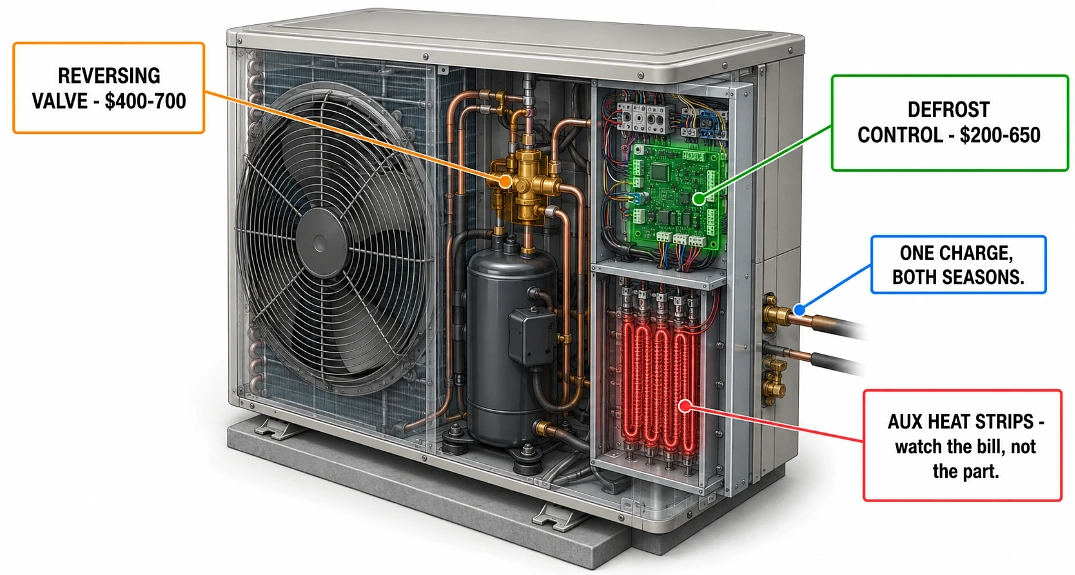
A heat pump is a refrigeration circuit that runs in both directions, and the parts that make that possible are exactly the ones general handymen and furnace-first techs misread:
- The reversing valve flips the system between heating and cooling, and when it sticks, the symptoms imitate a dead compressor. The valve costs $400 to $700 to replace, the compressor costs $800 to $3,500, and guessing wrong buys the expensive one while the cheap one stays broken.
- The defrost control runs the winter cycle that melts frost off the outdoor coil. When it fails, ice builds up and gets misdiagnosed as low refrigerant, leading to a recharge that fixes nothing. The board itself runs $200 to $650.
- Auxiliary heat strips back up the system in deep cold, and when a control fault leaves them running constantly, the house stays warm while the bill quietly doubles. This one usually gets found by whoever thinks to check, not by whoever arrives first.
- One refrigerant charge serves both seasons, so a sloppy summer top up degrades January just as much as July.
NATE Is Where Diagnosis Lives
The credential that covers the skill gap is NATE, the industry’s main voluntary certification, which includes a dedicated heat pump specialty and, unlike the lifetime EPA card, expires every two years unless the technician logs 16 hours of continuing education. That renewal cycle matters more right now than it ever has, because new heat pumps are shipping on mildly flammable A2L refrigerants like R454B and R32 that older training simply never covered. Manufacturer factory training sits on top of that, and it’s often what a brand requires before warranty work counts as warranty work. This stack is checkable in about a minute, which is why trusted heat pump repair service experts tend to name their certifications before being asked, the credentials are the product.
The Cheap Guess Versus the Certified Diagnosis
| The symptom | The cheap guess | What a certified diagnosis checks first |
|---|---|---|
| No heat, but the fan runs | Dead compressor, big quote | Stuck reversing valve or a defrost fault. |
| Ice caking the outdoor unit | Needs refrigerant | The defrost cycle and airflow, before any gauge goes on. |
| Winter bills suddenly doubled | Old thermostat | Auxiliary heat strips running when they shouldn’t. |
| Weak cooling in summer | Top up the charge | Find the leak first, topping a leaking system is rental comfort. |
| Constant on and off cycling | Buy a bigger unit | Controls, charge, and sizing, in that order. |
Before booking anyone, three questions settle it, and a good outfit answers all three without flinching:

- Are your technicians EPA 608 certified, and who holds NATE or a heat pump specialty?
- Have you worked on my brand and model type, including cold climate and inverter systems?
- Will I get the diagnosis in writing, in case the warranty ever needs it?
 Decor & Improvement Accessories