

Home & Decor Blogs: DIY, Interior Design & Lifestyle Ideas
Wood Look Tiles vs Wooden Flooring: Which Is More Practical?

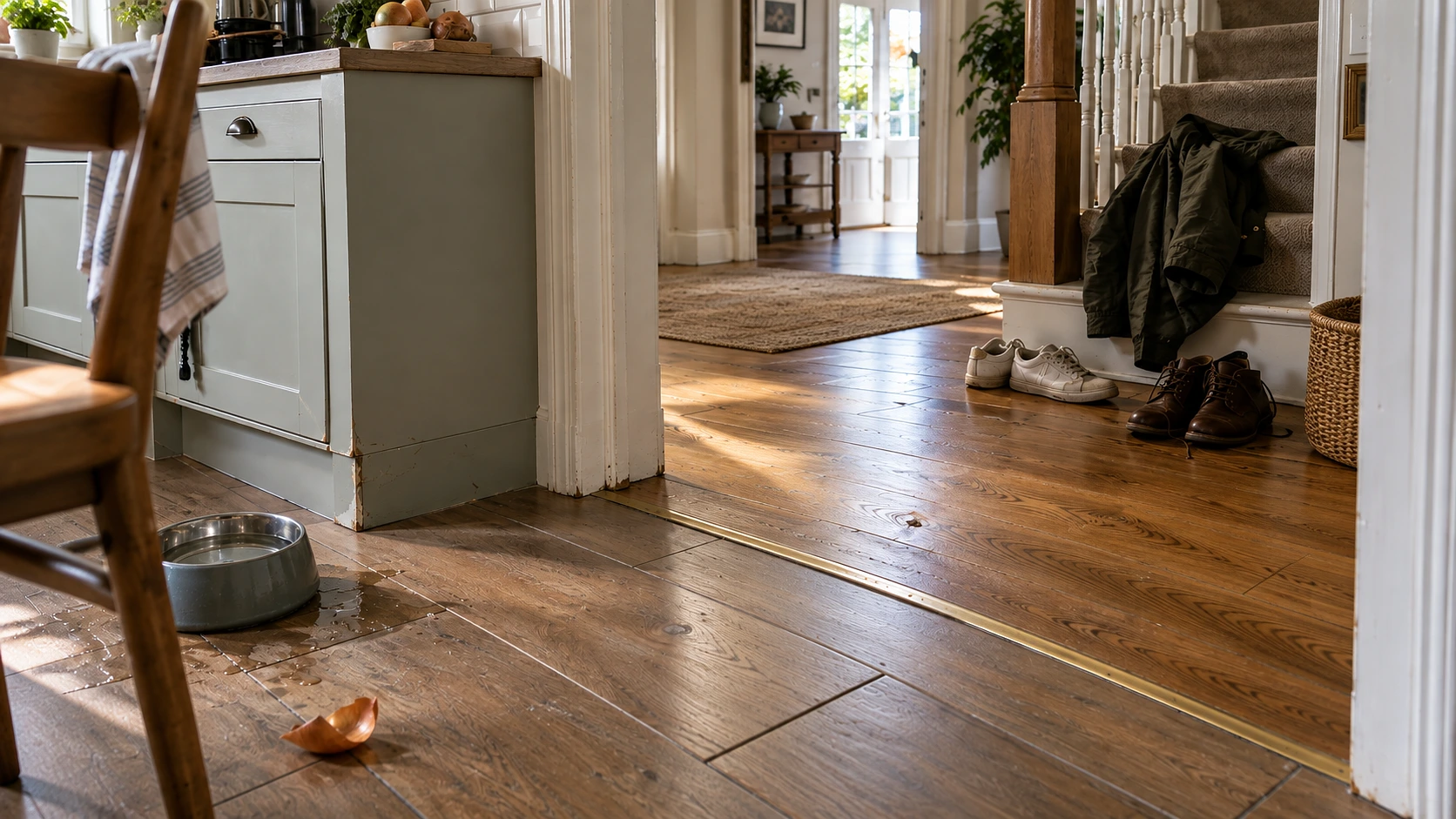
A wooden floor changes a room the moment it goes down. The grain, the long plank line, the warm colour, and a plain box of a room is suddenly looking finished. The trouble is that real wood is alive in a way no other floor is. It is reacting to a dragged chair, a dropped glass of water, a wet month, a dry month, and 10 years of feet, and it is asking to be looked after the whole time. That is where wood look tiles come in, a floor that gives you the picture of wood and none of the temperament.
So the comparison is never only about which one looks better. It is about the room, how many feet cross it, the climate outside the window, and how much care you are willing to give a floor after the excitement of choosing it has worn off. The table is the short version, the rest of the piece is the reasons.
| Wood look tile | Real wooden flooring | |
| Scratches and dents | Shrugs off chair legs and claws | Dents, scratches, shows wear paths |
| Water and spills | Wipes up, no harm done | Swells, stains, warps if left |
| Humid or changing climate | Barely moves | Expands and contracts with the season |
| Cleaning | Sweep and mop, grout now and then | Careful with water and cleaners |
| Looks | Very close, from standing height | The real thing, no two planks the same |
| Underfoot | Hard and cool | Warm and a little soft |
| Repair after years | Replace the damaged tiles | Sand and refinish the whole floor |
| Best rooms | Kitchen, bathroom, hallway, anywhere wet or busy | Bedroom, dry living room |
Wood Look Tile vs Hardwood Flooring for Daily Use
Durability is where the comparison always starts, and it is the one where both floors deserve their reputation. Hardwood lasts for decades when it is laid properly and treated with respect, and a solid wood floor can be sanded back and refinished, usually 3 or 4 times over its life, which is a kind of second youth no tile is getting. In between those refinishes, though, it is collecting dents from dropped pans, scratches from the dining chairs, a faded patch where the sun comes through the window every afternoon, and a worn track from the door to the sofa.
A wood look tile is hard all the way through. The strength is in the fired body and the glazed face, not in a finish sitting on top of something soft, so chair legs, pet claws and ordinary foot traffic are not marking it the way they mark timber. It is not indestructible, a cast iron pan dropped from waist height will chip it, and a heavy enough knock will crack one, and then that one tile is being cut out and replaced. Wood dents, tile chips, and the difference is that wood dents every week.
Hallway in a House With Two Dogs
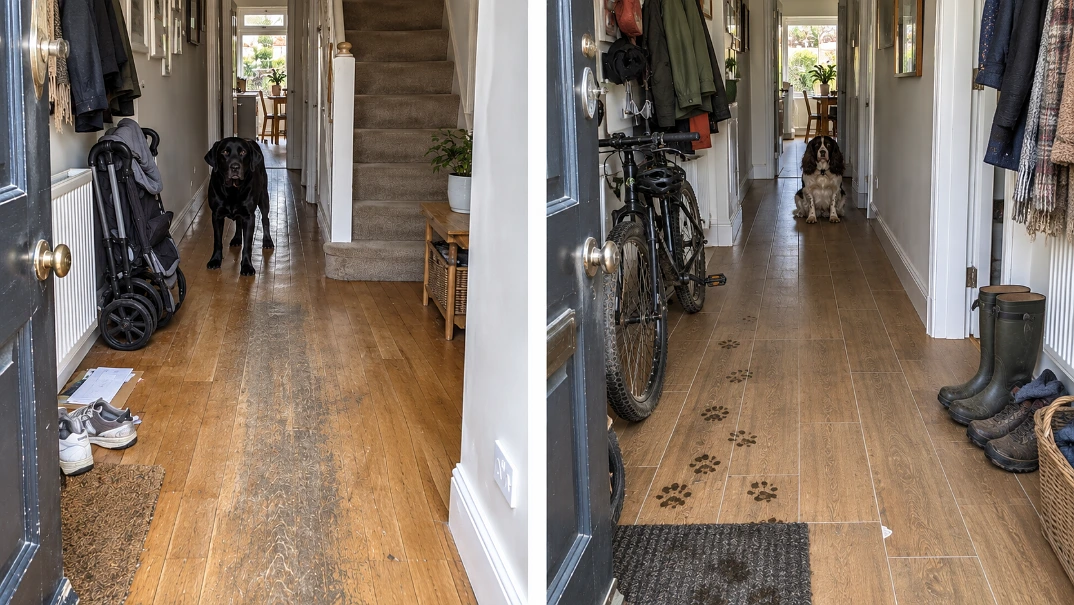
The hallway takes every entry and exit, the dog’s nails, the pushchair wheels, the shoes that never come off. A hardwood hallway in that house is showing a grey worn path down the middle inside 3 years, and the owner is either living with it or paying to refinish the whole run. The same hallway in a tile with a wood grain is looking in year 6 as it did on day 1, with 1 chipped tile by the front door where the bike fell over.
Winner for daily wear: tile, and it is not close.
Which Handles Water Better?
Water is the biggest single difference between the two, and it is the difference that decides the kitchen and the bathroom before anything else is considered. Natural wood absorbs it. A spill mopped up in a minute is fine, a spill found in the morning has started swelling the board, and a slow leak from under a dishwasher is lifting a section of floor before anyone notices the floor is wet. Engineered wood handles moisture better than solid timber because its layered core moves less, so it holds its shape in a kitchen where solid oak would be cupping, but the top layer is still wood, the edges still drink, and a leak under a fridge is swelling an engineered floor the same as a solid one, only more slowly.
A vitrified wood look tile has water absorption under half a percent, which in practice means the water sits on top until someone wipes it. This is the reason wood look tiles are the sensible option anywhere splashes and a wet mop are part of the week. What the tile does not do is waterproof the floor. In a bathroom or a wet kitchen the waterproofing is a membrane under the tile, the grout has to be a type that resists water, and the tile has to be rated for a wet floor with the slip resistance to match. The tile keeps itself dry, the installation keeps the house dry, and those are 2 different jobs.
Bathroom With Children Who Bathe Like Otters
The bath floor in that house is under standing water twice a day. Wood there is a mistake being made in slow motion, and even the good engineered boards with the sealed edges are a floor with a countdown on it. A matte wood look tile with a slip rating and a properly sealed grout is the only version of a wooden floor that belongs in that room, and from the doorway it is reading as timber.
Winner for water: tile, by a length.
Kitchen With a Dishwasher on Its Third Hose
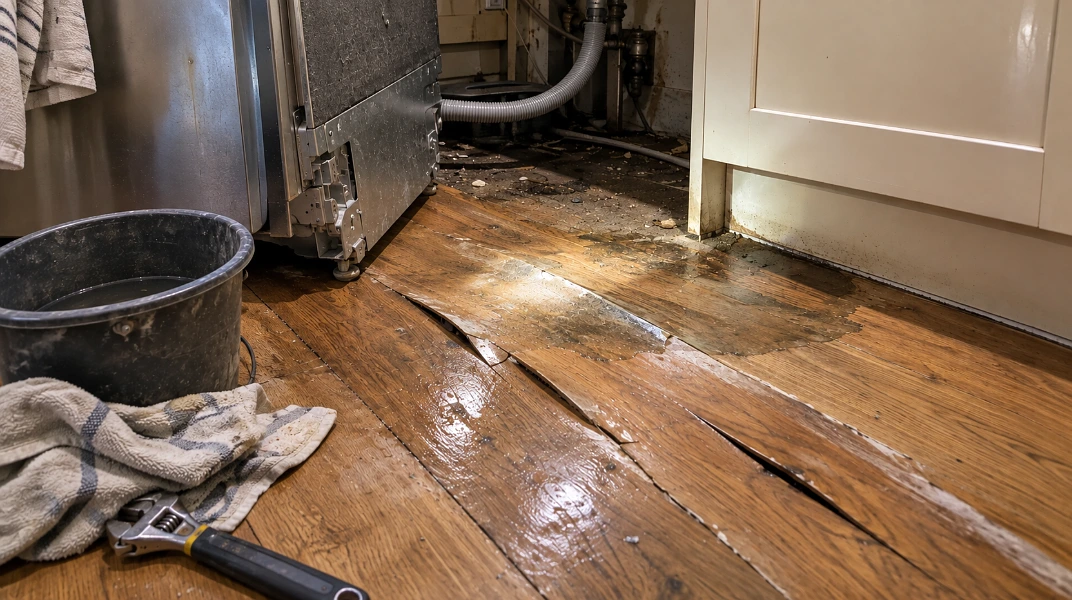
Every kitchen has the appliance that fails wet, and it is usually the dishwasher, a slow drip at the inlet that runs under the unit for weeks before anyone sees a stain on the floor in front of it. Under a wooden floor that drip is lifting the boards along the whole cabinet run and the repair is a floor fitter, not a plumber. Under the tile the water is sitting on the glaze and the membrane, the plumber fixes the hose, the floor is dried with a towel, and that is the end of it.
Hot and Humid Weather
Timber breathes with the weather. In a humid month it is taking on moisture and expanding, in a dry month it is giving it back and shrinking, and a floor that was laid without an expansion gap or without a few days of acclimatising in the room is buckling in the first wet season or opening up in the first dry one. In climates that swing between the two every year, the installation is doing as much work as the wood.
Tile is not breathing. Humidity is not moving it in any way you will see, which is why it keeps coming up as the practical alternative for a humid climate. The installation still has to suit the place, the adhesive, the grout, the movement joints on a large floor and the condition of the slab underneath, but the material itself is not the thing that will move.
Ground Floor Flat in a Monsoon City
Every year the floor gets 3 months of air you could wring out. A solid teak floor in that flat is a beautiful thing that is cupping at the edges by the second August, and the owner is learning what a dehumidifier costs to run. The tile floor in the flat next door is being mopped and forgotten.
Winner for climate: tile, unless the room is air conditioned year round, in which case wood is fine and the question goes back to water and wear.
Underfloor Heating
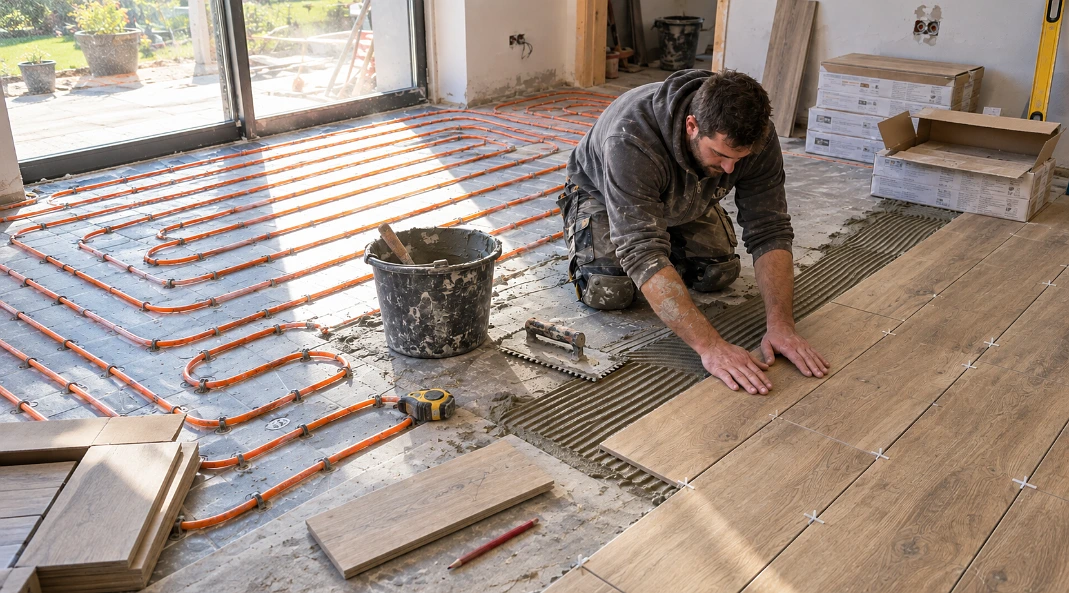
The climate question runs the other way in cold places, and there tile has an advantage people do not expect. A tile floor conducts heat, so over an underfloor heating system it is warming up fast and pushing the heat into the room, and a wood look tile over heating is the closest thing to a warm wooden floor that stays warm. Real wood is an insulator, which is why it feels warm to bare feet in the first place, and it is slow to pass heat through and touchy about it. Solid wood over underfloor heating is generally advised against, and engineered wood is usually limited to a surface temperature around 27 degrees, above which the boards dry and open. So the room that wants underfloor heating and the look of wood is, more often than not, getting tile.
Cleaning and Maintenance
This is the part people notice most once they have lived with the floor for a year, because it is the part that happens every week. A wooden floor is a pet. It is lovely, it makes the house feel like a home, and it needs feeding and it cannot be left in the rain. Too much water on the mop, the wrong cleaner, a grain of grit under a chair leg, all of it is showing, spills want to be wiped up on the spot, and after enough years the whole thing is being sanded and refinished.
The tile is simpler. For normal cleaning most homes need nothing more than this:
- Sweep or vacuum the loose dust.
- Mop with an ordinary floor cleaner.
- Wipe spills when you see them, or when you get round to it.
- Clean the grout when it starts looking dull.
The grout is the one honest maintenance item on a tile floor. It is the seam on the suit, it is what shows first when the floor is tired, and a grout that matches the tile colour and is sealed at installation is staying clean far longer than a pale grout left bare.
Winner for maintenance: tile, and the grout is the only thing keeping it from being a walkover.
Ten Years In
The maintenance difference is easiest to see at the 10 year mark, because that is when both floors are asking for something. A hardwood floor at 10 years is due a refinish, which means everything out of the room, a sanding machine for 2 or 3 days, dust in every cupboard in the house, a new finish and a week before the furniture comes back, and then it is a new floor again, which is the good part. A tile floor at 10 years is asking for the grout to be cleaned properly or, on a floor that was laid with a pale grout and never sealed, regrouted, which is an afternoon on your knees with a grout saw and a bag of grout and no furniture moved. One is a renovation, the other is a chore.
Does Tile Really Look Like Wood?
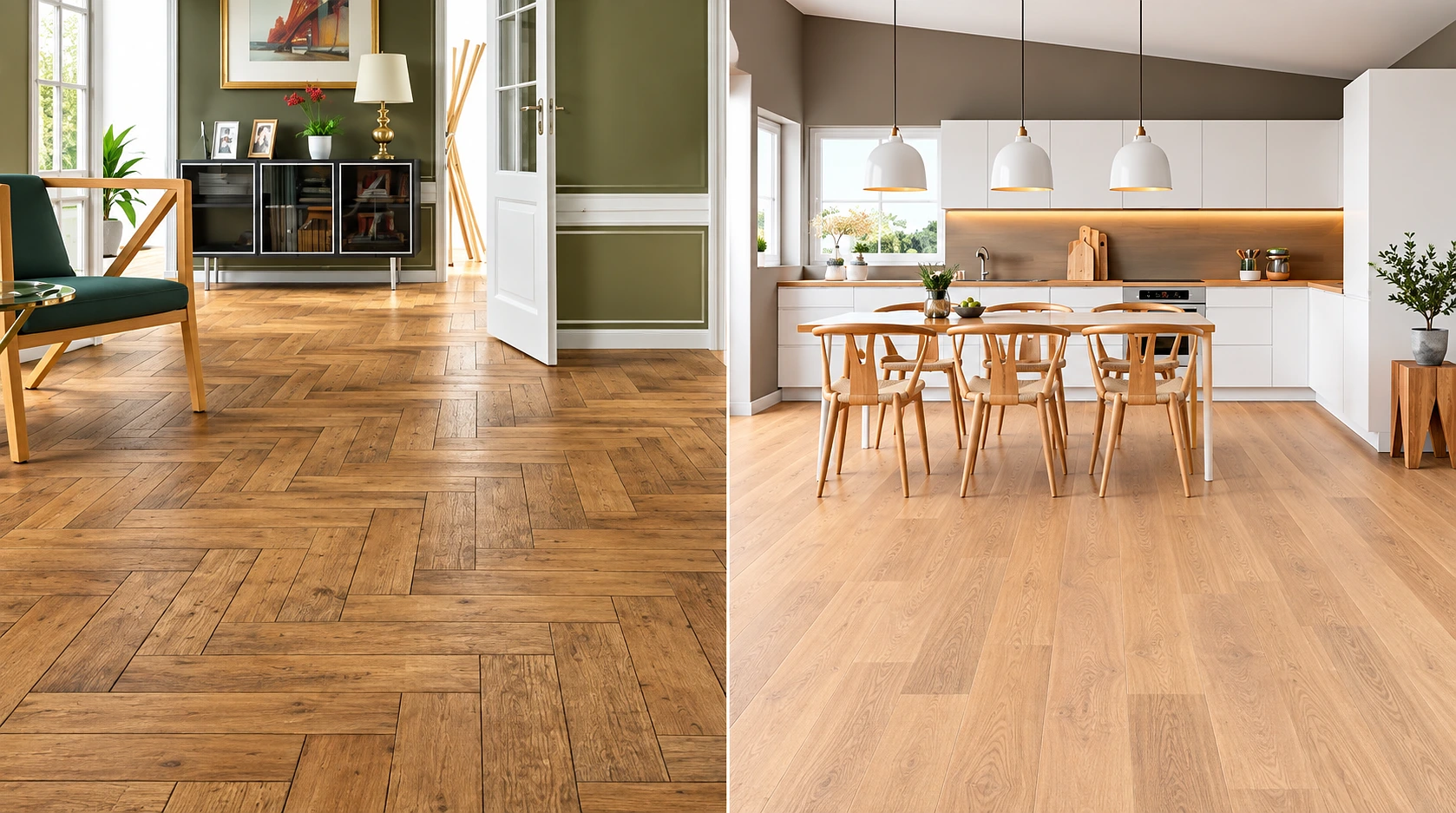
This used to be an easy question to answer, and the answer used to be no. The old wood look tiles gave themselves away from across the room, the same knot every fourth tile, so that walking down a hallway was like walking past a row of identical trees, and a flat, printed colour with nothing under it. Anyone who chose them then was choosing practicality and admitting it.
Newer printing is doing something different. A good range is carrying 20 or 30 different faces so the knot is not repeating, the surface has grain you can feel with a fingertip, and the colour has depth because it is layered rather than printed once. Wood look ceramic tiles are covering the lighter, simpler plank looks, and wood look vitrified tiles are where the range is widest in colour, size and finish, with knots, saw marks, weathered edges and shade changes between pieces if you want them. The biggest change of all is size, a tile at 200 by 1200mm is laid in the same staggered pattern as a real plank floor with the grout line running where a board joint would, and from standing height the eye is reading planks, which the old 300 by 600 tiles never managed because no plank was ever that shape.
Wood Look Tiles Are Not Just Brown Anymore
Modern wood-look tiles run from pale washed oak through mid browns, greys, beige, weathered driftwood and a walnut that is close to black. Some have a grain so soft it reads as plain from a distance. Others are bold, with knots and shade changes that vary tile to tile the way a real floor does. The range now includes:
- Pale oak style looks, for the Scandinavian rooms.
- Mid brown timber shades, the safe choice that suits most furniture.
- Dark walnut effects.
- Grey wood patterns.
- Weathered plank designs with visible saw marks.
- Mixed shade wood effects, where the variation between tiles is the point.
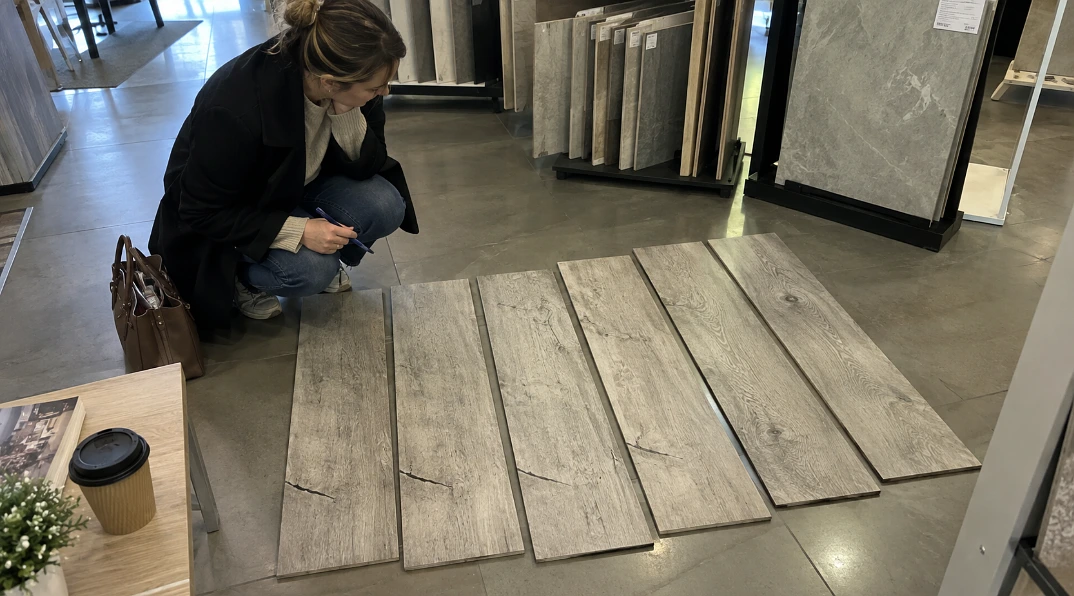
The weathered ones deserve a word of caution, because a distressed tile that is too perfectly distressed, with the same artful crack in the same corner of every piece, is the new version of the identical trees. Look at 6 tiles side by side in the showroom before choosing a weathered look, and if the cracks line up, walk on.
Wood Effect Tiles vs Real Wood: Which Looks Better?
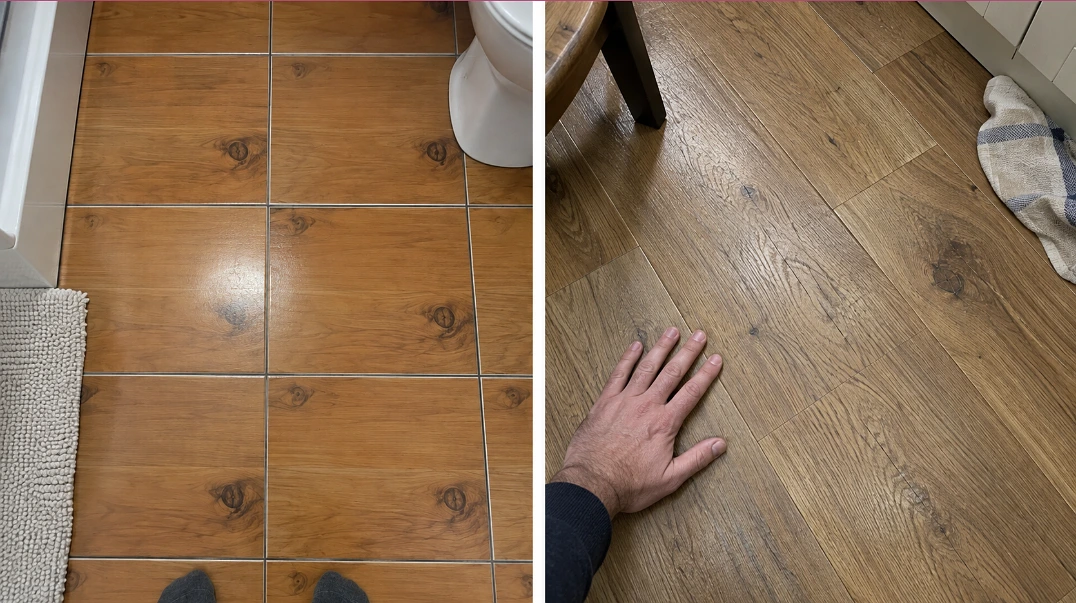
Real wood still has the thing a tile cannot copy, which is that no 2 planks were ever the same. The grain, the knots, the shade and the small marks all happened in a tree, not a printer, and a tile is a photograph of that, a very good photograph now, but a photograph. Stand on a real oak floor and a good oak look tile in the same light and from standing height most people are not telling them apart. Kneel down and run a hand across both, and everyone is.
So the honest version of the question is not which looks more real. It is whether you want the real material badly enough to give it the care it asks for. If yes, wood, and everything above about water and wear is the price of it. If no, the tile is the easier road and no visitor is going to call you out on it.
Winner for looks: wood, on points, and the margin is smaller every year.
Underfoot and Sound
There is one difference: no printer is closed, and it is not in the eye. Wood is warm to a bare foot and it gives a little under weight, and a room floored in it is quieter, because the boards are soaking up footsteps and the clatter of a dropped spoon. The tile is cool, it is hard, and a large tiled room with nothing soft in it is echoing. None of that shows in a photo and all of it shows in a bedroom at 6 in the morning. The fix on a tile floor is rugs where feet land and something soft on the walls, and underfloor heating if the budget stretches, and with those a tiled bedroom is comfortable. Without them, this is the room where wood earns its keep.
Installation Is Different Too
Both floors need a sound, level base, and after that the methods part ways. Tile is going down on adhesive over a prepared surface, with spacers, then grout, and with a wood look tile the installer has one extra job, which is shuffling the faces so the same design is not landing next to itself and giving the game away. A good installer is laying 6 or 8 tiles out dry and mixing the boxes before the adhesive is opened.
Wooden flooring is going down with glue, nails or as a floating floor, and it is carrying a list of things that have to be right before the first board:
- Moisture level in the subfloor and in the boards.
- Expansion gaps at every wall and doorway.
- Subfloor condition, flat and dry.
- Room humidity at the time of laying.
- Acclimatisation, the boards sitting in the room for days before they go down.
So the price of the material is not the price of the floor for either of them, and with wood the installation is where most of the later problems were decided.
Which Rooms Get Which
Most busy homes end up with both, and the split is not a compromise, it is the right floor in each room. Run down the house:
- Kitchen: tile. Water, dropped pans, the dishwasher, and a wet mop every other day.
- Bathroom and utility: tile, with a slip rating and the waterproofing under it, no argument.
- Hallway and entrance: tile. Grit under shoes is sandpaper to a wooden floor, and the hallway gets all of it.
- Living room: either, and this is the real decision. Tile if there are dogs, children under 5, a home office chair or a door to the garden. Wood if the room is for sitting in and the shoes come off at the door.
- Bedroom: wood, or tile with rugs and heating. Bare feet, quiet, and nothing gets spilled.
- Stairs: wood, because a tiled stair is hard on the knees and unforgiving on a fall, and the nosings are a job to get right in tile.
- Ground floor in a humid climate: tile throughout, and put the wood upstairs where the air is drier and the feet are bare.
The house that gets this right has a tiled kitchen and hall that look like the same oak as the wooden bedroom floor above, which is now possible in a way it was not 10 years ago, and the visitor standing in the hallway is not asking which is which.

 Decor & Improvement Accessories