

Home & Decor Blogs: DIY, Interior Design & Lifestyle Ideas
5 Mistakes People Make Furnishing A Home In Phoenix, And What To Do Instead
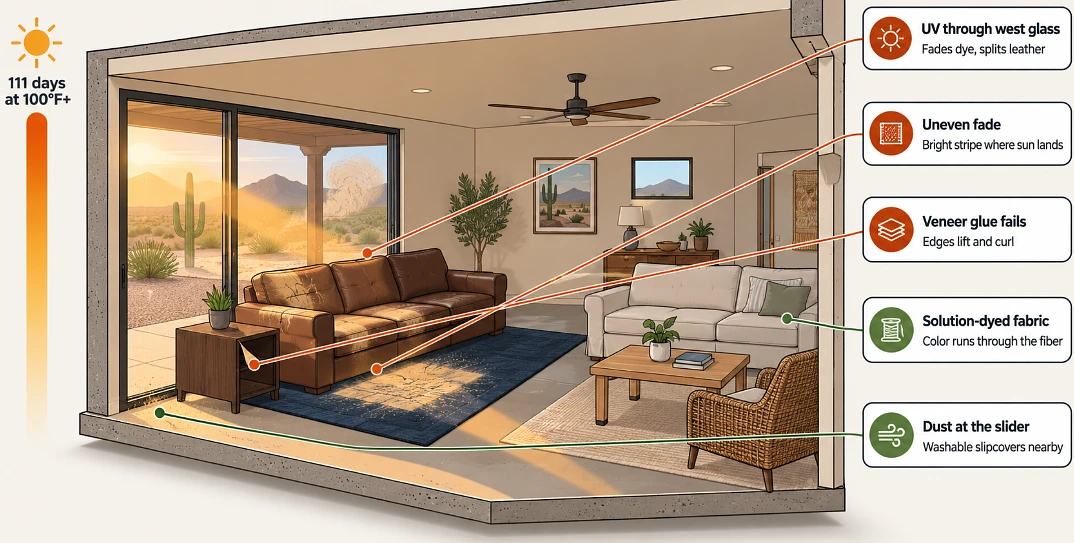
Furnishing a house in Phoenix is not the same job as furnishing one in Denver or Atlanta, and most people find that out about 2 summers in, when the couch has cracked and the rug by the slider has gone 2 different colors. The weather here is the problem. Phoenix has been averaging somewhere around 111 days a year at 100°F or more lately, which is close to a third of the year, and the sun on the other 250 days is not exactly gentle either. A house costs around $446,000 at the median now, so people are putting a lot of money into a building and then filling it with things that were designed for a climate 1,000 miles away.
So these are the 5 mistakes that come up again and again, why each one costs money, and what people who have been through a Phoenix summer do instead.
Mistake 1: Buying Furniture That Was Made For A Milder Climate
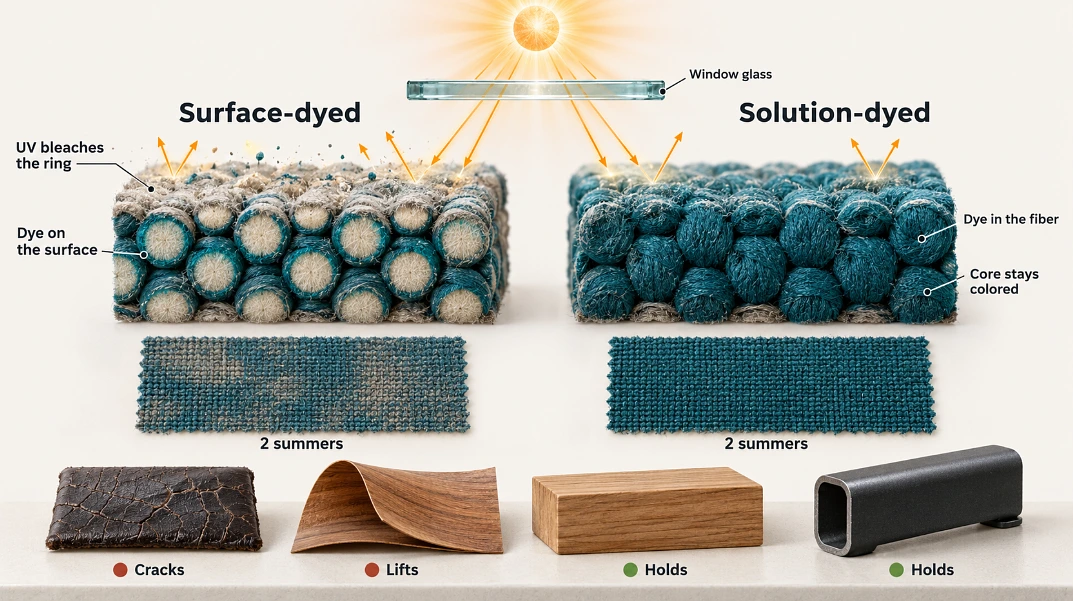
Dark leather, foam cushions and cheap wood veneer all break down fast in Phoenix sun. Solution-dyed fabric, light wood, teak, powder-coated metal and synthetic rattan will last, because they were built to.
Now, the thing about Phoenix sun is that it is not just hot, it is UV, and a south or west facing window lets a lot of it in. UV ruins dye, it eats the adhesive under wood veneer, and it splits vinyl and leather faster than almost anywhere else in the country. A leather couch that would have gone 15 years in Seattle can start cracking inside a couple of years in a west facing Phoenix living room, and dark leather is the worst of it because it takes the heat as well as the light. Unless someone is happy to replace a couch every 2 years, it is not worth the gamble.
What holds up is anything where the color goes all the way through. Solution-dyed fabric, which is where the pigment is in the fiber itself and not sprayed on the surface, keeps its color for years longer than ordinary upholstery. Light woods and woven fabrics absorb less heat, so they do not scorch anyone sitting down on a July afternoon, which is a real thing that happens with dark leather here. Near glass doors, powder-coated metal, teak and synthetic rattan outlast thick foam cushioning, since foam breaks down and off-gasses in extreme heat.
Rugs go the same way. A dark rug near a window fades unevenly, with a bright stripe where the sun lands and the original color everywhere else, and oddly the cheap washable rug often outlasts the expensive decorative one in that spot, only because it can go in the machine after a dust storm.
Which brings up haboobs. These dust storms come through fast in summer and coat everything near a patio door or a window that is not sealed tight. Washable slipcovers on any padded furniture near a sliding door are not optional, and outdoor cushions should live in a sealed box between uses and not out on the patio.
Mistake 2: Buying Furniture Sized For Rooms That Do Not Exist Here
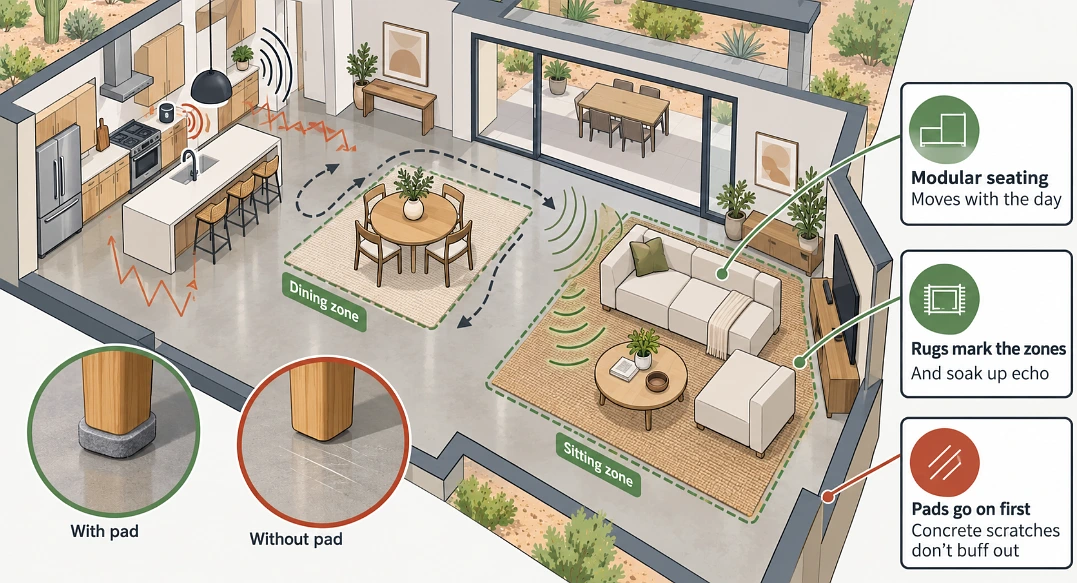
Phoenix homes are mostly open plan, with the kitchen, dining and living area in one run. An oversized sectional or a heavy dining set swallows that space. Modular pieces and rugs do the job walls would have done.
New single family homes in the West had a median size of about 2,170 square feet in 2023, according to the Census Bureau’s new housing figures, and a lot of Phoenix builds follow that pattern with the open plan on top. That layout looks big on the listing and it is, but it has no walls to hide furniture behind, so a big sectional that would have been fine in a closed living room sits in the middle of everything and the whole floor feels smaller.
Modular pieces make more sense here because the room’s job changes through the day, from kitchen to office to the place everyone sits, and the furniture should be able to shift with it. Rugs matter more than people expect. In an open plan they are what carve out the zones, the dining zone and the sitting zone, and they also soak up sound that would otherwise bounce straight off tile or polished concrete, which most Phoenix floors are.
That flooring is a mistake all by itself if it gets ignored. Sealed concrete scratches and the scratches do not buff out, so felt pads or rubber grips should go on every leg of every piece before it is set down, not after the first scrape.
A smaller thing that catches people out is the garage. Most new Phoenix homes have one and it ends up holding more than a car, since the heat means outdoor gear cannot live outside, and shelving it out early saves the scramble of trying to fit it all in later.
Mistake 3: Shopping For Furniture With No Floor Plan In Hand
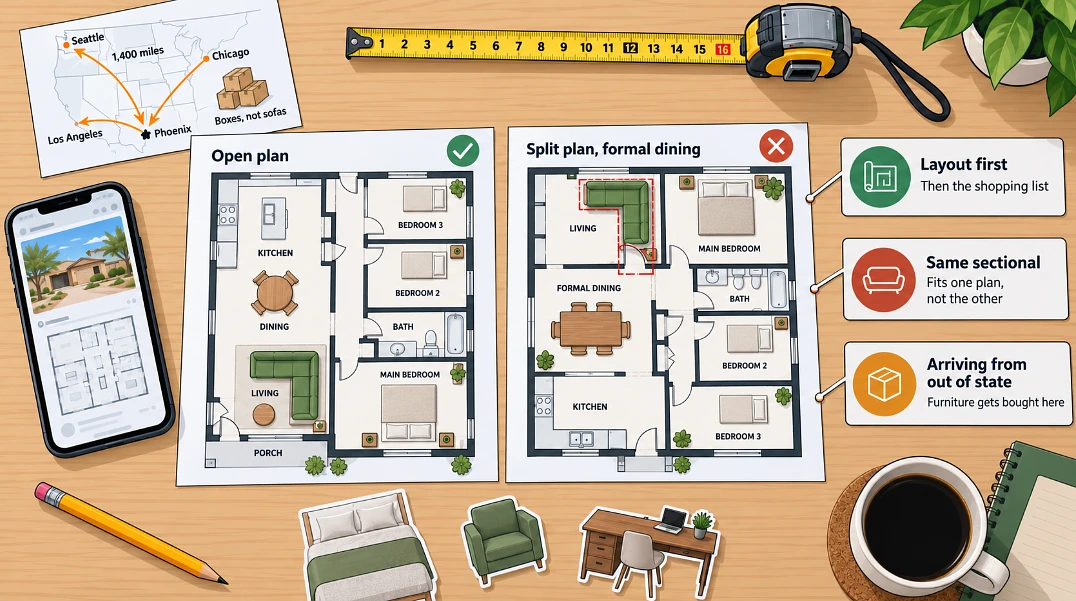
Most people buying here are coming from out of state and furnishing from scratch, so the layout of the house decides the furniture budget. Settle the floor plan first, then shop.
Out of state buyers are a big share of the Phoenix market. Redfin’s migration data has Seattle sending more home searches to Phoenix than any other outside metro, with Los Angeles and Chicago close behind, and these are not moves across town. They are households crossing whole climate zones, and almost none of them pay to haul a sectional 1,400 miles. They arrive with boxes and buy the furniture here.
That is where the order of things matters. A buyer who knows the exact layout before closing can build a furniture budget around it, room by room, instead of finding out afterward that the couch will not fit or the dining set needs a room the house does not have. There are more than 6,200 homes on the market in the Phoenix area right now, and browsing home details with the furniture question in mind, open plan or split plan, formal dining room or not, single story or 2, changes the shopping list completely before a dollar is spent.
Mistake 4: Treating Furniture As Whatever Is Left After Closing
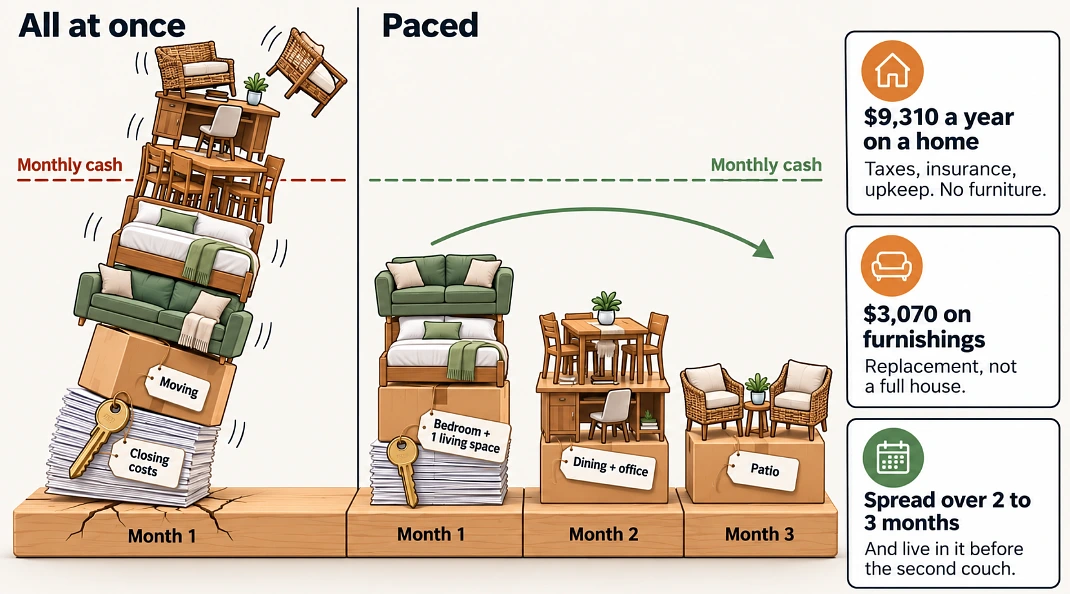
Furniture needs its own line in the budget, separate from the mortgage, and bought over 2 or 3 months instead of all at once.
The Bureau of Labor Statistics puts the average US household’s spending on an owned primary home at about $9,310 in 2024, and that figure is taxes, insurance and upkeep. Furniture is not in it. The same survey has married couples without children spending about $3,070 a year on household furnishings and equipment, which sounds like a useful number until you realize it measures routine replacement in homes that are already furnished. Filling an empty house from scratch runs well past that, and it runs past it fastest for an out of state buyer who sold everything before the move.
The way around it is pacing. Closing costs and moving expenses hit in the same month, so the furniture bill does not have to. The main bedroom and 1 living space in the first 30 days, then the dining area, the home office and the patio over the next 2 or 3 months. That spreads the cash out and it also gives a person 2 or 3 months of living in the house before deciding where the second couch goes, which is usually when the first plan turns out to be wrong anyway.
Mistake 5: Furnishing The Rooms In The Wrong Order
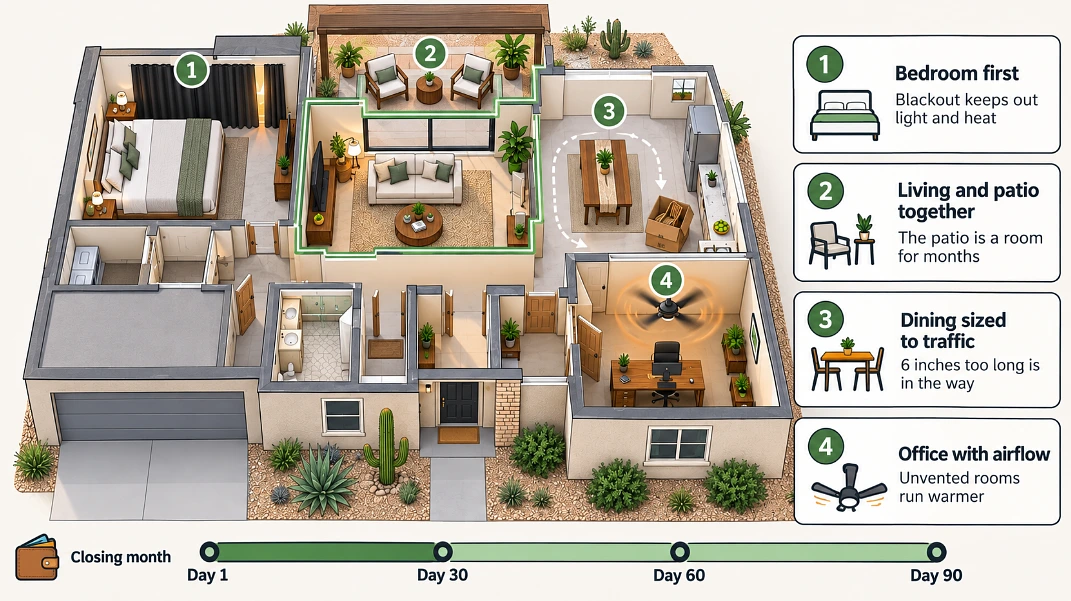
Bedroom first, then the living room and patio as 1 decision, then the dining area, then the office. In Phoenix that order is about heat, not looks.
The bedroom goes first because of the mornings. Phoenix is bright early, and blackout curtains on a sun facing window are doing 2 jobs at once, keeping the light out and keeping a surprising amount of heat out with it. A real mattress and blackout fabric before anything decorative.
The living room and the covered patio should be budgeted together and not as 2 separate rooms, because for 6 to 8 months of the year a covered patio here is a room, and in the cooler months it is the room everyone wants to be in. Buying for them separately usually means the patio gets the leftovers and sits empty.
In the kitchen and dining area, a table sized to the actual traffic through an open plan matters more than anything that matches. A table that is 6 inches too long in an open plan is 6 inches in everyone’s way, all day.
The home office is the one people forget about until July. Interior rooms with no direct AC ducting run noticeably warmer than the vented rooms in summer, so some kind of extra air movement near the desk, a ceiling fan or a decent floor fan, should be planned in from the start instead of bought in a panic the first week it hits 110.
| Mistake | What it costs | What to do instead |
|---|---|---|
| Dark leather and foam near a west window | A new couch every 2 or 3 years | Solution-dyed fabric, light wood, teak, metal, washable slipcovers |
| Oversized furniture in an open plan | A floor that feels half its size | Modular pieces, rugs to zone, felt pads before anything touches concrete |
| Shopping before the floor plan is settled | Returns, and a dining set with no room | Know the layout, then build the room by room budget |
| Furniture as leftover money | Running short the same month as closing | Its own line in the budget, spent over 2 or 3 months |
| Rooms in the wrong order | A hot office and an empty patio | Bedroom, then living and patio together, then dining, then office |
Anyone who has been through a Phoenix summer with the wrong couch will tell you most of this. The point of the list is to hear it before the couch, not after.

 Decor & Improvement Accessories