

Home & Decor Blogs: DIY, Interior Design & Lifestyle Ideas
Bar Stool Height Guide: What Seat Height Fits Your Counter
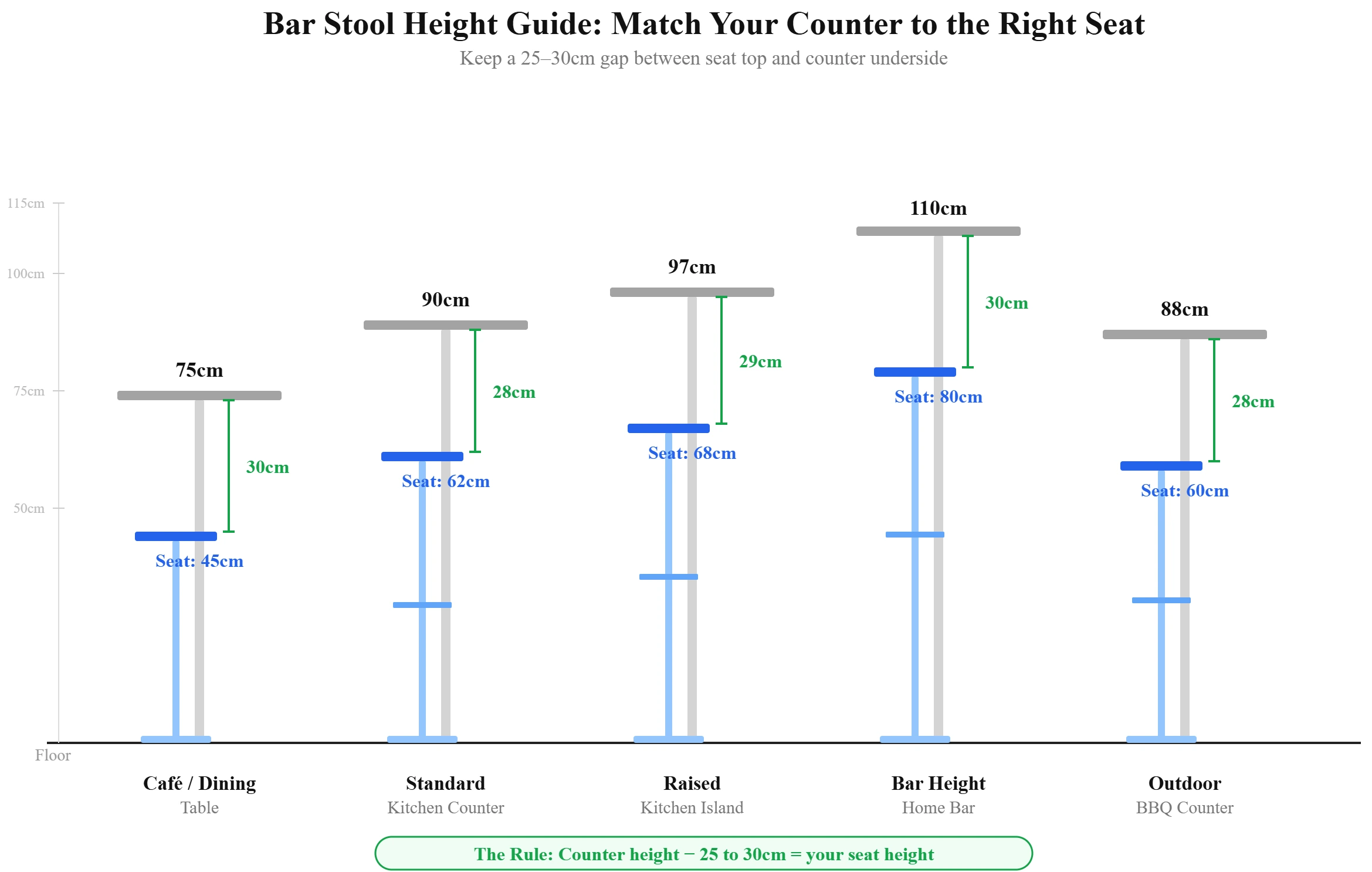
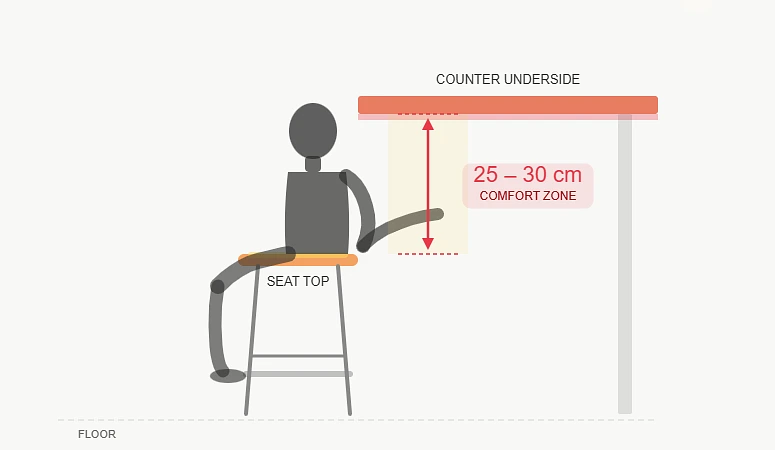
A bar stool height guide is a sizing reference that matches your counter’s measurement to the correct seat height — keeping a 25–30cm gap between the top of the seat and the underside of the counter so your thighs sit comfortably without pressing upward.
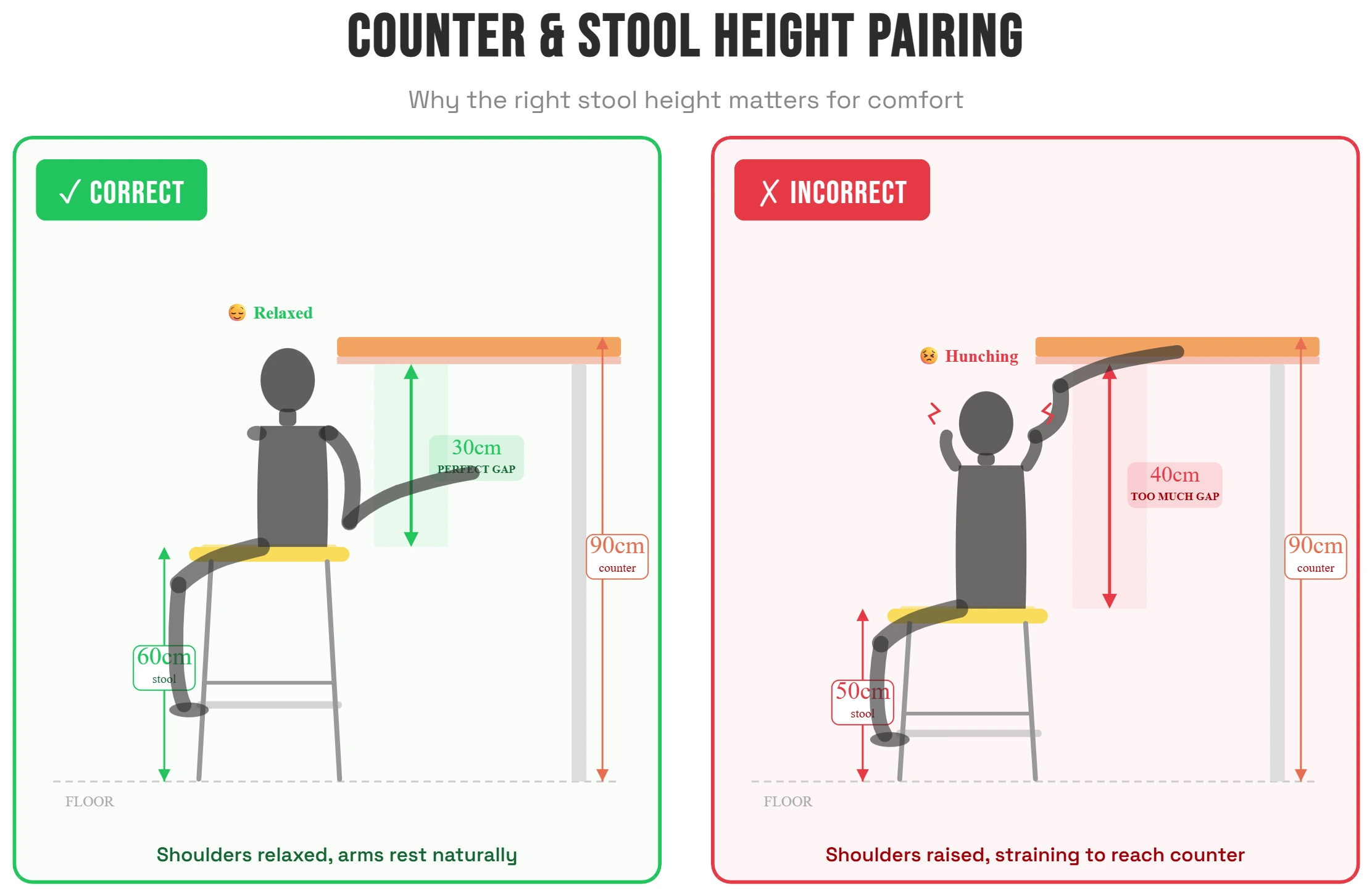
Get this wrong by even 5cm and you’ll notice it within minutes. Too high, your knees hit the counter. Too low, your shoulders hunch forward to reach your plate. Either way, the stool ends up decorative — not used.
The fix is simple: measure your counter once, match it to the right seat height below, and stop guessing.
Standard Kitchen Counters (90cm) Need a 60–65cm Seat
A 90cm counter is what most kitchens have. It’s the default height builders use for benchtops, and it’s the measurement you’ll find in the majority of homes built in the last 30 years.
The seat height you need: 60–65cm.
At 60cm, a person around 165–170cm tall sits with their thighs roughly parallel to the floor — the same position as a good office chair. At 65cm, taller people (175cm+) get the same result. Either end of that range works. Below 58cm, you’re reaching up. Above 67cm, your legs start pressing into the counter from underneath.
What stool style works best here? This is the most common counter height, so nearly every stool on the market fits. Backless stools work if you’re using the counter for quick meals — 20 minutes, coffee and toast. If you’re working from the kitchen island with a laptop or sitting through a long dinner, a low backrest (around 15–20cm above the seat) stops the lower back from fatiguing.
Footrest position matters at this height. Your feet shouldn’t dangle. Look for a footrest bar sitting roughly 30cm below the seat. If the stool doesn’t have one, your legs will go numb within 15 minutes — that’s not an exaggeration, it’s what happens when the seat edge presses into the underside of your thighs without lower leg support.
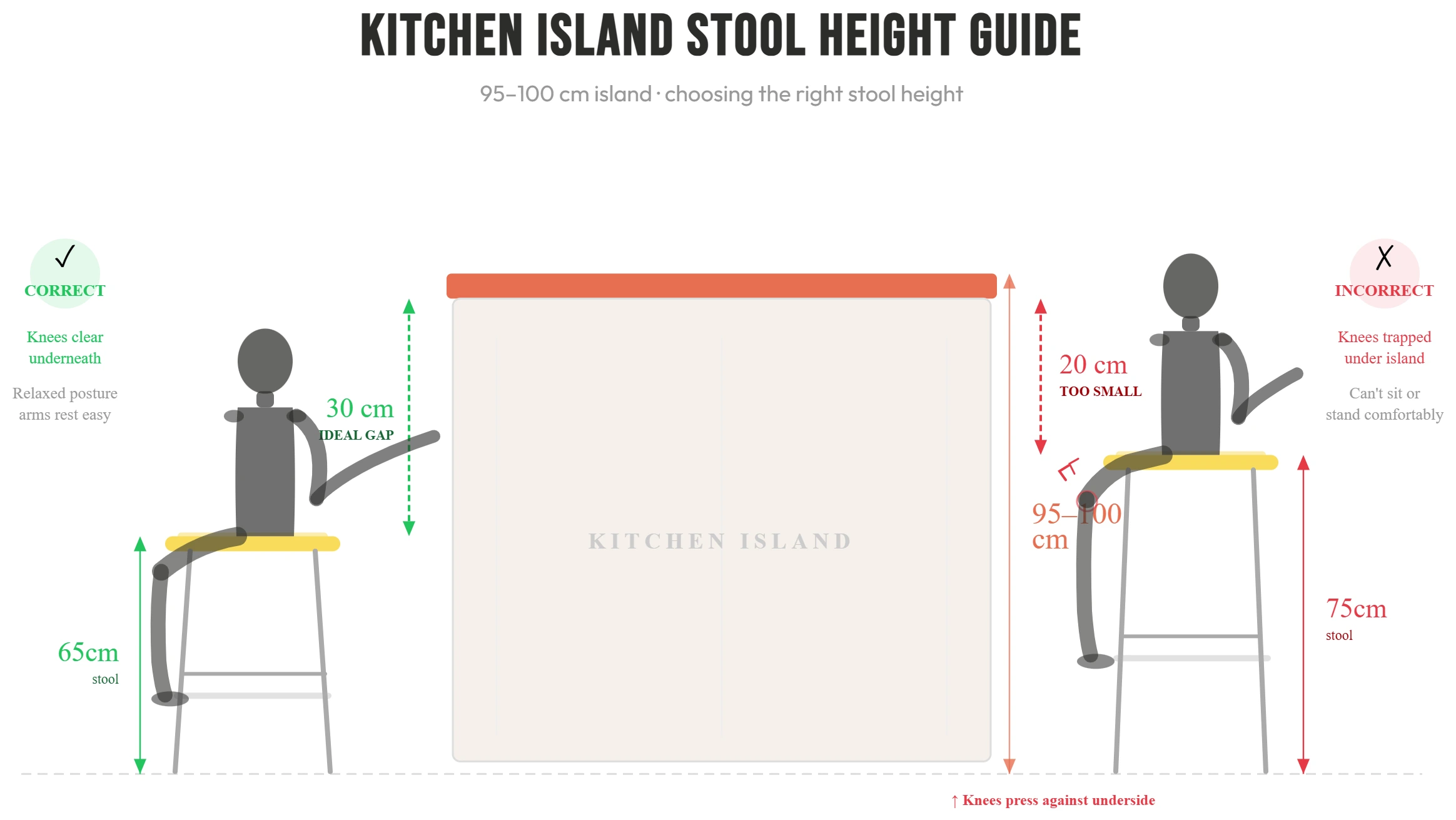
Raised Kitchen Islands (95–100cm) Need a 65–70cm Seat
Some newer kitchens — especially open-plan designs — have islands built slightly taller than the standard benchtop. This is common when the island serves as both a prep surface and an eating bar, with the extra height hiding the cooking mess from the dining side.
The seat height you need: 65–70cm.
This is where online shopping gets tricky. A 65cm stool gets labelled “counter height” by one retailer and “bar height” by another. There’s no universal standard across brands. The number on the product page is what matters — ignore the category name and check the actual seat measurement in centimetres.
The swivel question becomes relevant here. At 95–100cm counter height, the stool is tall enough that getting on and off requires a slight hop or a step onto the footrest. A swivel base lets you turn the seat toward you, sit down facing outward, then rotate to face the counter. Without it, you’re climbing in sideways — manageable but noticeably less comfortable, especially for older family members or guests.
If you’re browsing options at this height range, retailers that let you filter by exact seat height save a lot of back-and-forth. When you shop bar stools online, filtering by measurement rather than vague categories like “counter” or “bar” is the fastest way to find what actually fits your island.
Bar Height Counters (105–115cm) Need a 75–80cm Seat
This is the tall counter you see in dedicated home bars, entertainment areas, and some café-style kitchen setups. It’s deliberately higher than a working kitchen surface because people standing on the other side — pouring drinks, serving food — can do so without bending.
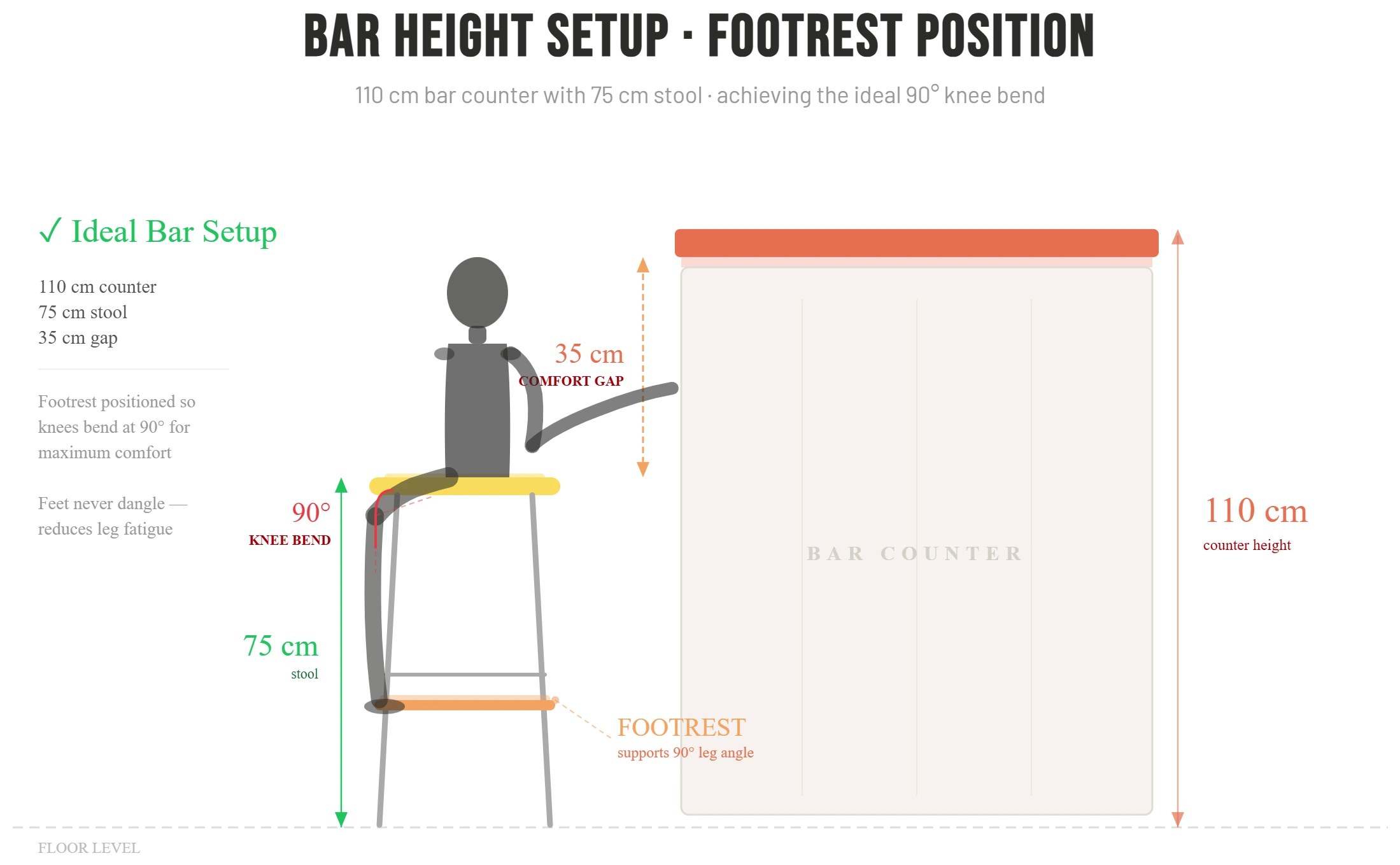
The seat height you need: 75–80cm.
At this height, the stool is genuinely tall. The seat sits at roughly hip height for an average adult, which changes two things about how you choose.
First, a footrest isn’t optional — it’s structural. Without it, your legs hang completely free. That’s uncomfortable within 5 minutes and genuinely fatiguing within 20. The footrest needs to sit at a height where your knees bend at roughly 90 degrees when your feet are resting on it. For most adults, that’s 35–40cm below the seat.
Second, stability matters more. A tall stool with a narrow base tips more easily. Look for a base diameter that’s at least 45cm wide, or four-leg designs where the legs splay outward. Pedestal bases work if they’re weighted — cheap pedestal stools at this height feel precarious.
The backrest debate shifts at bar height. At 75–80cm, you’re sitting significantly higher than a normal chair. A backrest here isn’t just about lumbar comfort — it provides a sense of security. People instinctively feel less stable on a tall backless stool, even if it’s perfectly balanced. A mid-height back (20–25cm) solves this without making the stool look bulky.
Café and Dining Tables (73–78cm) Need a 43–50cm Seat
This one catches people because they buy “bar stools” for what is actually a standard dining table height. It happens most often with standalone high tables used in small apartments, breakfast nooks, or café-style kitchen corners.
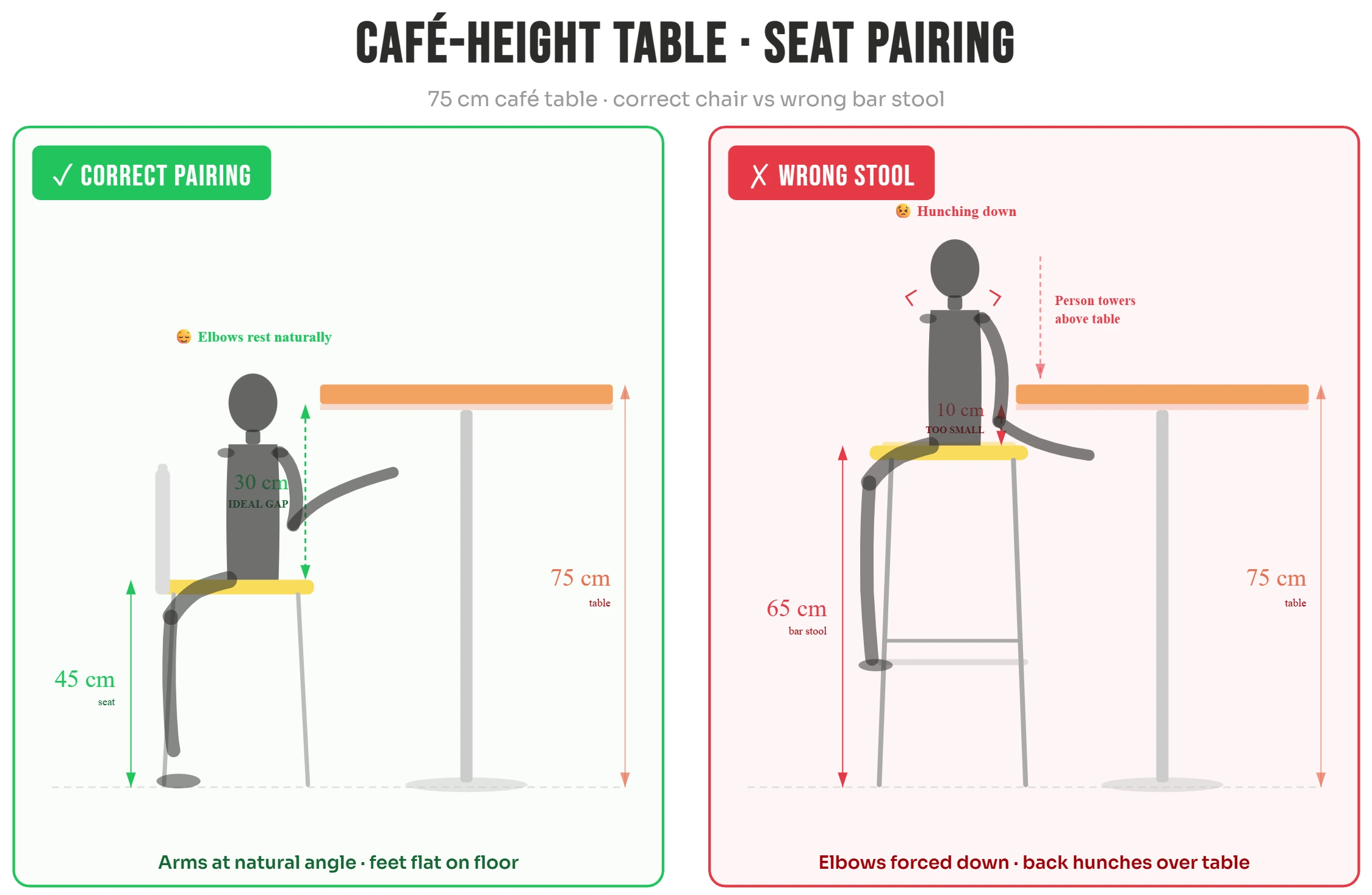
The seat height you need: 43–50cm.
At this range, you’re not buying a bar stool at all — you’re buying a dining chair height seat. But the style might still look like a stool (backless, minimal, industrial). The visual language of “stool” and “chair” overlaps at this height, so what matters is the measurement, not the product name.
How do you know if you have this height? Measure from the floor to the top of the table surface. If it reads between 73–78cm, you’re at standard dining height. This includes most IKEA tables, most restaurant tables, and most freestanding kitchen tables that aren’t islands.
The mistake people make: They search “bar stools” because they want the stool aesthetic — clean lines, no arms, minimal profile — and end up with a 65cm seat for a 75cm table. That puts your chest at table level. Searching for “counter stools” or filtering specifically by 43–50cm seat height avoids this entirely.
Outdoor Counters and BBQ Areas (85–95cm) Need a 55–65cm Seat
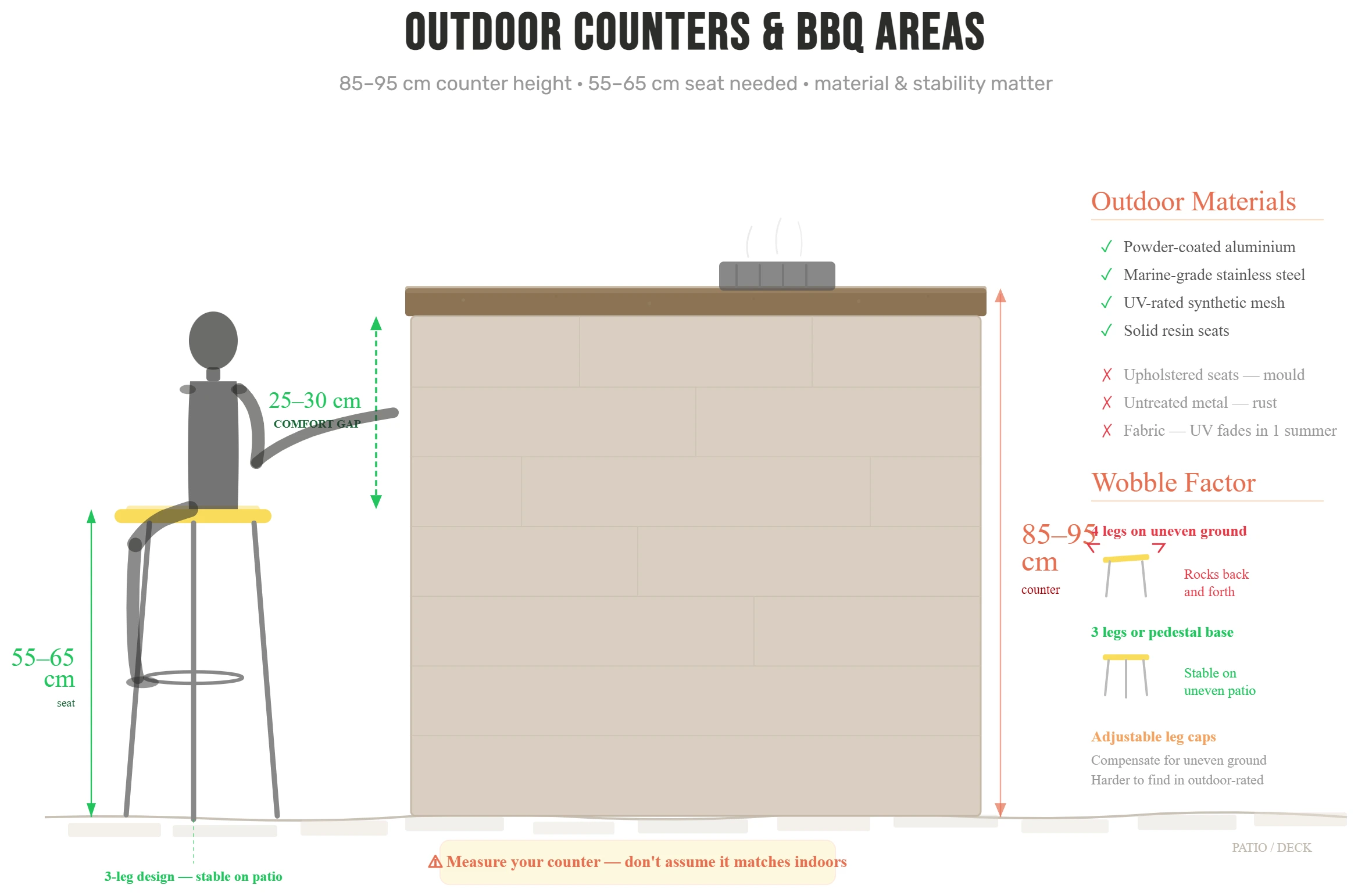
Outdoor kitchens and BBQ counters don’t follow indoor standards. They’re built at whatever height the landscaper or builder decided worked for standing — which usually lands somewhere between 85 and 95cm, depending on whether there’s a stone top, a tiled finish, or a raw timber bar.
The seat height you need: 55–65cm.
The range is wider here because outdoor counters vary more. Measure yours — don’t assume it matches your indoor kitchen.
Material changes everything outdoors. The height rules stay the same, but the stool material can’t be an afterthought. Upholstered seats and untreated metal frames don’t survive outside. UV exposure fades fabric within one summer. Rain pools on flat cushion surfaces and grows mould underneath. Powder-coated aluminium or marine-grade stainless steel frames paired with UV-rated synthetic mesh or solid resin seats handle weather without ongoing maintenance.
The wobble factor on uneven ground. Indoor floors are level. Patios, decks, and outdoor tiles often aren’t. Four-leg stools amplify small unevenness — one short leg means a rocking stool. A three-leg design or a weighted pedestal base sits more stable on imperfect surfaces. Alternatively, adjustable-height stools with threaded leg caps let you compensate for uneven ground, though these are harder to find in outdoor-rated materials.
One Measurement Solves Everything
Every section above comes back to the same starting point: measure your counter height in centimetres, subtract 25–30, and that’s your seat height.
Write that number down before you open a single product page. It eliminates 80% of the options instantly — and the ones remaining are the ones that actually fit your kitchen, your bar, or your outdoor space. No returns, no surprises, no stool that looks perfect in the photo and feels wrong the moment you sit down.

 Decor & Improvement Accessories