

Home & Decor Blogs: DIY, Interior Design & Lifestyle Ideas
Bringing Nature Indoors: Biophilic Design for Modern Homes

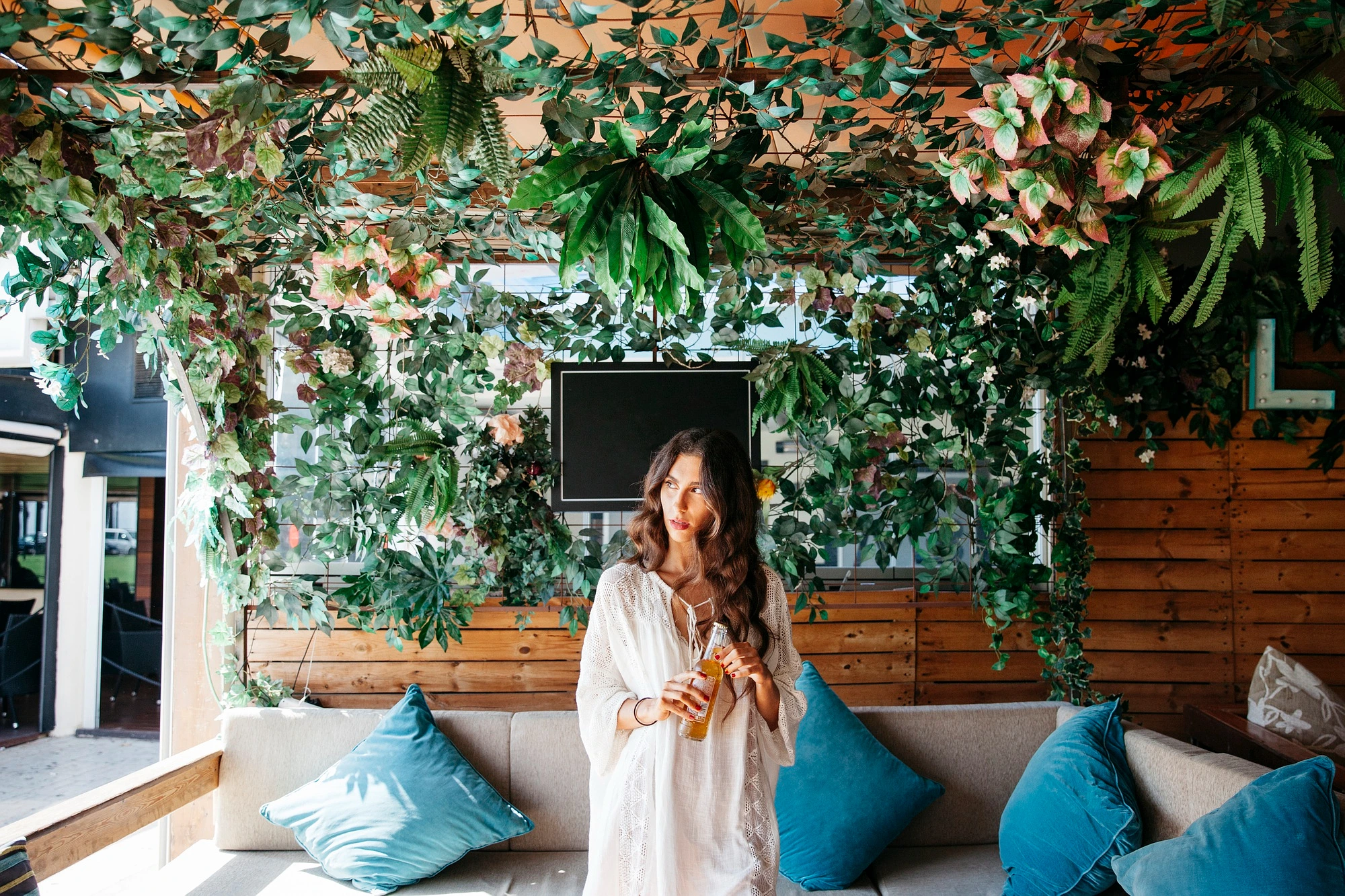
Biophilic design incorporates aspects of nature, plants, sunlight, wood, stone and water into indoor environments to diminish stress and increase focus, creating a more healing environment at home. The concept dates back to the biologist Edward O. Wilson, who argued in the 1980s that humans share a biological urge to connect with nature. Americans spend about 90% of their time indoors, according to the U.S. Environmental Protection Agency. That’s a lot of hours spent near drywall, synthetic surfaces and artificial light. Biophilic design counteracts that by reintroducing the natural cues our nervous systems still respond to — even when we don’t know it.
The Research Behind It
Peer-reviewed studies and large-scale surveys corroborate that viewing nature indoors reduces stress, accelerates recovery from illness and enhances both productivity and creativity.
A biannual outdoor office environment report known as the Human Spaces Report (2015) asked 7,600 workers around the world, spread across 16 countries. Commissioned by Interface and chaired by organizational psychologist Prof Sir Cary Cooper. Workers in environments containing natural elements such as greenery and sunlight reported 15% higher well-being, 6% greater productivity, and creativity that was 12% to 16% higher than those working in spaces designed with zero nature connection. Nearly half 47% had no natural light whatsoever in their place of work. A third said office design would directly influence their willingness to take a job.
Go back a few decades, and there’s Roger Ulrich’s 1984 study, published in Science. He tracked gallbladder surgery patients at a Pennsylvania hospital and compared recovery outcomes based on what patients could see through their windows. Those facing trees stayed 7.96 days on average. Those facing a brick wall stayed 8.70 days. The tree-view group also needed fewer painkillers and got fewer negative notes from nurses. Over 5,000 citations later, that single paper essentially built the foundation for evidence-based design in healthcare.
More recently, a 2024 systematic review in Frontiers in Built Environment compiled studies from between 2010 and 2023, concluding the presence of biophilic design in hospitals lowers length of stay, patient mortality, pain levels and staff stress. The evidence at this stage is not thin or speculative. It’s decades deep.

Three Categories That Guide It
Biophilic design acts on three orders: direct nature (plants, water bodies, natural daylight), natural analogues (woods, stone, biological patterns and textures) and spatial design (troughs with open views, sheltered coves and curved paths). The framework is derived from Terrapin Bright Green’s “14 Patterns of Biophilic Design”, both published in 2014 and updated in a 10th anniversary edition to be released in 2024
You don’t really need to worry about this in a theoretical way. Bring in real greenery. Let more daylight through. Select surfaces that hew more toward what might be pulled from the ground than conjured in a factory. Position furniture so that there’s a happy medium between open space and tucked-away areas where you can escape. Each of those changes alters a room in such a way that you notice. Stack a few on top of each other, and the power adds up.
Plants and Greenery
The largest, most noticeable plants have the strongest biophilic effect because they provide vertical scale; they soften hard architectural lines; and they give a space a feeling of living focal point that’s impossible to achieve with small pots perched on a shelf.
One of the quickest ways to change how a room feels is by adding statement huge plants for home. A single tall plant in a corner does more than a dozen scattered succulents — it anchors everything around it.
| Plant | Light | Indoor Size | Best For |
|---|---|---|---|
| Fiddle-Leaf Fig | Bright indirect | 6–10 ft | Tall vertical drama |
| Snake Plant | Low | 2–4 ft | Low-maintenance air purifier |
| Boston Fern | Medium indirect | Trailing | Humidity, visual softness |
| Pothos | Low to medium | Trailing vine | Fast growth, hard to kill |
| Dracaena | Low to bright indirect | 4–6 ft | Slim, good for tight spaces |
Tight on floor space? Go vertical. Dracaena grows tall without spreading wide. Trailing vines hung from shelves or ceiling hooks can break up an open-plan layout without walls or dividers.
Natural Light
The Human Spaces study ranked natural light as the single most wanted element among office workers globally, and the same biology applies at home: daylight regulates circadian rhythm, lifts mood, and determines which plants can actually survive where you put them.
If your windows are limited, you can still work with what you’ve got:
- Mirrors placed opposite or adjacent to windows bounce light deeper into a room
- Lighter wall colours reflect more than they absorb
- Clearing clutter off windowsills and frames lets more light through than you’d expect
- Moving your main seating or work area closer to a window costs nothing and changes the feel of your day
When placing plants, map how light moves through each room at different times. “Bright indirect light” — which most tropical houseplants need — means the plant can see open sky through a window but isn’t getting direct sun beaming onto its leaves.
Wood, Stone, and Natural Textures
Visible wood grain has been shown to calm the autonomic nervous system, and natural textures like stone, linen, cork, and wool produce tactile and visual responses that synthetic alternatives don’t trigger. This isn’t opinion — research referenced in Living Architecture Monitor confirms measurably different physiological reactions to natural versus manufactured materials.
What works well is the contrast between surfaces, similar to how an actual landscape mixes rough ground with smooth rock and soft moss:
- Smooth stone next to rough woven rattan
- Warm timber paired with cool ceramic
- Unlacquered brass or reclaimed wood — materials that develop character as they age
- Linen, hemp, or wool in place of polyester — they breathe better and regulate temperature too
Rooms where every surface looks brand new and uniformly perfect don’t create the same sense of ease. Wear, patina, visible grain — these are qualities our brains associate with living environments, not showrooms.
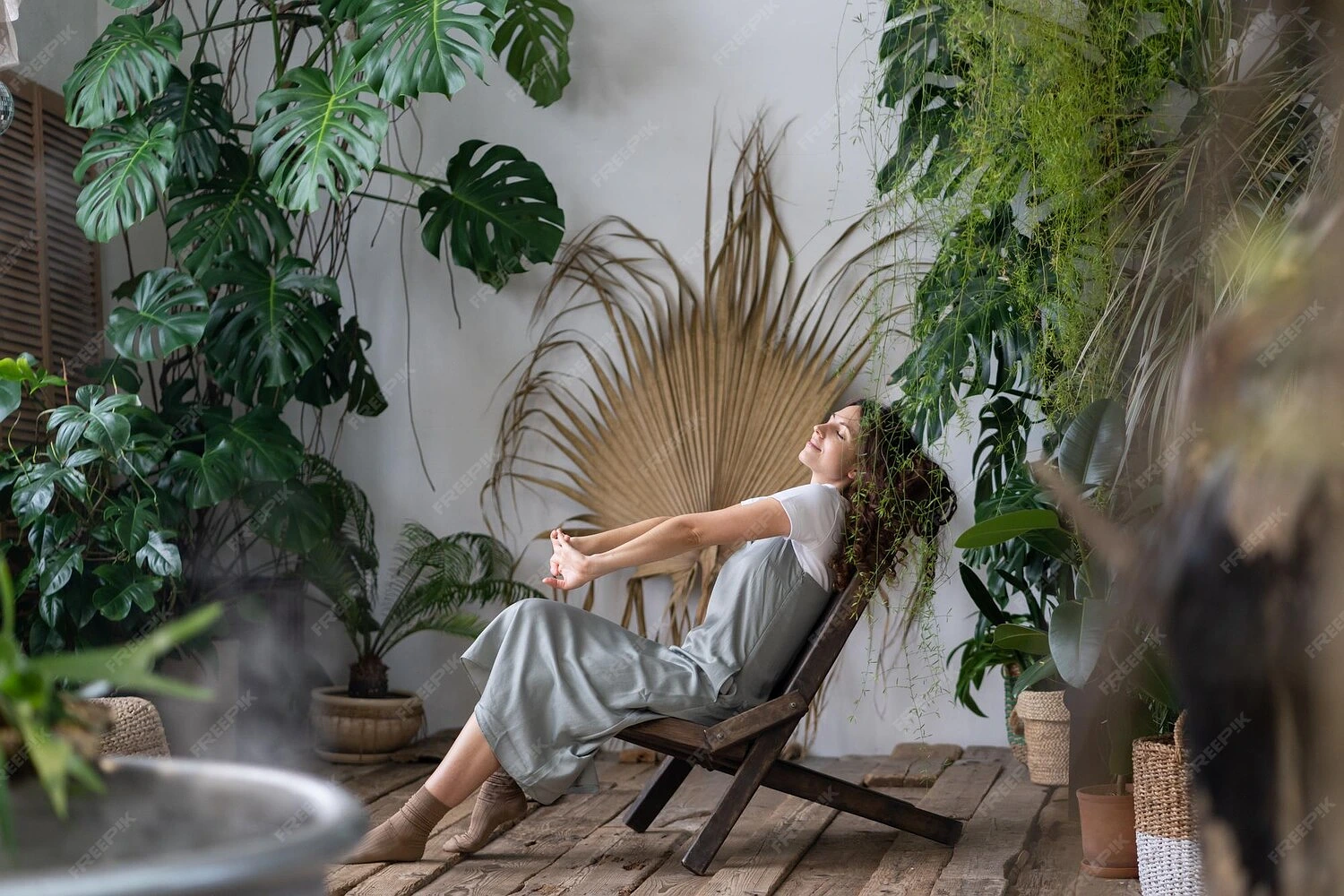
Curves and Organic Shapes
Rounded forms — faith in arched mirrors, curved furniture and circular rugs — soften the rigid 90-degree angles of modern architecture, allowing for a smoother visual flow through a space. Nature does not make straight lines anywhere. Rivers bend, branches fork, shorelines straggle. Bringing those shapes inside makes rooms feel less boxlike.
In open-plan homes, a circular rug or an arc-shaped sofa can create a sitting area without raising a wall. If you see that your walking routes through a room include a lot of sharp right-angle turns around furniture edges, rearranging the space so movement flows more naturally could help. May not seem like much, but the body pays attention.
Where to Start
You don’t need a renovation; the changes that matter most cost little or nothing.
- One substantial plant with real presence, not a desk succulent
- One synthetic throw swapped for linen, hemp, or wool
- One harsh overhead light has been replaced by a warmer lamp near where you actually sit
- Curtains opened wider, or heavy drapes traded for something lighter
- Your main chair or sofa moved closer to a window
Notice where you naturally go when you want to relax, and where you tend to avoid hanging out. The spots you skip are usually the ones most starved of daylight, greenery, and natural texture. Start there.
 Decor & Improvement Accessories