

Home & Decor Blogs: DIY, Interior Design & Lifestyle Ideas
Eco-Friendly Siding: The Real Science Behind Four Popular Claims
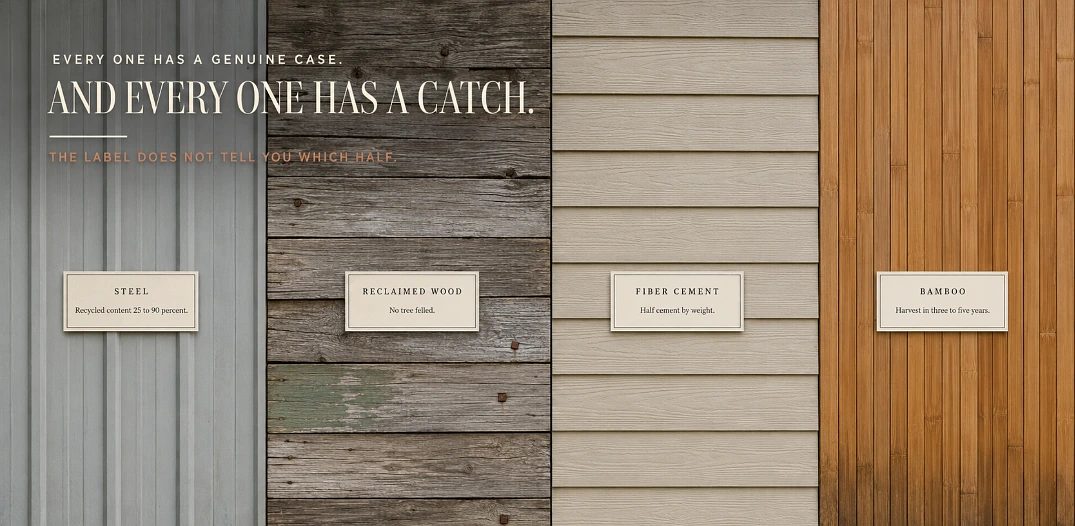
Every material on this list has a genuine environmental case behind it, and every single one also has a catch that never makes it onto the sample board at the showroom: knowing both halves is really the whole job here, because “eco-friendly” printed on a label doesn’t tell you which half you’re getting.
Four Materials, and What the Research Actually Says About Each
Steel
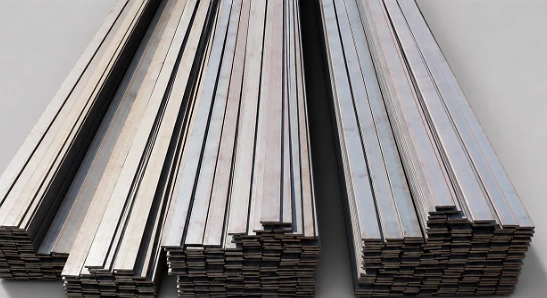
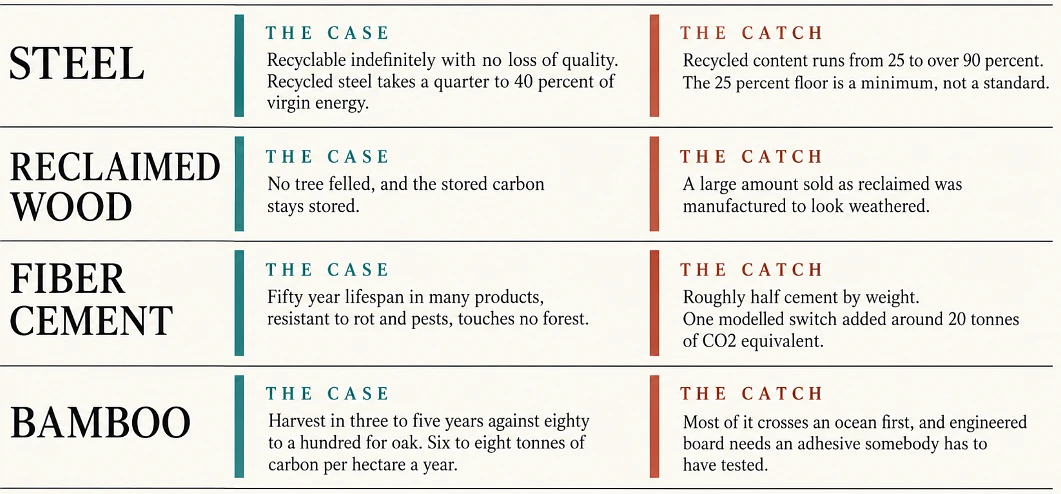
Steel is genuinely, fully recyclable, indefinitely. A steel beam can be made into another steel beam forever without losing quality, and that part of the pitch is completely true.
What’s less often said plainly is that the recycled content of the actual product in front of you can run anywhere from 25 to over 90 percent, and the gap comes down to which production method made it. Electric arc furnace production is running on roughly 75 percent scrap feedstock. Older methods have far less recycled material fed into them. And recycled steel is taking something like a quarter to 40 percent of the energy that virgin steel production actually needs.
A quick way to check before you buy:
- Ask the manufacturer to have the recycled content percentage stated in writing, not just the word “recycled” on the box.
- Anything sitting at or near the 25 percent floor is the bare LEED minimum, not a genuine environmental commitment, so treat it as the low end rather than the standard.
Reclaimed Wood
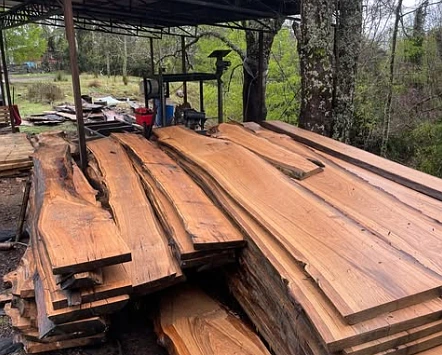
The carbon case for reclaimed wood is about as clean as it gets. No tree gets felled at all, and the carbon that’s already stored in the wood stays stored instead of getting released back into the air.
The catch is verification, not chemistry. There is, honestly, a large amount of wood out there sold as reclaimed that was never actually reclaimed from anything. It was manufactured to look weathered, and priced to match what genuine salvaged lumber commands, because real reclaimed wood costs more, and fraud has a habit of following that kind of price gap. The fix is to have the seller produce something specific rather than taking their word for it, the FSC Reclaimed Materials Standard and SCS Salvaged Wood and Fiber verification are both real third-party certifications built exactly for this, with chain-of-custody paperwork that traces the board back to where it actually came from.
Fiber Cement
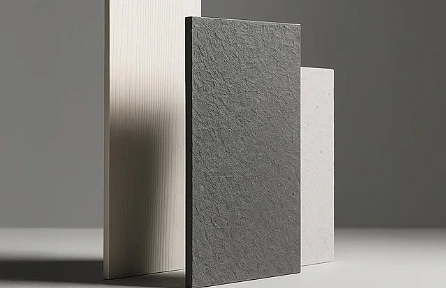
This one is genuinely durable, fifty years in a lot of products, resistant to rot and pests, and it doesn’t touch a forest at all, so on paper it dodges the whole deforestation argument.
But it’s roughly half cement by weight, and cement is one of the most carbon-intensive materials used in construction anywhere. A real embodied-carbon study, run by the architecture firm Coldham & Hartman, had modelled what would happen if the wood clapboard siding on one of their own projects got swapped for fiber cement instead. The switch was adding 40,000 kilograms of CO2 equivalent, something like 20 tons of carbon, and the firm itself compared that number to running an average non-net-zero American home for four straight years. Just from changing the siding. Manufacturers like James Hardie are working to fix this, some plants are aiming to cut their own manufacturing emissions by 42 percent by 2030, but that’s a target they’re working toward, not something already built into the board that’s on your wall right now.
Bamboo, the One That Actually Needs the Longer Answer
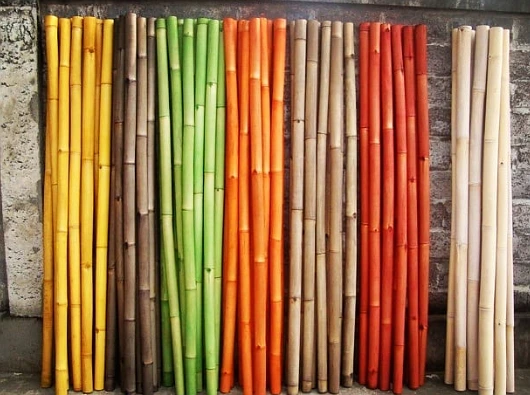
People ask about bamboo more than they ask about the other three, and it’s earned the longer answer, because there are honestly four separate parts to what’s actually true about it.
The Growing Case
A stand of bamboo is ready to harvest in three to five years. Oak, by comparison, takes eighty to a hundred. And because bamboo is growing from an underground rhizome system rather than a single trunk, cutting it down doesn’t actually kill the plant, there’s no replanting, no bare patch left where a forest used to stand.
A Moso bamboo stand is pulling something like six to eight metric tons of carbon out of the air per hectare every year. Oak forests, in the studies that have actually looked at this, are managing closer to two or two and a half. The root system matters too, it’s keeping roughly 83 percent of itself in the top foot of soil, and that’s exactly what holds ground together in a way clear-cut timberland never really does.
Where It Gets Complicated
Most of the bamboo used in North American and European construction was grown in China or Southeast Asia, so before it’s ever a wall panel it’s already crossed an ocean, and that shipping cost is eating into the carbon advantage the growing stage just built up.
Engineered bamboo also needs an adhesive to hold the strands together, and manufacturers have that adhesive tested for formaldehyde content before it can carry a real certification. Reputable brands are testing as low as 0.005 parts per million, well under California’s strict CARB Phase 2 limit, but a cheap board from an unverified supplier could be using a resin nobody’s ever checked at all.
What “Exterior” Actually Requires
This matters more for siding specifically than it does for flooring, because raw bamboo is naturally moisture-sensitive, and left untreated outdoors it degrades fast, the opposite of what a “natural material” pitch implies you should expect.
What actually holds up as exterior bamboo siding is a properly engineered product that’s been through real weatherproofing and factory finishing built specifically for outdoor exposure, not raw culms with a coat of stain over them.
The Quote Everyone Cuts Short
Have you seen that Apple TV documentary series Home, the one which was released in 2020? One episode, Sharma Springs, follows Bali architect Elora Hardy as she builds an entire house out of bamboo, and she’s on record calling it about the most environmentally conscientious material there is, four-year growth cycle, real carbon numbers behind it.
But her actual quote doesn’t stop there, and this is the part that gets left out whenever someone repeats the first half of it. It only holds up, in her own words, “if the bamboo is chosen well, treated properly, designed carefully, and maintained.” Four conditions, not zero.
So Which One Should You Actually Buy
It Depends on What You’re Actually Trying to Solve For
Lowest carbon footprint on paper, and you don’t mind checking two labels before you commit: bamboo wins, but only the properly certified, regionally sourced kind, not whatever’s cheapest at the yard.
Longest lifespan with the least ongoing thought: fiber cement, and you’re accepting the manufacturing carbon cost as the price of fifty years of not having to think about it again.
Genuine zero-new-material impact, and you’re willing to do the legwork verifying the seller: reclaimed wood, assuming the paperwork actually backs it up.
Full recyclability at end of life and a number you can actually verify: steel, but have the manufacturer state the recycled content percentage directly rather than trusting the word “recycled” on its own.
None of these four is the universally right answer, and anyone telling you otherwise is selling you the label, not the material.

 Decor & Improvement Accessories