

Home & Decor Blogs: DIY, Interior Design & Lifestyle Ideas
Exterior Remodeling in the Right Order: What to Fix First

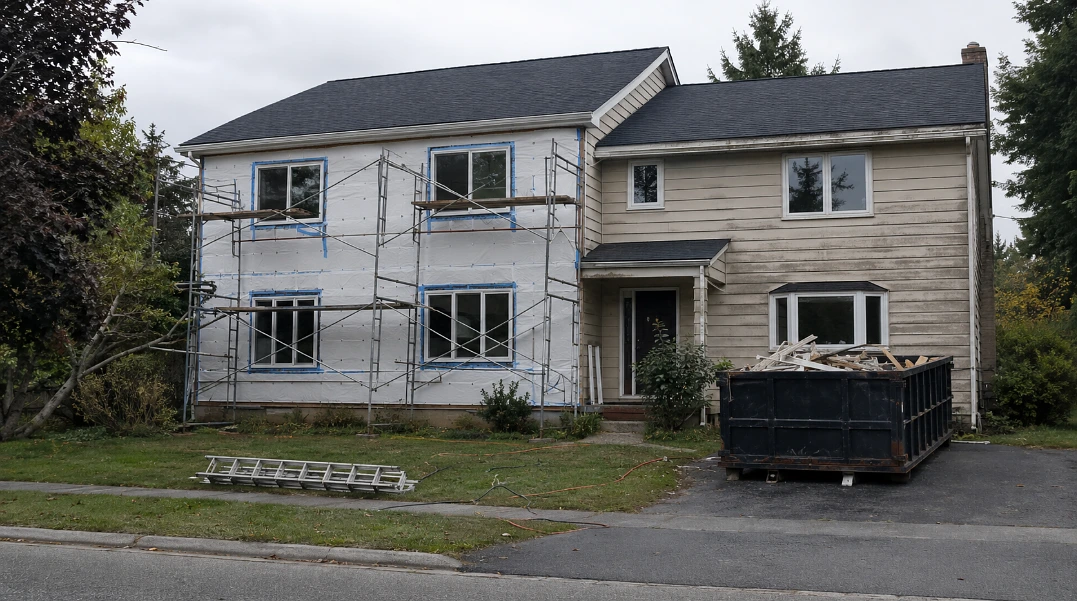
Most exterior remodels go wrong in the planning order, not the workmanship. The sequence that holds up is boring. Deal with water first, then the wall itself, then the pretty stuff, because out of order you end up paying to protect finishes that the layer behind them is quietly ruining.
That order holds whether you’re phasing the work yourself over three summers or handing the whole thing to exterior remodeling services under one contract. Either way, the sequence is the part worth checking before anything gets signed, because a plan that starts with paint and ends with gutters is a plan written backwards, however nice the renderings look.
Start With Water
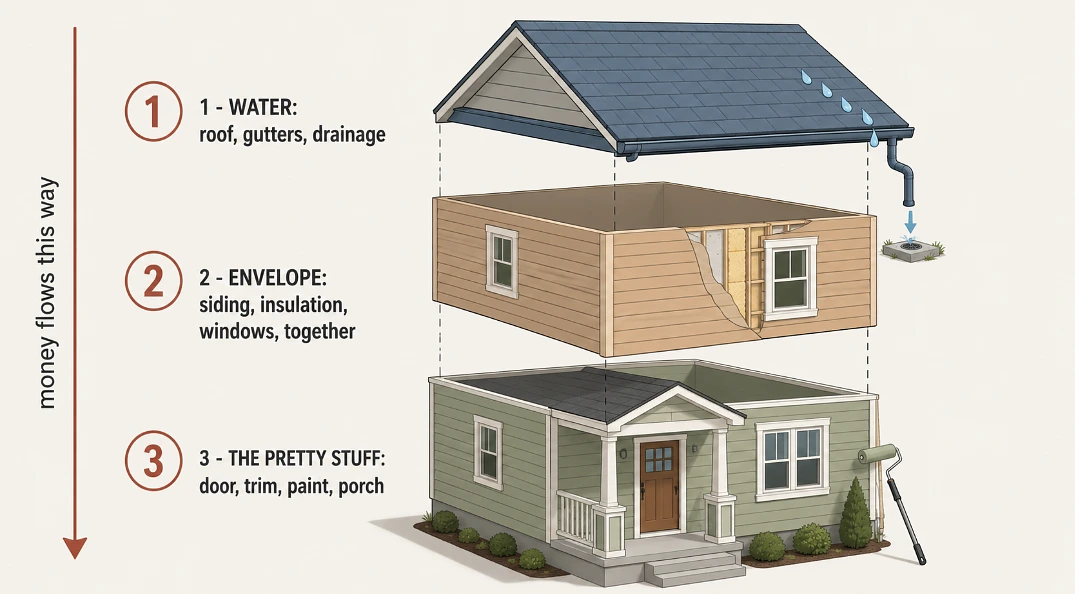
The roof goes first even though it’s the least fun money you will spend. For most homes an architectural shingle replacement lands somewhere between $8,000 and $15,000, and what you’re really buying is everything underneath it, because a roof that’s going doesn’t go alone. It soaks insulation, rots framing, stains ceilings. Gutters and ground drainage belong in this phase too. They’re cheap, they’re dull, and they protect more expensive things than anything else on the outside of a house.
The Envelope, and the One Cheap Moment
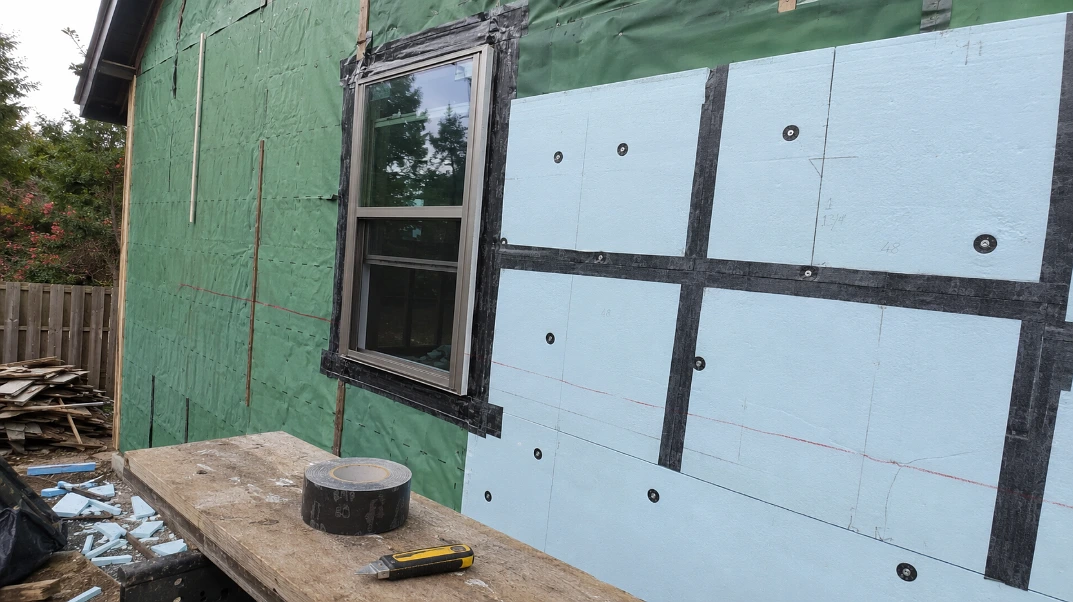
Siding, insulation and windows want to happen together, and the reason is simple: while the old siding is off, the wall is open. That is the only time adding continuous exterior insulation costs a fraction of what it would as its own project, and it’s also the right time to set windows, because a window flashed into the weather barrier while everything is exposed gets integrated properly instead of caulked in from outside and hoped about.
On materials, your climate should outrank the brochure. James Hardie and the other fiber cement lines shrug off fire, coastal salt and general abuse, and a full house of it typically runs $15,000 to $22,000 against maybe ten to fifteen for vinyl. LP SmartSide sits between them if you want the timber look without the timber upkeep. Windows, figure $450 to $700 apiece installed for decent vinyl double hungs.
Two things worth knowing before signing anything. On older houses, expect the crew to find something ugly once the cladding comes off. Rotten sheathing turns up on something like a third of these jobs, so a quote without a contingency line isn’t cheaper, it’s incomplete. And running roof, siding and windows as one project instead of three saves real labor money. One scaffold, one mobilization, one cleanup.
What the Resale Numbers Reward
Paint, trim, the porch, the entry, all of it lasts longer and lands better on a sound envelope, and the resale data mostly rewards the same order.
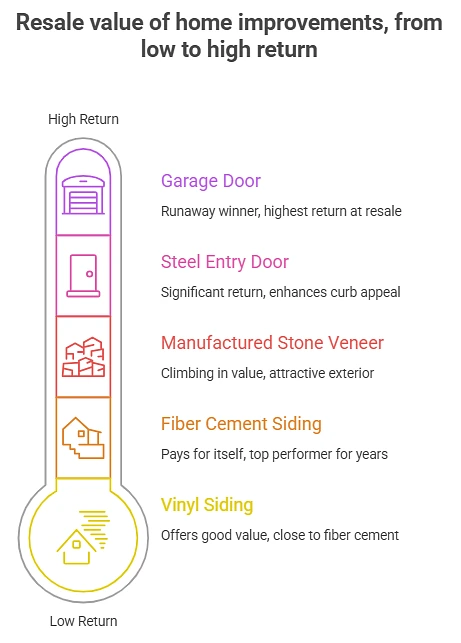
Zonda’s Cost vs Value Report, which tracks 28 projects across more than 100 U.S. markets, found eight of the ten highest returning projects were exterior work, and the top three each gave back more than double their cost.
The runaway winner is one most people forget is even a remodel: the garage door, recouping around 268% at resale, the top project two years running. A steel entry door lands near 216%, manufactured stone veneer around 206% and climbing year over year. Fiber cement siding, near the top of these tables for over a decade, now more than pays for itself at roughly 114%, with vinyl close behind at 97%.
There are running savings too, new windows especially take a real bite out of heating and cooling bills. One budgeting note while you’re pricing windows and doors: the federal energy credit that used to offset those upgrades has expired, so if a plan or an older article is still counting it, recheck the math before you sign.
Who Owns the Seams
Permits, inspections, HOA rules, all of it rides along with exterior work, and a decent contractor handles the paperwork without drama. The part worth thinking harder about is warranty structure. Hire trade by trade and the roofer covers the roof, the sider covers the siding, and when a leak shows up at the flashing between them, each company points at the other. That seam is the practical case for running the whole sequence under one contract, one warranty conversation, and flashing that belongs to somebody. Whatever route you take, get the warranties and care schedules in writing at handover. You will not remember any of it in year six, and year six is when it matters.
If money forces the project into phases, phase it in this order. Water this year, walls next, paint when the first two are done.
 Decor & Improvement Accessories