

Home & Decor Blogs: DIY, Interior Design & Lifestyle Ideas
From Concept to Completion: Why Early Landscape Planning Prevents Costly Changes Later in Residential Projects

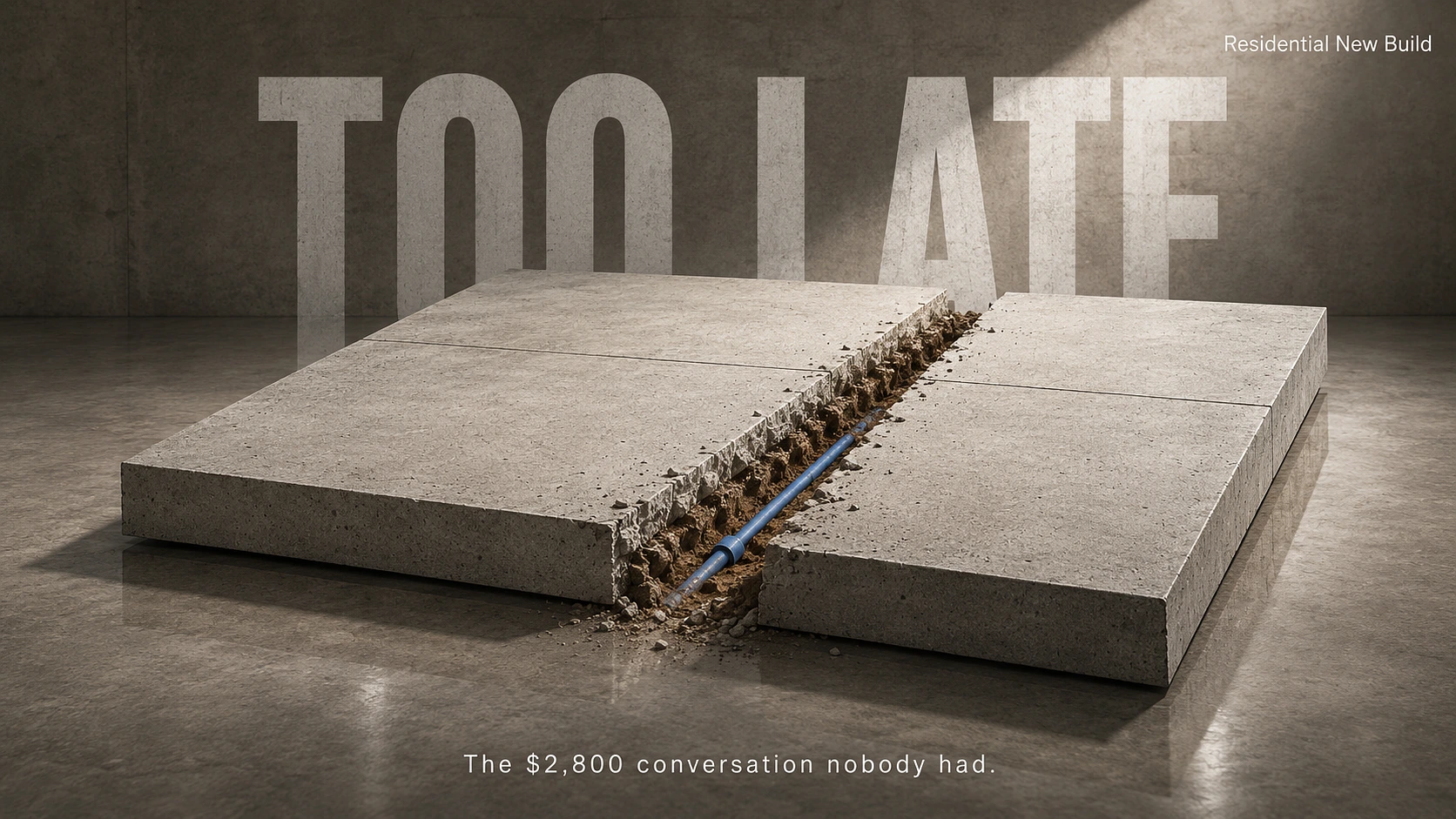
The electrician was already gone when the landscape designer showed up. So was the concrete crew. The patio had been poured three days earlier, the driveway the week before, and the irrigation lines were supposed to run exactly where two thousand square feet of finished hardscape now sat. Cost to fix it: cut through the patio in two places, trench underneath, repour the cut sections. Roughly $2,800 in saw work, materials, and refinishing that no one had budgeted for. Two extra weeks on a project that was supposed to be wrapping up.
I’ve watched this exact sequence play out so many times that I can usually tell, the first time I walk a site, whether it’s going to happen on that project too. The signs are pretty obvious if you know what you’re looking at. Nobody has talked to a landscape designer yet. The builder’s drawings show the house and a generic green rectangle around it. The homeowner is excited about plant selection and hasn’t thought about where the gas line for the future fire pit needs to enter the slab. None of that is unusual. It’s just expensive.
This is the conversation that happens at the end of residential builds where Landscape planning was treated as the thing you figure out after the house is done. It doesn’t have to be that way.
What Late Landscape Planning Actually Costs
Most homeowners think of landscape decisions as flexible. The plants, the water features, the lighting placement, the fire pit location, all of that feels like it can wait until the house is closer to done. Then the bill arrives.
Below are the real cost ranges for retrofitting versus planning early, drawn from current residential project data.
Irrigation retrofit after hardscape is in
- New installation during construction: $3,000 to $8,000 for an average sized backyard.
- Retrofit after patios and walkways are finished: add $1,500 to $4,000 for trenching, cutting hardscape, and restoration.
- Drip irrigation per zone, planned: $300 to $1,200.
- Sprinkler system per zone, planned: $600 to $2,000.
Most yards need three to five zones. Plan it during framing and the conduit goes in the same trench the electrician is already using. Plan it after pouring and you’re cutting into something you just paid for.
Drainage and grading
- Done as part of original site prep: $1,000 to $5,000 for whole yard regrading.
- Corrected after the fact because nobody accounted for plant beds or retaining walls: add $1,000 to $4,000 for drainage piping and another pass at the grading.
A bad slope toward the house is the one I worry about most. By the time water is sitting against the foundation, you’re not just regrading anymore, you’re potentially looking at waterproofing work that runs into the tens of thousands. I’ve seen that conversation in person and it’s brutal because there’s no good outcome, just expensive ones and more expensive ones.
Lighting installed during versus after
- Low voltage lighting installed during construction: $80 to $120 per fixture plus around $600 for transformers and wiring runs.
- Same fixtures retrofitted later: visible conduits, surface mounted runs, limited placement options.
Path lights bolted on top of finished hardscape often look exactly like what they are, an afterthought. The homeowner spent six figures on the build and the lighting they’re walking past every night was the cheapest thing in the project to plan and now it’s the thing that screams “added on later.”
Hardscape modifications
- Concrete patio installed once, properly graded: $4 to $12 per square foot.
- Retaining wall added because grading wasn’t planned for plant beds: $35 to $65 per square foot for a fifty foot wall, which is $1,750 to $3,250 that didn’t need to exist.
The patio redo is the one that physically hurts to watch. Someone pays for a beautiful rectangle, then realizes six months later that it needs curves to work with the redesigned plant beds, and they pay for the curves on top of the rectangle they already paid for. Twice the same money for one patio.
The Sequence That Actually Works
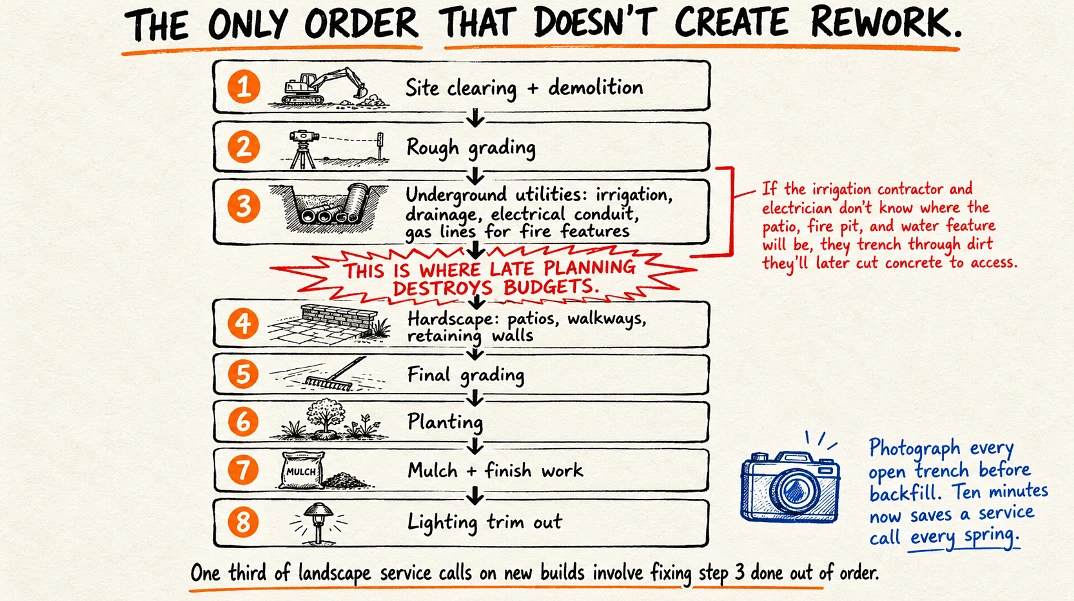
Landscape contractors who have worked residential new construction long enough talk about this in a specific order. Not because it’s pretty. Because it’s the only order that doesn’t create rework.
The standard sequence is:
- Site clearing and demolition.
- Rough grading.
- Underground utilities, irrigation, drainage, electrical conduit, gas lines for fire features.
- Hardscape, patios, walkways, retaining walls, structural elements.
- Final grading.
- Planting.
- Mulch and finish work.
- Lighting trim out.
Step three is where late planning destroys budgets. If the irrigation contractor and the electrician don’t know where the patio will be, where the fire pit gas line needs to run, and where the water feature will sit, they trench through dirt they’ll later cut concrete to access. Roughly one third of landscape contractor service calls on new construction homes involve fixing this exact problem, according to industry coordination data.
One thing I tell every client who’s about to go through this phase: during the trenching window, walk the yard with a phone and photograph every open trench before backfill. Julie Orr Design recommends the same thing, and there’s a reason. People forget where pipes are. When you want to plant a tree five years later, those photos are the difference between an easy hole and a severed irrigation line. It takes ten minutes and saves people from a service call I get asked about every spring.
Trade Conflicts That Show Up When Nobody Plans Ahead
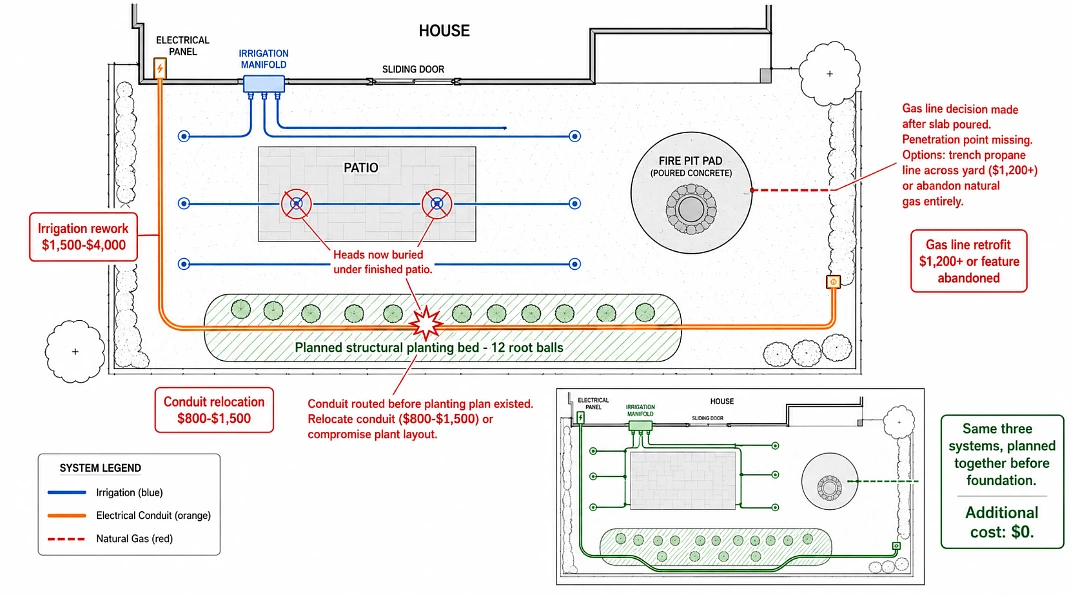
This is the section I get most worked up about because it’s the most preventable damage in the entire industry and nobody is talking about it the way they should.
The construction sequence rule that matters most: framing should be 80 to 90 percent complete before plumbing and electrical rough-in begins. Standard. Every contractor knows this. But underground utilities for the landscape need to be coordinated before the foundation is even cured, and that’s where the wheels come off. The site is moving fast, the framing crew is on schedule, and somebody decided the landscape package would be figured out “later.” Later means the electrician and the irrigation guy are doing two different versions of the same job because nobody handed them one drawing to work from.
Here’s a real pattern from the trade. A homeowner adds a pool and patio after moving in. The original builder installed all the sprinkler heads on one zone with no consideration for sun exposure or slope. The new pool and patio now cover three of those heads. The retrofit isn’t just adding the pool plumbing, it’s reconfiguring the entire irrigation system because the original wasn’t designed for what the yard actually is now. That’s a Maryland landscape contractor’s case study, and it’s so common it could be from anywhere. The fix involved adding zones, switching to matched precipitation nozzles, and replacing the controller. Water use dropped 22 percent after the rebuild. The original system had been wrong from day one because nobody had asked the right questions before the builder put it in.
The other conflict that repeats: the electrician routes wiring through where the garden beds were supposed to go. Standard residential electrical layout assumes the yard is a blank canvas. If nobody told the electrician that a row of structural plantings was going on the south side, the conduit ends up exactly where the root balls need to be. Either the conduit gets relocated, expensive, or the plant layout gets compromised, also expensive in a different way.
And the one I see most often, which doesn’t get talked about enough, is the gas line for outdoor fire features. The decision to add a fire pit or an outdoor fireplace looks like a late-stage aesthetic call, but the gas line for it has to be planned before the slab is poured because the penetration point is in the concrete. Decide on the fire pit during planting week and you’re either trenching a propane line across the yard later or you’re abandoning the natural gas option entirely. I’ve watched homeowners cry over this one.
What Has to Lock In Before Foundation Pours
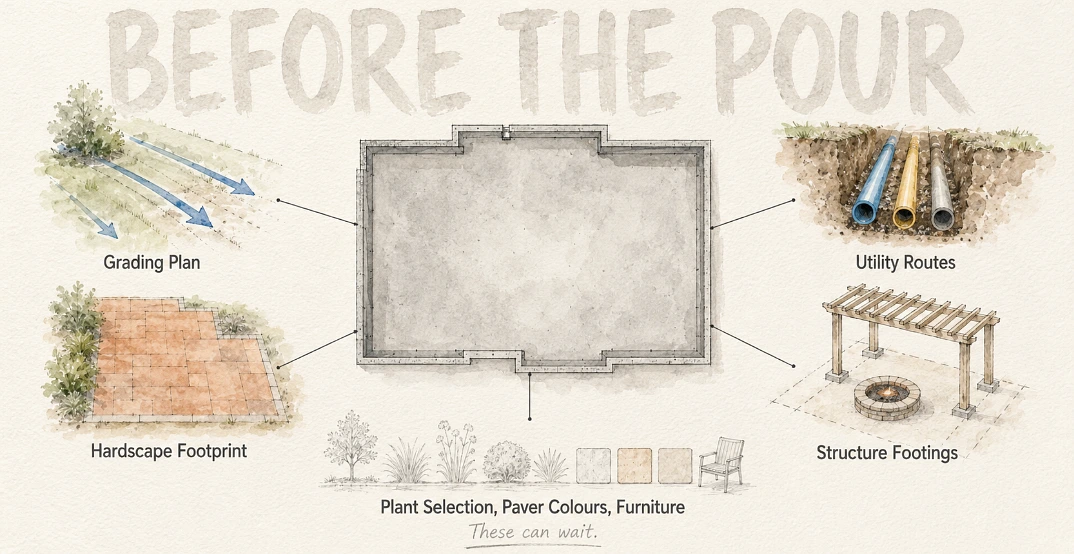
This is the short list. Decisions made before this milestone cost a fraction of what they cost made after it.
- Final grading plan, including drainage direction and any slopes shaping seating areas or planting zones.
- Underground utility routes for irrigation, low voltage lighting, gas lines for outdoor kitchens and fire features, and any electrical for pumps or water features.
- Hardscape footprint, even rough, so the foundation crew knows where adjacent slabs will tie in.
- Locations of any structures, pergolas, sheds, pool equipment pads that need their own footings poured in the same concrete pour.
Notice what isn’t on this list. Plant selection. Specific paver colors. Furniture choices. Those can wait.
Material Selection
Material consistency between indoor and outdoor is the part most homeowners want and most projects botch. Stone selected for the kitchen counters often informs what stone reads as cohesive on an outdoor bar surface. Hardwood species inside an open floor plan that flows to a deck looks disjointed if the deck material was chosen without reference to it.
Selecting these materials in parallel matters because of supply, not just aesthetics. Lumber and stone tariff impacts have shifted residential material costs by roughly 10 to 15 percent over the past eighteen months, with Canadian lumber and Mexican cement absorbing the largest changes. Materials selected six months apart can land at different price points and different availability windows. Selected in parallel, the contractor can lock in pricing across the whole package.
The disjointed look homeowners complain about after the fact almost always traces to this. Indoor finishes were chosen, the build progressed, and then nine months later somebody started picking outdoor materials in a completely different procurement cycle from a different vendor with no reference samples in hand.
The Long Term Value Argument
Landscaping can increase home value by 10 to 30 percent depending on quality and execution, according to current residential real estate data. The variance in that range comes almost entirely from whether the landscape feels like part of the home or feels like something added on later.
Buyers notice the connection without being able to articulate it. A patio that lines up with the main living space, lighting that’s flush with the hardscape rather than bolted on top, planting beds that work with the home’s lines rather than fighting them. None of that is luck. It’s the result of decisions made early, when everything could still be moved.
Designing for How the Property Will Actually Be Used
The functional layer of landscape planning is the easiest to get wrong because it requires honest conversation about behavior.
- How does the family actually use the yard?
- Who entertains, how often, how many people?
- Where does the dog go?
- Where do kids end up playing?
- Where does the laundry get hung?
- Where do recyclables sit before they’re rolled out?
A landscape plan that doesn’t address these gets used differently than how it looks in renderings. The dining area becomes storage because nobody actually wants to eat in the spot the designer picked. The decorative path turns into a worn dirt line because everyone walks a different way. The fire pit sits unused because it’s twenty feet too far from the kitchen and nobody wants to schlep food.
What I tell clients during the first meeting is to spend a week before our second meeting noticing where they walk, where they sit, where they actually want to be at different times of day. Real landscape planning starts with traffic patterns and use cases and works outward to aesthetics, not the other way around.
Residential projects where landscape design enters the conversation in week one, alongside the architect’s drawings, end up with outdoor spaces that feel intentional. Residential projects where it enters in month six, after the patio is poured and the irrigation budget is gone, end up with the compromises homeowners spend years working around. The difference isn’t talent or vision. It’s timing, and timing is the cheapest thing in the entire build to get right.
 Decor & Improvement Accessories