

Home & Decor Blogs: DIY, Interior Design & Lifestyle Ideas
The Homeowner’s Seasonal Checklist for Keeping Pests Out


Pests don’t usually show up out of nowhere. It just feels that way.
One week, your home is quiet, clean, and calm. The next week, you’re spotting ants near the sink, hearing scratching in the attic, or wondering why flies seem to love your back door so much. Honestly, it’s annoying because most pest problems start small. A damp corner. A loose screen. A pile of leaves near the foundation. A trash bin that didn’t get rinsed after a summer cookout.
That’s why seasonal pest prevention matters. It’s not about turning your home into a fortress. It’s about staying a few steps ahead, the same way you check smoke alarms, clean filters, or swap out winter blankets when the weather changes.
Spring: Wake Up the House Before the Pests Do
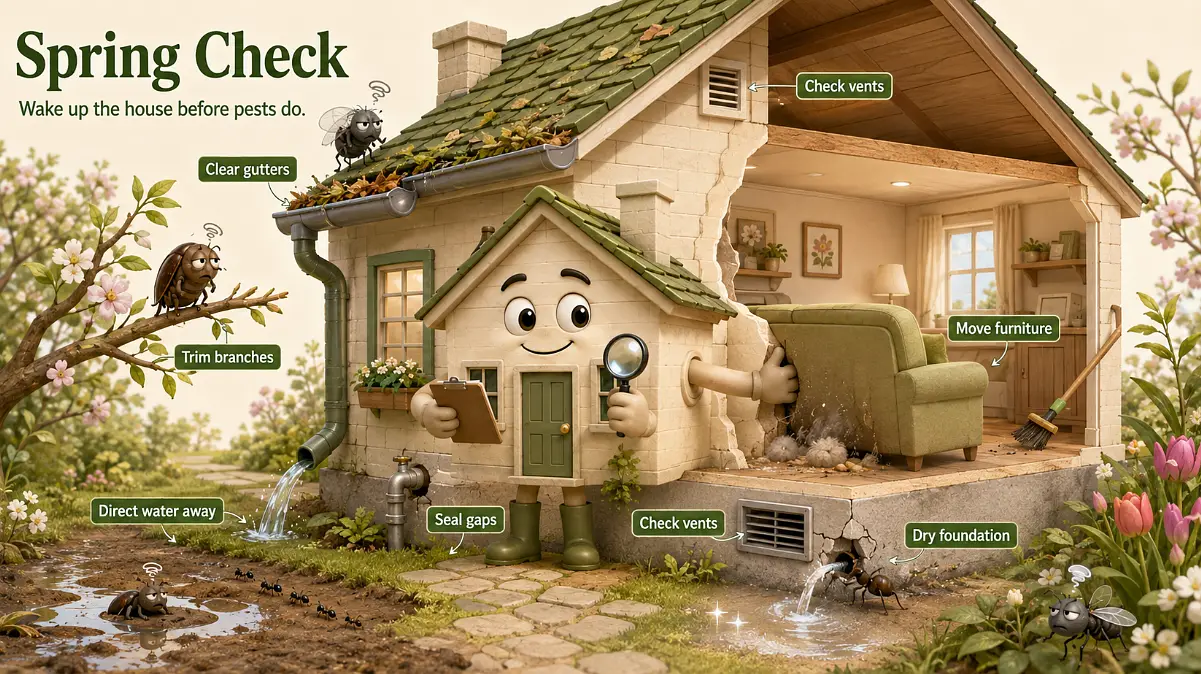
Spring is when everything outside starts moving again. The ground softens, the rain comes back, and the insects that spent the winter dormant become active more or less all at once. Your house is coming out of the same winter, and it needs the same attention, even though nothing about it looks urgent yet.
Start outside, and walk the perimeter slowly. You are reading the foundation, the siding, the vents and the window frames for the small failures that let things in:
- Cracked caulk and hairline gaps around the points where pipes, cables and utility lines enter the house.
- Lifted or perished weather stripping and loose trim that no longer sits flush.
- Any opening at ground level at all, because an ant does not need a doorway, it needs a crack, and that is a much lower bar to clear.
Seal what you find with whatever suits the size of the gap, whether that is exterior caulk, steel wool or expanding foam. While you are out there, clear the gutters and set the downspouts so they carry water several feet clear of the walls, because a blocked gutter holding leaves and standing water is one of the more welcoming things you can offer a mosquito.
Cut back any shrubs or branches resting against the siding too, since a branch touching the house is simply a bridge, and pests will use it to reach a window frame they could never have got to otherwise.
Indoors, spring is about the parts of the room you stopped looking at. Pull the larger furniture away from the walls and clean behind it properly, because that is where crumbs, pet hair and dust quietly accumulate for months. It is also, if you are the sort of person who rearranges rooms, worth remembering that a space you can easily clean behind is a space you can far more easily keep protected.
Summer: Warm Weather Throws the Doors Open
Summer runs on open doors, meals eaten outside, sticky hands and children moving in and out of the house all day, and the ants are more than ready for it. If you watch a trail of them for a minute you will see there is nothing random about it, because the moment one of them finds a reliable source of food the rest follow the same route to it within the hour. That is why the ordinary defences matter so much in summer: wiping the counters down, keeping anything sweet in sealed containers, cleaning spills as they happen, and keeping an eye on the pet bowl, since a little spilled kibble by the dog’s dish is enough to bring a whole line of them in.
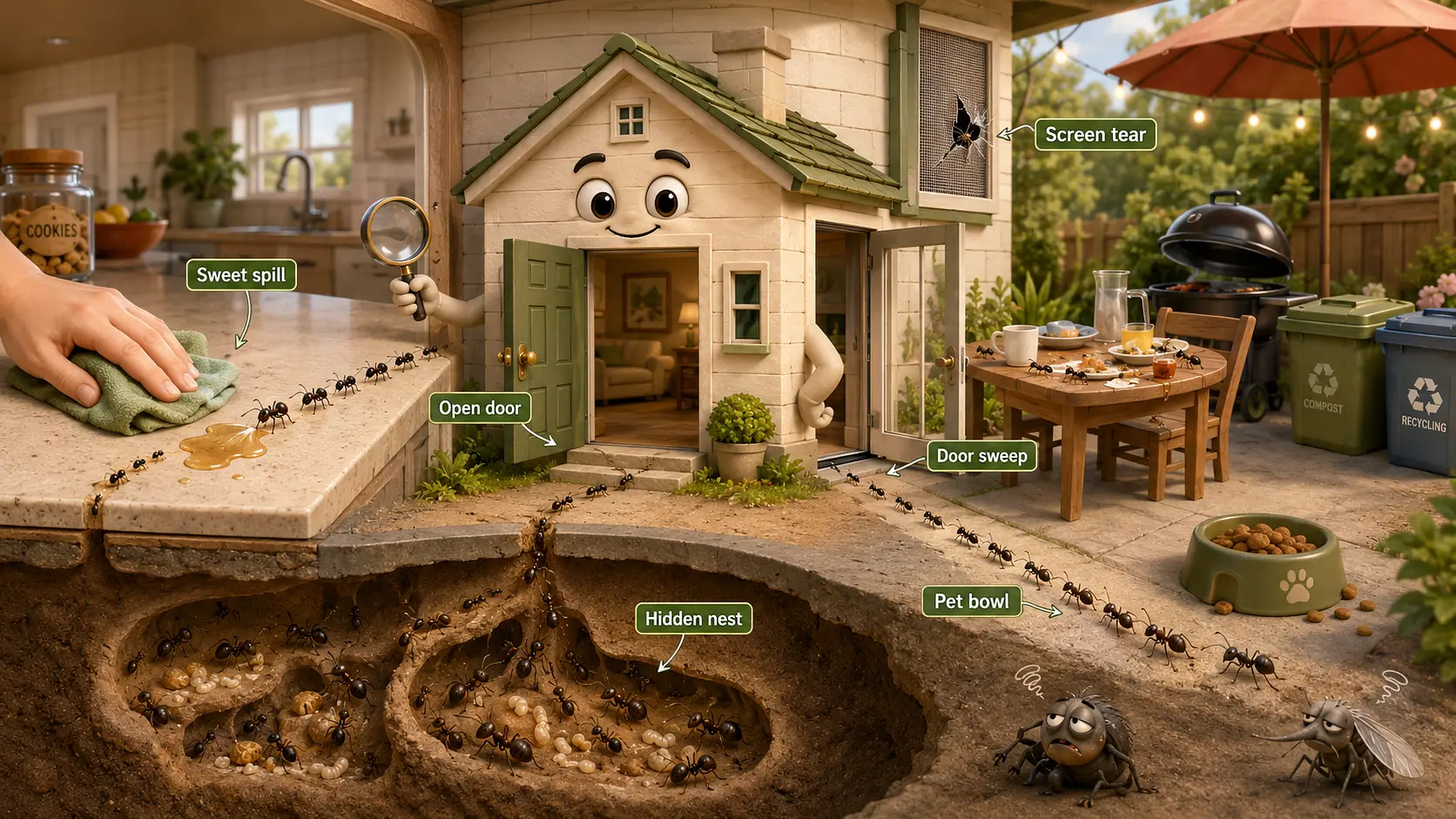
The important thing to understand about the ants you can see is that they are the least of your problem. Wiping the visible trail off the counter only removes the workers that happen to be out on an errand. It does nothing at all to the colony that sent them, which is usually hidden inside a wall void or beneath the slab where you have no way of reaching it. So when the ants keep coming back around the kitchen or the bathroom however clean you keep it, the message is that the nest itself is established, and that is the stage at which it makes sense to bring in modern pest ant control services that treat the colony directly, rather than spending your summer clearing away the same trail every morning.
Outdoor meals need a short routine of their own, or the patio slowly turns into a feeding station. A quick reset after a barbecue covers most of it:
- Clear the plates and cups away promptly instead of leaving them out.
- Wipe down the tables and railings where spills and sugar collect.
- Rinse the recycling before it goes into the bin.
- Keep the bin lids shut tight.
It is also worth checking your window screens and door sweeps while the warm weather is testing them, because a small tear in a screen will let in flies and mosquitoes all evening, and a worn door sweep leaves a gap for crawling insects right at floor level.
Fall: Close the Gaps Before the Cold Sends Them In
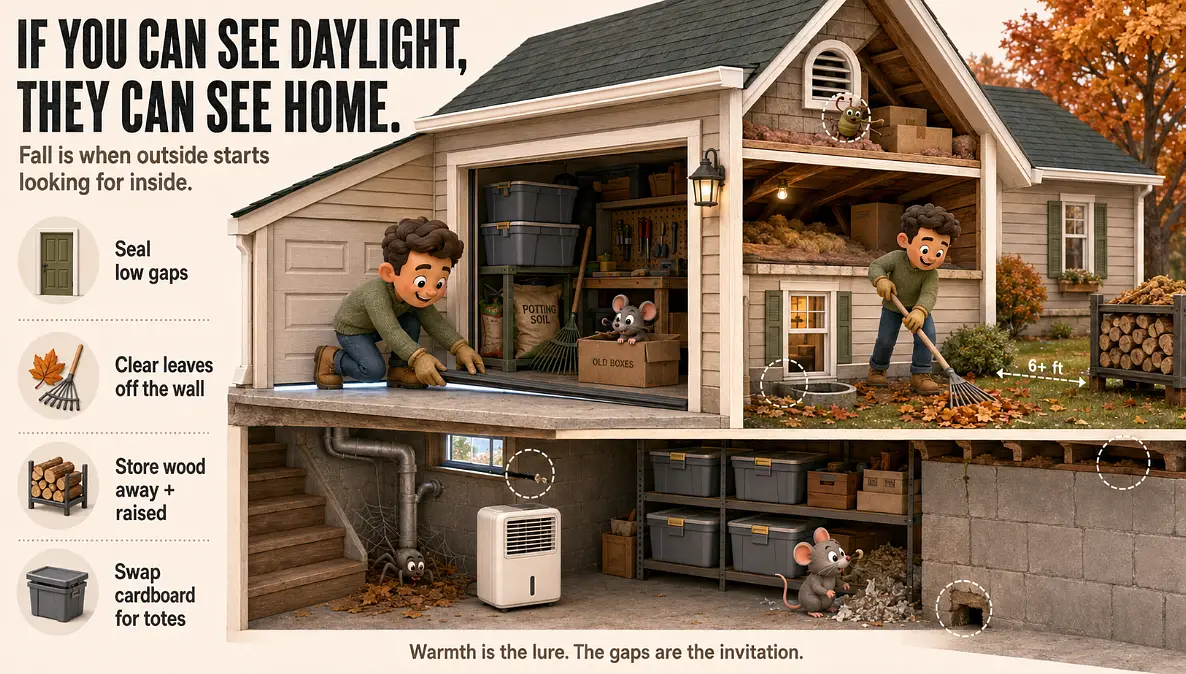
In autumn the whole pattern reverses. The pests are no longer out looking for food in the warmth; they are looking for the warmth itself, and mice, spiders and stink bugs all begin sizing up your garage, basement and attic as somewhere to see out the cold. This makes it the most important sealing season of the year, and you go about it more thoroughly than you did in spring. Get down low and check around the garage door, the basement windows, the attic vents and the crawl space, anywhere a gap tends to open near the ground. The simplest test still holds: if you can see daylight under a door, a pest can get in under it.
Two autumn habits catch a lot of people out, and both come down to convenience. The first is firewood. It is tempting to stack it right beside the back door where it is easy to reach, but a woodpile is full of insects and will sometimes hold a mouse nest, so keeping it several feet from the house and raised off the ground is worth the extra walk. The second is leaves. A drift of fallen leaves looks pleasant for a day or two and then turns wet and heavy, which is precisely the mix of moisture and cover that pests prefer, so rake it away from the foundation, out of the window wells and out from under the deck. Autumn is also the right moment to sort out the garage, because the cardboard boxes, bags of soil and forgotten holiday decorations sitting in there make ideal nesting material, and a cardboard box will always be easier to chew into and hide behind than a plastic tote with a proper lid.
Winter: Dry, Sealed, and Watching the Rooms You Never Enter
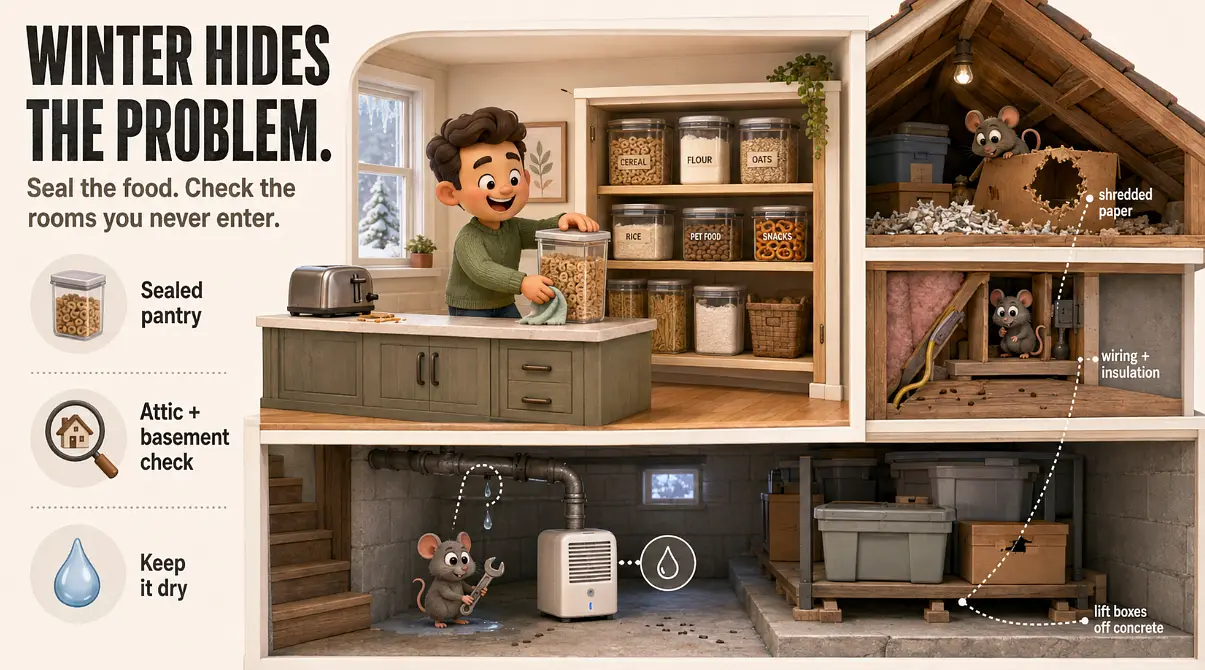
Winter is deceptive, because you stop seeing pests outdoors and it is easy to assume the problem has gone away with them. It has not gone away; it has moved inside. Some pests genuinely slow down in the cold, but rodents do the opposite and come in, and they are the ones to take seriously, because a mouse in the walls will chew through wiring, shred insulation and work its way into wherever food is kept.
Begin in the kitchen and pantry. Grains, cereal, flour, pet food and snacks all belong in sealed containers, and any spill inside a cabinet wants cleaning the same day, because a few crumbs behind the toaster are enough to keep something interested well into the new year. Then go and check the rooms you almost never enter, which is exactly why they have chosen them. In the basement and the attic you are looking for droppings, shredded paper, gnaw marks, a faint sour smell and small holes worked into stored boxes, and at night you are listening for scratching. It is not an enjoyable ten minutes, but it is a genuinely useful one. Keep those spaces dry while you are there, since fixing a weeping pipe, running a dehumidifier in a damp basement and lifting boxes up off the bare concrete all make the space far less appealing to the things that would otherwise settle into it.
The Year-Round Habits That Quietly Do the Most
A fair amount of this was never seasonal at all, and simply amounts to keeping a home that pests find boring:

- Keep the bins sealed and the lids on.
- Clean the drains before they start to smell.
- Don’t leave dishes sitting overnight.
- Fix leaks rather than living around them.
- Store food properly instead of leaving it out.
- Keep the yard reasonably tidy, which is not the same as immaculate.
That last point is worth being honest about, because immaculate was never the standard. Real homes are lived in, with shoes by the door and crumbs under the high chair and laundry that keeps multiplying in the basket, and none of that is a problem on its own. The trouble only begins when the small things accumulate together, when one slow leak and one torn screen and one gap under a door all exist at the same time, and what looked minor individually adds up to a genuinely easy way in.
The whole aim of the seasonal routine is to catch those patterns early and keep taking away the four things every pest is really after, which are food, water, shelter and a way inside. Spring handles the sealing and the cleaning, summer manages the food and the outdoor mess, autumn closes the gaps ahead of the cold, and winter watches the quiet rooms and keeps them dry. Keep to that rhythm for a couple of years and it stops feeling like a chore, and simply becomes part of how you look after the place.
 Decor & Improvement Accessories