
Home & Decor Blogs: DIY, Interior Design & Lifestyle Ideas
How Mattress Companies Get Caught Lying, And What To Ask So You Don’t Pay For It

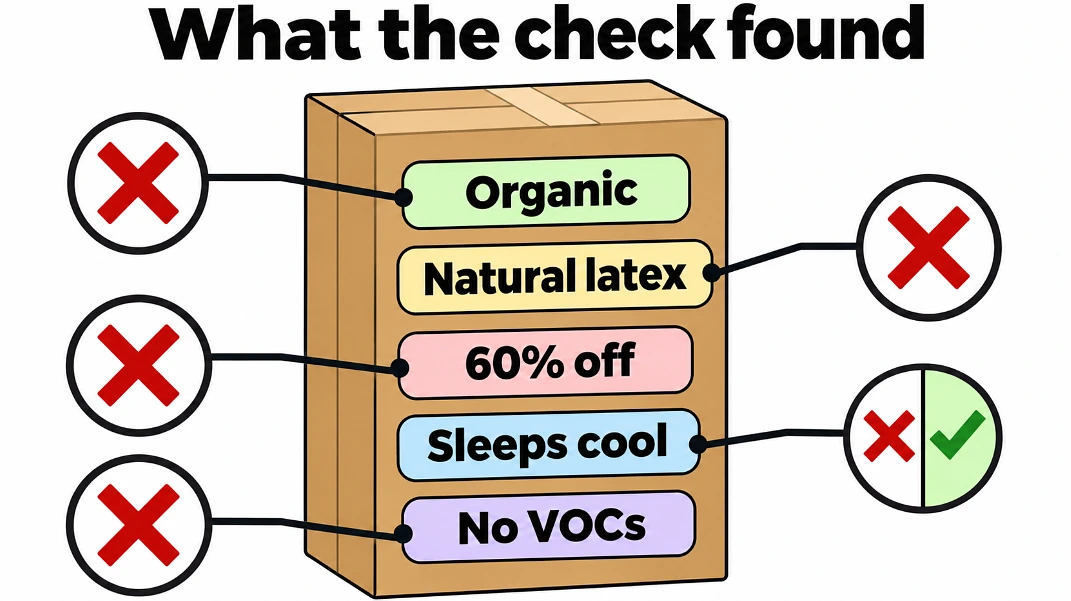
Organic. Natural latex core. No off gassing. 60 percent off. Sleeps cool. Those are the words on the box, and most of them never get checked by anyone. When anyone does check, a regulator, a consumer magazine, a university lab, the result tends to come out one way, and it is worth knowing those stories before you pay, because those words are still on the boxes.
A Natural Latex Core That Was Synthetic
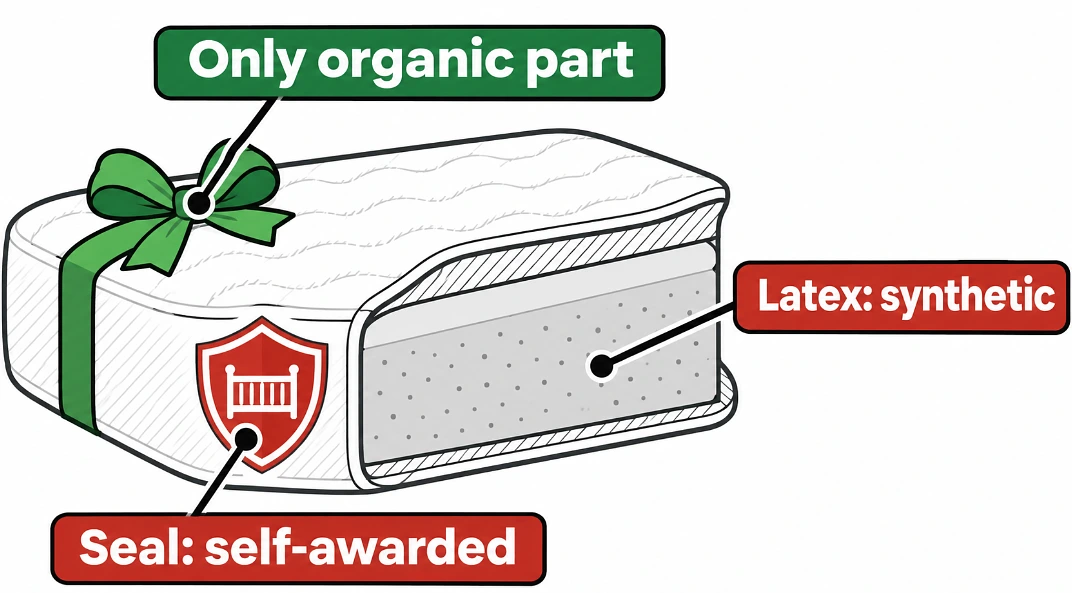
Moonlight Slumber sold baby mattresses online and at some of the nation’s biggest retailers. In ads for its Starlight Simplicity and Little Star mattresses, it described the products as “organic” and “a safe, organic alternative to traditional crib mattresses” with a “Natural Latex Core.” According to a logo the company prominently displayed, its products had the “Green Safety Shield.”
The Federal Trade Commission went through the claims in September 2017, and its blog put the result in one line: organic and natural, won’t emit VOCs, proven by testing, bearing the Green Safety Shield, those claims were deceptive, deceptive, deceptive and deceptive.
- What was claimed
- The mattresses were organic. Only the ribbon on them was.
- The Little Star had a “Natural Latex Core.” The latex used in this mattress was synthetic.
- The mattresses were made from plant based foam. The foam contained little or no plant based material.
- Testing proved there were no VOCs. The company did not possess testing that proved there were no VOCs.
- What the shield was. The company awarded the seal to itself. The Green Safety Shield was not a certification by an independent third party, and it was displayed on the website and packaging near certifications that were.
- Ask this: who certified it, and can I see the certificate from them, not from the brand.
Four years earlier the commission had settled with Relief-Mart, Essentia Natural Memory Foam and Ecobaby Organics over “VOC free” and “chemical free” claims on memory foam, and in Ecobaby’s case the certifier that vouched for the foam was the company itself under another name.
| The claim | Who made it | What the check found | Year |
|---|---|---|---|
| “Natural Latex Core” | Moonlight Slumber | The latex was synthetic | 2017 |
| “Green Safety Shield certified” | Moonlight Slumber | The company awarded the seal to itself | 2017 |
| “VOC free” memory foam | Relief-Mart, Essentia, Ecobaby | Unsubstantiated; Ecobaby’s certifier was Ecobaby | 2013 |
| “60% off” | Nectar, in the UK | Not sold at full price throughout the period | 2024 |
| “Cooling” | Various brands | For a long time, very few lived up to it | 2025 |
| “Over 99% reduction in viral activity” | BekaertDeslee | True, with its standard and window attached | 2020 |
A 60 Percent Off Bed That Never Sold At Full Price
Which? watched the prices of 11 mattress brands for 8 weeks in late 2023 and published what it found in February 2024. Some mattresses were promoted at seemingly unrealistic discounts. For example, the Nectar Memory Foam was offered with 60 percent off and was not sold at full price throughout the period.
- What the tactics were: one sale running into the next, countdown timers that reset, and discounts that may not offer a genuine saving.
- What Lisa Galliers, the Which? mattress expert, said: “When companies promote a deal, it must be a genuine offer.”
- Ask this: when did this bed last sell at the full price, and for how long.
Scaled down to your own order, a $900 bed marked “was $2,250” is only a bargain if a customer paid $2,250 for it at some point. The shop ought to be able to say when.
Cooling Claims That Only Started Coming True
CHOICE in Australia tests mattresses in a lab for warmth, how warm or cool they are to sleep on, and it does not report on manufacturers’ marketing claims, just the data. Peter Zaluzny, the CHOICE mattress expert, put the history of those claims in 2 sentences.
“For a long time, very few mattresses lived up to their cooling claims. But over the last few years, we’ve found more and more that actually matched the advertising.”
The Ecosa Truefirm claimed cooling, sweat wicking fabric, open cell latex and pocket springs that enhance airflow, and the experts verified that it returned a result of very cool when tested. Some of the most expensive mattresses in that review rated towards the bottom of the comfort and sagging tests, and around half a dozen discount mattresses performed as well as, if not better than, others that cost over $1,000. If a brand says it sleeps cool, ask what it was measured against, and by whom.
What Came Off 16 Children’s Mattresses In A Toronto Lab
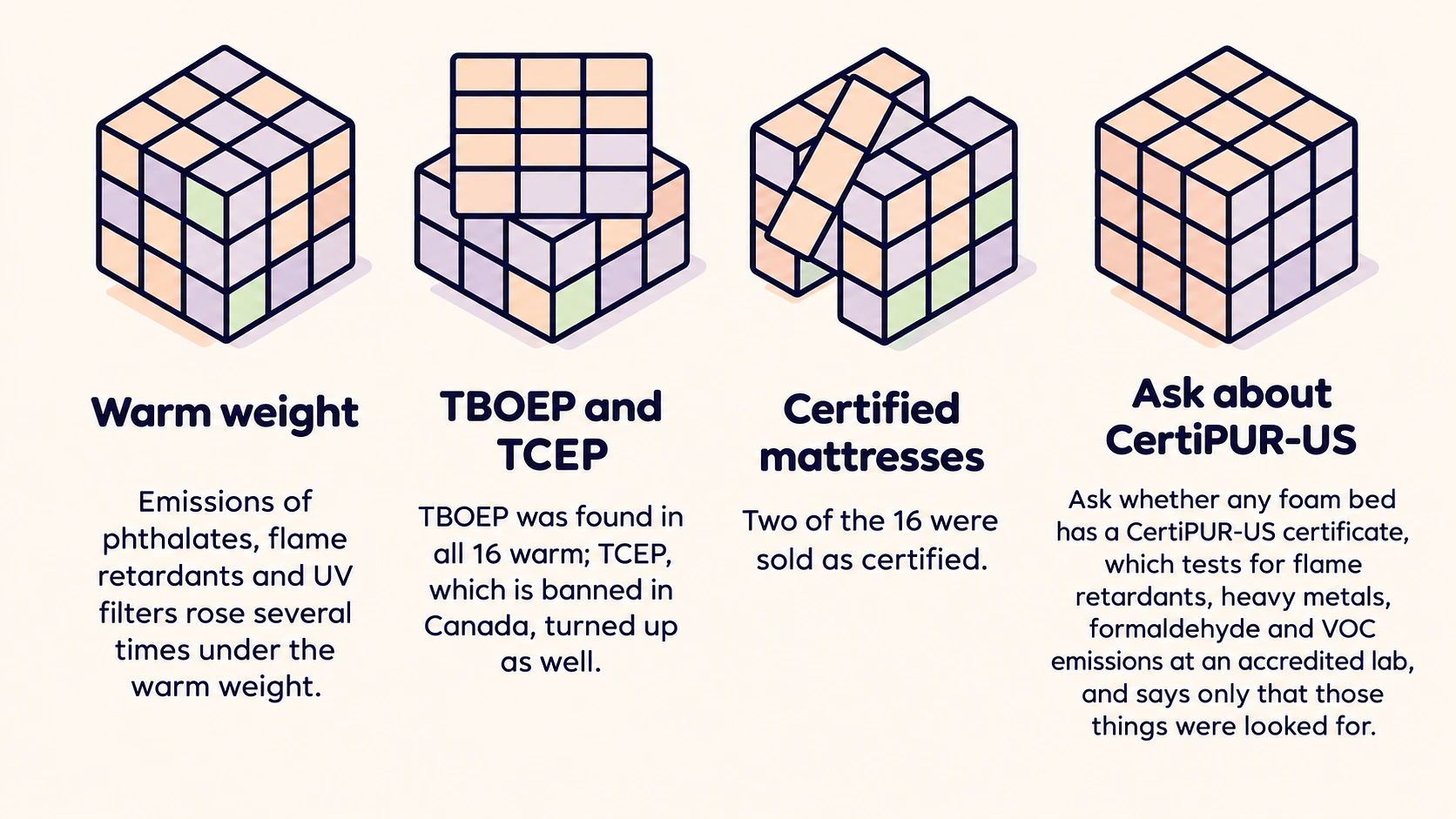
In April 2025 Miriam Diamond’s team at the University of Toronto bought 16 new children’s mattresses from North American retailers and measured what came off them, first at room temperature and then under the warmth and weight of a simulated sleeping child.
- Emissions of phthalates, flame retardants and UV filters rose several times under the warm weight.
- One flame retardant, TBOEP, was found in 3 mattresses cold and in all 16 warm. TCEP, which is banned in Canada, turned up as well.
- Two of the 16 were sold as certified.
- Ask this: on any foam bed, is there a CertiPUR-US certificate, which tests for flame retardants, heavy metals, formaldehyde and VOC emissions at an accredited lab, and says only that those things were looked for.
Diamond called the result “a wake-up call for manufacturers and policymakers to ensure our children’s beds are safe.” Arlene Blum of the Green Science Policy Institute, who co-wrote the paper, said it was concerning that these chemicals were still being found in children’s mattresses.
A Number That Arrived With Its Paperwork, And Then Lost It
Not all claims fail the check.
On 26 June 2020 BekaertDeslee, the Belgian mattress fabric maker, announced that the Guangdong Detection Center of Microbiology had tested its VIRASE fabric under ISO 18184:2014 and found a higher than 99 percent reduction of viral activity within 2 hours.
ISO 18184 is the international standard for antiviral textiles, so that claim carries its standard, its window and its result, and anyone can go and read the standard. The company’s own product page today says the fabric reduces the spread of viruses with 99 percent effectiveness, and the standard and the 2 hours have dropped off the sentence. The number has not changed, the paperwork is gone, and that is how a tested figure turns back into a slogan. When a percentage is on the box, ask which test standard produced it and over what time.
The 4 Things To Ask Before You Pay
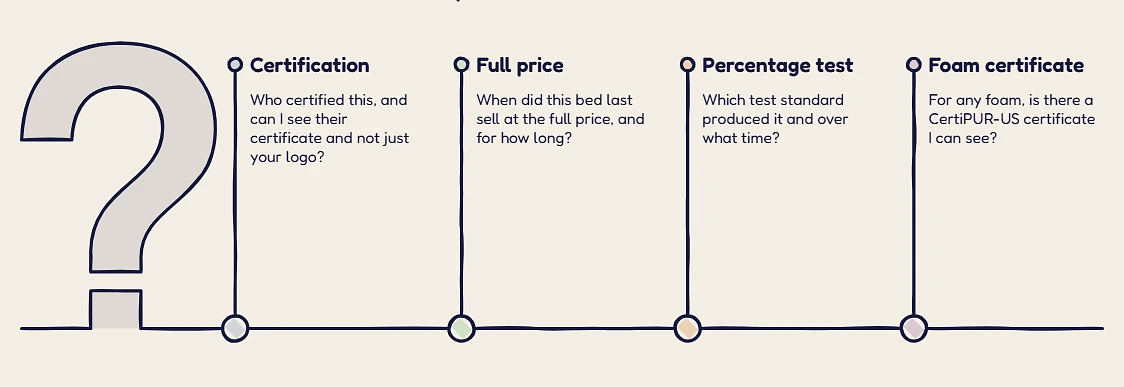
Each story above ends in a question, and the 4 of them fit on the back of a hand.
- Who certified this, and can I see their certificate and not just your logo?
- When did this bed last sell at the full price, and for how long?
- For any percentage on the box, which test standard produced it and over what time?
- For any foam, is there a CertiPUR-US certificate I can see?
Moonlight Slumber, Nectar’s 60 percent and the lost ISO number all fall at one of those 4. A seller who has the answers will give them in a minute. A seller who does not will change the subject, and that is your answer too.
The paperwork tells you whether the claim is true. It does not tell you whether the bed suits your back, and for that the two materials behave differently enough that we gave them their own latex vs memory foam guide.
 Decor & Improvement Accessories