

Home & Decor Blogs: DIY, Interior Design & Lifestyle Ideas
How to Choose a General Contractor: Start With Ten Names and Cut


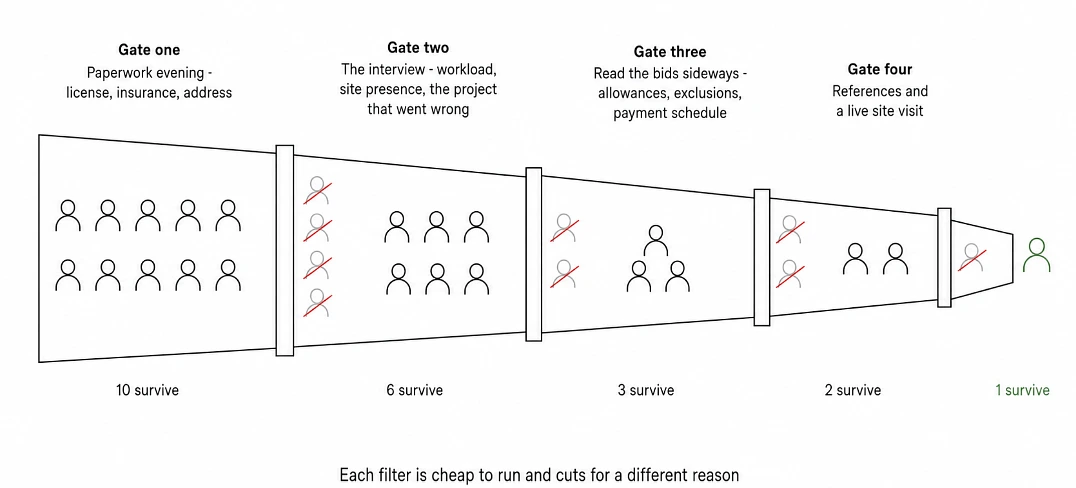
Hiring works better as elimination than as selection. A general contractor will control your money, your schedule, and every subcontractor who walks through the door for months, so the goal isn’t finding someone who seems good, it’s running a list of about ten names through four filters until only one survives. Each filter below is cheap to run and cuts for a different reason.
Where the Ten Names Come From
Not from ads. The strongest sources are finished projects you can stand in front of, which means asking neighbors who renovated recently, and the trades themselves. Electricians and plumbers know exactly which contractors run an organized site and pay their bills on time, and they’ll tell you if asked. Before collecting names, settle three things on your side, whether your plans are finalized or need design input, whether this is a renovation, an addition, or a ground up build, and what your honest budget range and timeline flexibility look like. Contractors read prepared clients quickly and price them more seriously.
Ten Becomes Six: The Paperwork Evening
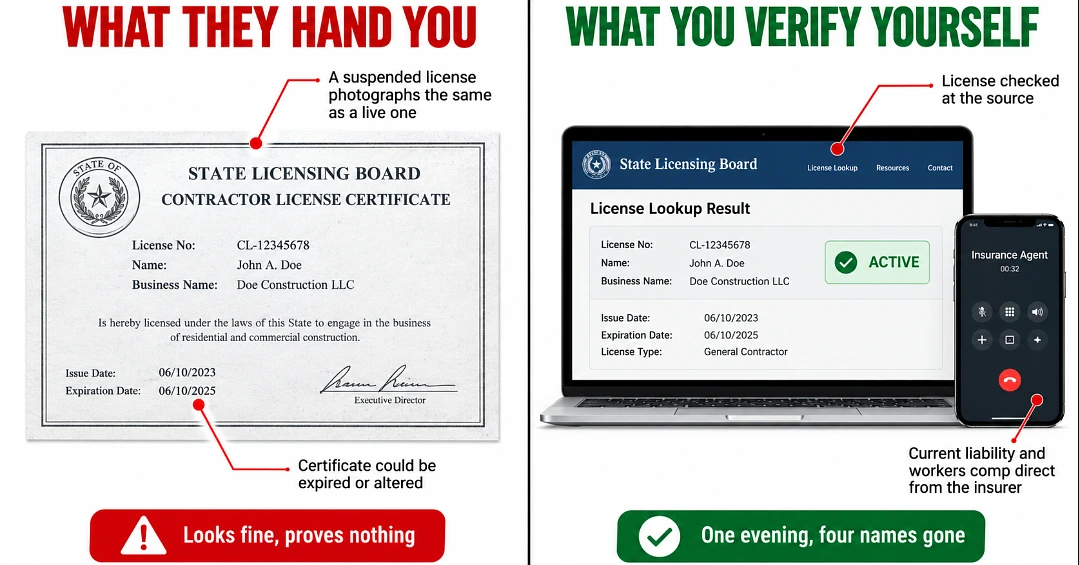
One evening of checking removes about four names, and none of it requires talking to anyone. Verify the license directly with your state’s licensing board rather than accepting a photocopy, since a suspended license photographs the same as a live one. Ask each candidate’s insurance agent, not the candidate, for current certificates of general liability and workers compensation, because if an uninsured worker gets hurt on your property, the claim can land on you. And confirm a physical business address with some history behind it. A contractor operating from a truck and a phone number is not automatically dishonest, but they are harder to find in year two when the warranty question comes up.
Six Becomes Three: The Interview
The interview measures fit, and the single most predictive question is the least asked one: how many projects are you running right now? A contractor juggling too many jobs makes your site the quiet one whenever another project catches fire. The rest of the short list:
- Who is physically on my site each day, you or a superintendent?
- What does your communication rhythm look like once work starts?
- How do you price and document change orders?
- Can you walk me through your last project that went wrong, and what it cost?
That last one earns its place. Anyone who claims nothing has ever gone wrong is either new or lying, and both answers cut them from six to five on the spot. Specific, unhurried answers reflect experience. Vague or defensive ones are the interview doing its job.
Three Becomes Two: Read the Bids Sideways
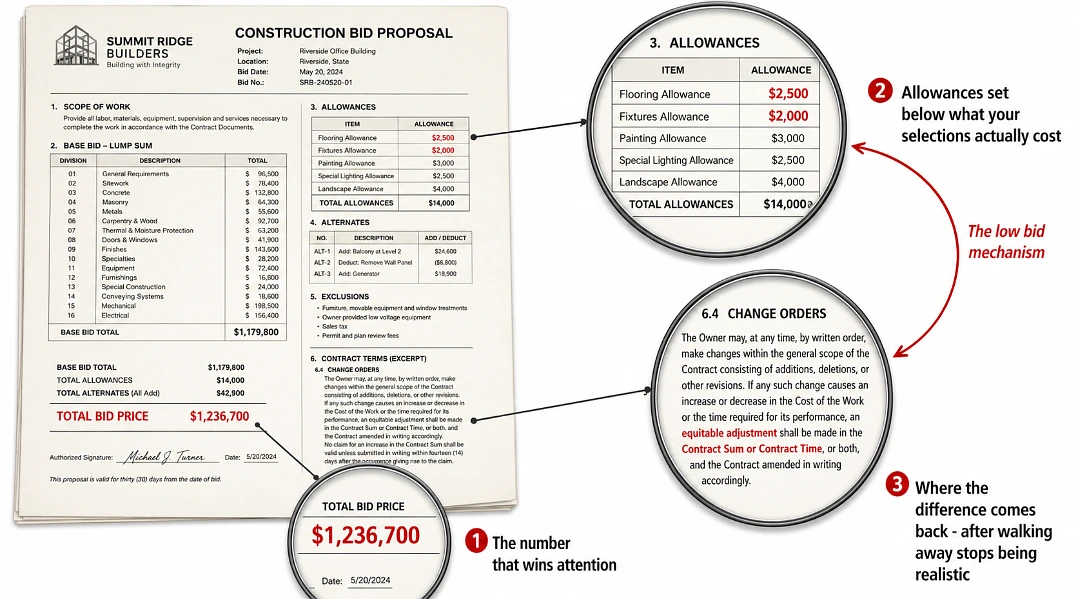
Lay the proposals next to each other and ignore the bottom line for the first pass. What you’re comparing is scope clarity, stated exclusions, allowance amounts, and the payment schedule. The classic low bid mechanism works like this: the number looks lean because allowances for flooring, fixtures, and finishes are set below what your actual selections will cost, and the difference comes back later as change orders when walking away is no longer realistic. So compare the allowances line by line against what you plan to buy, not against each other.
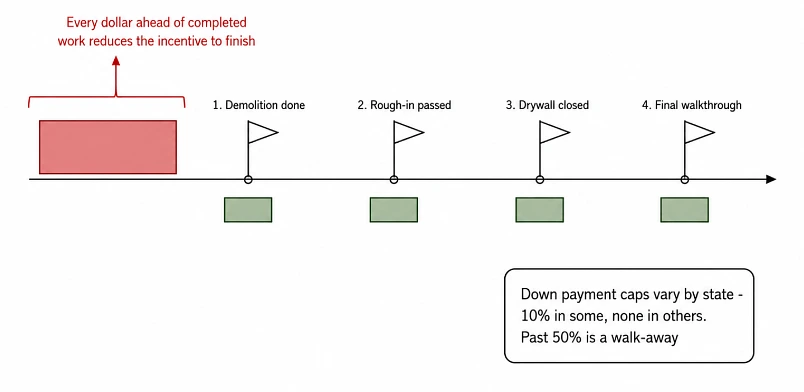
The payment schedule is where the law helps you. California and Nevada cap the down payment at 10 percent or $1,000, whichever is less, Maryland and Virginia cap it around 33 percent, and states like Texas set no cap at all, which makes the schedule clause the most important paragraph in the contract. Where no law applies, 10 to 25 percent down is customary, anything past 50 percent is a walk away regardless of how good the references sound. The principle underneath is leverage, every dollar that gets ahead of completed work reduces the contractor’s incentive to finish, so tie each payment to a visible milestone, demolition done, rough in passed, drywall closed.
Two Becomes One: References Decide It
Call references from projects that resemble yours in size, not the showcase jobs, and ask three things: did the final cost match the contract plus documented changes, how were disputes handled, and would you hire this contractor again tomorrow. If you can, visit a site they’re running right now, because a clean, organized site on a random Tuesday tells you more than any portfolio. This last filter is where charm loses to record, and it’s how you end up with the right general contractor for your construction project rather than the best interviewee.
 Decor & Improvement Accessories