

Home & Decor Blogs: DIY, Interior Design & Lifestyle Ideas
When Is the Right Time to Replace Your Home’s Gutters?

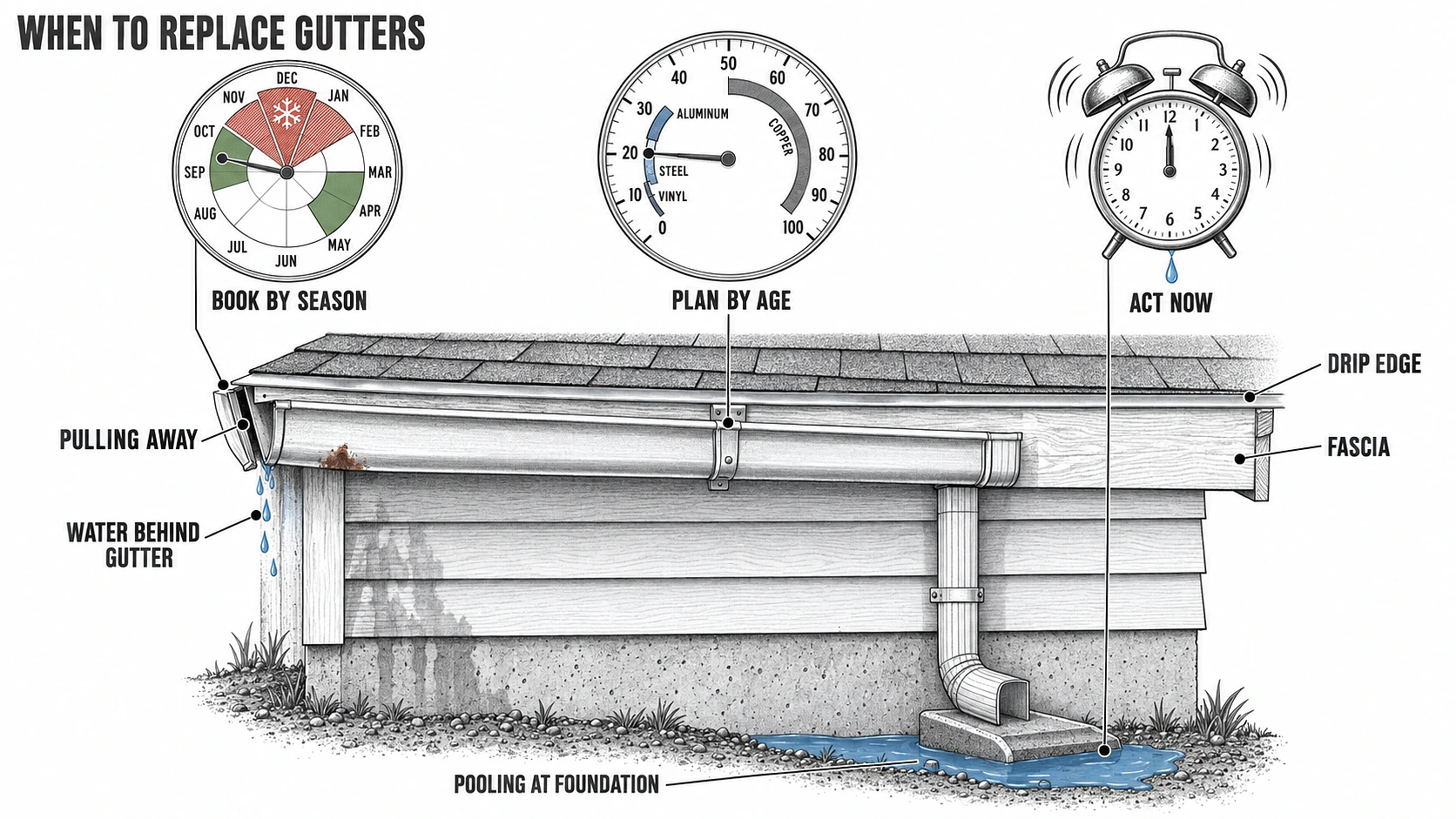
The short answer has three parts:
- By choice, book the work for late spring or early fall.
- By age, start planning once the system passes 20 years.
- And if water is already getting behind the gutters or pooling at the foundation, the right time is now, whatever the calendar says.
Everything below is the detail behind those three clocks.
How Long Do Gutters Last?
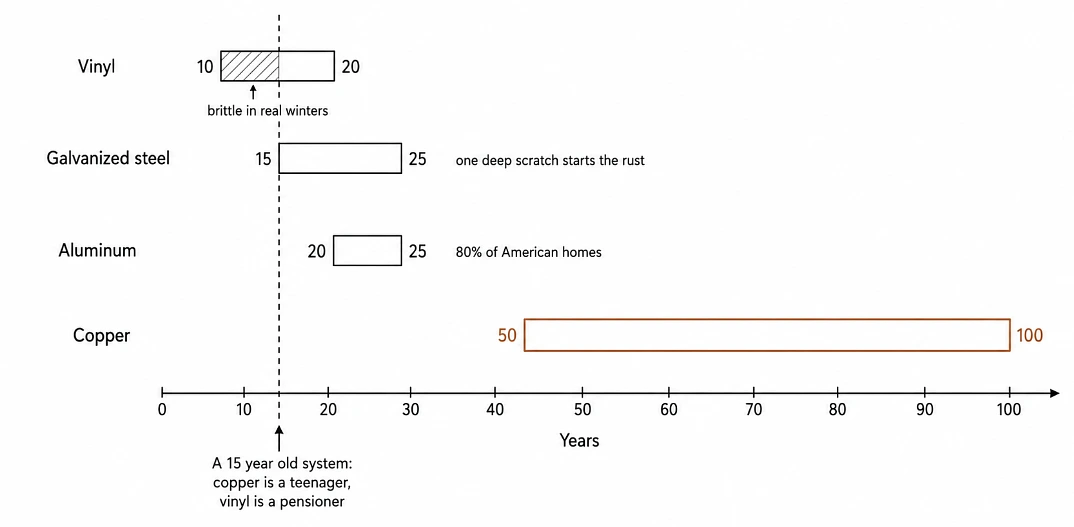
Depends entirely on what is hanging up there. Vinyl runs 10 to 20 years on paper and closer to 10 to 15 anywhere with real winters, because the plastic goes brittle in the cold and cracks under ice load. Galvanized steel gives 15 to 25 years, strong stuff, but the zinc coating is the whole defense, and one deep scratch lets rust start its slow work at that spot. Aluminum, which hangs on roughly 80 percent of American homes, lasts 20 to 25 years and fails politely, loosening at joints and hangers rather than rotting. Copper is the outlier at 50 to 100 years, with soldered joints that outlive the sealant on every other material. So before deciding when to replace, find out what you have. A 15 year old copper system is a teenager, a 15 year old vinyl one is a pensioner.
Which Signs Point to Replacement Instead of Repair?
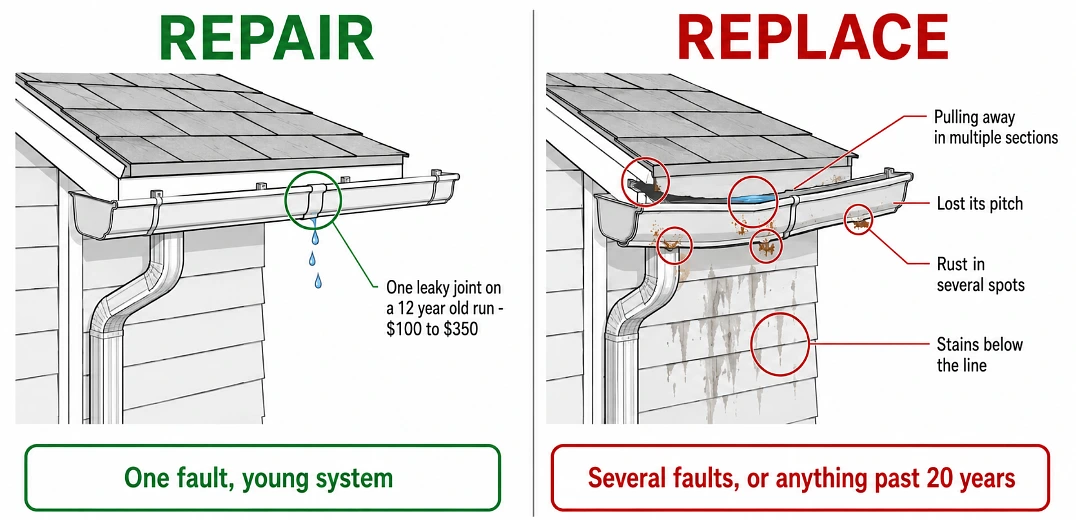
Several problems at once, or any problem on a system past 20 years. One leaky joint on 12 year old aluminum is a $100 to $350 repair and money well spent. The pattern that means replacement looks different:
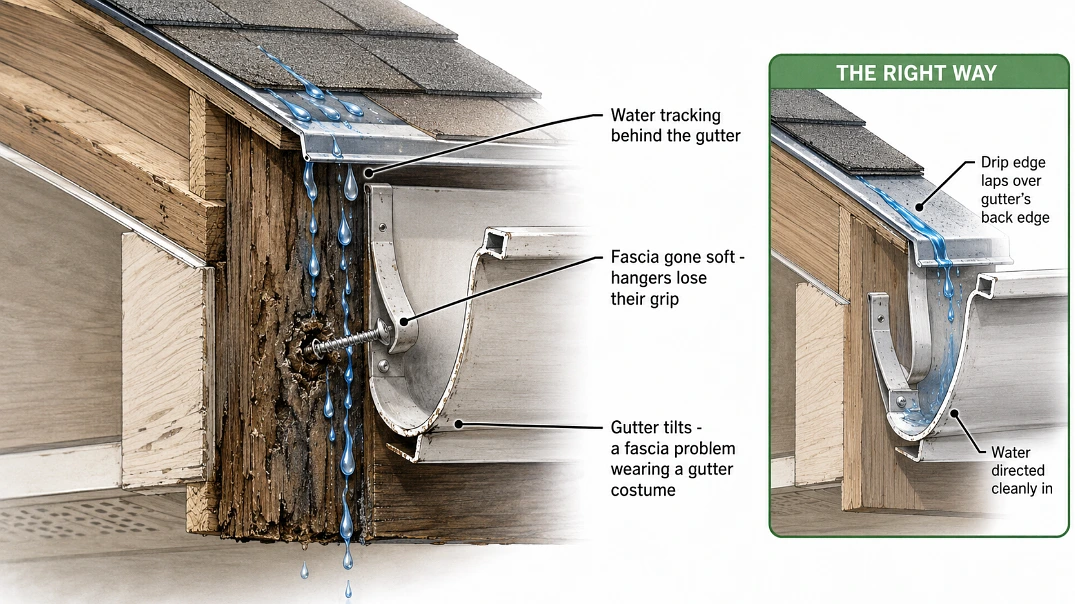
- Gutters pulling away from the fascia in multiple sections, which usually means the wood behind the hangers has gone soft from water, a fascia problem wearing a gutter costume.
- Standing water even after a cleaning, meaning the run has lost its pitch, and no amount of cleaning restores slope.
- Rust or cracks showing up in several places at once rather than one unlucky spot.
- Peeling paint or stains on the siding directly below the gutter line, proof water has been escaping for a while.
A decent rule from the trade: when a repair quote passes half the cost of replacement, repairing is just replacing slowly and expensively.
What Season Should You Book?
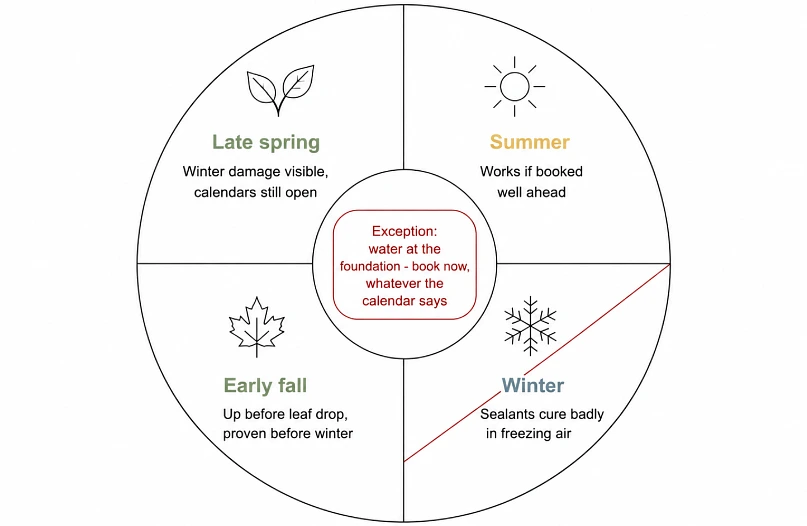
Late spring and early fall, for different reasons. Late spring shows you winter’s damage while contractor calendars still have room before summer fills them. Early fall gets new gutters up before the leaves drop and lets the system prove itself ahead of winter. Summer works if you book well in advance. Winter is the one to avoid in cold climates, because sealants cure badly in freezing temperatures, so joints caulked in January fail sooner than the same joints sealed in May. One exception overrides all of it. A failing system pouring water at the foundation gets a gutter replacement whenever it’s discovered, because foundation repair costs more than every seasonal advantage combined.
What Does Replacement Cost?
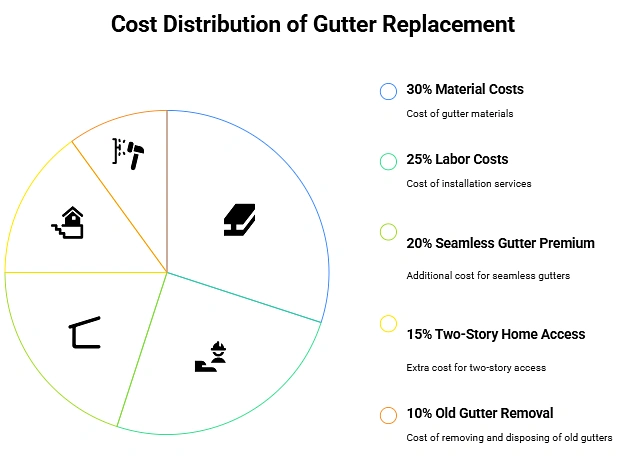
For a typical home carrying 150 to 200 feet of gutter, aluminum lands between $900 and $3,300 installed, and that is the number most people end up budgeting around.
Per linear foot by material, vinyl runs $3 to $6, galvanized steel $5 to $12, aluminum $6 to $15, and copper $15 to $40. Seamless costs a little more than sectional and repays it by removing the joints that leak first. Two story homes add roughly 15 to 20 percent for access and safety gear. Old gutter removal and disposal rides along at $50 to $150 if it isn’t already in the quote, worth confirming, since replacement quotes and new install quotes get compared as if they’re the same job and they aren’t.
Should You Bundle It With Other Exterior Work?
Yes, and in a specific order. Roof first, always, because roofing crews lean ladders on gutters and drop debris into them, and the drip edge on a new roof needs to lap correctly over the gutter behind it. The same logic applies if a siding installation is on the calendar, sequence the gutters last so they hang against the finished wall and the downspout straps anchor into new material instead of getting pried off and remounted. Landscaping and drainage projects pair well too, since gutters, downspouts, and grading are one water system pretending to be three separate trades.
And if you’re unsure which side of the repair or replace line you’re on, skip the ladder and wait for the next hard rain. Overflow at one corner is a clog or a bad joint, a repair. Water sheeting over the middle of a run, or dripping behind the gutter against the fascia, is a system that has stopped doing its one job.
That ten minute walk in the rain is the cheapest gutter inspection there is.
 Decor & Improvement Accessories