

Home & Decor Blogs: DIY, Interior Design & Lifestyle Ideas
How to Choose Kitchen Cabinet Handles That Work in a Working Kitchen

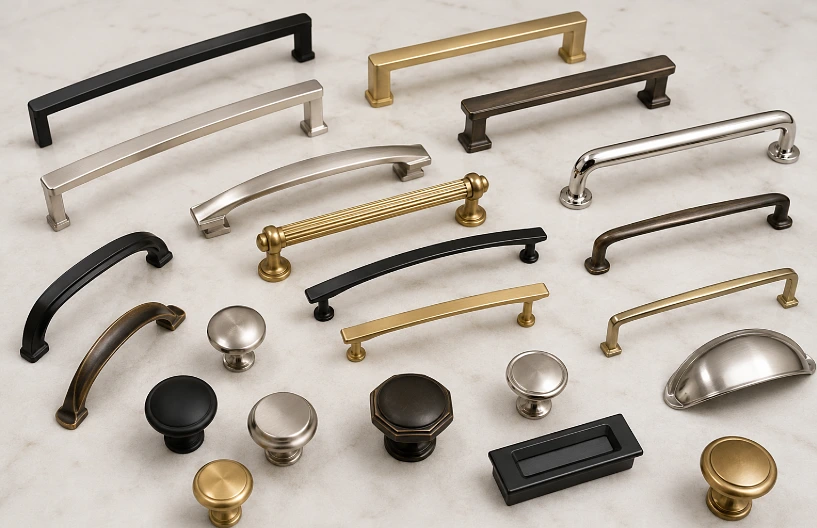
Handles are the thing people spend the least time choosing and touch the most. Every drawer, every cupboard, every pantry pull, dozens of times a day, for the next fifteen years or so.
And most people pick them the way they pick picture frames. Off a wall of samples, under showroom lights, without once testing what the thing feels like in a real hand doing a real job.
Which is why so many kitchens look incredible in the completion photos and then quietly get the handles swapped eighteen months later.
Start With the Cabinetry, Because It Rules Most Options Out
The style question comes first because it kills off most of the choices straight away.
A flat front kitchen with shadow lines and no visible framing does not want a cup pull. A Shaker kitchen with framed doors does not want a chunky matte black T bar. Get that mismatch wrong and the whole room looks confused no matter how well everything else is done.
For contemporary flat front cabinetry:
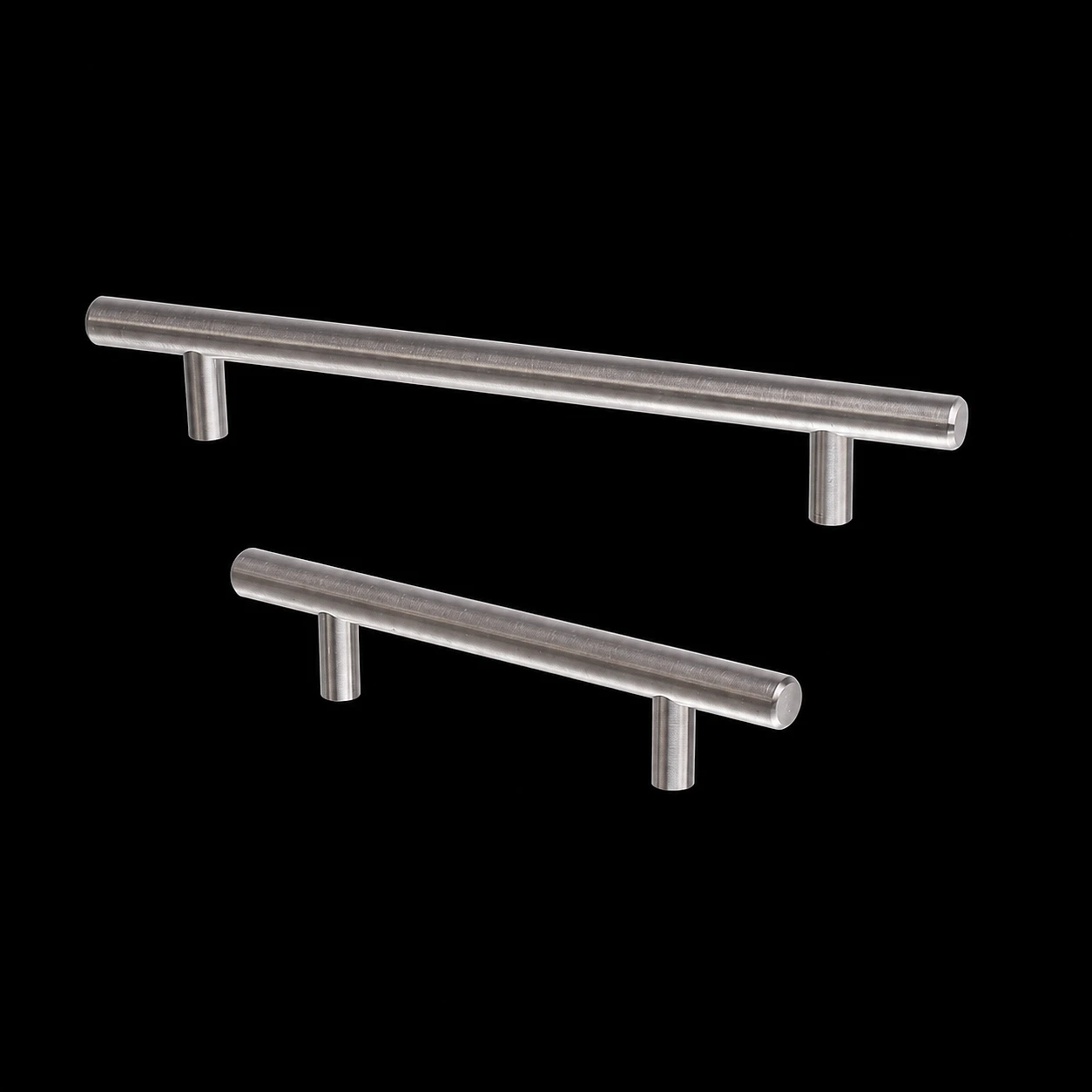
- Bar handles, particularly longer ones on drawers
- Finger pulls and integrated pulls, where the routed groove becomes the handle
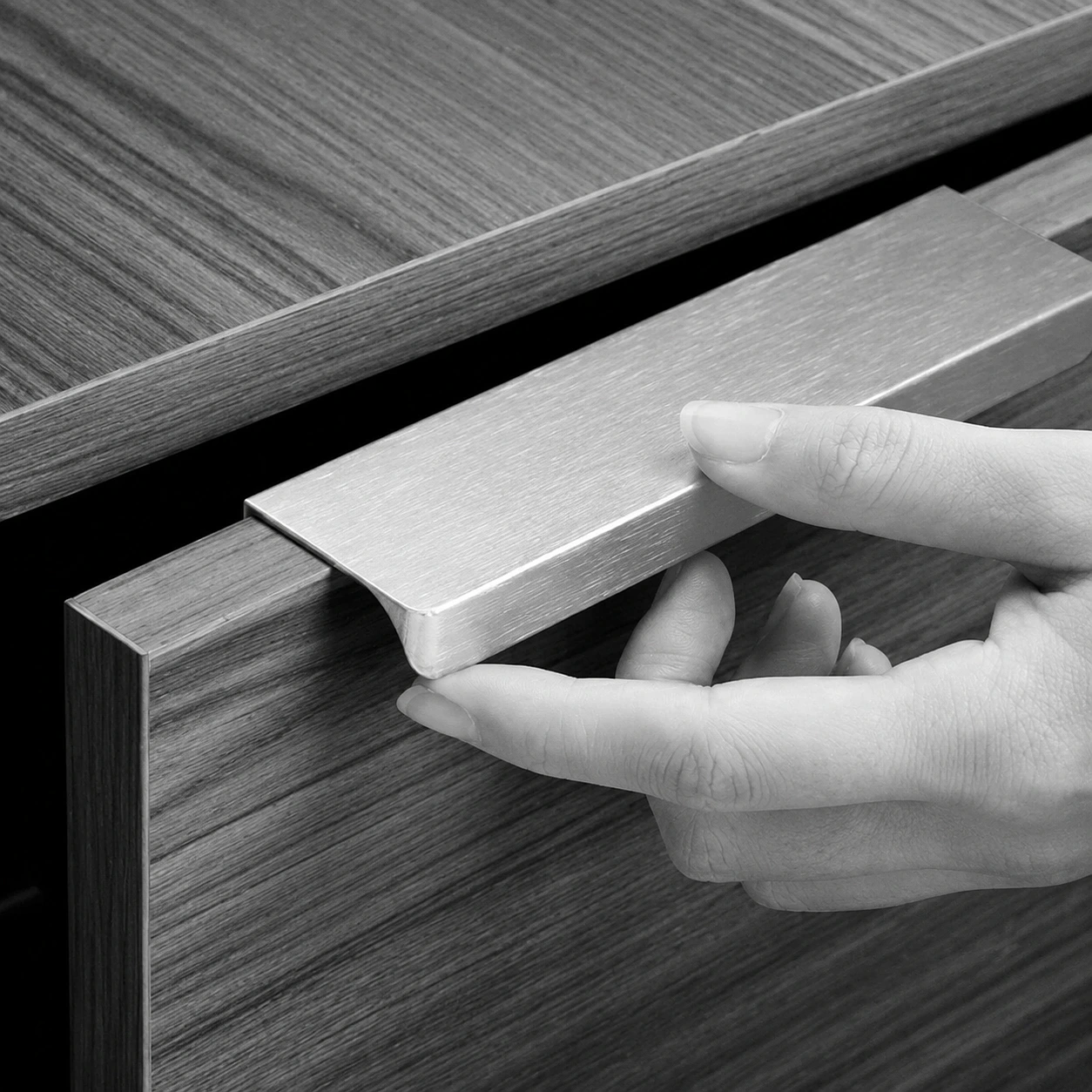
- Edge pulls, sitting almost invisibly along the top edge
For Shaker, country, or anything with framed doors:
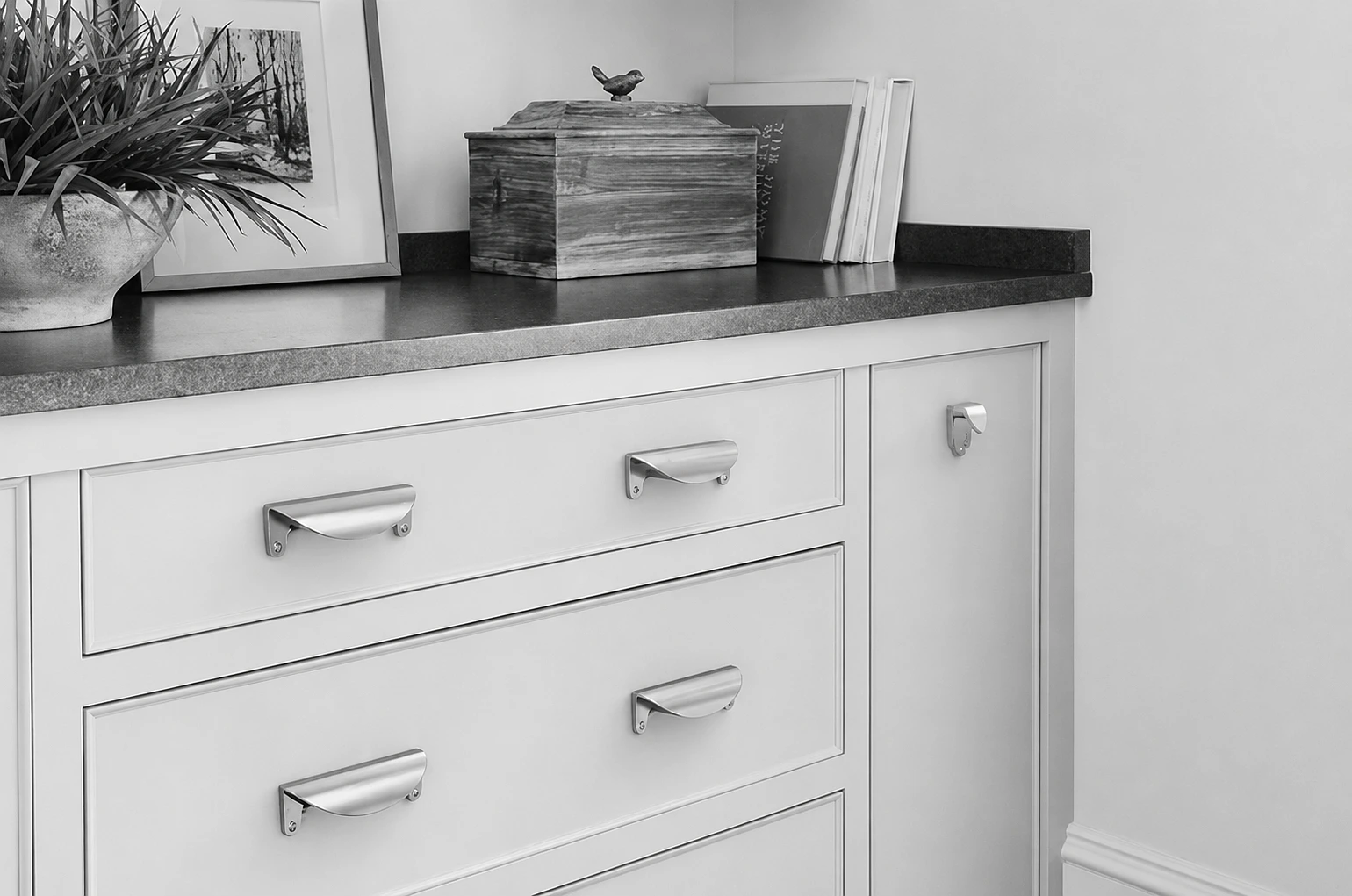
- Cup pulls on the drawers with knobs on the doors, which is the classic pairing and it works
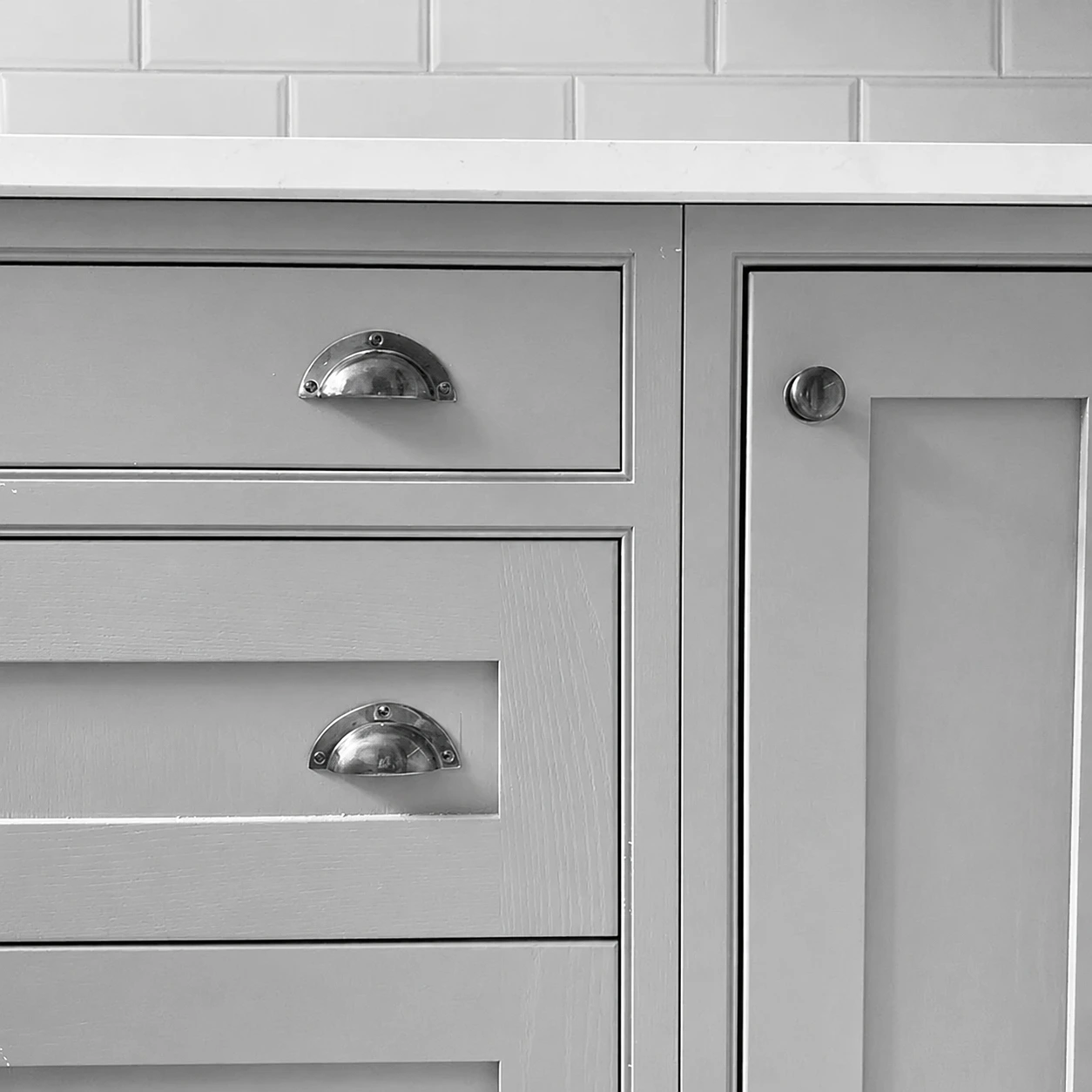
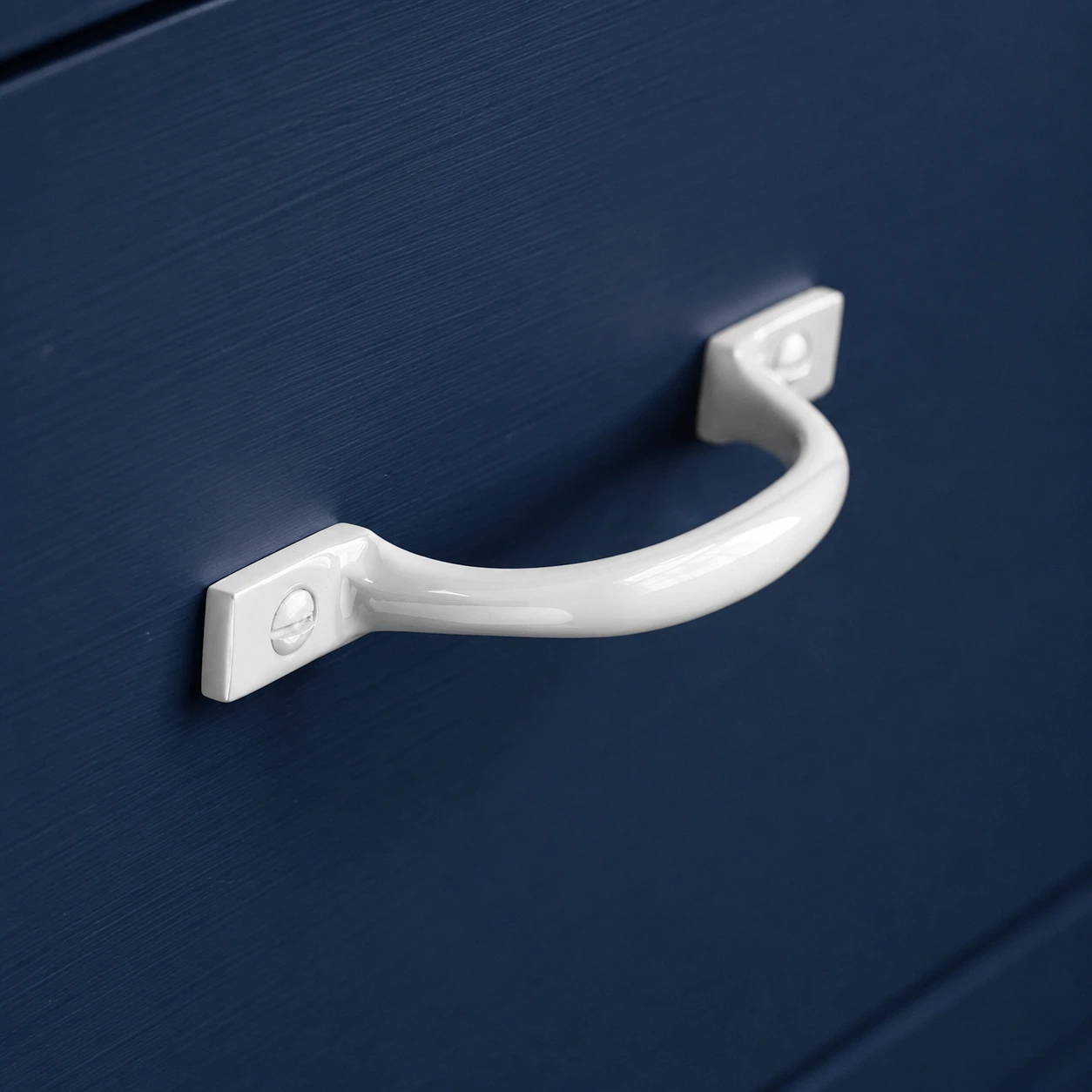
- D shaped handles in aged brass or bronze, if the palette leans warm
- Knobs on their own, if the kitchen is small and the cabinetry is already doing the visual work
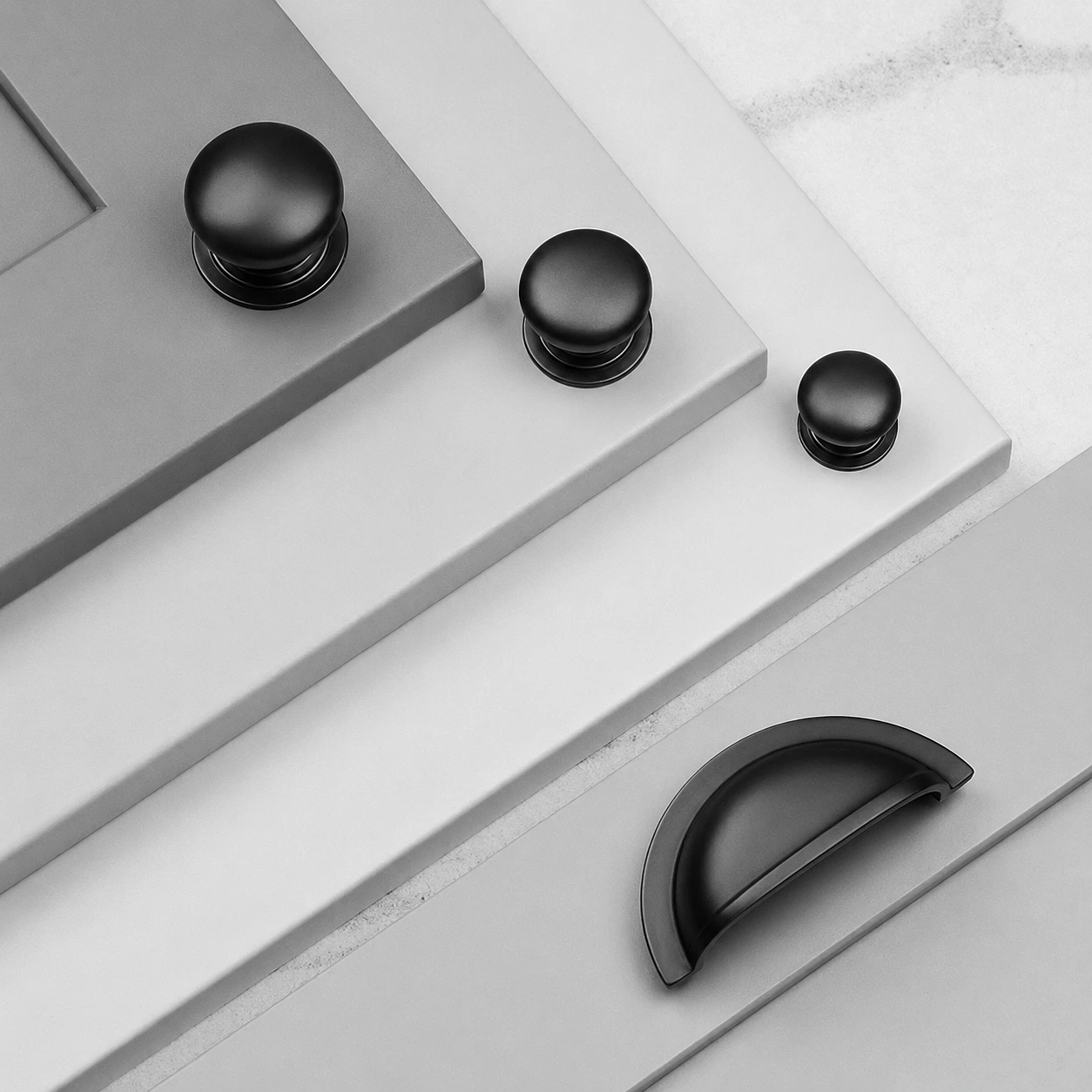
Mixing across those two groups is where kitchens start looking like the owner could not commit.
Doors and Drawers Do Not Want the Same Handle
This is the part most handle articles skip.
A door is hinged at the side, so the handle only has to pull it outward and the force involved is small. A fingertip on a knob does that fine.
A drawer is a different job entirely. Especially a deep one full of pots, or a wide one full of cutlery trays. The force is real, the soft close hardware resists that first bit of movement, and the handle has to give your hand something to properly grip.
A knob on a deep drawer works on the day it goes on and becomes annoying within a month, because loaded up, your fingertips just slide off it.
So the rule that holds in real kitchens:
- Doors can take knobs, D handles, cup pulls or bars
- Drawers need something you can wrap fingers around, so bars, cup pulls or D handles
- Wide drawers, 600mm and over, need a bar long enough that two hands can share the pull
That last one is what showroom kitchens never demonstrate. A one metre pot drawer with a single 128mm handle in the middle is hard to open smoothly, because all the pulling force lands in one small spot against a wide front that wants to twist. A 320mm or longer bar spreads it and the drawer glides the way the runners were engineered to.
Bar Handles Became the Default, and That Cuts Both Ways
There is a very good chance every handle in the last new kitchen you walked into was a black or brushed nickel T bar.
It got that way for sensible reasons. Bars are comfortable, they scale up for drawers, they suit flat fronts, and they photograph beautifully.
The hesitation is that they are now so common a kitchen full of them looks like every other kitchen finished in the last five years. Safe, but not distinctive.
Where bars genuinely earn their place:
- On drawers longer than 500mm, where the extra length helps
- On pantry doors, where a long vertical bar reads as a design element in its own right
- In galley kitchens, where a run of consistent horizontal lines gives the space a rhythm
Where they start to lose it:
- On every single door in a big kitchen, where the repetition just goes flat
- On warm timber or textured cabinetry, where the industrial line fights the finish
- On small doors, where the bar looks oversized for what it is opening
The better version is usually mixing lengths across the room. Longer bars on the drawers, shorter on the pantry, something else again on the uppers to break it up.
What Handleless Kitchens Are Like to Live With
The handleless look, whether that is routed finger pulls, integrated J pulls, or the aluminium channel running across the drawer faces, is the one people either love completely or come to quietly regret.
The love makes sense. It photographs beautifully, the cabinetry becomes pure form with nothing sticking out of it, and in a small kitchen it genuinely makes the space feel bigger because your eye is not hopping between a dozen bits of hardware.
The regret is mostly about grease.
Finger pulls and integrated channels collect it in a way exposed handles do not, because the oil from cooking and the residue off fingertips and the general fine dust of a kitchen all settle into the recess where the handle should be. Cleaning becomes a specific chore rather than a wipe with a damp cloth.
Then there is wear. Every open and close puts pressure on the door edge or the recessed pull area, so the paint or laminate at those points degrades faster than the rest of the door. On good cabinetry that is very slow. On budget cabinetry it can show inside a few years.
Handleless works well in a butler’s pantry, a second kitchen, an apartment where the cooking is light, or a home where that minimalism is the language throughout. It works less well as a default for a busy family kitchen where the cleaning has not been thought about.
Edge pulls, which hardly anyone suggests
Edge pulls solve most of that, and hardly anybody browses them.
They mount on the top edge of the door or drawer, so from the front the cabinetry still reads flat and clean, and the pull only becomes visible from above or once the door is open.
That is the compromise between fully handleless and fully handled. Minimal front elevation, but a proper grip your fingers can wrap around, so the grease and the wear problems mostly go away, and cleaning is easy because the pull sits on top rather than recessed into the face.
The reason they are not more common is that they show badly in a showroom. A cabinet with an edge pull looks handleless from the standard viewing angle, so the customer does not understand what they are looking at without someone explaining it, and the handles that sell are the ones people can see and get instantly.
Worth asking about specifically, because they rarely come up as a default suggestion.
Finishes Decide Whether It Still Looks Good in Ten Years
The finish is where the long decision gets made. A handle that looks great on installation day and then tarnishes, chips or wears through within two years is a bad handle whatever shape it is.
Brass is worth understanding before you commit to it, because the finish decides how it ages. A lacquered or protected brass keeps the polished look, which is what PullSupply solid brass cabinet handles are built around, and raw unlacquered brass does the opposite, darkening unevenly around the grip point inside the first year, which is the metal behaving as intended rather than failing.
People who expected a permanent polished look tend to be unhappy by month four. People who wanted the patina are usually delighted by year three.
What holds up:
- Solid stainless steel, and 316 grade if there is any salt air about
- Solid brass, polished or aged, which develops patina rather than degrading
- Solid bronze, much the same story
- Anodised aluminium, light and durable as long as the anodising is decent
What does not:
- Plated finishes over base metal, which chip and show the metal underneath
- Coated finishes in high touch areas, which wear through at the grip point in a few years
- Cheap matte black, identical to good matte black on day one and completely different two years in
Matte black deserves its own note, because it is everywhere now.
A quality matte black is powder coated over solid brass or steel and it holds up fine. A cheap one is a spray coating over pot metal and it starts wearing off at the grip points inside twelve months. They look the same in the display and the price gap is usually significant, which is exactly why the cheap version ends up in most budget renovations.
If matte black is the direction, paying for the properly made version is one of the few upgrades that genuinely pays back.
Suppliers who specialise in kitchen cabinet handles rather than carrying them as an afterthought in a big hardware catalogue tend to stock the versions that last. Not a universal rule, but a useful one. A curated range usually means somebody made deliberate decisions about what was worth carrying.
The Paper Test
One test catches most of the regrets, and it costs nothing.
Print the handle at actual size. Cut it out. Tape it to the door of an existing cabinet in exactly the position it will sit on the new one. Then open and close that cabinet fifty times over the course of a week.
Not five times. Fifty, because handle problems only show up through repetition.
By about day three most people can tell whether the position feels right, whether the size suits the door, and whether the shape they thought looked great is comfortable under the hand. Twenty minutes to set up, and it is probably the single most useful thing anyone can do before signing off a kitchen.
The kitchens that get this right usually belong to people who thought about how the room would be used before they thought about how it would look, which is more or less the opposite of how most renovations happen.
ed before they thought about how it would look. Which is exactly the reverse of how most kitchen renovations happen, and exactly why the handle regret is so common.
 Decor & Improvement Accessories