

Home & Decor Blogs: DIY, Interior Design & Lifestyle Ideas
How to Choose the Right Metal Shed for Equipment and Outdoor Storage

When purchasing a metal structure to store equipment in, the main consideration is the storage contents themselves. While the building must be capable of providing space for all the items that need to be kept inside, this feature will have to meet other surrounding parameters as well.
While a compact building may be enough for a handful of tools, it won’t suffice for a riding mower, an ATV, and other larger stored equipment. One might have an issue with selecting a larger structure without taking into account its doors and height.
The correct approach is to establish what the building needs to hold, then choose which structure fits the job.
Start With the Equipment
The first action is to establish the maximum length and width of the stored equipment the user expects to see on a regular basis within the building.
While simple to define measurements of length, area, and volume, height and access should never be overlooked. A riding mower has no problem being located within the floor area of the structure the user selects, but such equipment presents an issue that needs to be resolved: access to the building’s interior.
The riding lawnmower or another vehicle will also create additional problems when the unit, motorcycle, ATV, or snowmobile needs to be removed.
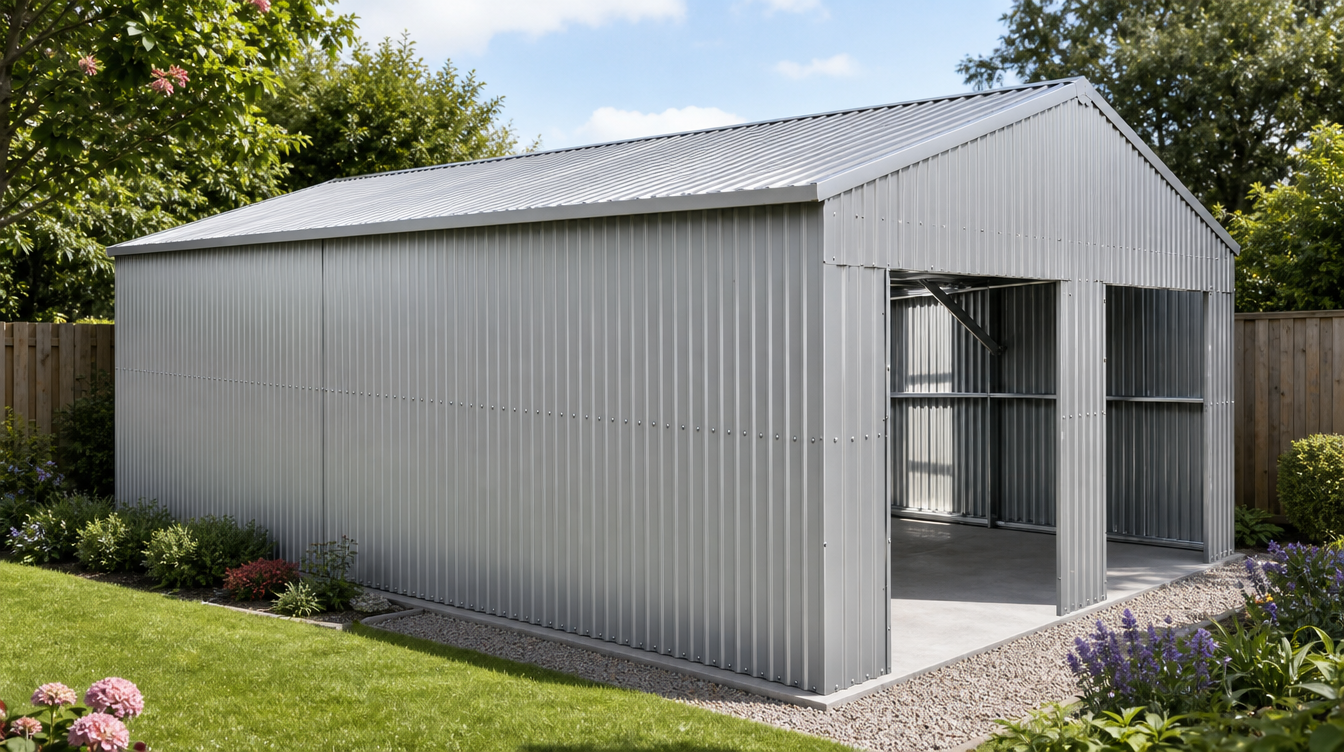
The opening dimensions of the doors should be established independently of the chosen metal building. At 8’ × 11’, the EMC Industrial galvanized metal shed has an overall floor area of 134 × 106 inches in the structure, while the doors provide a 67 × 70 inch access.
Note: The opening provided by the doors is different from their footprint and, in most cases, is more relevant in specifying what can be brought into the enclosure. The overall footprint tells the buyer how much the overall building occupies on the ground while the doors’ floor area dictates what can be brought into the interior.
Allow Room to Work
Space should not be designed or measured around a wall.
Items such as lawnmowers, power tools, and vehicles may require regular removal for use. Equipment also requires room for services to facilitate tasks such as maintenance and inspection. Similarly, storage racking and other items that support the maintenance of the workbench and equipment reduce the amount of usable floor space.
The most reliable approach is to use a scaled drawing and place the contents of the shed within the footprint indicated. This involves accounting for shelves, workbenches, and space for the removal of the largest piece of equipment. This should, ultimately, create a design wherein the space permits the working space without having to relocate several other pieces.
Choose the Building Size Around the Largest Item
Small tools do not demand a lot of space on the floor. Tractors, vehicles, ATVs, and other large items, on the other hand, require extensive floor plans and greater headroom.
As soon as large machinery comes into the equation, the choice for a traditional storage enclosure becomes questionable. A garage-like structure with greater available space on the floors and at the front entrances can allow the buyer to increase their options and simplify operations.
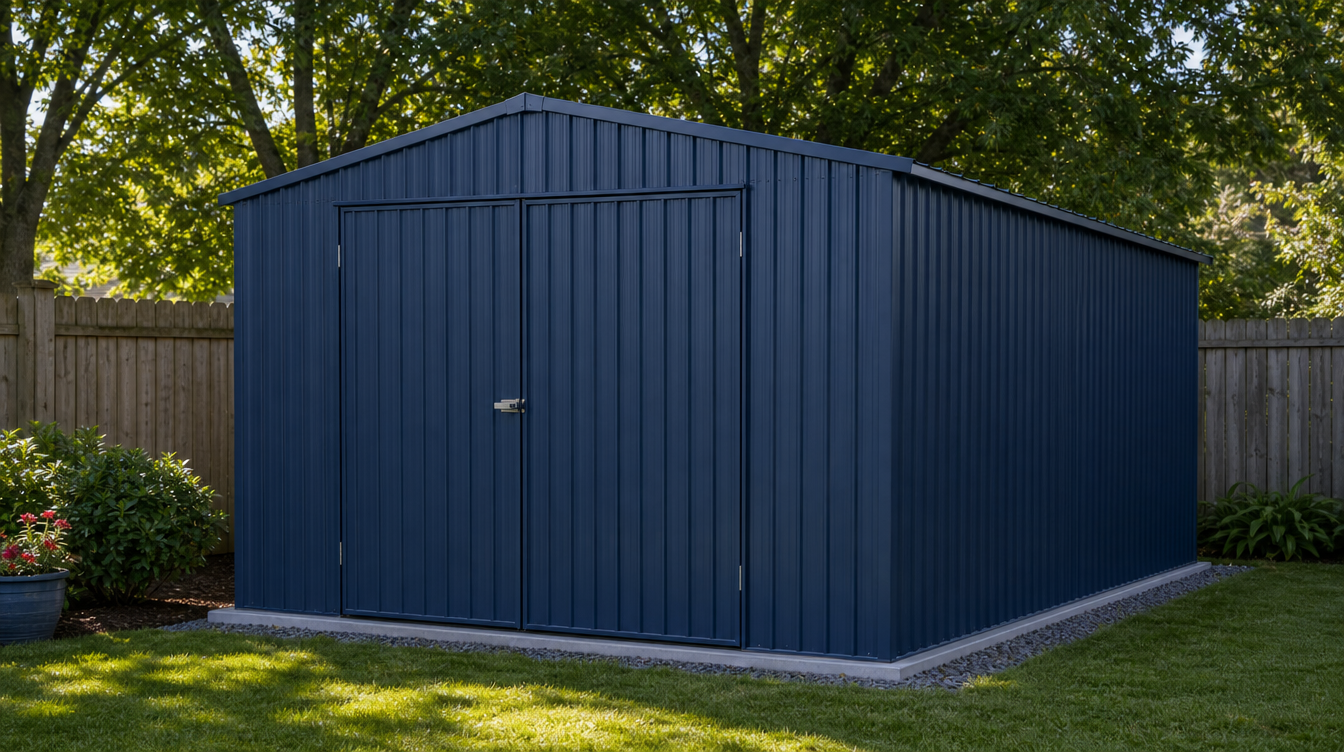
EMC’s 11’ × 20’ metal garage, for that instance, has 210 sq. ft. of storage space and utilizes two hinged doors that measure 100’’ × 79’’. The greater open floor space and doorway opening are aimed at accommodating vehicles and larger equipment that would not easily enter through a conventional structure’s doors.
There should then be little point in selecting a building solely based upon the storage space on the floor if the largest piece of equipment is unable to enter.
Look at the Frame and Connections
The buyer has determined the required size. Next, they need to study how the building has been constructed.
Two similar metal buildings can have significantly different characteristics within them despite comparable exterior dimensions. The frame holds together all the other structures, and it supports the total weight that is delivered directly to a floor. The frame then transfers this weight to the building’s connections and anchorage points. The external walls maintain the integrity of the enclosed structure by providing it with rigidity and, ultimately, reduce the wind’s impact. A correctly designed frame can serve as a substitute for the role of external structure, while one designed to be flexible and bendable will not suffice.
The EMC smaller galvanized metal building, for example, features a 22-gauge steel frame but uses 29-gauge metal sheeting.
When determining the specifications of a given building, the buyer should pay due attention to the frame, its connections, and other features related to the roof and anchorage, rather than the appearance or finish on the panels. Those who are looking for information on the construction of metal enclosures will gain far more knowledge regarding the building’s characteristics from the details on frame connections, roof detailing, and anchoring specifications.
Check the Structure Against Local Weather
The prevailing local weather also influences which metal building the user should choose.
The snow load is added to the weight the building’s roof supports, while high winds place additional stress on the building.
In this case, the characteristics that are most relevant are that the EMC’s specified 11’ × 20’ metal garage has a maximum roof load of 30 lb/sq. Ft. and a wind resistance grade of 75 mph.
This information is specific to the specified structure and should not be assumed as a universal rating against which other metal buildings may be compared. In practice, buyers should review the specifications their vendor provides as regards their required building and also be careful in selecting a site that matches the conditions in which the building will also remain.
Consider Corrosion Protection
As an outdoor storage structure, a metal building will be subjected to water exposure (rain and snow), humidity, and varying temperatures.
The level of corrosion resistance provided as a benefit over the lifetime of a metal shed, especially when exposed to these conditions on a permanent basis, becomes a consideration that the buyer cannot overlook.
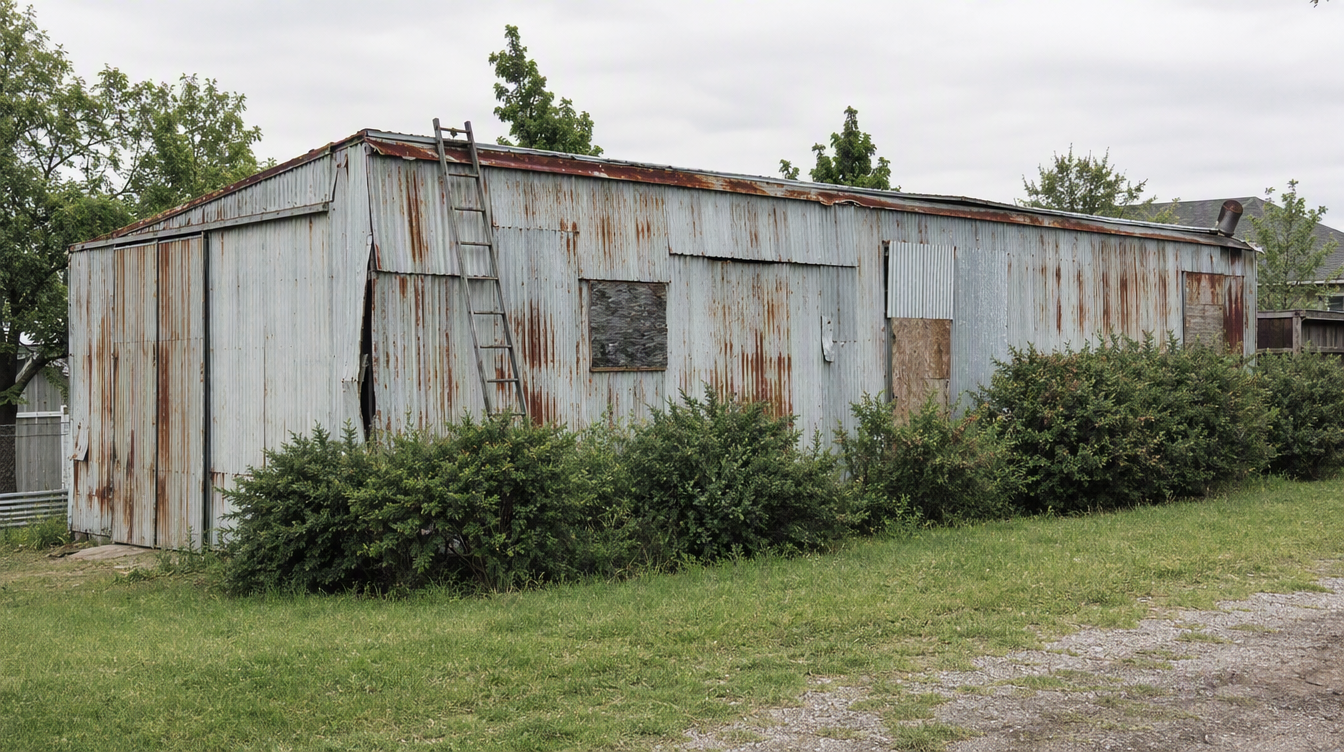
Galvanized steel, in this case, makes use of the advantages of a zinc coating to preserve the integrity of the steel layer beneath it. The material can, therefore, be used in the construction of a building that will regularly be found outside where humidity and water exposure are a factor every year. The surface is not impervious to corrosion, however. Surface scratches, exposed regions, exposed edges, bolts, and condensation have all the potential (and probability) of causing areas of localized oxidation. The overall condition of the galvanized steel surface and its preservation is something the buyer needs to monitor throughout the building’s lifetime. At the same time, as an owner, the advantage is that the building offers less maintenance on the exterior surfaces than do other constructions that call for periodic painting and sealing.
The galvanized metal building has provided a good balance between durability and simple maintenance for the environment it is expected to exist in.
Think About the Doors and Access
While the space within a building seems sufficient, the reality of getting equipment through the doorway may cause inconvenience.
Consider the approach to the building itself as well as the doorway access and, specifically, the driveway, path, or workspace. The area should be of sufficient dimensions that the user’s equipment can be aligned to the doors and not have to make a turn to allow the vehicle or tool inside.
Doors also influence how the space outside may need to make use of areas. Sliding doors, instead of hinged doors, will reduce the swing space outside the building, a factor that can be valuable. By contrast, hinged doors can offer greater width and be found to suit vehicles and other equipment. The selection should ideally follow the equipment and the access available for working around the building at the location where the building will eventually be placed.
Do Not Overlook the Foundation and Anchoring
The manner in which a metal building can be best utilized depends upon how it is mounted.
A good anchoring system can keep the structure properly balanced, while inappropriate site preparation can limit the alignment and function of the building’s doors.
Prior to acquiring a metal building, the buyer should take a look at the required installation instructions and address issues (or request a service alteration) from the site preparation process.
A good building cannot substitute for proper site preparation.
Choose for the Equipment You Expect to Own
The most common error the buyers of metal buildings make is attempting to design their purchases around the items being stored in their buildings. If the owner finds themself requiring more space later, it is far too late to simply replace an entire structure to accommodate a new addition, such as a lawnmower or new storage.
The alternative is simply to buy too large an enclosure and to expect to have to prepare for the site conditions and pay higher costs of purchase. Instead, the buyer should evaluate equipment that they already utilize and, with a look-ahead period on the expected service life of their chosen building, determine what can reasonably be added to what space. The size of the metal building is, for the majority of buyers, the smallest construction that can provide clearance for their equipment, provide working space, and account for any additional additions they are likely to add over their usage’s lifetime.
Metal sheds should create storage possibilities and access to equipment, not simply present an area of enclosure. The buyer must take note of the equipment dimensions to determine what will have to fit within the building. They also need to measure the actual doorway rather than the dimensions of the overall structure. Once the footprint is decided upon, a layout is established that considers the workbench, equipment storage, working room access, and other items such as shelving. This can also include ensuring that space is present for the largest piece of equipment to be placed in or retrieved from the enclosure and, in general, to have enough movement. The frame construction and load resistance should be examined alongside the site and anchoring details, as well. All of these factors speak much louder to how useful a metal shed will be than the floor plan of a structure.
 Decor & Improvement Accessories