

Home & Decor Blogs: DIY, Interior Design & Lifestyle Ideas
That Popping Sound From Your Utility Closet Is Central Indiana Limestone

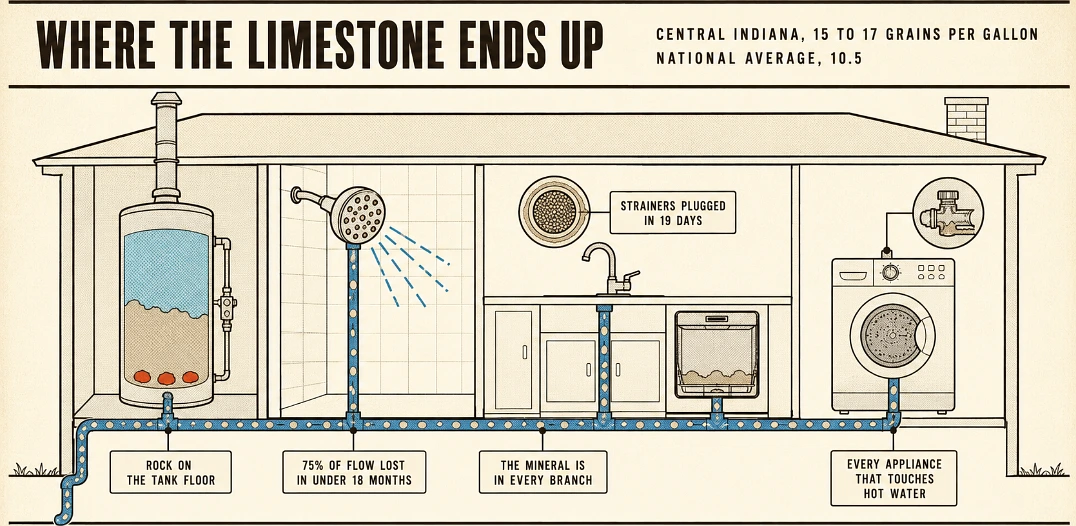
You have heard it. Late evening, house quiet, and something in the utility closet starts popping and rumbling like there are rocks tumbling around inside a dryer.
Most people assume the water heater is on its way out and start pricing replacements.
It is not about to explode, and it is usually not a fault in the unit at all. Plumbers call that noise kettling. Underneath a crust of hardened mineral sediment sitting on the bottom of your tank, water is getting trapped, boiling, and punching steam bubbles up through the crust. That popping is the sound of it escaping.
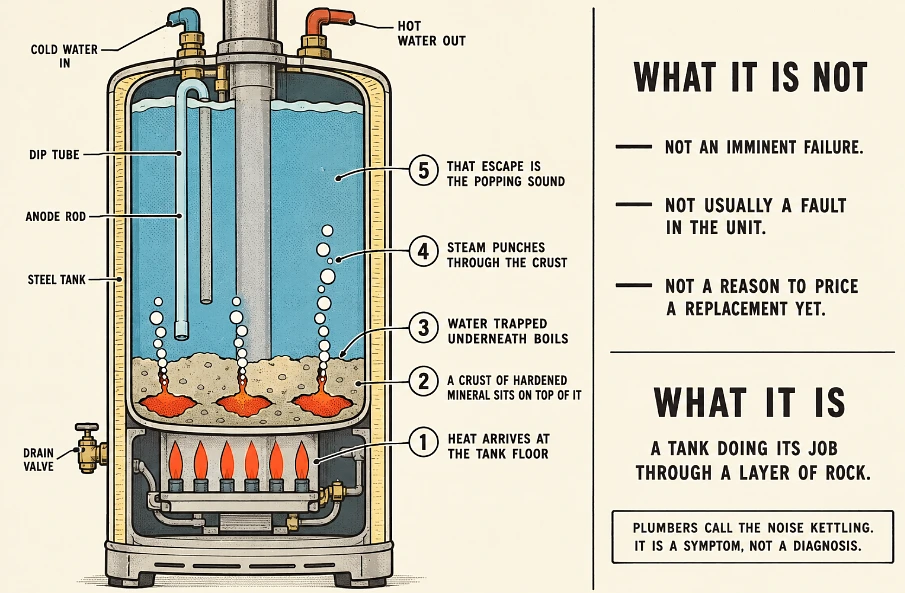
So where did the crust come from? Straight out of the ground under your feet, and this is where living in Central Indiana matters more than most homeowners realize.
Follow The Limestone
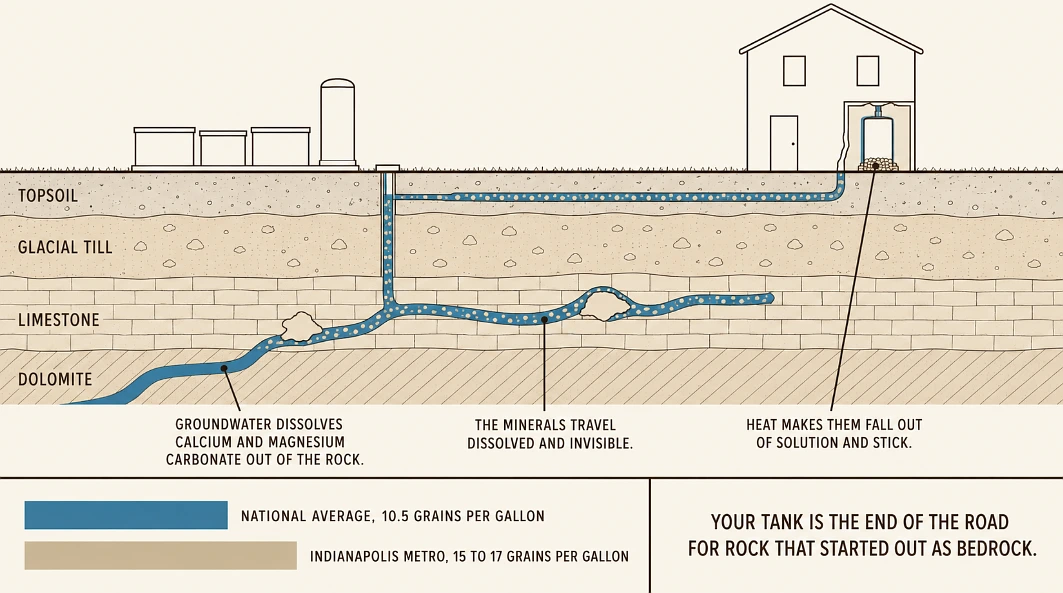
Indiana sits on limestone and dolomite bedrock. Groundwater moves through that rock on its way to the wells and treatment plants, and it does not pass through politely, it dissolves calcium and magnesium carbonate out of the stone and carries them along.
Those minerals travel through the mains, through the service line, into the house, and then they stop.
They stop in your water heater, because heat is what makes dissolved minerals fall out of solution and stick. The hotter the water, the faster they come out. Your tank is the end of the road for rock that started out as bedrock, and it has been quietly collecting there since the day the unit was installed.
How much of it? The Indianapolis metro runs 15 to 17 grains per gallon. National average is about 10.5. Indiana lands on almost every list of the hardest water states in the country, and Central Indiana is the hard part of a hard state.
What 15 Grains Actually Costs You?
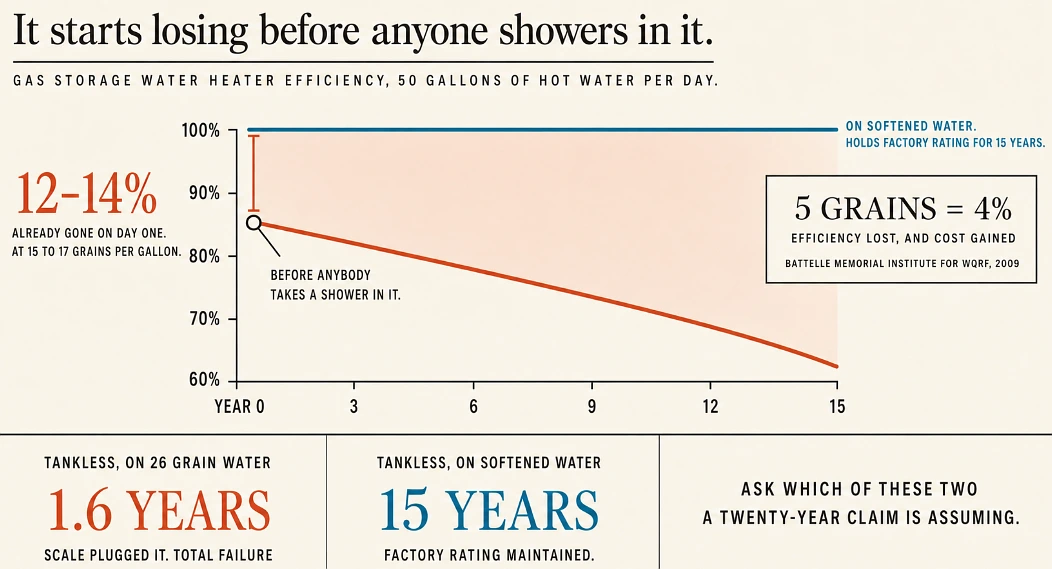
Here is the number that reframed this whole thing for me. The Battelle Memorial Institute ran a study for the Water Quality Research Foundation and found that every 5 grains per gallon of hardness costs a gas storage water heater 4% of its efficiency, at 50 gallons of hot water a day.
Run that against 15 to 17 grains.
Your brand-new heater in Fishers is starting life somewhere around 12 to 14% down. Before anybody takes a shower in it. That is not wear, that is the opening position.
And it compounds. In that same study, gas storage heaters running on hard water lost roughly half their efficiency across a 15-year lifespan, while the identical units on softened water held their factory rating the whole way. The Department of Energy puts a quarter inch of scale on a heating element at up to 40% efficiency loss.
Tankless is the brutal one. On 26 grain water the tankless units in that study did not degrade gracefully, they plugged with scale and stopped working entirely after 1.6 years of equivalent use.
Which is why “tankless lasts twenty years” is a claim that quietly assumes water nobody in Central Indiana actually has. Ask that question specifically before anyone sells you one here.
What It Looks Like When The Tank Comes Apart
Numbers are fine, but I wanted to know what this looks like from the other side, so I asked somebody who opens these things for a living.
Abel E., a Service Technician at Cooper’s Water, which has been doing plumbing Fishers homeowners rely on for 45 years across Central Indiana, put it plainly:
“You can tell before we even drain it. You knock on the tank low down and it sounds solid instead of hollow. That’s not water in there. On the older ones around here I’ve pulled out sediment you could stand a spoon in.”
That matches the other thing homeowners report and misread, which is a 50-gallon tank that behaves like a 40-gallon tank. The capacity did not shrink. The sediment took the space.
It Is Not Only The Heater
Scale goes everywhere the water goes, it is just slower to show up where things stay cool.
Battelle found more than 75% of showerhead nozzles clogged within one week of hard water exposure. One week! That crusty white ring on your faucet base and the spray that has gone crooked and split are the visible version of what is happening in places you cannot see.
Aerators clog, flow drops, and people replace perfectly good fixtures thinking the fixture failed.
So What Do You Actually Do?
Two honest answers here, and they are different answers.
For the scale already sitting in your tank: a softener installed today does nothing about it. Softening stops new scale forming, it does not dissolve what has already baked on. If your unit is under six years old, treatment meaningfully extends the life it has left. If it is already kettling loudly and running short on hot water, you are managing a decline rather than reversing it.
For everything downstream: a softener runs a few hundred to a couple of thousand installed, and in a 15 to 17 grain region it pays back through the water heating bill and through fixtures that stop dying early.
Before any of that, get the hardness on your specific address tested rather than trusting a regional average. Fishers pulls from more than one source and the number at your tap is the number that matters.
One thing I would push back on while you are shopping. Softener companies love the phrase lifetime warranty, and it almost never covers the resin, the valve and the labor on the same terms. Ask for the warranty broken into those three parts in writing, or treat the word lifetime as decoration.
Important Thing Worth Keeping In Perspective
Is any of this dangerous to drink? (h3)
No. The EPA treats hardness as a secondary standard, which means aesthetic and appliance effects rather than a health risk. No one is getting sick from Central Indiana limestone.
What it is doing is running your water heater at three quarters of the efficiency you are paying for, filling the bottom of your tank with rock, clogging your showerheads inside a week, and shortening the life of every appliance that touches hot water.
Which is not an emergency. It is just a bill that arrives quietly, spread across years, and most homeowners here never connect it back to the ground under the house.
 Decor & Improvement Accessories