

Home & Decor Blogs: DIY, Interior Design & Lifestyle Ideas
How to Design Your Dream Backyard Oasis: A Simple Step-by-Step Guide

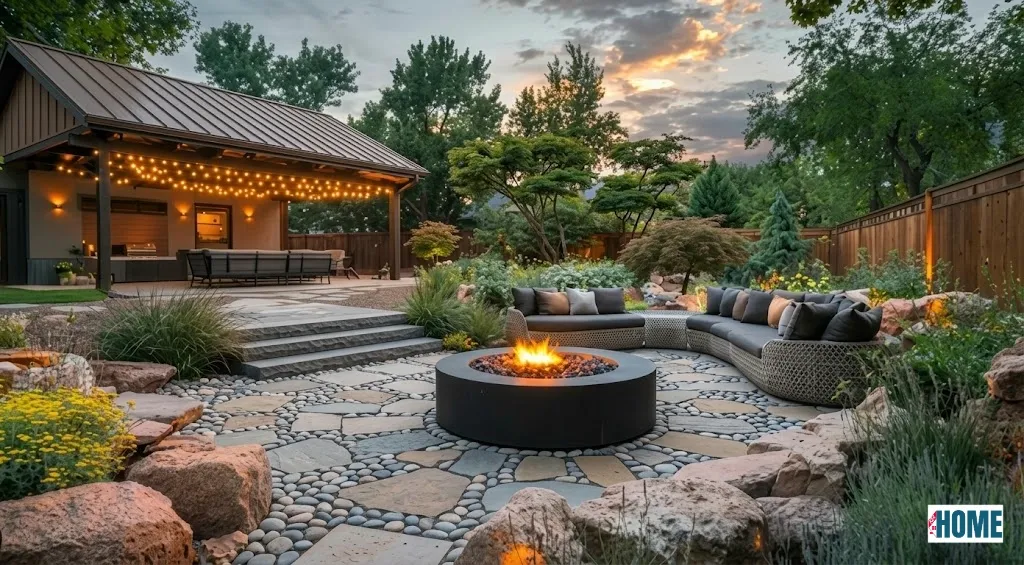
Most people pour money into kitchen renovations and bathroom remodels while their backyard sits there collecting lawn chairs nobody uses and a grill that hasn’t been cleaned since last Fourth of July. Strange priorities when you think about it — the backyard is the one part of your home with genuinely unlimited ceiling height and natural ventilation, and it’s treated like storage.
The spending is catching up to that realization, though. Grand View Research pegged the U.S. outdoor living structures market at $892.9 million in 2024, growing at 5.3% annually through 2030. A Fixr survey found 98% of architecture and remodeling pros agree that an updated outdoor space significantly impacts home value. So this isn’t just people wanting a nicer place to drink coffee on weekends — there’s actual financial sense behind it.
Underground Stuff You Don’t Know About
Everyone remembers to call 811 before digging. Good. But 811 only marks public utility lines. Over 65% of utilities on residential properties are privately owned — irrigation pipes, security wiring, septic connections, landscape lighting cables, old sprinkler systems the previous homeowner never mentioned. None of that gets flagged.
Hitting an irrigation line mid-project isn’t dangerous the way a gas line is, but it stops everything. You’re calling a plumber, watching your weekend timeline evaporate, spending money you didn’t budget for. Easiest prevention is searching for private utility locating near me before any shovel touches dirt. They sweep the whole property with ground-penetrating equipment and flag what’s down there. Costs way less than fixing what you accidentally broke.
Spend a couple of weeks observing your yard before planning anything, too. Where water collects after a heavy rain. Which corners get baked by afternoon sun. Where wind comes through strongest. Sketch it on paper — just a rough drawing with notes. That sketch prevents you from putting a dining area in a spot that floods or planting shade-loving ferns where they’ll get six hours of direct sun.
Ground Work
Whatever you build sits on what’s underneath it, and if the base isn’t right, you’re chasing problems for years. Settling pavers, pooling water, furniture legs sinking into soft ground.
Gravel works well as a foundation. Drains properly, blocks erosion, discourages weeds. Installation is pretty basic: clear existing vegetation, level the ground, roll out landscape fabric, then spread and tamp gravel down every few inches. Crushed stone and paver base — which is crushed stone mixed with sand — both work depending on what sits on top.
Edging defines where one zone ends and another starts. Paver edgings hold materials in place along the perimeter permanently. Brick edging needs a tamped area with several inches of crushed gravel topped by sand for drainage.
The yards that feel best usually combine surfaces. Some soft ground cover you’d walk across barefoot, enough hard surface for table legs and chairs to stay put. Flagstone in one area, decomposed granite in another, a wood deck section somewhere else. Different textures, same yard — it reads as one space with distinct purposes rather than a chopped-up mess.
Getting Shade Right
Here’s the thing about unshaded patios: nobody uses them. You set up furniture, buy cushions, maybe hang some lights — and from June through September the whole area sits empty because it’s unbearable by noon. Shade is what decides whether your outdoor space works four months a year or eight.
Pergolas are the go-to, and costs spread across a wide range. Aluminum kits run $10 to $30 per square foot if you’re doing it yourself. Wood — cedar, redwood, pressure-treated lumber — falls between $20 and $50 per square foot before you account for staining every couple of years.
A 10′ × 12′ aluminum pergola lands somewhere between $1,200 and $3,600 installed. Same dimensions in wood, $2,400 to $6,000.
| Material | Cost/Sq Ft (DIY) | Maintenance | How Long It Lasts |
|---|---|---|---|
| Aluminum | $10–$30 | Basically none | 20+ years |
| Pressure-treated wood | $20–$35 | Stain/seal every 2–3 years | 10–15 years |
| Cedar | $25–$45 | Stain every 2–3 years | 15–20 years |
| Vinyl | $25–$55 | Occasional wash | 15–20 years |
Foundation under the pergola depends on your ground. Posts embedded directly into soil work at ground level. Galvanized steel brackets bolt onto existing decks. Concrete slabs handle uneven terrain. A pergola that shifts or wobbles in wind is a safety issue and an eyesore, so matching foundation type to your actual conditions matters more than the pergola material itself.
Pick Outdoor Furniture
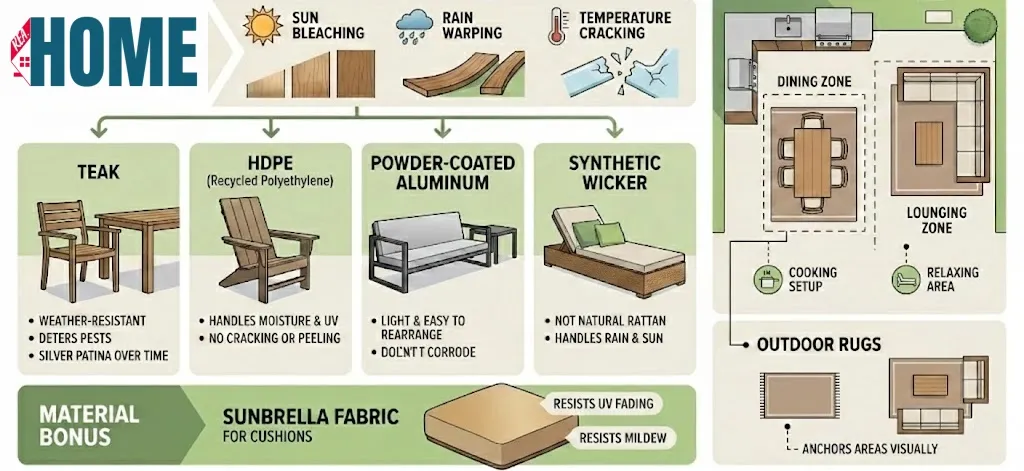
Everything you put outside gets punished by weather. Sun bleaches colour, rain warps cheap wood, temperature swings crack brittle plastics. Buying the wrong materials means replacing everything in two years.
What holds up:
- Teak — weather-resistant, naturally deters pests, develops a silver patina over time. Expensive but you buy it once
- HDPE (recycled high-density polyethylene) — handles moisture and UV without cracking or peeling. Increasingly popular for good reason
- Powder-coated aluminum — light enough to rearrange easily, doesn’t corrode, low upkeep
- Synthetic wicker — not the same as natural rattan, which falls apart outdoors. Synthetic versions handle rain and sun properly
- Sunbrella fabric for any cushions — resists UV fading and mildew. It’s become the default for outdoor upholstery and that reputation is earned
Bigger patios work better divided into zones. Dining near whatever cooking setup you have, lounging further away. An outdoor rug under each group anchors the area visually and keeps things feeling deliberate rather than scattered.
Outdoor Lighting
Most people string up some bulbs before a barbecue and call it done. That’s not lighting — that’s decoration. Actual outdoor lighting has layers and each one does a different job.
Motion-activated flood lights cover security. Mount them between 8 and 15 feet high, pointed at entry points and dark corners of the yard. Then you need path lights along walkways so people can see steps and grade changes at night. String lights or wall sconces add warmth. A couple of spotlights picking out a tree or interesting feature give the space some depth after dark.
LED fixtures for anything that stays on regularly. The numbers aren’t even close — according to the U.S. Department of Energy, LEDs use up to 75% less energy than incandescent bulbs and last up to 25 times longer. We’re talking 25,000 to 50,000 hours for an LED versus about 1,000 for incandescent. For outdoor fixtures running several hours every evening, that’s the difference between replacing bulbs constantly and forgetting they exist for years.
Colour temperature matters more than people realize. Warm range, 2700K to 3000K, gives that slightly amber tone that makes outdoor spaces feel comfortable. Anything above 4000K starts looking institutional — like a petrol station forecourt, not a backyard.
Extending the Season with Heat
A backyard that’s only comfortable from May to September is only returning value for five months. Adding a heat source pushes that closer to eight or nine months depending on where you live, which is a massive increase in how much use you get from everything else you’ve spent.
Fire pits work on a level that patio heaters don’t, honestly. People gather around fire. They just do — it’s instinctive. Gas fire pits light instantly with no cleanup. Wood-burning ones give you the smell and the crackling but you’re managing ash and watching for sparks near anything flammable.
Patio heaters are more practical for covered areas where open flame isn’t smart. Propane units around 40,000 BTUs warm a reasonable radius, though wind cuts that effectiveness fast. Electric infrared heaters mounted overhead work better in sheltered spots.
Plants That Do More Than Look Nice
Greenery shouldn’t just fill empty space. Pick plants that solve problems while they’re at it.
Vertical planting works well when ground space is tight. Hanging baskets, wall-mounted planters, shelving with pots against a fence. Fabric pouches attached to fence boards grow herbs surprisingly well. Repurposed guttering mounted horizontally handles strawberries and shallow-rooted greens — more productive than it sounds.
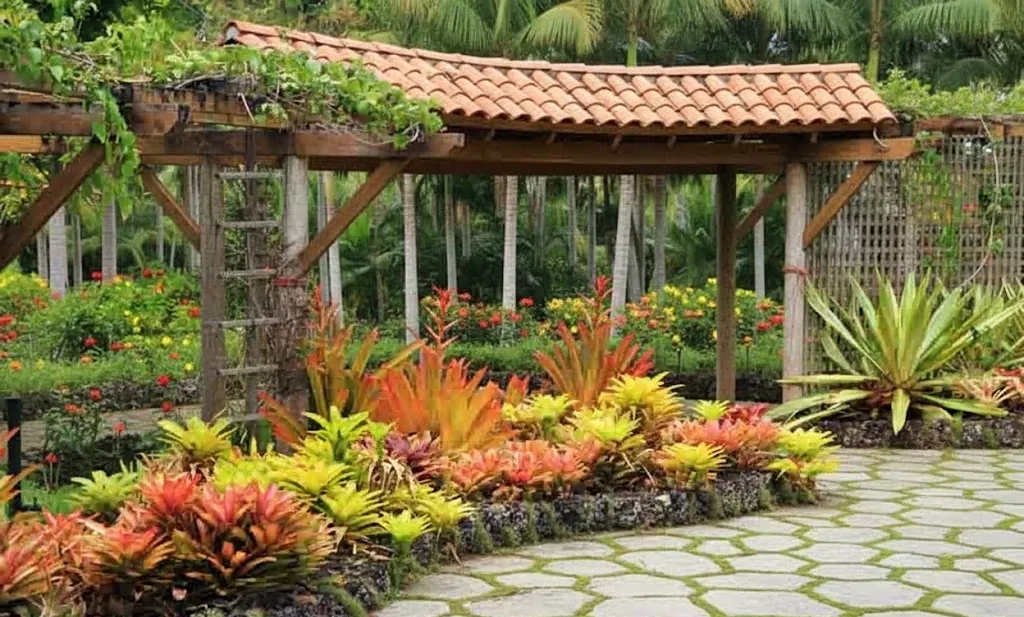
For built-in pest control, lavender, marigolds, and basil produce scents that mosquitoes avoid. You’re planting things you’d probably want in the yard anyway and getting fewer bites during evening use as a bonus. Canna lilies and elephant’s ear plants push things toward a tropical feel if that appeals to you.
Container gardening on a patio takes minimal space. Salad leaves and herbs with shallow roots do well in pots. Climbing beans go up trellises and produce food from vertical space that wasn’t doing anything.
Water Features
A fountain or small pond does two things well: gives the yard a focal point, and produces enough ambient sound to mask traffic and neighbour noise. In compact urban backyards, that second benefit matters more than people expect — it makes the space feel considerably more private.
Self-sustaining ponds run themselves once established. Solar-powered fountains cost nothing to operate. Container water gardens fit on decks without digging. About 19% of homeowners who renovated outdoor spaces in 2024 added a water feature, per Houzz data reported by This Old House — it’s common enough that you won’t struggle to find options at every price point.
What You’re Actually Spending
Backyard costs vary enormously depending on what you’re working with and how far you take it. But rough component pricing gives you something to budget against:
- Gravel/paver base (DIY materials): $1–$3 per square foot
- Pergola: $1,200–$6,000+ depending on material and size
- Decent outdoor furniture set: $1,500–$5,000
- Landscape lighting (LED, professionally installed): $2,000–$5,000
- Fire pit: $300–$3,000 (portable to built-in)
- Water feature: $1,100–$7,500 installed
On the return side: a well-done patio can increase home value by 8% to 12%. The National Association of Realtors found that an overall landscape upgrade averages 100% cost recovery on about $9,000 spent. An attached outdoor deck can add close to $20,000 to a home’s worth, with owners recouping around 75% at resale.
The catch is execution. A backyard with cheap materials and no real design thought doesn’t photograph well, doesn’t impress buyers, and doesn’t add what the numbers above suggest. The ROI comes from spaces that look like someone actually planned them — considered materials, good lighting, areas that make sense for how people actually use outdoor space. That’s what shows up in listing photos and gets offers moving.
 Decor & Improvement Accessories