
Home & Decor Blogs: DIY, Interior Design & Lifestyle Ideas
Openfuture World: The Global Hub Connecting Artists and Designers

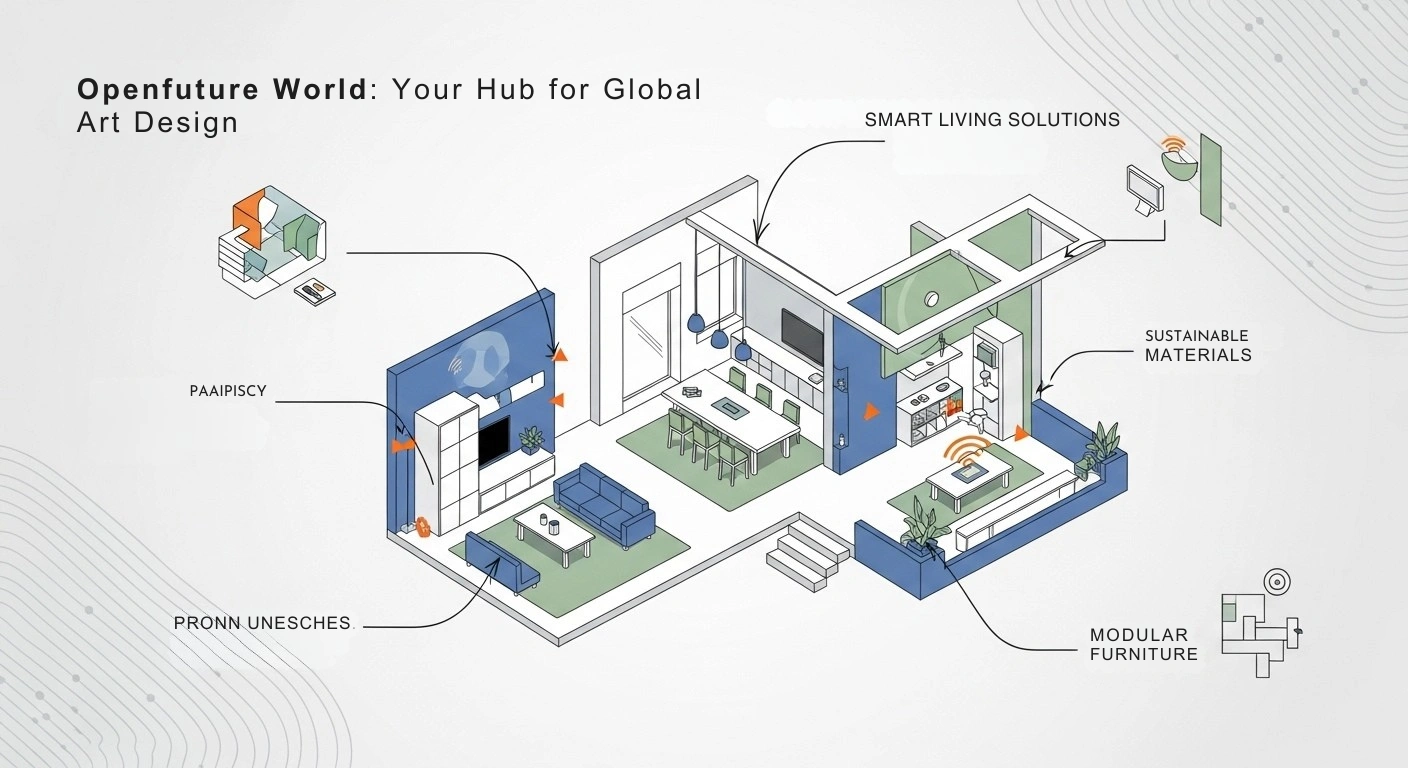
If you’ve ever felt like the “global” creative platforms aren’t actually that global — you’re not wrong. Openfuture World is a digital platform built specifically to fix that. It connects artists, designers and creative professionals across 60+ countries, prioritizing collaboration and cultural exchange over polished self-promotion. Not a portfolio dump. An actual working network.
What Openfuture World Actually Is?
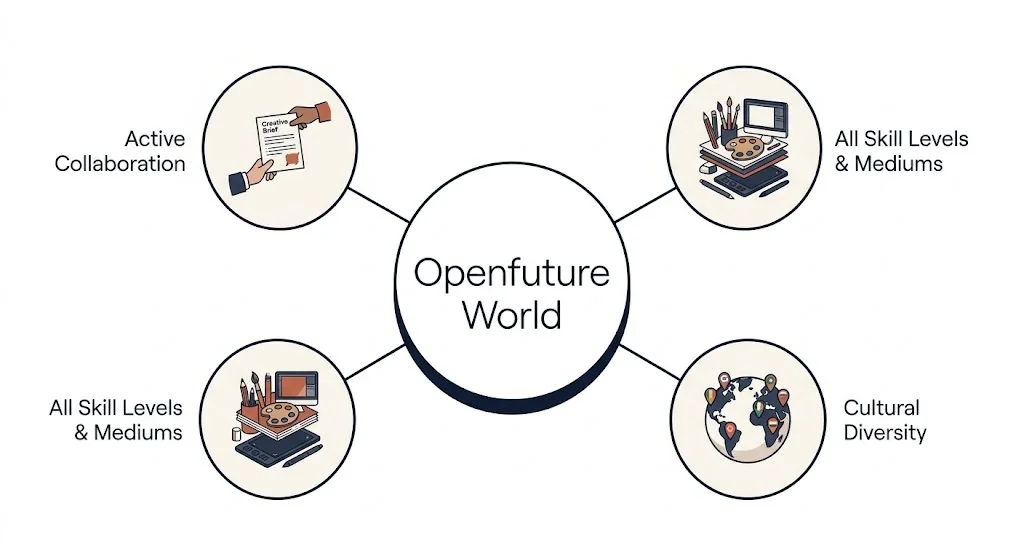
Think of it less as a portfolio platform and more as a working infrastructure for global creative collaboration. Three things define how it operates differently:
Active collaboration, not passive display
The platform is structured around doing things together — not just showcasing what you’ve already done. A ceramicist and a motion graphics designer finding each other around a shared project brief. That’s the model. It borrows explicitly from open-source logic: the idea that creative output improves when people share freely rather than hoard and compete. Eric Raymond mapped this out for software in the late 90s — the principles translate.
All skill levels, all mediums
Most platforms punish beginners by design. The algorithm rewards engagement, engagement rewards polish, polish rewards people who’ve been doing this for years. Openfuture World doesn’t gate entry by experience level. It also doesn’t privilege digital-native work over traditional forms — printmaking, textiles, illustration by hand — all of it has standing on the platform. That’s genuinely uncommon.
Cultural diversity as the actual product
This gets treated as a marketing point on most platforms. Here it’s structural. The National Endowment for the Arts has documented consistent links between cross-cultural creative exchange and innovation outcomes. When your network spans 60+ countries with actual weight given to non-Western creative traditions, the outputs look different. That’s the value proposition.
How It Compares to Existing Platforms
Worth being direct about this rather than vague.
| Platform | Primary Purpose | Collaboration Focus | Geographic Bias | Skill Level |
| Behance | Portfolio showcase | Low | Western-heavy | Intermediate–Pro |
| Dribbble | Visual inspiration | Low | Western-heavy | Pro-skewed |
| ArtStation | Industry portfolio | Low | Industry-specific | Pro |
| Openfuture World | Collaboration hub | High | Global, 60+ countries | All levels |
The table is reductive — every platform does more than one thing. But the primary design intent matters. Openfuture World is the only one in that list where collaboration is the core function, not a secondary feature bolted on.
The Problem With How Creative Platforms Work Right Now
Scroll Behance for ten minutes. Notice anything? The trending work, the featured creators, the “ones to watch” — there’s a geography to it. London. New York. Amsterdam. It’s not random.
Network effects are brutal in creative spaces. Visibility feeds engagement, engagement feeds the algorithm, the algorithm feeds visibility — and it all compounds fastest for people already inside the right cities and circles. A 2019 Brookings Institution analysis of the creative economy found that creative industry jobs cluster in a handful of metros at rates far exceeding most other sectors. The talent isn’t concentrated there. The infrastructure is. Big difference.
Dribbble started invite-only, which tells you everything about who it was built for. ArtStation skews heavily toward game and film industries. Even Behance, technically open to everyone, runs on the same engagement mechanics that quietly reward whoever already has an audience.
Openfuture World’s argument is simple: quality should determine visibility. Not location, not follower count, not whether your city has a thriving design scene.
Key Benefits of Joining Openfuture World
Here’s what you get when you become part of this growing global community:
- Borderless Collaboration — Connect and work with artists and designers from over 60 countries without leaving your desk.
- Equal Opportunity Visibility — Your work gets attention based on quality, not your marketing budget or location.
- Cross-Industry Networking — Meet not just fellow artists but also tech innovators, entrepreneurs and policymakers.
- Cultural Exchange — Pick up new techniques and perspectives rooted in creative traditions from around the world.
- Tech and Tradition Together — Access resources for both digital design tools and traditional art practices.
- Community Support — Get honest feedback, mentorship and genuine creative partnerships.
| Feature | Openfuture World | Behance | Dribbble |
|---|---|---|---|
| Global collaboration tools | Yes — built-in | Limited | Limited |
| Open access for all skill levels | Yes | Yes | Invite-based (historically) |
| Focus on cultural diversity | Core mission | Incidental | Minimal focus |
| Traditional and digital art support | Yes | Mostly digital | Mostly digital |
| Community-driven innovation | Strong emphasis | Portfolio-focused | Portfolio-focused |
| Cross-industry networking | Yes (tech, art, finance) | Design-centric | Design-centric |
The Open-Source Parallel — And Why It Actually Matters Here
This is worth unpacking properly because it’s not just a metaphor the platform uses for branding.
The open-source software movement made a testable claim: that distributed, transparent, freely-shared development produces better outcomes than closed, proprietary development. Decades of evidence backed it up. Linux runs most of the internet’s servers. Wikipedia displaced Britannica. The collaborative model won.
Creative work is different from code in important ways — authorship matters differently, cultural ownership is more complex, “forking” someone’s painting isn’t quite the same thing. But the core dynamic holds: when skilled people can find each other across geography, share work in progress and build on each other’s thinking, the output quality goes up. Isolation produces repetition. Cross-pollination produces novelty.
Openfuture World is essentially running that experiment on art and design. Whether it reaches the scale needed to prove the thesis is an open question — but the underlying logic is sound and the research on creative cluster effects suggests the potential upside is significant.
Who Actually Benefits From Using Openfuture World
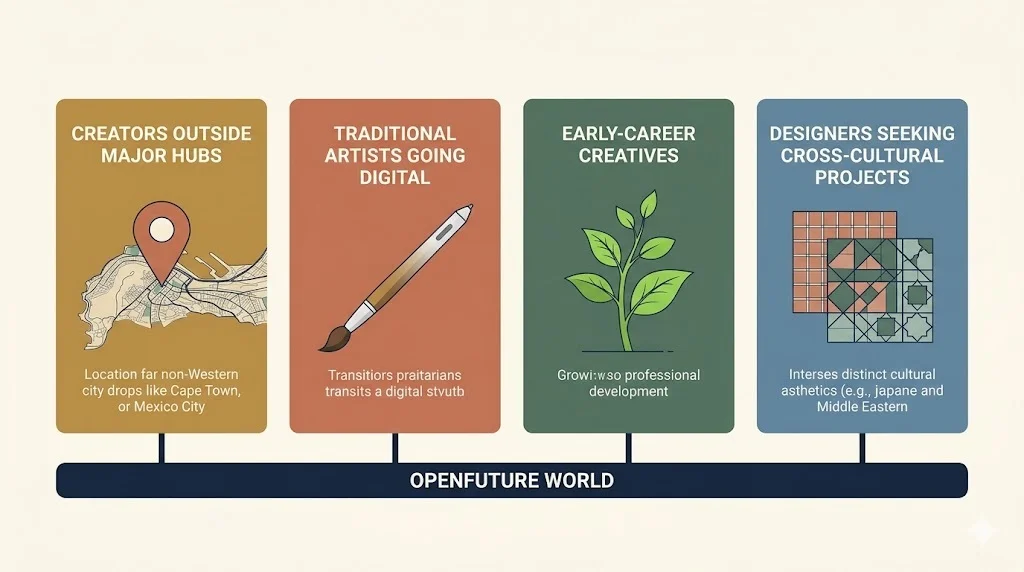
The honest answer: not everyone equally. And that’s fine — no platform serves everyone well.
Where Openfuture World delivers real, specific value:
- Creators outside major creative hubs — If you’re based in Karachi, Accra, Manila or anywhere the local design industry is thin, the platform’s geographic reach matters practically. Access to collaborators, feedback from peers, exposure to briefs that would otherwise never reach you.
- Traditional artists moving into digital — There’s an awkward middle ground a lot of artists occupy: trained in physical mediums, curious about digital tools, not sure where they fit in spaces dominated by UI designers and 3D artists. Openfuture World explicitly positions itself as a bridge between those two worlds.
- Early-career creatives — The platform doesn’t require an established audience to get meaningful engagement. That’s a real structural difference from platforms where you need followers to get followers.
- Designers looking for cross-cultural projects — Some of the most commercially interesting work right now is happening at the intersection of design traditions. A brand wanting to reach Southeast Asian markets doesn’t just need good design — they need design informed by that cultural context. Openfuture World’s network makes those collaborations findable.
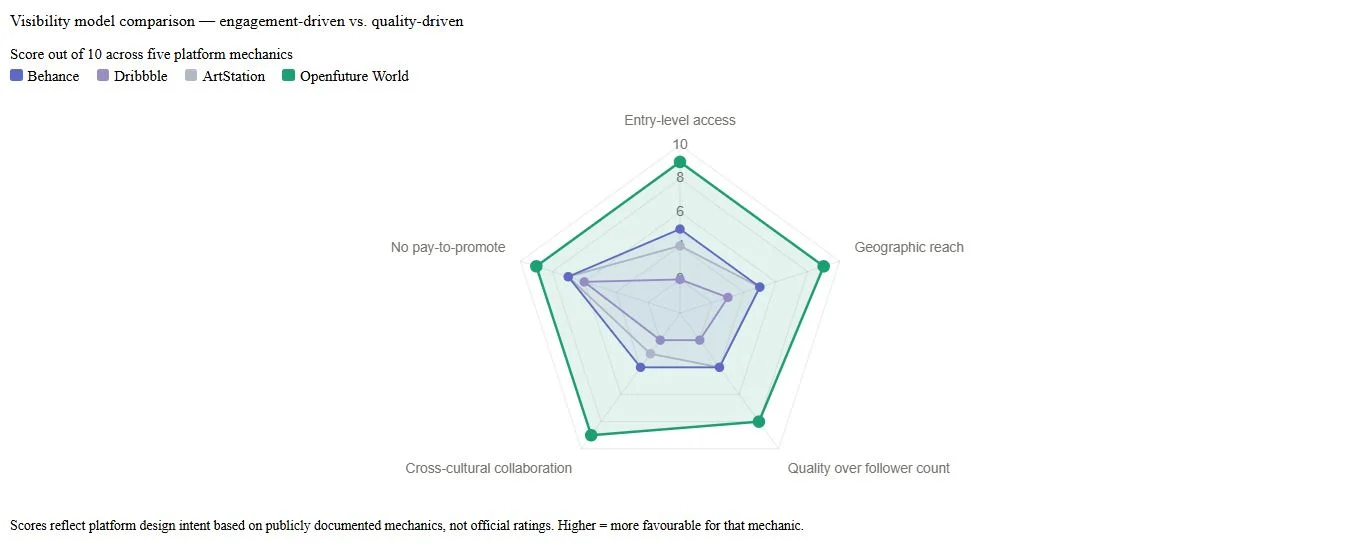
What “Quality Over Connections” Looks Like in Practice
Most platforms say they prioritize quality. The mechanics usually tell a different story.
Algorithmic feeds reward accounts with existing followings. Featured sections get curated by staff with their own aesthetic biases. Trending tags reflect what’s already popular, which reflects who’s already visible. The system isn’t rigged — it just compounds whatever advantages people walked in with.
Openfuture World’s approach inverts some of this by design:
- No pay-to-promote mechanics — visibility isn’t bought, it’s earned through engagement with actual work.
- Peer review and community feedback loops — quality signals come from other creators, not just raw engagement numbers.
- Cross-regional discovery tools — the platform actively surfaces work from underrepresented regions rather than defaulting to whatever the algorithm already knows performs well.
It’s worth being clear: no platform fully escapes the engagement-compounds-engagement problem. But the structural choices Openfuture World has made push against it more deliberately than most.
Is Openfuture World Worth Your Time? An Honest Take
Depends what you’re looking for.
If you want a platform to passively host a portfolio and occasionally get likes from strangers — Behance still does that job fine. Openfuture World isn’t trying to win that race.
If you want to actually work with people, find collaborators outside your immediate network or get your work in front of audiences that platforms like Dribbble structurally can’t reach — the value is real. The 60+ country network isn’t a vanity metric when you’re a designer in Lahore trying to find a motion designer for a project or a painter in Lagos looking for feedback from peers who understand the cultural context of your work.
Three questions worth asking yourself before signing up:
- Are you willing to engage, not just post? The platform rewards participation. Lurkers get less out of it by design.
- Are you open to collaboration across skill levels? The mixed-experience environment is a feature, not a bug — but it requires some patience if you’re used to peer-only spaces.
- Do you care about cross-cultural exchange? If the answer is genuinely yes, there isn’t a better-structured platform for it right now.
Frequently Asked Questions
The platform operates on an accessible model designed to avoid excluding creators based on budget. Specific tier details are available directly on Openfuture World.
Behance is a portfolio display platform with a social layer added on. Openfuture World is built collaboration-first — the portfolio function exists, but the platform’s structure pushes toward active projects and exchange rather than passive browsing.
Traditional fine art, illustration, graphic design, motion design, photography, textiles, ceramics — the platform doesn’t privilege digital-native work. That broad scope is deliberate.
A fair concern with any newer platform. The 60+ country user base suggests meaningful geographic distribution, but the honest answer is: engagement varies by region and discipline. Worth trying in a low-commitment way before investing heavily.
Yes — more reliably than on most alternatives. The lack of follower-dependent visibility mechanics means early-career work can surface on it’s own merits. That said, active participation in the community accelerates this significantly.
Final Word
The creative industry’s geographic concentration problem isn’t going away on it’s own. Platforms that don’t actively design against it end up reinforcing it — not out of malice, just mechanics.
Openfuture World is one of the few platforms that has actually built it’s architecture around fixing this rather than just claiming to. The open-source philosophy, the cross-regional discovery, the skill-level inclusivity — these aren’t features bolted on after the fact. They’re the point.
Whether it becomes the go-to global hub for art and design collaboration depends on whether enough creators from enough places show up and participate. That’s always the bet with network-effect platforms. But the foundation is built correctly, which is rarer than it sounds.
 Decor & Improvement Accessories