

Home & Decor Blogs: DIY, Interior Design & Lifestyle Ideas
Polycarbonate and Acrylic on a UK Self Build: Where Plastic Beats Glass and What It Costs

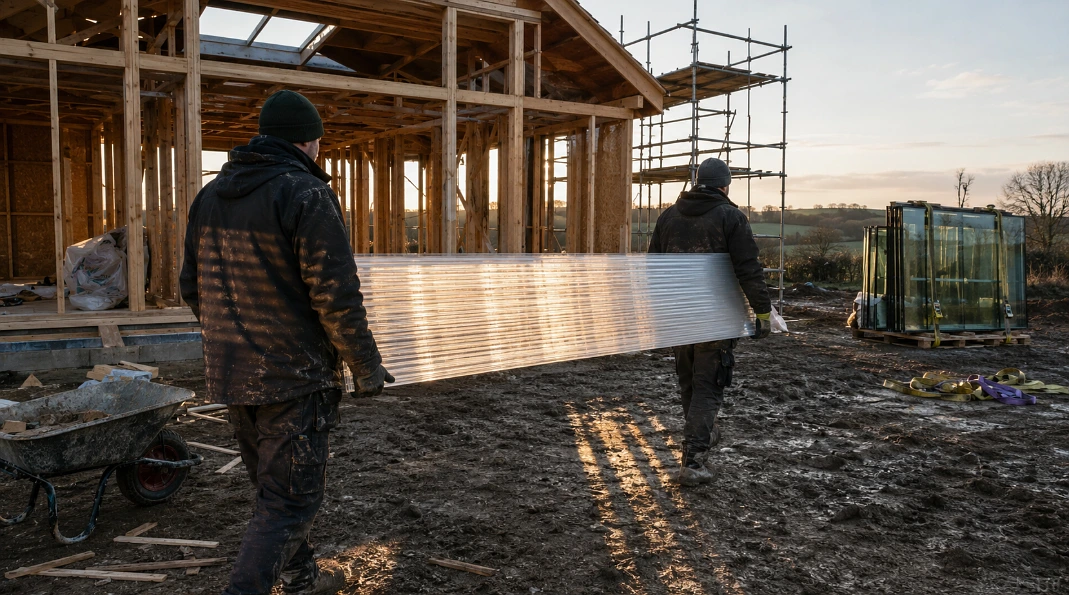
Anyone managing their own build learns quickly that glass is heavy, fragile, and priced like it knows you need it.
For a surprising number of jobs on a modern UK self build there is a plastic sheet that does the work better, and the people who price their own materials have quietly made polycarbonate and acrylic the default overhead, along covered walkways, inside the house, and during the messy middle months of the build itself.
Not everywhere, though. This article takes a fairly firm position on where the line sits, and it starts on the roof.
Overhead Is Where Glass Loses First
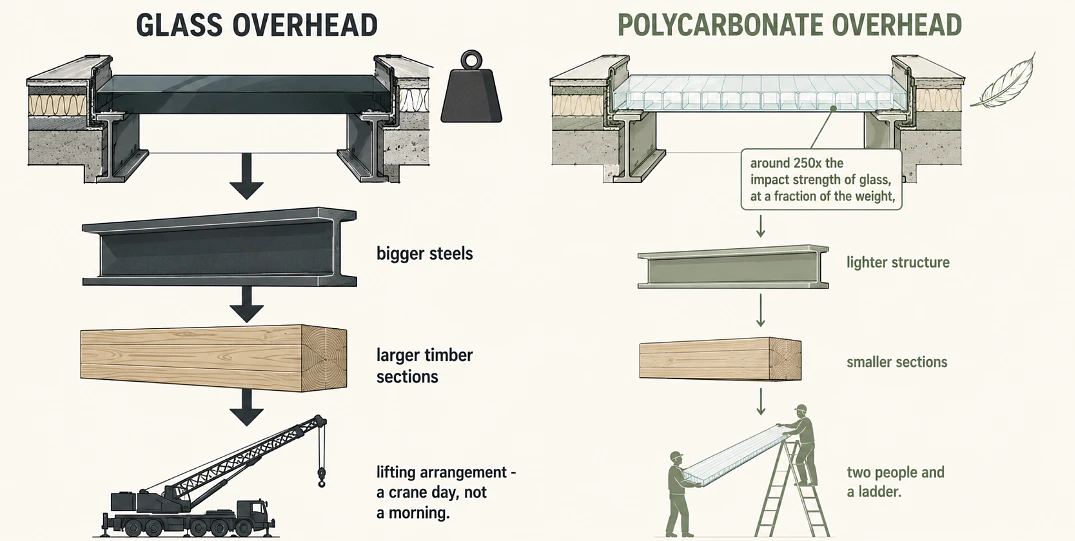
Rooflights and glazed roof sections are where the argument settles fastest.
Glass overhead has to be toughened or laminated, it weighs a small fortune per panel, and that weight travels down through the design as bigger steels, heavier timber sections, and lifting arrangements that turn a morning job into a crane day. Polycarbonate carries something like 250 times the impact strength of glass at a fraction of the weight, so the structure holding it up gets lighter and cheaper too, and two people can carry a full roof panel up a ladder without anyone phoning a hire company.
The regulations and the money both cooperate, which honestly surprises people:
- Approved Document L wants rooflights in new homes at a U value of 2.2 W/m²K or better assessed on the horizontal plane, and a 25mm multiwall sheet sits comfortably inside that, with the thickest grades pushing toward 1.0.
- Ask suppliers for the certified whole unit figure rather than a centre pane number, because building control will ask you the same thing later.
- A complete polycarbonate roof lands between £85 and £190 per square metre with bars, trims, and tapes included.
On the sheets themselves, a 16mm or 25mm polycarbonate multiwall sheet cut to size runs from about fourteen quid for small pieces up to roughly a hundred for big roofing panels, and the UK made Corotherm system behind them includes every fitting the roof needs. That is the kind of number that makes the glazed quote look like a decision rather than a default.
Carports, Walkways, and the Economics of Spans
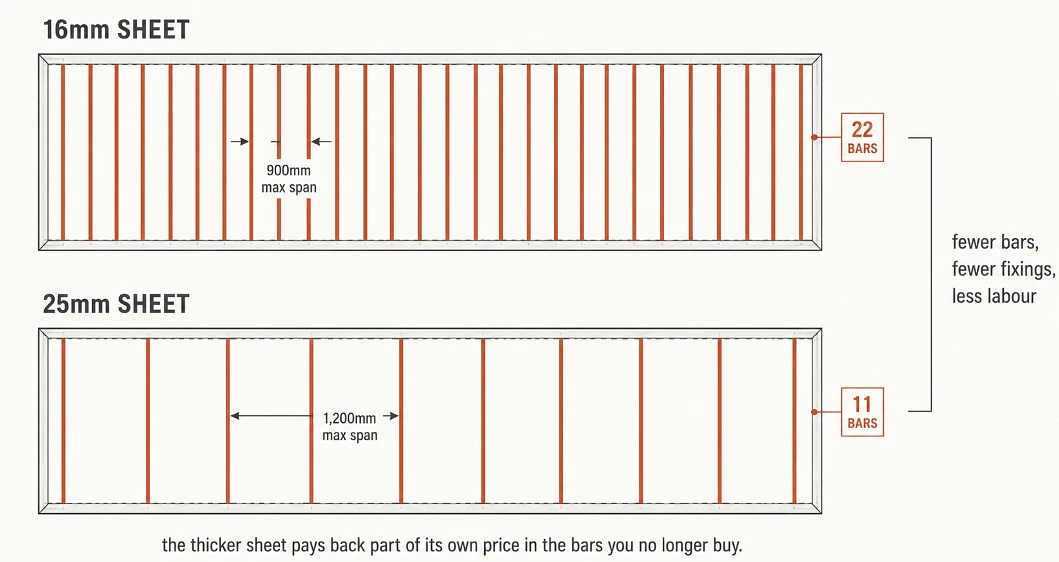
Outside, sheet thickness starts doing structural work as well as thermal work.
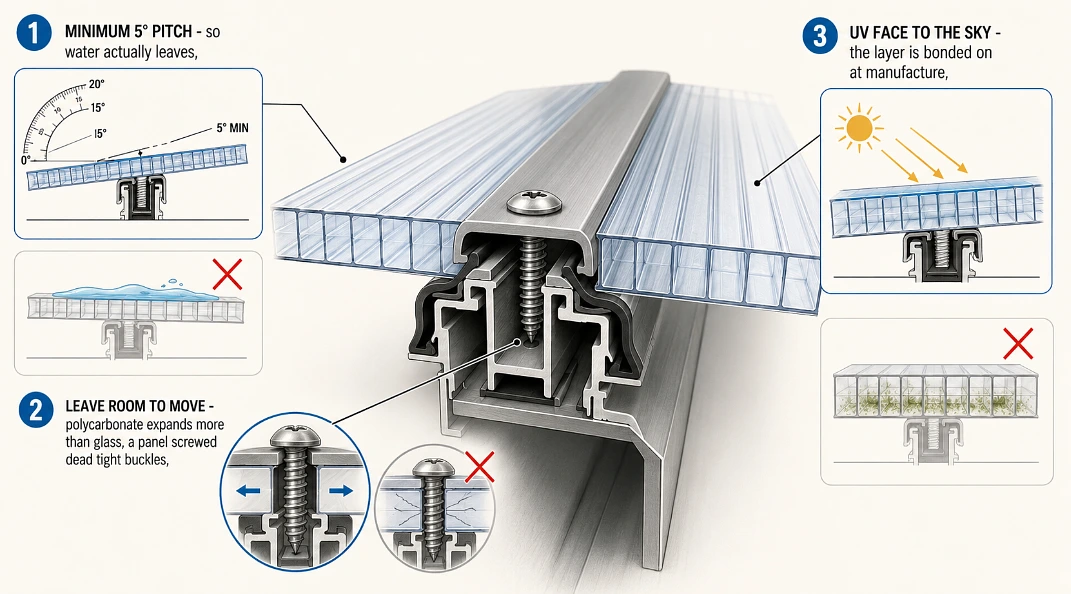
A 16mm sheet spans up to about 900mm between glazing bars and a 25mm sheet stretches that to 1,200mm, and since the bars are a real chunk of any roof budget, the thicker sheet partly pays for itself by needing fewer of them. The installation habits that make these roofs last are small and specific:
- A minimum pitch of five degrees, so water actually leaves.
- Room in the fixings for the sheet to expand and contract through the seasons, because polycarbonate moves more than glass and a panel screwed dead tight will buckle or crack.
- The UV protected face pointing at the sky, always, since the layer gets bonded on during manufacture and fitting it upside down traps moisture in the flutes where algae happily moves in.
Get those right and the sheet shrugs off snow loads, football strikes, and the odd dropped branch for the ten to fifteen years the UV layer is rated for. Which is why warranties in this market run about a decade.
Inside the House, Acrylic Takes Over
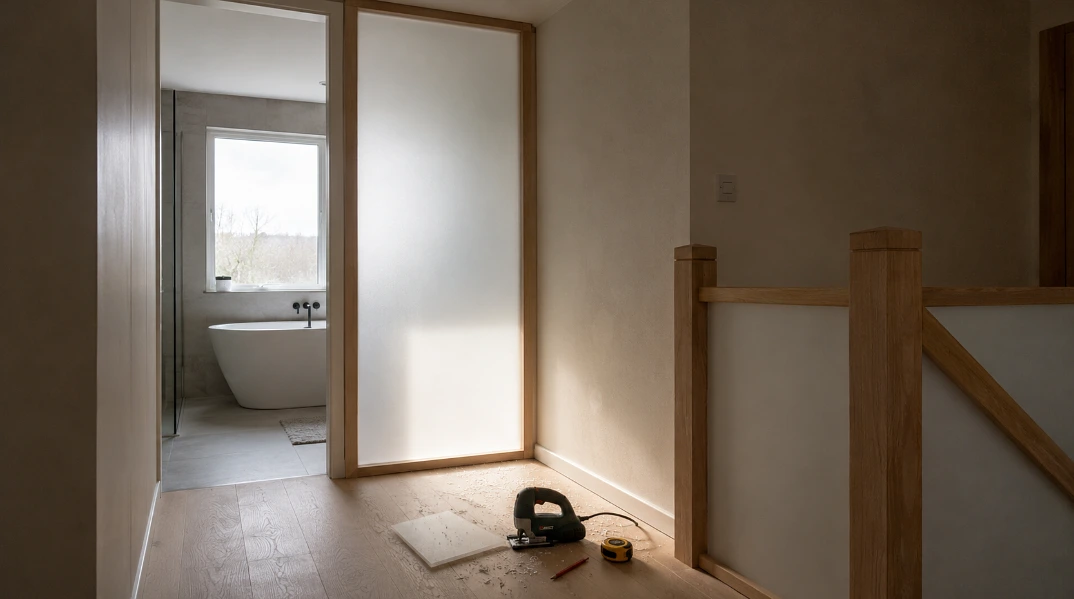
Indoors nothing needs to survive hail, and acrylic wins on clarity and workability instead.
It is optically cleaner than polycarbonate, and it cuts and drills with ordinary wood tools right there on site, which changes how partitions and glazed details get built, because a self builder can trim a panel to an out of square opening in the garage instead of re ordering glass and waiting a fortnight. Frosted acrylic makes bathroom partitions and stair balustrade infills that pass borrowed light between rooms, and that matters more than people expect in the deep floor plans modern builds tend to have.
The one thing to respect is that acrylic is more brittle than polycarbonate. It belongs in the lower risk positions, wall panels and fixed screens rather than anywhere structural or anywhere a scaffold pole might swing.
The Build Programme Argument, Which Is the Sleeper
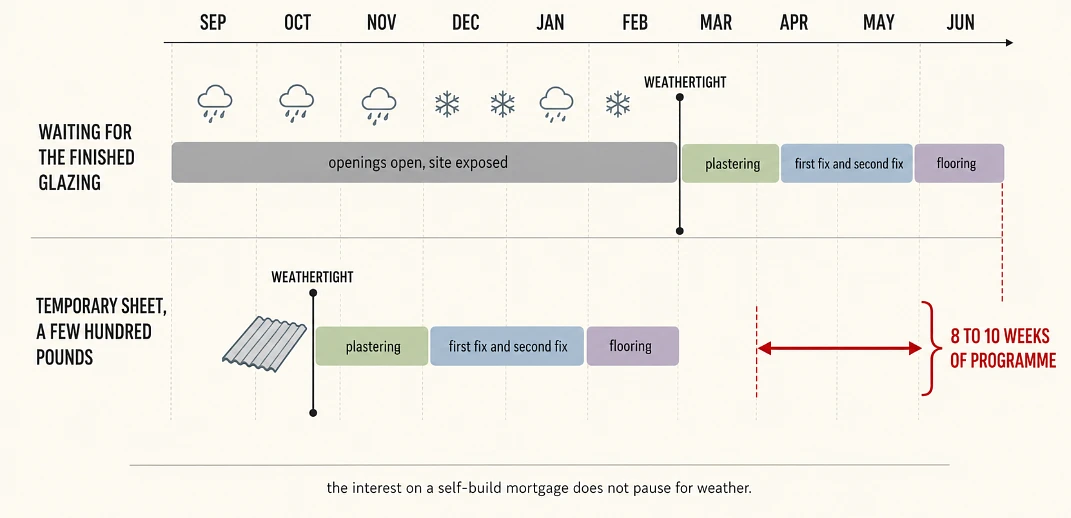
Cheap sheet can make your site watertight months before the finished glazing arrives.
Corrugated or thin twinwall panels close in openings and roof sections for a few hundred pounds, and a build that gets weathertight in November instead of March lets the plasterers, electricians, and floor layers work through the winter instead of waiting on it. This use case never appears in the glossy self build magazines, and it regularly buys a project eight or ten weeks of programme.
Anyone who has paid interest on a self build mortgage through a wet spring knows exactly what those weeks cost.
Where the Line Sits
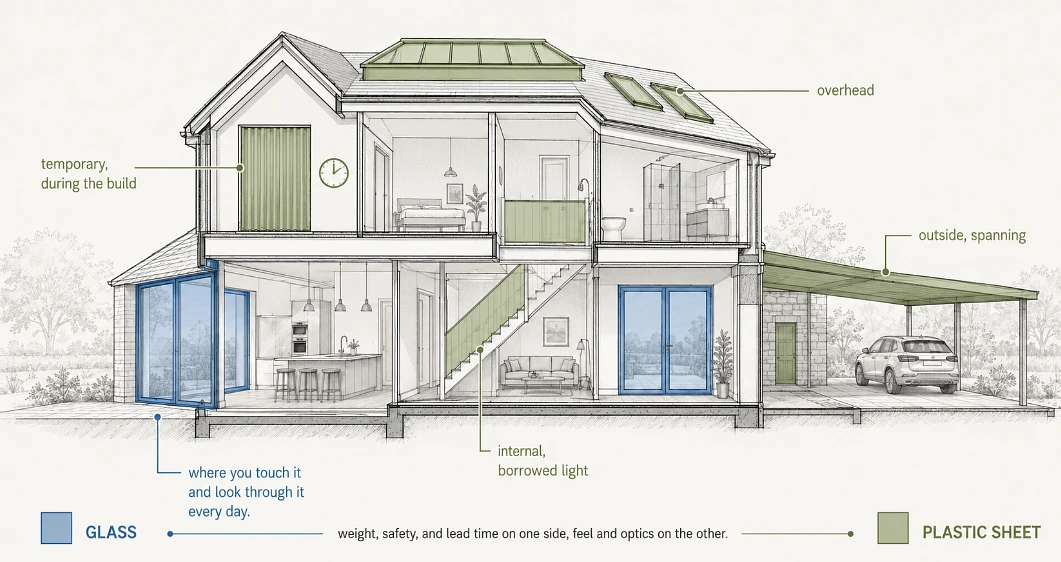
Glass belongs where you touch it and look through it every day, the main windows and doors, where its feel and optical quality are worth every kilo.
Everywhere overhead, everywhere internal, and everywhere temporary, plastic sheet does the same job lighter, safer, and cheaper. The self builder who defaults to glass across the whole project is mostly buying weight, steel, and lead times they never needed.
 Decor & Improvement Accessories