

Home & Decor Blogs: DIY, Interior Design & Lifestyle Ideas
What Makes Custom Furniture Different From Mass-Produced Pieces
Most furniture is bought the way you buy a phone case. It fits, more or less, and that is the whole standard.
I do not think that is a bad way to furnish half a house. The sofa for the rental, the desk for a kid who will outgrow the room in two years, fine, buy it Thursday and move on. But there is a specific kind of table that does not work that way, and the difference is not really about quality. It is about who the piece was actually made for.
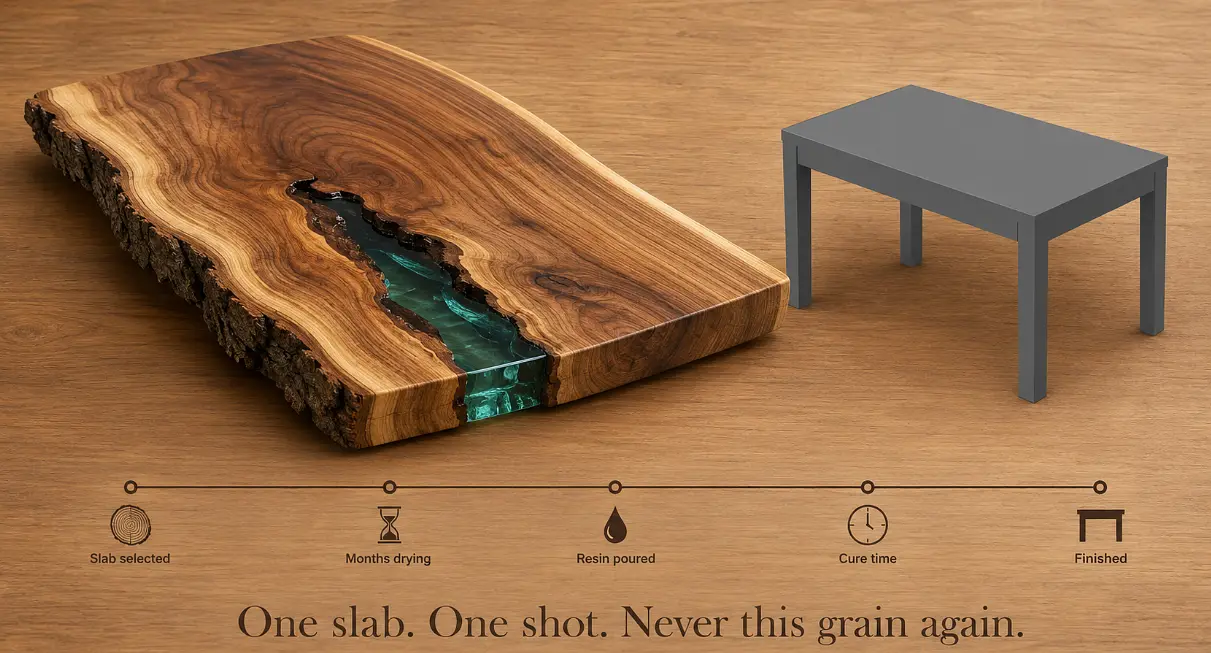
George Nakashima knew this better than almost anyone. Working out of New Hope, Pennsylvania, he built his whole practice around the idea that a slab of wood only gets one shot at becoming what it is. He wrote it plainly in The Soul of a Tree, that “a graining, a subtle coloring, an aura, a presence will exist this once, never to reappear.” People at the time thought he was strange for it, buying up wood with cracks and knots that other workshops would have sent back. He kept buying it anyway.
That sentence is the whole argument, honestly. Once you get it, everything else follows.
The Room Decides The Table, Not The Catalogue
A factory piece is finished before you ever see it. Three sizes, two finishes, in stock or not, done.
Custom work starts somewhere else entirely, with a conversation about the actual room, not an imagined average one. How many people sit here on a normal Tuesday. Does it have to fit into that gap beside the kitchen island. Will it take a beating from kids every single day, or does it need to disappear quietly into a small flat.
Small questions. They decide almost everything.
With mass production, your life bends around whatever the design happened to allow. With a commissioned piece, it runs the other way, the table bends around your life. Once you have sat at one built for your actual walls and your actual habits, going back to a catalogue size feels like wearing someone else’s shoes. Slightly wrong in a way you cannot quite name until you notice it every single day.
No Two Slabs, No Two Tables
Here is where it gets properly interesting, and where a live edge piece shows the whole idea at its most honest.
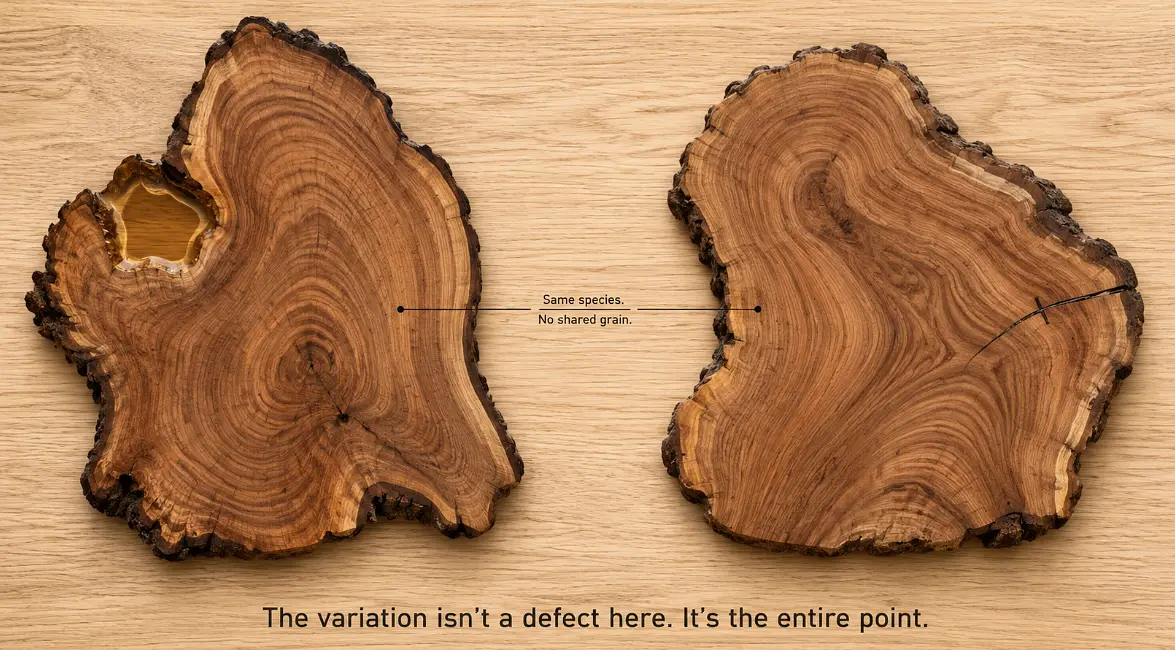
The edge is not cut straight. It is the actual outer line of the tree, the shape it grew into over decades nobody controlled. So the maker cannot template it, cannot run the same drawing through a machine ten thousand times, because the material itself refuses to repeat. A void gets filled with resin in one spot, a hairline crack gets stabilised in another, and both decisions come from what that specific piece of wood is doing, not from a factory spec sheet.
This is the whole reason live edge resin tables sit in a different category from almost anything else you can buy for a dining room. Two tables cut from the same tree species will not share a grain. Pour resin into the mix and exact repetition stops being possible at all. A furniture factory treats variation as a defect to be engineered out. Here, the variation is the entire point of owning it.
The Waiting Is Not A Downside
Ready made arrives Thursday. Commissioned furniture makes you wait, and I have come around to thinking the wait is not a flaw in the process, it is part of what you are actually buying.
The slab has to dry properly first, sometimes for a long stretch, or it moves and cracks later. A deep resin pour needs its full cure time and there is no shortcut that does not risk the whole piece. So for weeks the thing you paid for simply does not exist yet, which sounds frustrating and mostly is not, because you get to watch it arrive.
Nakashima wrote about opening a log for the first time as its own kind of drama, uncovering something that had been sitting hidden inside the trunk for centuries, waiting for what he called its second life. A buyer only gets a small taste of that. You saw a photo of the raw slab before it became a tabletop. You knew it when it was still just wood, and that changes how you look at it once it is finished.
It Is Built To Be Fixed, Not Replaced
Nick Offerman runs an actual woodshop in Los Angeles, has done since 2001, on top of everything else he is known for. He is not just playing a carpenter on television. And he put this plainly in one interview, that with a real table you are shaping a natural material into something meant to serve your family for generations, not just a few years.
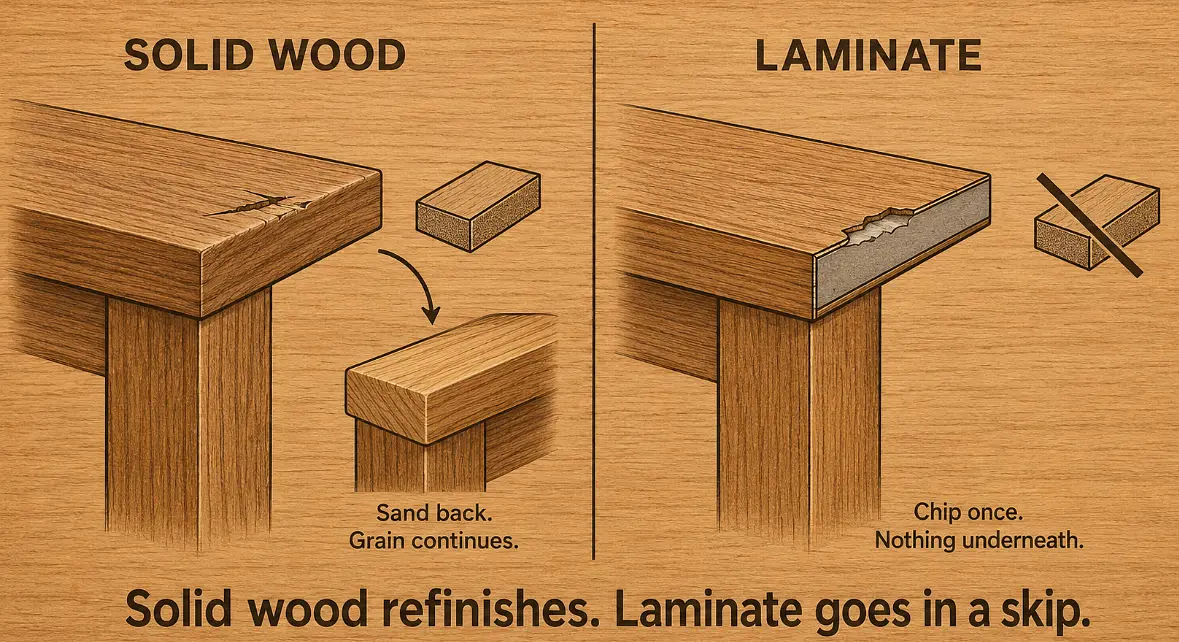
Solid wood can be sanded back and refinished decades later. A cracked joint can usually be repaired. Thin laminate mostly cannot, once it chips or the layers start lifting there is nothing underneath worth saving, so the whole piece goes in a skip. Which reframes the price gap in a way most people do not think about upfront. The custom piece costs more on day one because one person’s time cannot be spread across ten thousand identical units. But the cheap piece is often priced for its first life only, and that is the only life it gets.
Somebody Else’s Table Has A Story Attached To It
Nakashima mostly refused to sign his own work. His reasoning, and I like this a lot, was that the work was not about him. It was about the tree, about nature.
His daughter Mira still runs the Nakashima studio in New Hope today, and when Offerman was asked about the woodworkers he admires most, he called her the Meryl Streep of studio furniture, which is a strange and pretty perfect way to put it. A family business, one generation handing a body of work to the next, still going.
That is the last piece of it. A commissioned table arrives already carrying a story before you even own it, the specific tree, the room it was measured for, the weeks it took to become itself. It stops being background furniture almost immediately. People tend to repair the things that carry a story and throw out the things that never had one.
So here is where I land, plainly. Buy flat pack for everything you expect to replace anyway, the rental sofa, the desk your kid outgrows, the bookshelf that will not survive the next move. Save the commission for the one piece your room actually gets built around. Let that be the table still standing there when everything else in the house has been swapped out twice over.

 Decor & Improvement Accessories