

Home & Decor Blogs: DIY, Interior Design & Lifestyle Ideas
Pool Liner Replacement In Maryland: Costs, Signs, and How to Pay for It
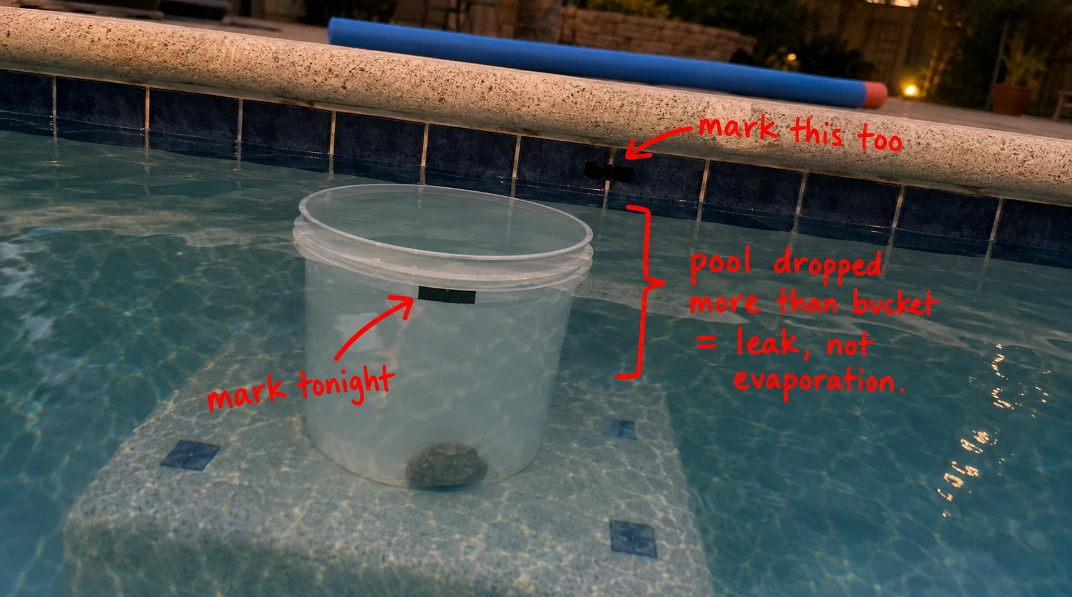
Put a bucket on the second step of the pool tonight, fill it until the water inside matches the pool’s waterline, and mark both levels with a strip of tape. Look again tomorrow evening. If the pool has dropped further than the bucket has, the water is not evaporating, it is leaving through something, and on a vinyl pool that something is nearly always the liner. The test costs nothing, and in Maryland it pays to do it early, because the swim season here runs from Memorial Day to about Labor Day and a liner that fails in June takes half of that with it.
Image here: the bucket test photo, bucket on the pool step with the tape marks.
Patch It Or Replace It
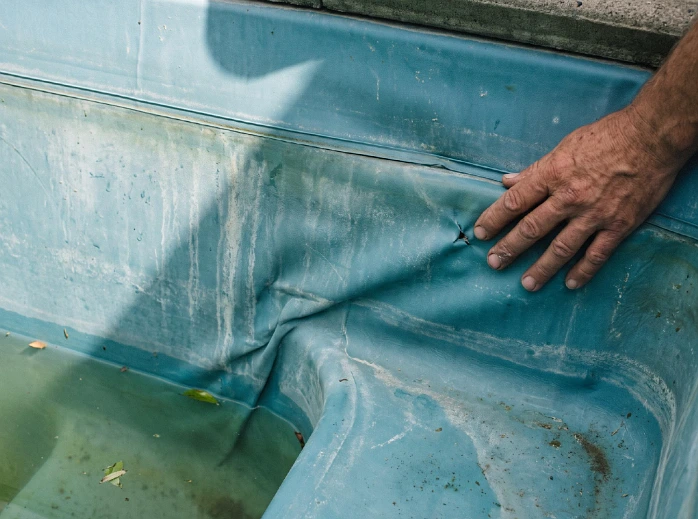
If the liner is under 5 to 7 years old and the tear is small and sits away from the seams, the corners and the fittings, you can patch it. A kit will cost you $20 to $50 and a pro repair somewhere between $150 and $500, and a patched liner that holds water is as good as any other liner. Once the liner has passed 8 years and the patches have started adding up, each repair buys months, and the money would be going toward a replacement either way.
What A Maryland Liner Looks Like At Spring Opening
Age is only the first number. The liner shows it in 4 ways:
- Vinyl that feels stiff or chalky under your hand instead of soft, which means sun and chlorine have pulled the plasticizers out of it, and a liner in that state tears under ordinary feet.
- New wrinkles near the walls or the steps that were not there last season.
- The top edge slipping out of the bead track, because once it lets go in one place it keeps letting go.
- Staining that chemicals no longer shift, especially together with any of the 3 above.
There is a fifth one in Maryland, and it comes round every April. Pools in the Old Line State have been closed and winterized since October by then, and those 6 months of freezing and thawing will have done more to old vinyl than a whole summer of kids jumping in. So the day you open the pool is the day you find out what the winter did to it. If the liner looked fine at closing and has come out with new wrinkles, a slipped track or a crack along the waterline, expect it to go sometime in July. Most vinyl liners will need replacing somewhere between 7 and 10 years, a well looked after one can get to 15, and bad water chemistry has finished them off in 5. If you are seeing 2 or more of those together on a liner in that age range, you should be pricing a new one.
What A New Liner Costs In 2026
Angi puts the national average for a liner replacement at about $2,600, and Baltimore County labor tends to land in the upper half of any national range. The bands that matter for a pool in this state:
| The job | Typical 2026 range |
|---|---|
| Above ground pool, all in | $500 to $2,500 |
| Standard rectangular inground | $3,000 to $5,500 |
| Custom inground with steps, ledges or an attached spa | $6,500 to $9,000 and up |
| Rule of thumb for a full job | About $5 per square foot of floor and wall |
Above ground is the end of the market a homeowner can do, and doing the labor yourself saves $250 to $800 if there is a second pair of hands and enough patience to fit it without wrinkles. Inground is a different trade. The liner is measured and manufactured for your walls, steps and deep end, which is why an inground quote takes 2 to 3 weeks to become a finished pool.
20 Mil Or 27 Mil In A Freeze State
Look at the thickness line on the quote before the color. Liner thickness is measured in mil, and the entry 20 mil liner lasts 7 to 10 years. Stepping up to 27 mil adds $100 to $700 to the job and buys 8 to 12 years, which is why installers quote it by default. In a state where the pool spends half the year frozen, the thicker liner is earning its extra cost every winter.
A thicker liner on a pool with unbalanced water is money wasted, since bad chemistry kills a 27 mil liner about as fast as a 20. Fix the water first, then buy the liner.
How To Pay For It
How you pay depends on how much equity you have in the house and how much of it you want tied to a pool. A home equity line usually carries the lowest rate, and the house is the collateral, so equity drawn for a liner is equity that is not there for a roof 2 years later. The Consumer Financial Protection Bureau’s HELOC page covers the variable rate and the draw period, and it is a 10 minute read before signing. A cash out refinance only pays for its closing costs if you were going to refinance anyway, and few people were. A personal loan is faster, leaves the equity alone, and costs more in interest.
Pool liner financing is a separate thing from all of those. It is usually unsecured, so no property stands behind it, the terms run as long as 20 years on larger projects, and a smaller liner job can be paid off early with no penalty.
Is a 0% card ever the right way? For a job under a couple of thousand dollars, yes, if the balance is cleared before the promotional rate ends. Past that point the card is the most expensive option on this page.
What Maryland Law Gives You Before You Sign Anything
Maryland has 3 rules on home improvement contracts that most states do not, and all 3 apply to pool work:
- Every home improvement contractor, pool installers included, needs a Maryland Home Improvement Commission license, and the MHIC number can be checked on the Commission’s site in about a minute before anyone measures the pool.
- State law caps the deposit at one third of the contract price. A contractor asking for half up front is asking for more than the law allows.
- Work done by a licensed contractor sits behind the MHIC Guaranty Fund, which can compensate a homeowner for actual losses when a licensed job goes wrong.
Before you apply for any of that, pull your free credit reports at AnnualCreditReport.com, because a hard inquiry will show up and you would rather know your score first, and most lenders will want it in the mid 600s or better before they give you their best rate. Then get 3 itemized quotes before you decide how much to borrow, because liner quotes can be $1,000 or more apart for the same pool in the same zip code, and borrowing against the first number you heard is how people end up paying interest on money they never needed. Pay in stages if you can: a deposit inside the legal cap, something when the old liner comes out, and the balance once the pool is filled and holding water.
Book It In September Or April
In Maryland there are really only 2 windows for this, and they are tighter than the fall or spring most guides will tell you. Vinyl needs to be warm before it will stretch and seat properly, which is why no crew here will fit one in January, and the pool has been closed since October anyway.
The first window comes right after Labor Day, when you are closing the pool anyway, so the work costs you no swim days and the contractors’ calendars have only just opened up. The second is April into early May, before opening.
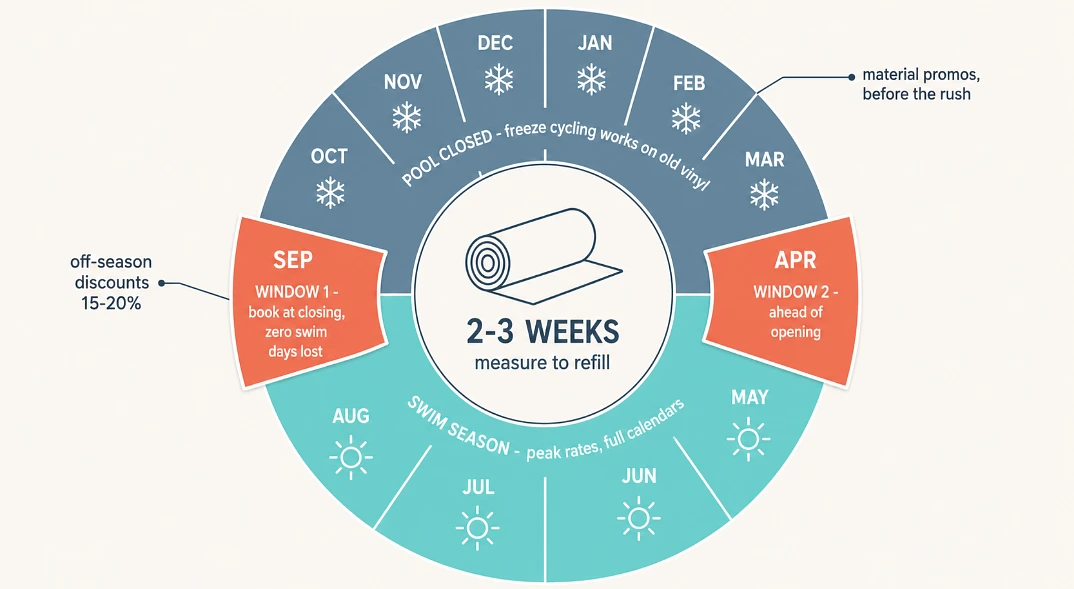
The fitting itself will take a day or 2 at least. The whole inground job, measuring, manufacturing, draining, fitting and refilling, will run 2 to 3 weeks from the first visit, and if you can book it in the off season it will save you real money, because contractors have been discounting 15 to 20 percent once the demand drops and some suppliers run material promotions in January and February before the spring rush.
If your liner was already showing 2 or more of those signs when you closed the pool, book it now, while the calendars are still open. Otherwise you are waiting for it to go in the middle of July, at peak rates, with the pool closed for 3 weeks of a swim season that around Reisterstown only runs about 15 weeks to begin with.

 Decor & Improvement Accessories