

Home & Decor Blogs: DIY, Interior Design & Lifestyle Ideas
Signs Your Current Air Conditioner Is Costing More Than It Should


Think about a runner training with a mask over their mouth. Same lungs, same legs, same effort going in, but half the oxygen actually getting through, so the body starts burning more just to hit the same pace it used to hit easily. That’s basically what happens inside an aging air conditioner, except the mask is dust, and nobody ever takes it off.
Most homeowners notice the bill going up before they notice why. The unit’s still running, the house still cools eventually, so it’s easy to assume everything’s fine and the electric company just raised rates again. Usually that’s not it. Usually something specific inside the system is quietly working twice as hard for the same result, and once you know what that actually looks like, it’s not hard to catch early.
The Dust Layer That’s Thinner Than A Coin And Still Costs You Real Money
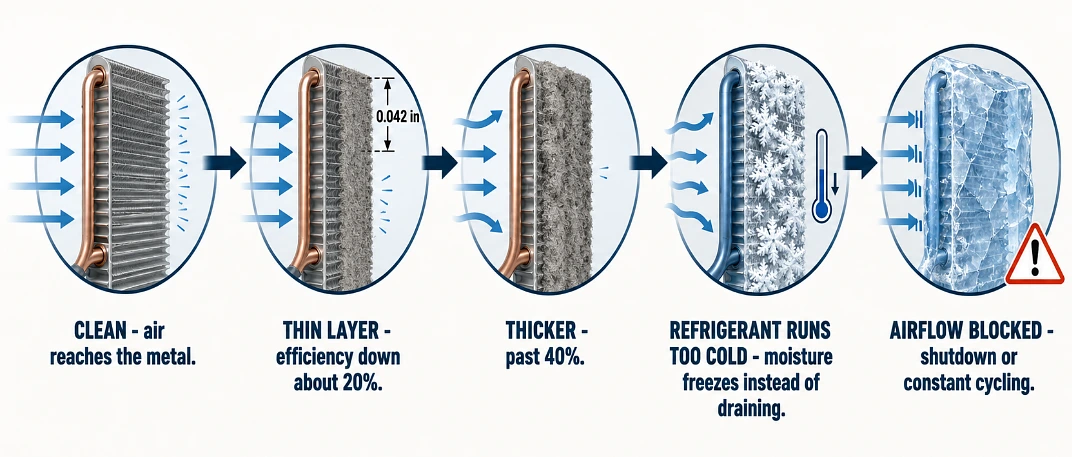
Inside every AC sits a coil that’s supposed to pull heat out of your indoor air, and it can only do that job if air actually reaches the metal.
Dirt builds up on that coil slowly, the same way it builds up on a car radiator, and even a genuinely thin layer, something like the thickness of a few sheets of paper, can drop the coil’s efficiency by around 20 percent. Push that layer thicker and the loss climbs past 40. So the coil stops absorbing heat properly, the refrigerant running through it gets colder than it should, and the moisture in the air freezes onto the coil surface instead of draining away. Ice then blocks the little airflow that was still getting through, and the system either shuts itself down trying to protect the compressor or cycles on and off constantly trying to catch up.
What to actually check:
Pull the filter out once a month during cooling season and hold it up to a light.
If you can’t see light through it clearly, it’s already costing you money sitting in the unit.
A clean filter is the single cheapest thing protecting that coil, and it’s a five minute job most people put off for a season or two without realising what it’s quietly doing to the bill.
Why One Room Never Gets As Cool As The Rest
This one’s less about the unit itself and more about the paths the air has to travel to actually reach every room.
Picture watering a garden through a hose with a few small holes punched along its length. Water still comes out the end, technically, but everything close to the leaks gets soaked while the far end of the garden barely gets a trickle. Leaky or undersized ductwork does the same thing to cool air, some rooms get plenty, others sit warm no matter what the thermostat says, because the air meant for them escaped somewhere along the way through gaps most homeowners never see, above a ceiling or inside a wall.
A rough test worth trying:
Close the door of the room that always runs warm.
Feel around the door frame and any nearby wall vents for warm air leaking in from elsewhere.
If a room’s noticeably worse than the others and that gap doesn’t explain it, the ductwork feeding it is the likely culprit, not the AC unit itself.
The Bill That Climbs Even Though Nothing Changed
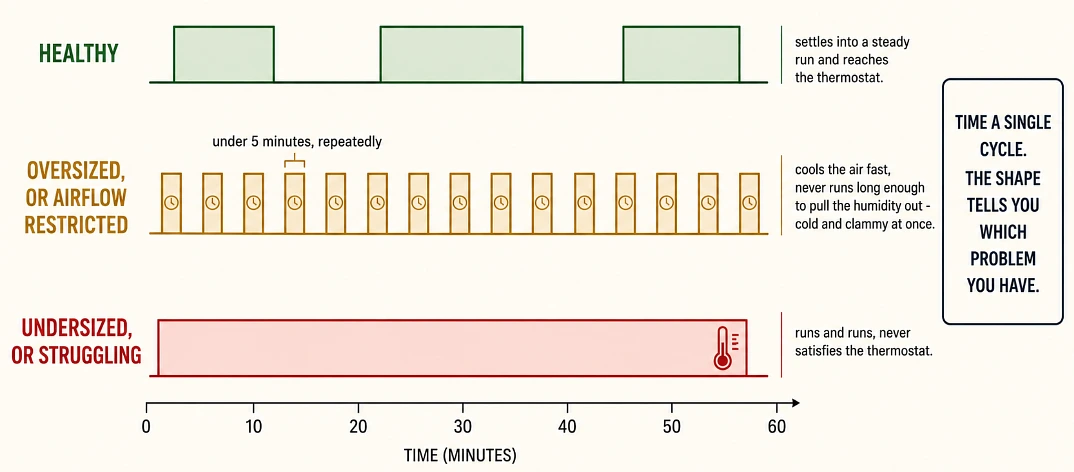
If the system is short cycling, turning on, running briefly, shutting off, over and over rather than settling into a normal steady run, that’s usually one of two things, and they’re worth telling apart because the fix is completely different for each.
An oversized unit cools the air fast without running long enough to also pull humidity out properly, so the house ends up cold and clammy at the same time, cycling constantly because it’s finishing the temperature job in a few minutes and shutting off before the moisture job’s even started. An undersized or struggling unit does the opposite, it never quite gets there, so it just keeps restarting, trying and failing to reach the number on the thermostat.
One way to tell which:
Time how long a single cooling cycle actually runs before shutting off.
Under five minutes, repeatedly, points toward oversizing or a airflow restriction upstream of the coil.
A cycle that runs long and still never satisfies the thermostat points toward the unit struggling, which is closer to the refrigerant issue below.
The One That Sneaks Up Over Years, Not Seasons
This last one is the odd case out, because unlike a dirty coil or a bad duct, it isn’t something you fix once and forget. It develops.
Refrigerant runs through sealed copper lines and coils, and it isn’t supposed to ever need topping up in a properly installed system, not the way a car needs oil changes. But certain household chemicals, cleaning products, some adhesives, even new carpet off-gassing, produce compounds that slowly corrode copper from the inside, eating microscopic pinholes into the metal over years rather than months. The EPA’s own figures put typical leak rates for a residential system at somewhere around 1 to 4 percent of the total charge per year, which explains why a system can run fine for two or three full summers with the leak already underway before anyone notices anything’s actually wrong.
I find this one genuinely sneaky compared to the others, because there’s no dramatic failure moment, just a slow drift, the house feels a little warmer than it should on the hottest days, the electric bill creeps rather than jumps, and it’s easy to explain both away as just a hot summer.
The one sign worth actually paying attention to:
A faint sweet smell near the indoor unit, similar to nail polish remover.
That specific smell is refrigerant escaping, and it’s the clearest early signal most homeowners will ever get before the bill and the comfort both start slipping properly.
This one genuinely isn’t a DIY fix, refrigerant work needs certification and the right equipment by law, but catching the smell early is the difference between a small repair and a compressor that’s been running low on charge for two summers straight.
What Any Of This Is Actually Worth Fixing Versus Replacing
None of these four issues necessarily mean the whole unit’s finished. A dirty coil and a leaky duct are usually cheap, fast fixes that restore most of the lost efficiency on their own. A genuine refrigerant leak or a unit that was wrong sized from the day it was installed is a different conversation, because you’re not fixing a symptom at that point, you’re deciding whether it’s worth pouring more money into equipment that was never quite right for the house. That’s usually the moment a proper energy-efficient AC installation service actually earns its cost, sizing the replacement correctly the first time instead of repeating whatever mistake put the old unit in the wrong range to begin with.
That’s really the judgment call worth having a professional make once two or more of these show up together, not the filter check itself, which anyone can and should be doing monthly without waiting for a problem to show up first.
 Decor & Improvement Accessories