

Home & Decor Blogs: DIY, Interior Design & Lifestyle Ideas
Sliding VS Casement uPVC Windows: Which Is Better for Urban Homes?

If you are short on time and just want the quick answer, sliding windows tend to suit most urban homes better because space is usually the constraint that decides everything else. But if your layout gives you room for a window to swing open without hitting an AC unit or blocking a corridor, casement windows do a better job at airflow and security, and the difference is not small.
That said, “which is better” depends entirely on the flat or house you are working with, and most people asking this question are comparing quotes for a renovation or a new build and trying to figure out which option they will not regret in three years. So rather than listing specifications side by side like a product brochure, here is what actually matters when you are choosing between the two for an urban property.
How They Actually Work
uPVC Casement windows are hinged on one side and swing open either inward or outward, depending on how they are fitted. When you open one fully it creates a wide opening that lets a lot of air move through, which is the main reason people choose them.
Sliding windows move horizontally along a track using stainless steel or nylon rollers. They do not swing out into any space, they just glide sideways within their frame. That flat movement is the reason they work so well in tight spots.
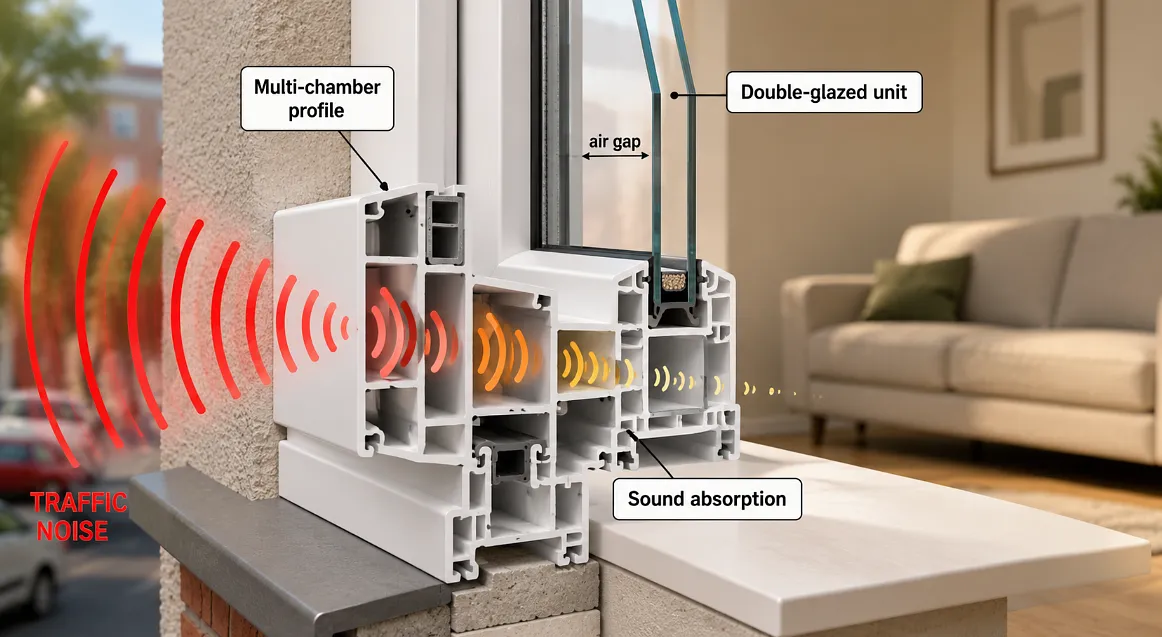
Both types use multi-chambered uPVC frames that trap air between the chambers and slow down heat transfer. The practical result of that is your rooms stay cooler in summer and warmer in winter without the AC running constantly. Lower electricity bills are probably the most underrated reason to switch to uPVC from aluminium or timber, because people focus on the look and forget about the running cost.
Noise Is the Urban Problem Nobody Plans For
You think about security, you think about ventilation, you think about how the windows look from outside. Noise is usually an afterthought until you are lying awake at 2am listening to a motorbike that sounds like it is inside your bedroom.
Both sliding and casement uPVC windows handle noise significantly better than aluminium or old timber frames because of those internal chambers in the profiles. The chambers break up sound waves before they make it through to the inside.
If noise is your main concern, go double-glazed multi-chamber regardless of which type you choose. The difference between single and double glazing on a busy road is dramatic. It will not make your bedroom silent but it will take the edge off traffic and construction noise enough that you notice the change immediately.
Between the two types specifically, casement windows seal slightly tighter because the sash presses into the frame when closed, compared to a sliding window where the panels sit alongside each other with a small gap at the meeting point. In practice that gap is minimal with decent profiles, but if you are on a main road and every decibel matters, casement has a small advantage here.
Airflow and Why Casement Wins on Paper but Not Always in Practice
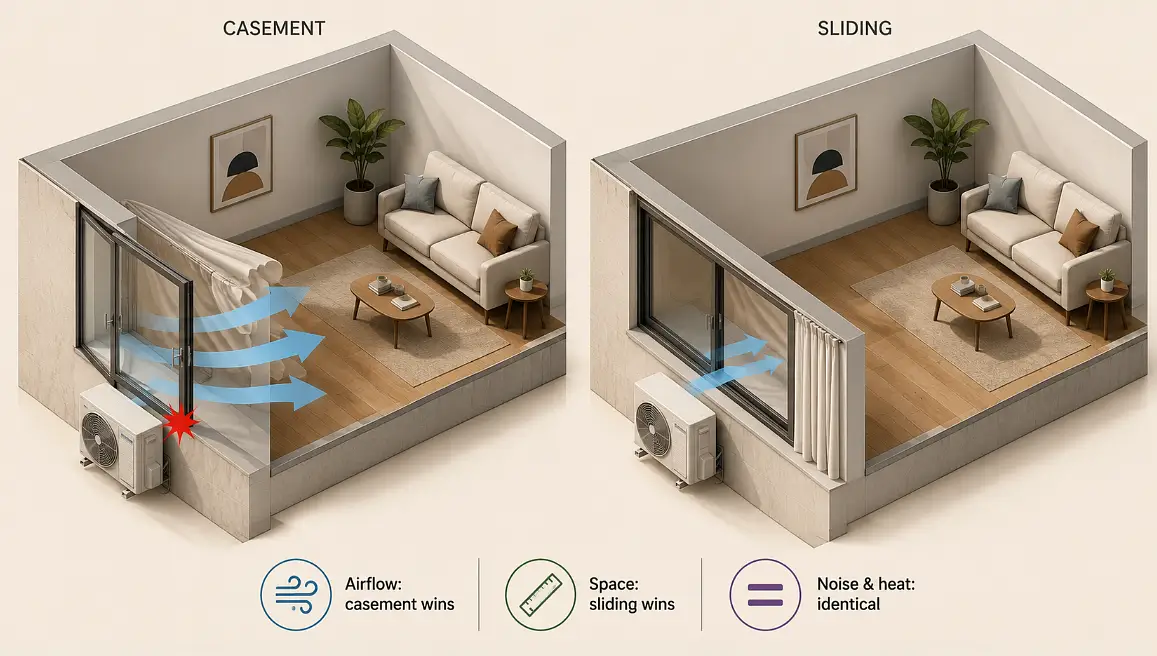
On paper casement windows are the clear winner for ventilation because the sash opens fully and you get the entire window area as an opening. A sliding window can only ever open halfway because one panel always sits behind the other.
That is the spec sheet answer. The real-world answer is a bit different.
In most urban flats the windows face corridors, balconies, or exterior walls with AC outdoor units mounted nearby. A casement window that swings outward into a corridor is a hazard. One that swings inward eats into your interior space and gets in the way of curtains and furniture. The window might technically offer better airflow but if you end up leaving it half-closed most of the time because fully opening it causes problems, the specification advantage disappears.
Sliding windows do not have this issue. They open within their own frame and nothing protrudes in any direction. For a compact urban flat where every square foot matters, that flat movement is genuinely more practical than a wider opening you cannot fully use.
If you have a standalone house with a garden and nothing blocking the window externally then yes, casement is the better choice for airflow and it is not close. But for a flat in a congested area, sliding windows give you consistent usable ventilation without any of the spatial compromises.
Space Consumption
This is usually what decides it for most urban properties and there is not much debate about it.
Casement windows need clearance space on whichever side they open. Inward-opening casement windows interfere with curtain placement and can block furniture near the window. Outward-opening ones can hit AC compressor units, balcony railings, or shared corridor space.
Sliding windows need zero clearance in any direction. They work in narrow rooms, tight balconies, high-rise apartments, and any situation where something is close to the window externally.
For upper-floor apartments especially, sliding is almost always the practical choice. Casement windows on higher floors can also catch wind in a way that puts stress on the hinges over time, which is something installers do not always mention during the sale.
Security Differences
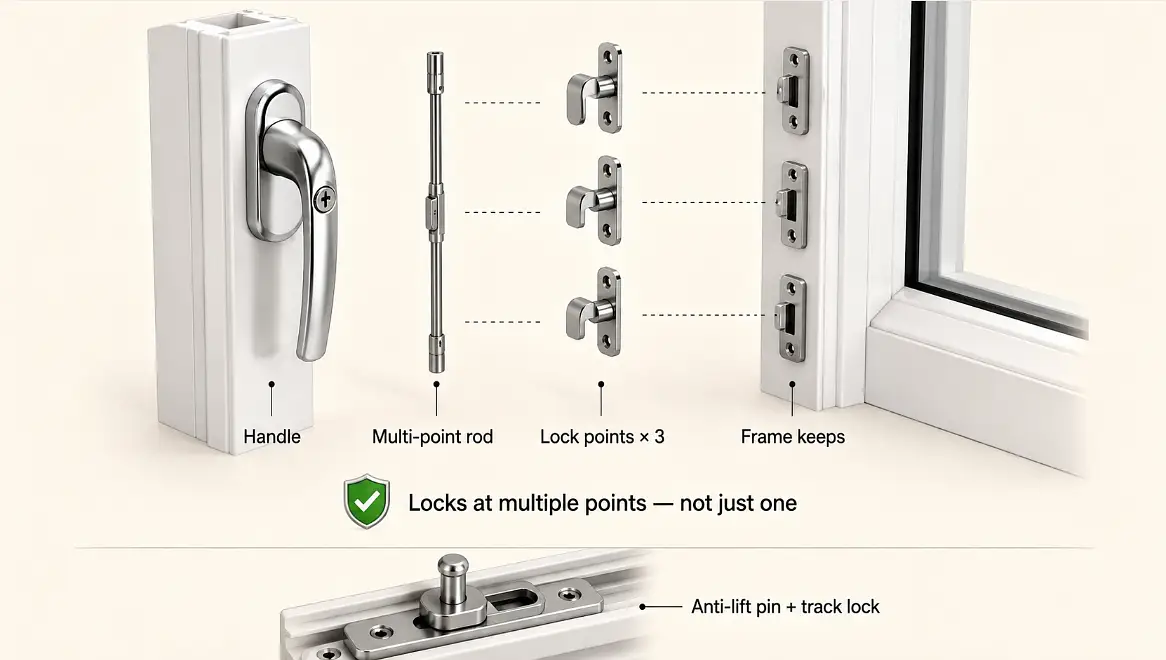
Casement windows have a slight edge on security because when closed the sash sits flush against the frame with no gap, and the multi-point locking mechanisms on decent casement profiles are genuinely robust. The lever compresses the sash into the frame at multiple points along the edge, making it very difficult to force from outside.
Sliding windows use a different approach with anti-lift pins that stop the panel from being lifted off the track and security locks at the meeting point. On good quality profiles the security is perfectly adequate, though the meeting point where the two panels overlap is technically a weaker spot than a sealed casement frame.
Similar security-focused design is also standard among uPVC sliding doors manufacturers, who build anti-lift and multi-point locking into the same track-based system.
For ground-floor properties where security is a bigger concern, casement windows with multi-point locks are the stronger option. For upper floors where forced entry through a window is less likely, the difference between the two is negligible in practice.
Maintenance
Both types need very little compared to timber or aluminium. Neither rusts, neither warps, neither needs repainting.
Sliding windows need the track cleaned periodically because dust and debris build up in the channel and can make the rollers sluggish over time. In dusty urban areas near construction or main roads this might be every few months. It takes five minutes with a cloth and some soapy water.
Casement windows need the hinges lubricated occasionally and the rubber seals checked to make sure they are not cracking or perishing. Seals that have gone hard will let noise and drafts through even though the frame itself is fine.
With either type, make sure the profiles carry BIS certification and have been tested to global standards. Cheap unbranded uPVC profiles will save you money upfront and cost you more in replacements within five to seven years. Quality profiles from established manufacturers will last decades without issues.
Which One Then
It comes down to your property.
Compact flat, upper floor, things close to the windows externally, narrow rooms – sliding. You will get consistent ventilation, clean lines, no spatial compromises, and low maintenance.
Standalone house, ground floor with garden access, nothing blocking the window swing, security is a priority – casement. Better airflow, tighter seal, stronger locking, and a look that suits houses with more external space.
For a lot of urban homes the honest answer is sliding for most windows and casement for one or two specific spots where the layout allows it. There is no rule that says every window in the house has to be the same type, and mixing the two based on what each room actually needs is usually the smartest approach.
Talk to an installer who carries both and ask them to walk through the property with you window by window rather than committing to one type for the whole house from a brochure. The right answer changes room by room, and anyone telling you otherwise is probably trying to simplify their own job rather than solve your actual problem.
 Decor & Improvement Accessories