

Home & Decor Blogs: DIY, Interior Design & Lifestyle Ideas
That One Room That’s Always Five Degrees Hotter? It’s Probably the Windows, Not the AC
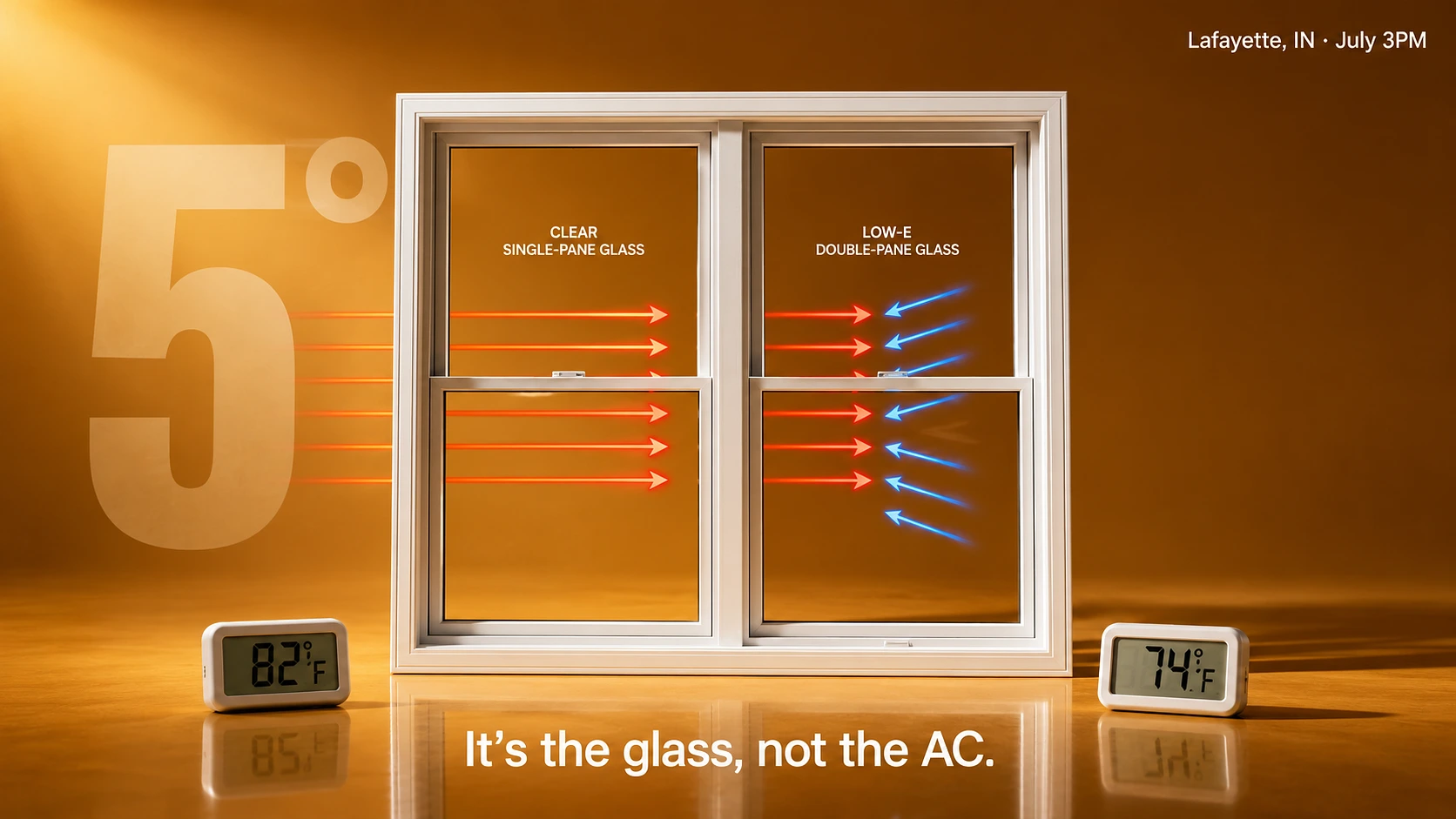
You know the room. Every house in Lafayette has one. The west facing bedroom that turns into a sauna by 3pm in July, or the living room with the big picture window where the AC runs nonstop and the space never actually feels cool. You have probably already checked the vents, maybe even had someone look at the ductwork. The system is fine. The glass is the problem.
Windows account for 25% to 30% of a home’s total heating and cooling costs according to the U.S. Department of Energy. In a house with single pane glass, which is still common in Lafayette homes built before the mid 1990s, that number skews even higher because single pane has an R value of roughly 0.85, which is basically nothing. A double pane window with Low E coating and argon gas fill jumps to an R value of 2.0 to 3.0. That is not an incremental improvement, that is the glass going from providing almost zero insulation to actually doing its job.
Do I Actually Need New Windows or Am I Just Overpaying for AC?
There’s a quick way to check. Put your hand flat against the inside of the glass on a hot afternoon. If it’s warm to the touch, solar heat is passing straight through. Now check the edges where the glass meets the frame. Feel air? That’s the seal. Old windows leak from both places simultaneously and your AC is fighting a battle it cannot win because it is cooling air that immediately gets reheated by the glass and replaced by outside air sneaking through the seals.
The foggy window test is even simpler. If you see condensation or haze between the panes of an existing double pane window, the seal has failed. The argon gas that was providing your insulation has leaked out and been replaced by regular air carrying moisture. The window still works as a double pane air filled unit, which is better than single pane, but you have lost roughly 30% of the insulating benefit you originally paid for. That fog is your money evaporating, slowly, every month.
What Numbers on the Label Actually Matter When You’re Shopping
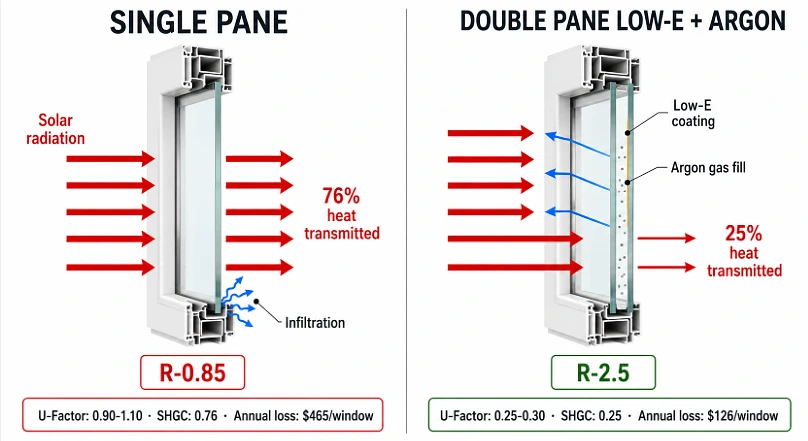
Two. Everything else is noise.
U factor: how fast heat moves through the window. Lower is better. Here is the range so you can compare what you have now against what’s available:
- Single pane, no coating: 0.90 to 1.10
- Double pane, no coating, air filled: 0.40 to 0.50
- Double pane, Low E coating, argon filled: 0.25 to 0.30
- Triple pane, two Low E coatings, krypton filled: 0.15 to 0.20
Lafayette falls in ENERGY STAR’s North Central zone. Under Version 7.0, which took effect in October 2023, the certification threshold here is a U factor of 0.25 or lower. Anything above 0.30 does not qualify for the ENERGY STAR label in your climate zone, will not be eligible for federal tax credits, and will underperform relative to what Lafayette’s 65°F annual temperature swing actually demands from the glass.
SHGC (Solar Heat Gain Coefficient): how much of the sun’s heat passes through. Scale of 0 to 1, lower means less heat gets in. The DOE says about 76% of sunlight hitting standard clear double pane glass enters as heat. Low E coatings cut that significantly.
Here is the part nobody in a showroom explains: SHGC should be different for different walls of your house.
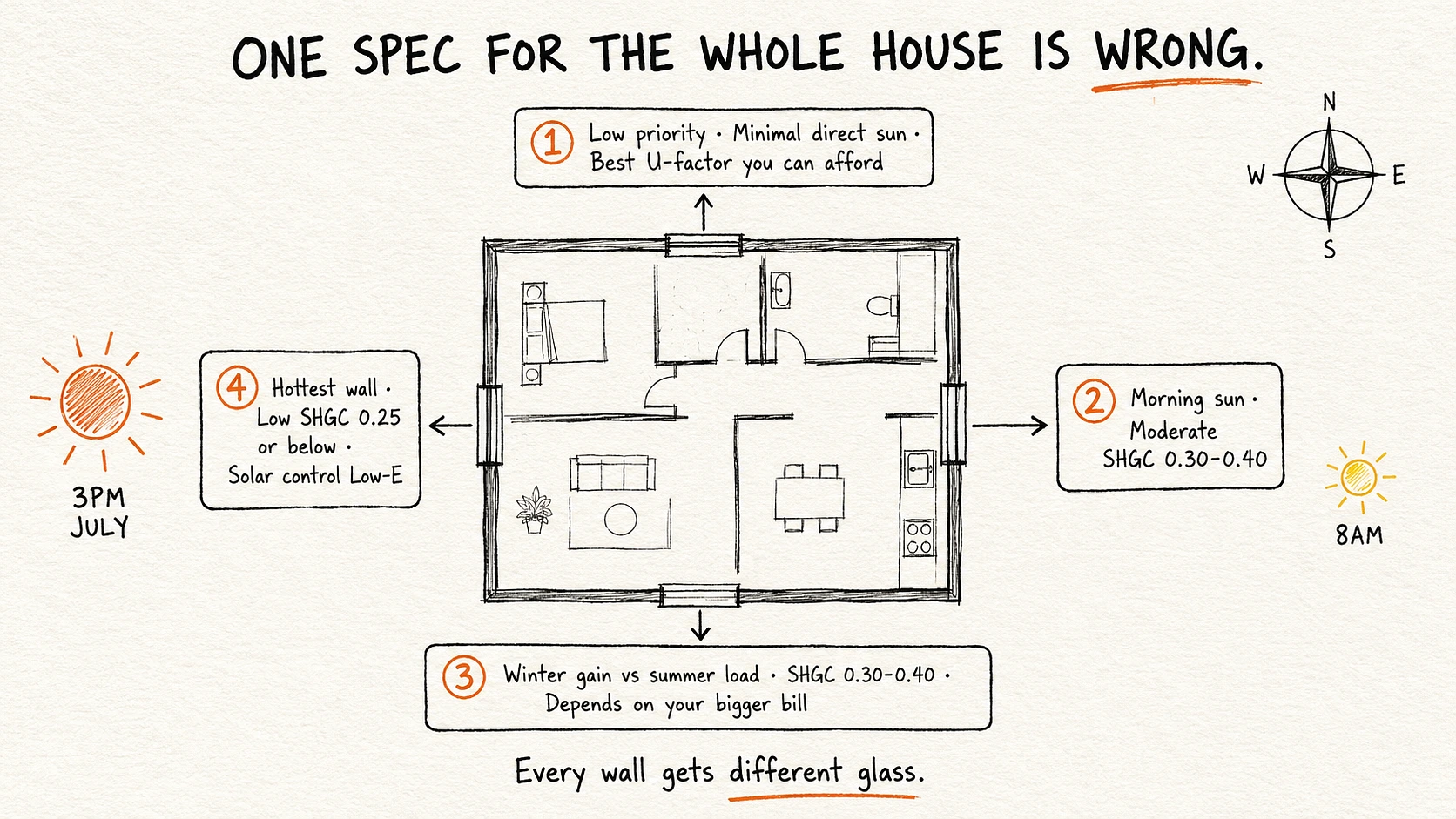
- West facing windows need low SHGC, around 0.25 or lower, because they take full afternoon sun during the hottest hours of Lafayette summers.
- South facing windows benefit from moderate SHGC, around 0.30 to 0.40, because in winter that solar heat offsets your furnace load and reduces your gas bill.
- North facing windows barely matter for SHGC since they get minimal direct sun. Just get the lowest U factor you can afford.
- East facing windows catch morning sun which is less intense, so moderate SHGC works fine.
One spec for the whole house is wrong. Every wall has different sun exposure and needs different glass. A dealer who hands you one brochure and says “these are great” without asking which direction your problem rooms face is selling you product, not solving your issue.
Two Types of Low E Coatings and Picking the Wrong One Makes the Problem Worse
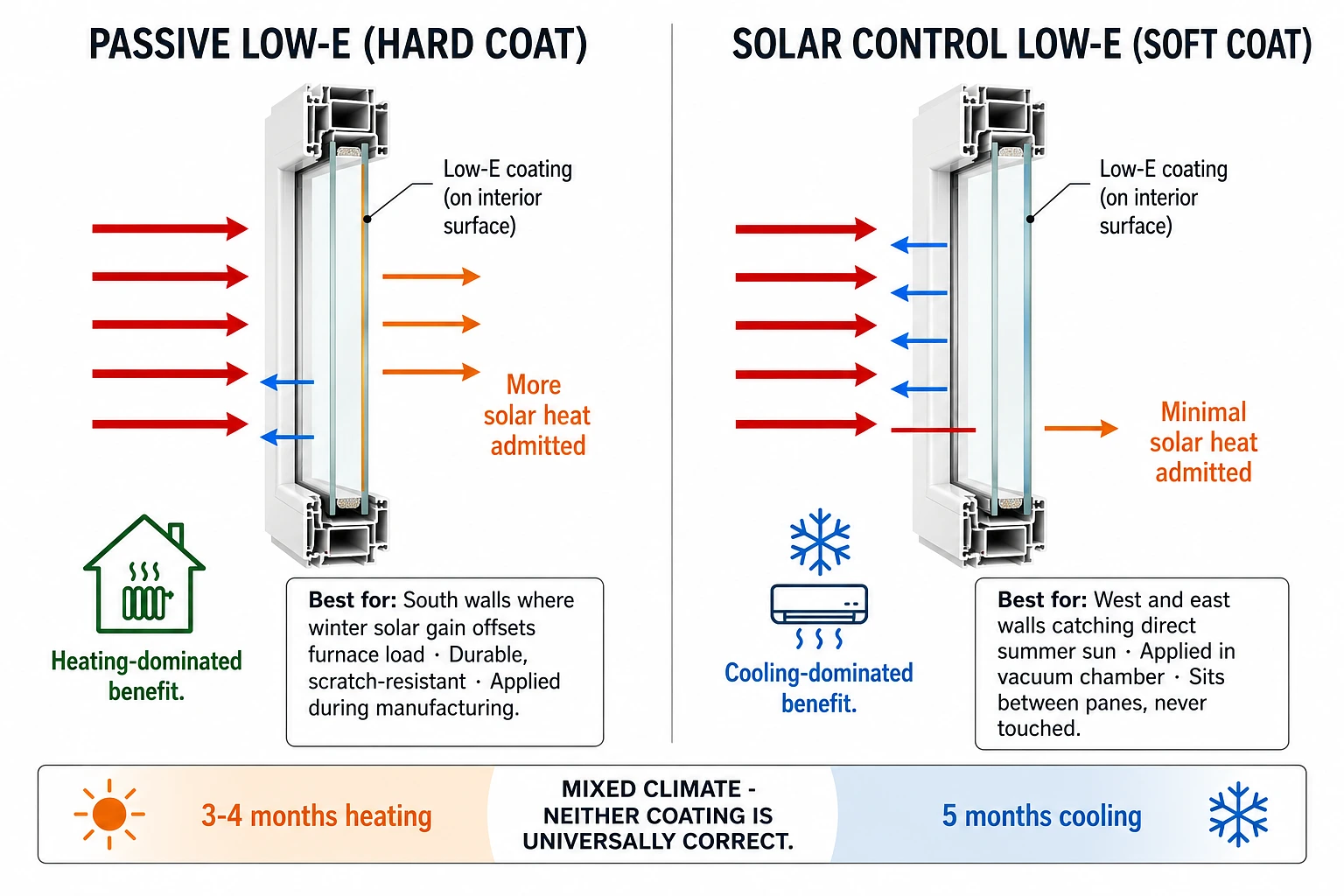
This is where it gets specific and where most generic guides get it completely wrong.
- Passive Low E (hard coat) lets more solar heat in. Built for heating dominated climates where you want the sun to warm your house. Durable, scratch resistant, applied during manufacturing.
- Solar control Low E (soft coat) blocks more solar heat. Built for cooling dominated or mixed climates. Applied in a vacuum chamber, sits on an interior surface between the panes where nothing touches it.
Lafayette’s climate is mixed, roughly five months of meaningful cooling and three to four months of meaningful heating, so neither coating type is universally correct. Put solar control on every window and you block winter sun that was helping your furnace. Put passive on every window and your west facing rooms still cook in August.
The answer for most Lafayette homes: solar control Low E on west and east walls, passive Low E on south walls if your heating bill is bigger than your cooling bill, solar control on south walls if it’s the other way around. North walls, either works, the sun barely hits them directly.
Is Triple Pane Worth the Extra Cost?
For most Lafayette homes, no. Double pane with Low E and argon hits the efficiency sweet spot.
Triple pane costs roughly 15% to 25% more per window. The U factor drops to 0.15 to 0.20, and noise reduction is noticeably better, but the energy savings over double pane Low E are incremental rather than dramatic.
When triple pane does make sense:
- Large picture windows on the west wall that take full afternoon sun for five months.
- Rooms above unheated garages where heat loss compounds through both the floor and the glass.
- You plan to stay 15+ years and want to maximize cumulative savings.
- Street noise is an issue and you want the sound dampening.
The payback on triple pane versus double pane typically stretches past 10 to 12 years in this climate. Not a bad investment if you’re staying long term, but anyone claiming it “pays for itself quickly” is exaggerating the math.
What It Actually Costs and the Honest Payback Timeline
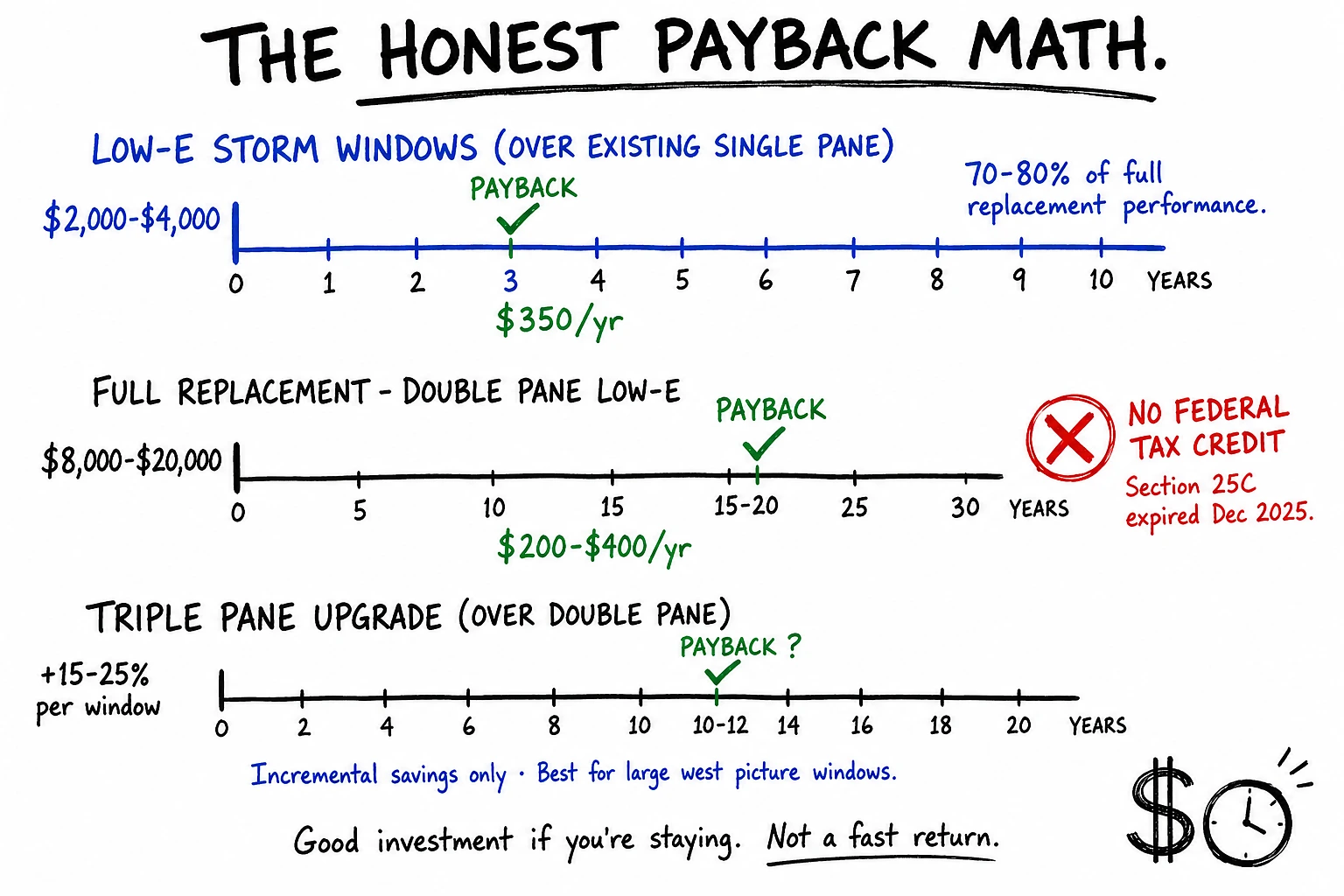
Full window replacement for a typical Lafayette home, roughly 15 to 20 windows, ranges from $8,000 to $20,000 installed depending on frame material and glass configuration. Vinyl frames are cheapest, wood and fiberglass are premium.
What you get back:
- Energy savings of $200 to $400 per year for a home upgrading from single pane to double pane Low E (based on DOE data showing $126 to $465 per window annually).
- Reduced HVAC wear because the system cycles less, which extends equipment life.
- Resale value bump, though this varies and is hard to pin to an exact number.
One thing worth knowing: the federal Section 25C Energy Efficient Home Improvement Credit, which used to cover 30% of window costs up to $600 per year, expired on December 31, 2025. The One Big Beautiful Bill Act killed it. As of right now there is no federal tax credit for window replacement. Some Indiana utility companies still run rebate programs for ENERGY STAR certified installs, so check with your provider, but the federal money is gone.
Honest payback math without the tax credit: on energy savings alone, a mid range replacement project in Lafayette pays back in roughly 15 to 20 years. Factor in reduced HVAC maintenance and the resale bump and it shortens somewhat, but this is a long term investment. It’s a good one if you are staying, but nobody should tell you it is a fast return.
The $50 Fix Worth Doing Before You Spend $15,000
If full replacement is not in the budget right now, low E storm windows installed over existing single pane glass can save approximately $350 per year according to ENERGY STAR estimates, with a payback period of about three years. The DOE notes these retrofits deliver similar savings to full replacement at roughly one third the cost. That is a $2,000 to $4,000 project doing 70% to 80% of the work a $15,000 project does.
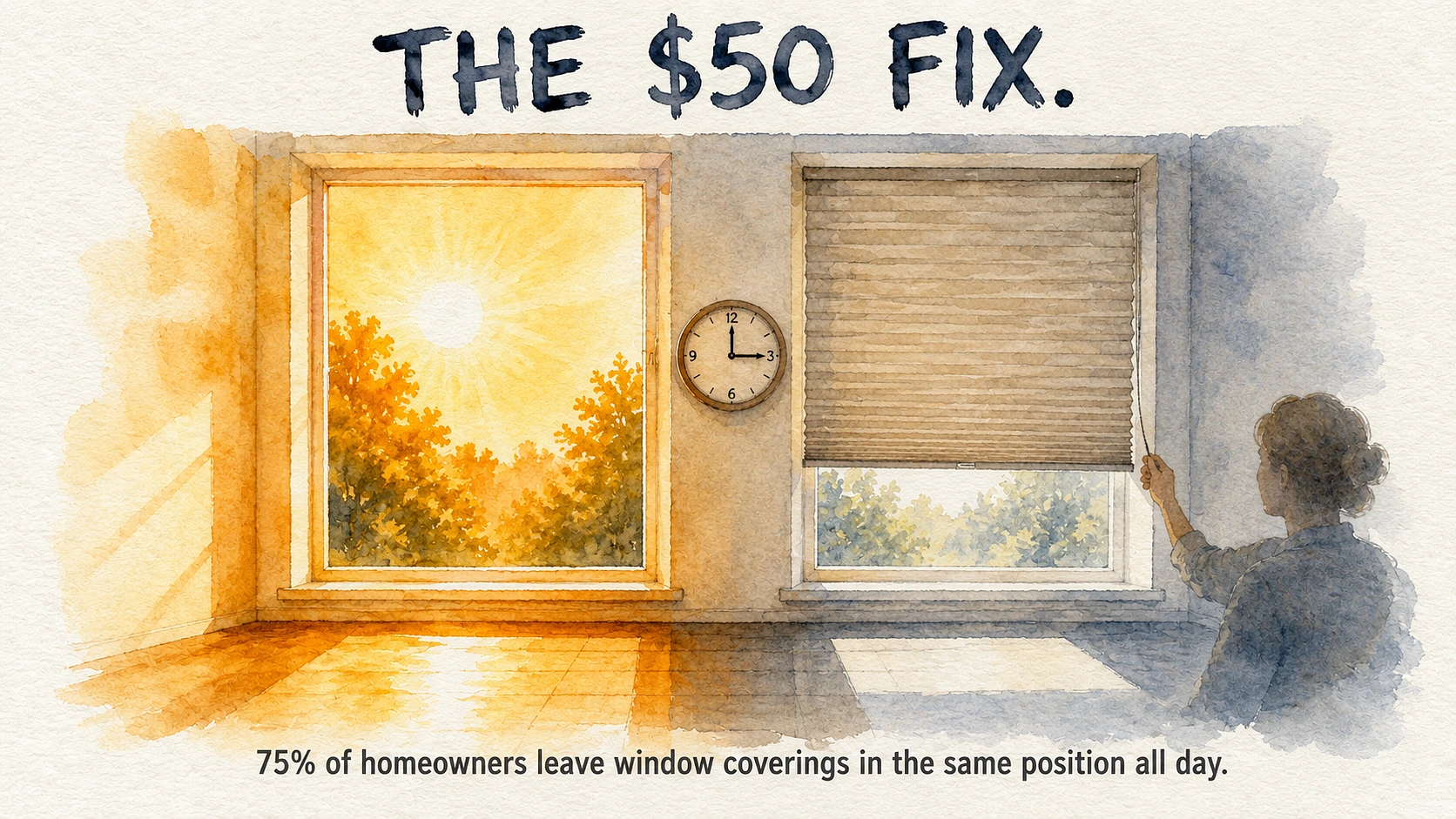
And here is something even cheaper: the DOE found that roughly 75% of homeowners leave their window coverings in the same position all day, every day. Just closing blinds or cellular shades on west facing windows during afternoon hours in summer blocks a meaningful chunk of solar heat gain. Costs nothing. Takes ten seconds. Most people simply do not do it.

 Decor & Improvement Accessories