

Home & Decor Blogs: DIY, Interior Design & Lifestyle Ideas
The Real Reason Your Backyard Concrete Keeps Cracking

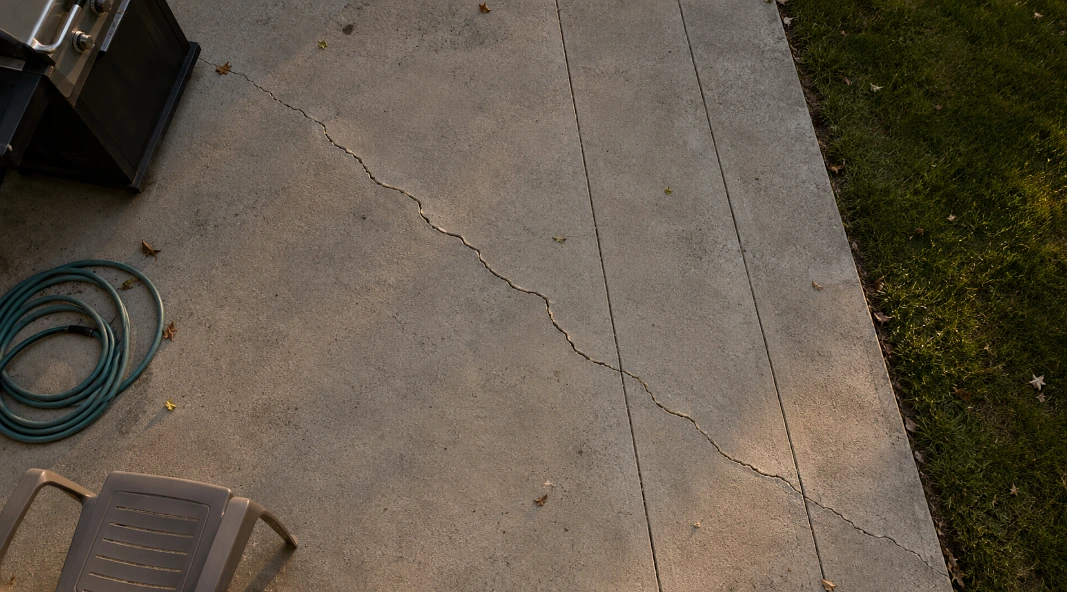
Quick answer: your concrete cracked because all concrete cracks. It shrinks as it dries, the shrinking tears it, and the Portland Cement Association calls that cracking inevitable and expected. The only thing anyone ever controlled was where the crack goes, and that job belongs to the control joints, not the mix.
There’s an old line in the trade. Concrete comes with two guarantees, it gets hard and it cracks. Sounds like a contractor covering himself. It isn’t. The PCA, about as close to the final word on concrete as it gets, says restraint to shrinkage is the single most common cause of cracking, and that in a normal poured slab it’s simply going to happen.
So the question hiding under “why does my patio keep cracking” has the wrong premise built in. It was always going to crack. Someone just never aimed it.
Why Concrete Tears Itself Apart
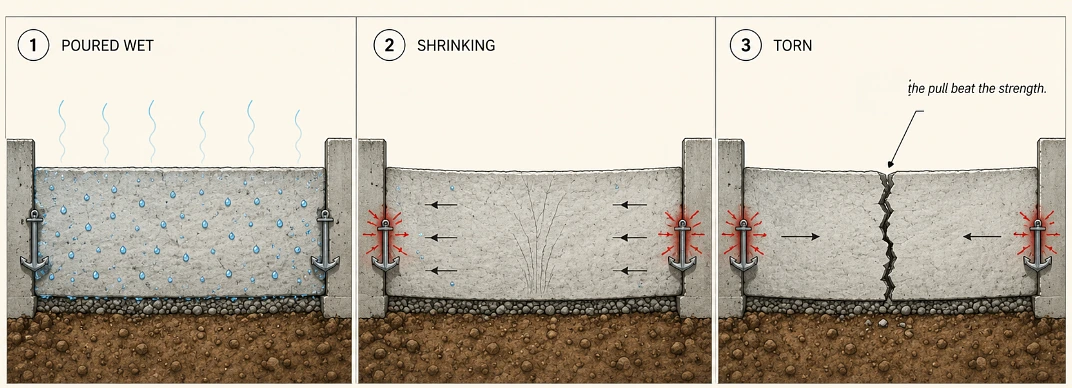
Mixed concrete carries more water than the chemistry needs. Has to, or you couldn’t pour the stuff. Then that extra water spends weeks evaporating out, and as it leaves, the slab shrinks. Around half an inch across a hundred feet. Doesn’t sound like much until you remember the slab can’t move.
It’s gripping the ground under it by friction. It’s often tied into a foundation or wall at the edge. So it wants to pull inward and something’s holding it still, and concrete has serious compressive strength, it’s strong when you squash it, but weak when you stretch it.
What happens when the pull beats the strength? It tears. That tear is your crack.
And the wetter the mix went in, the more it shrinks coming out. A crew that waters down the load to make finishing easier is quietly buying you extra cracks. You can’t pour a slab that doesn’t shrink, but you can absolutely pour one that shrinks worse than it needed to.
The Part Nobody Told You About Control Joints
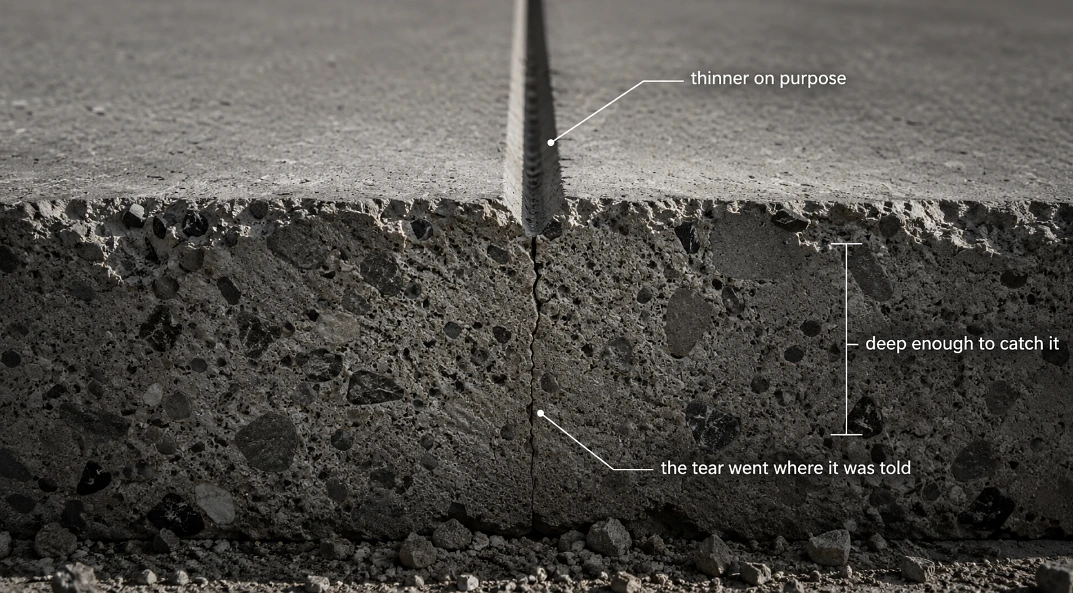
Those grooves cut into every sidewalk. Most people think they’re decoration, or some kind of crack prevention.
They don’t prevent anything. They’re targets.
A control joint is a deliberate line of weakness, a spot where the slab is thinner on purpose, so when the concrete inevitably tears, it tears there. Down in the neat straight groove where you’ll never notice it. Not wandering across the middle of your patio.
That’s the whole trick, and it’s also where most ugly backyard concrete actually went wrong. Not the mix. Not the weather. The joints:
- Spaced wrong. A typical slab wants them roughly every 20 to 30 feet. Stretch that and the slab picks its own path between them.
- Cut too late. The shrinking starts the moment the pour begins to set, so joints need cutting no later than the next day. Miss the window and the crack already chose its route.
- Cut too shallow. A groove that doesn’t go deep enough is a groove the crack ignores.
- Or just never cut at all. In which case the slab makes every decision itself, and it picks the ugliest line available every single time.
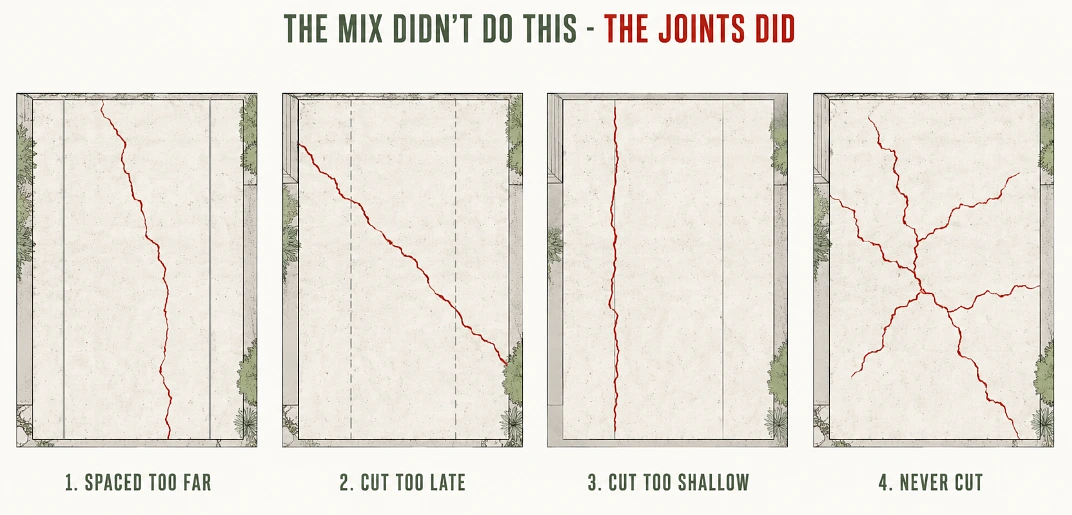
Standing there annoyed at a crack snaking across your patio, the honest story usually isn’t bad concrete. The crack was coming regardless. Nobody gave it anywhere good to go.
The One Crack That Should Actually Worry You
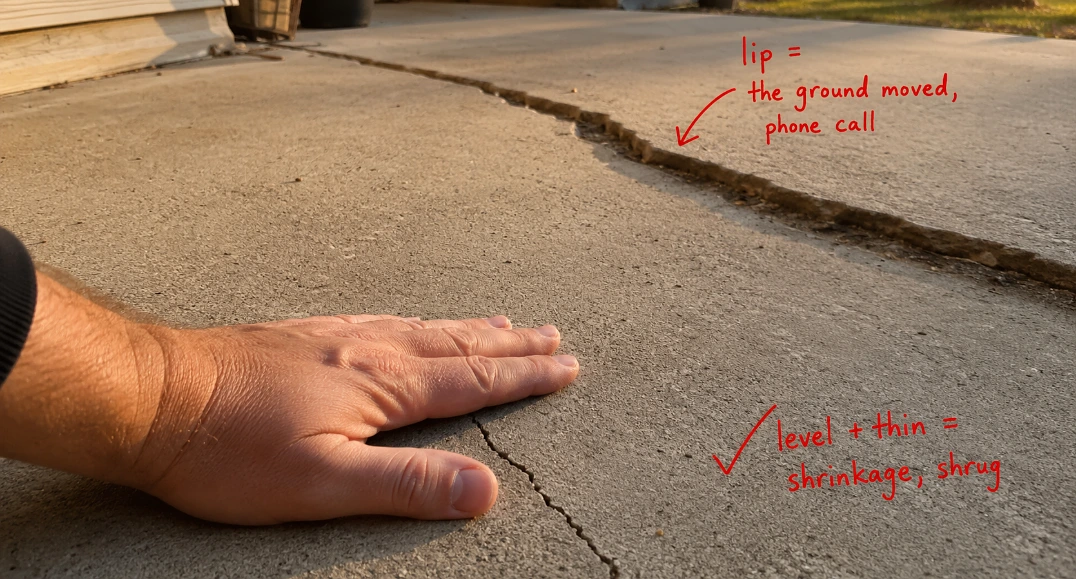
Everything above covers the normal kind, the thin wandering hairline that stays put. There’s a second kind, and telling them apart is worth thirty seconds, because one’s a shrug and the other’s a phone call.
Run your hand across the crack. Are both sides level?
Level and thin means shrinkage. Harmless. Under an eighth of an inch, meandering, not growing. That crack was born the month the slab was poured and it’s done moving.
A lip means the ground moved. One side higher than the other is vertical displacement, and that’s not the concrete failing, that’s the soil under it, fill that wasn’t compacted, a void washing out, water undermining the support. Those cracks run wider, they keep growing season over season, and over badly compacted fill they can end with a section of slab losing its support entirely. A crack with a lip, or one that’s visibly wider every year, gets a professional look. Everything else is concrete doing what concrete does.
What Actually Works
Not crack-proof concrete. That product doesn’t exist, and whoever’s selling it to you is selling a story. What works is stacking the deck on the three things that decide how it cracks:
- Keep the water down. A stiffer mix shrinks less and tears less. Don’t let anyone thin it out to speed up their finishing.
- Cut the joints right. First day, sensible spacing, deep enough to actually catch the tear.
- Compact the ground first. Proper subgrade compaction before the pour is the difference between cosmetic cracks and the lipped kind that drops a corner of your patio in year two. On anything bigger than a garden path, basic soil testing before the pour tells you whether that ground can actually hold a slab, which beats finding out after.
Do all three and it still cracks. That’s the honest part. But it cracks in the straight lines you chose, hidden in the joints, instead of tearing its own ugly path across the middle. Not a slab that never cracks. A slab that cracks exactly where you told it to. That’s the entire win, and it’s the only one on offer.
 Decor & Improvement Accessories