

Home & Decor Blogs: DIY, Interior Design & Lifestyle Ideas
The Cleaning Mistakes That Ruin Expensive Furniture — And Where You Need Pro Service

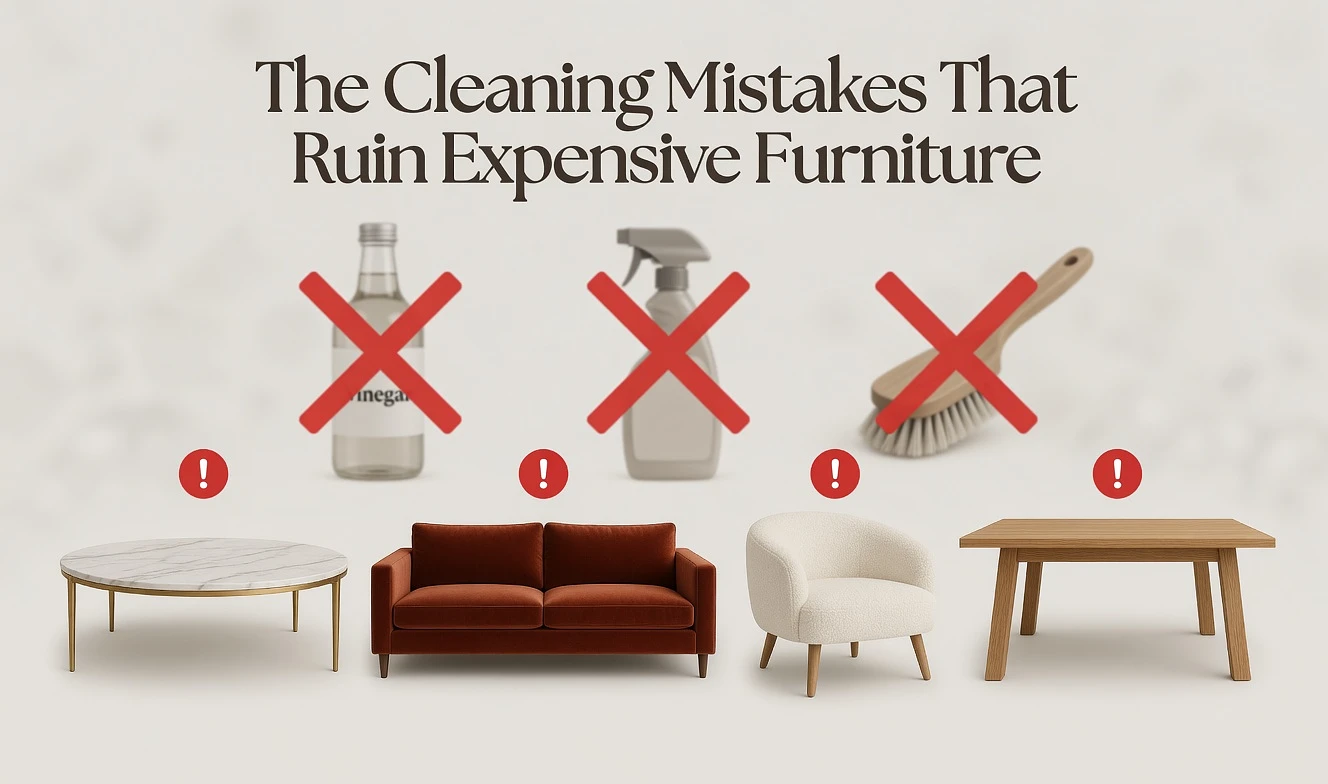
Nobody buys an expensive piece of furniture thinking they’ll ruin it while cleaning it. Yet it happens constantly. A Carrara marble coffee table dulled by vinegar. A boucle accent chair matted from the wrong brush. An oak dining table stripped by a floor cleaner that was just sitting under the sink.
The damage usually isn’t dramatic. It’s slow, cumulative, and by the time it’s visible, most of it can’t be reversed at home.
This guide covers the four surfaces where cleaning mistakes are most expensive — what you can handle yourself, what crosses the line, and the honest verdict on when a professional is the smarter call.
The Verdict:
| Surface | DIY Safe | Needs Professional |
|---|---|---|
| Marble coffee table | Daily dusting, pH-neutral cleaning, annual sealing | Etch marks, deep stains, restoration |
| Velvet sofa | Vacuuming, blotting, velvet brush | Silk/cotton deep stains, antique pieces |
| Boucle accent chair | Lint roller, gentle vacuuming, blotting | Set-in stains, S/X label pieces, full cleans |
| Oak/hardwood table | Damp cloth, finish-matched cleaner, re-oiling | Scratches, heat rings, unknown finish |
Most furniture care is genuinely manageable at home when you know what you’re working with. The expensive mistakes happen when people use the wrong product on the wrong surface, or when they push a DIY approach past the point where professional equipment and expertise actually matter.
Knowing where that line is — before a spill becomes permanent — is what keeps expensive furniture looking the way it did on day one.
Marble Coffee Tables: The Acid Problem Most People Don’t Know About
Marble looks indestructible. It isn’t. The issue is chemistry, not force.
Marble reacts badly to acid — and most household cleaners contain it. Vinegar, lemon-based sprays, multi-purpose formulas with citric acid, even some “natural” cleaners will chemically burn the surface. The result is called etching: dull, cloudy patches that look like heat damage but are actually chemical erosion. Once etched, the surface needs professional grinding and re-polishing to fix. That’s not a DIY project.
What you can do yourself
Daily dusting with a dry, soft cloth. For spills, blot immediately with a clean cloth — don’t wipe, don’t scrub. For regular cleaning, use only warm water or a cleaner specifically formulated for natural stone with a neutral pH of 7. Distilled water is better than tap if your area has hard water. Seal your marble table annually with a proper stone sealer — this creates a barrier that gives you time to catch spills before they stain.
What to avoid: bleach, vinegar, lemon juice, any general-purpose spray, and anything abrasive. Don’t vacuum marble surfaces either — the suction attachment can scratch.
Where the line is
Deep stains, existing etch marks, or any restoration work belong with a professional stone restorer. Attempting to buff out etching at home almost always makes it worse. If your marble is losing its polish or developing dull patches that won’t wipe away, that’s the call.
Velvet Sofas and Accent Chairs: One Wrong Move Flattens the Pile Permanently
Velvet is more forgiving than its reputation suggests — until you make the wrong move, at which point it’s unforgiving.
The most common mistake is rubbing a spill. Velvet has a directional pile — thousands of tiny fibers standing upright. Rubbing pushes a stain deeper and crushes the fibers sideways. You don’t just spread the stain; you flatten the texture in a way that’s difficult to reverse. Using too much water is the other big one. Velvet that dries unevenly leaves permanent water marks, and if it doesn’t dry completely it develops odor and mildew inside the cushion.
A third mistake people don’t expect: skipping regular vacuuming. Dust particles sitting on velvet act as microscopic abrasives. Over time, without vacuuming, they grind down the pile from everyday use. Studies on velvet care show this can reduce fabric longevity by around 15% before any staining even occurs.
What you can do yourself
Vacuum with an upholstery attachment every two weeks — this alone handles most maintenance. For fresh spills, blot with a clean dry cloth, pressing gently. For light surface cleaning, a soft velvet brush in the direction of the pile restores the nap and lifts compression marks left by sitting. A handheld steamer held a few inches away can also revive flattened areas without touching the fabric.
Avoid: rubbing in any direction, excessive water, direct sunlight which fades the dye permanently, and any solvent-based cleaner unless you know your velvet’s fiber content.
Where the line is
Deep stains — wine, oil, ink, coffee — on silk or cotton velvet are professional territory. These fiber types respond unpredictably to moisture and solvents. Professional cleaning on velvet can achieve up to 95% color uniformity retention on stains that would be permanently set by a DIY attempt. If your piece is antique, or if it’s labeled “dry clean only,” don’t attempt anything beyond vacuuming at home.
Boucle Accent Chairs: The Texture That Traps Everything and Forgives Nothing
Boucle has had a long run as the accent chair fabric of choice — the looped, textured weave looks effortlessly expensive. That same texture is what makes it a nightmare to clean incorrectly.
The loops trap dust, crumbs, and pet hair deep in the weave where a standard vacuum can’t reach them. The bigger problem is that boucle is extremely sensitive to moisture and heat. Using a wet cloth on a boucle chair can shrink the loops, cause pilling, and permanently distort the texture. Rubbing a stain snags and pulls the loops, which creates loose threads that unravel over time.
Many people also make the mistake of using a regular clothes brush or stiff brush to try to lift debris. The loop structure of boucle isn’t designed for that kind of friction — it catches and pulls.
What you can do yourself
A low-suction vacuum with a soft upholstery attachment, used gently across the surface, handles routine maintenance well. For dry debris caught in the weave, a lint roller is your best option — it lifts without snagging. For fresh spills, blot immediately with a dry cloth, no pressure. Let it air dry fully before sitting on it again.
Check the care label. Boucle pieces labeled “W” (water-based cleaner) can handle very light spot cleaning with a small amount of mild upholstery cleaner diluted heavily in water. Those labeled “S” (solvent only) or “X” (vacuum only) are not for DIY stain removal.
Where the line is?
Any boucle piece with set-in staining, general soiling across the surface, or that S or X care label warrants professional upholstery cleaning. Professionals use low-moisture extraction techniques that can clean deeply without saturating the fabric — something home steam cleaners can’t replicate safely on boucle.
Coming home to a mess causes instant anxiety. Your brain views clutter as unfinished work. This makes it impossible to relax fully. A clean home provides a sense of calm the moment you walk through the door. It is the best house cleaning service benefit for your mental health.
Oak and Hardwood Dining Tables: The Floor Cleaner Mistake
Hardwood dining tables get treated like floors by accident. Someone uses the same wood cleaner they mop with, or sprays a furniture polish that works fine on sealed surfaces but strips an oil-finished oak table. The damage shows up as white haze, dull patches, or areas where the wood starts lifting grain.
The core issue is finish type. Hardwood furniture comes with different finishes — lacquer, oil, wax, polyurethane — and they each require different care. A cleaner safe for one finish actively damages another. Most people have no idea what finish their table has, so they default to whatever is under the sink.
Steam cleaning is another common error on hardwood. Steam forces moisture into the wood grain, causing swelling and warping that can permanently change the shape of joints and surfaces.
What you can do yourself
Dry dust first, always. For regular cleaning, a slightly damp cloth — barely damp — wiped with the grain and dried immediately is usually enough. For oiled oak pieces specifically, a wood soap like Rubio Monocoat Soap or similar oil-safe cleaner preserves the finish rather than stripping it. Re-oil annually with a product matched to your specific finish.
Avoid: all-purpose sprays, steam cleaners, silicon-based furniture polishes (they build up and cloud the surface), and anything containing bleach or ammonia.
Where the line is
Deep scratches, heat rings, watermarks that have penetrated the finish, or any situation where you’re not sure what finish you have — get a professional assessment before trying anything. Re-finishing hardwood furniture incorrectly locks the damage in under a new coat rather than fixing it. That repair is expensive and sometimes impossible without full stripping.
Why Professional Residential Cleaning Services Matter Today

Modern life moves at a very fast pace. Most households now have dual incomes and packed schedules. There is very little time left for deep sanitation. Basic tidying is often all people can manage. This is why professional residential cleaning services are essential for today’s families. People now have a much higher awareness of home hygiene. A quick wipe of the counter is not enough to stay safe.
Experts go far beyond the surface level. They use specialized methods to remove hidden grime. Busy professionals and parents need more than a simple sweep. They need a home that feels truly fresh and sanitized. Professional help bridges the gap between a “neat” home and a healthy one. It is a smart investment for anyone living a high-energy lifestyle.
Always check the manufacturer’s care label before cleaning any furniture. When in doubt, consult a professional before attempting stain removal on high-value pieces.
 Decor & Improvement Accessories