

Home & Decor Blogs: DIY, Interior Design & Lifestyle Ideas
Why Architects Prefer Thermowood Cladding Over Other Timber Options
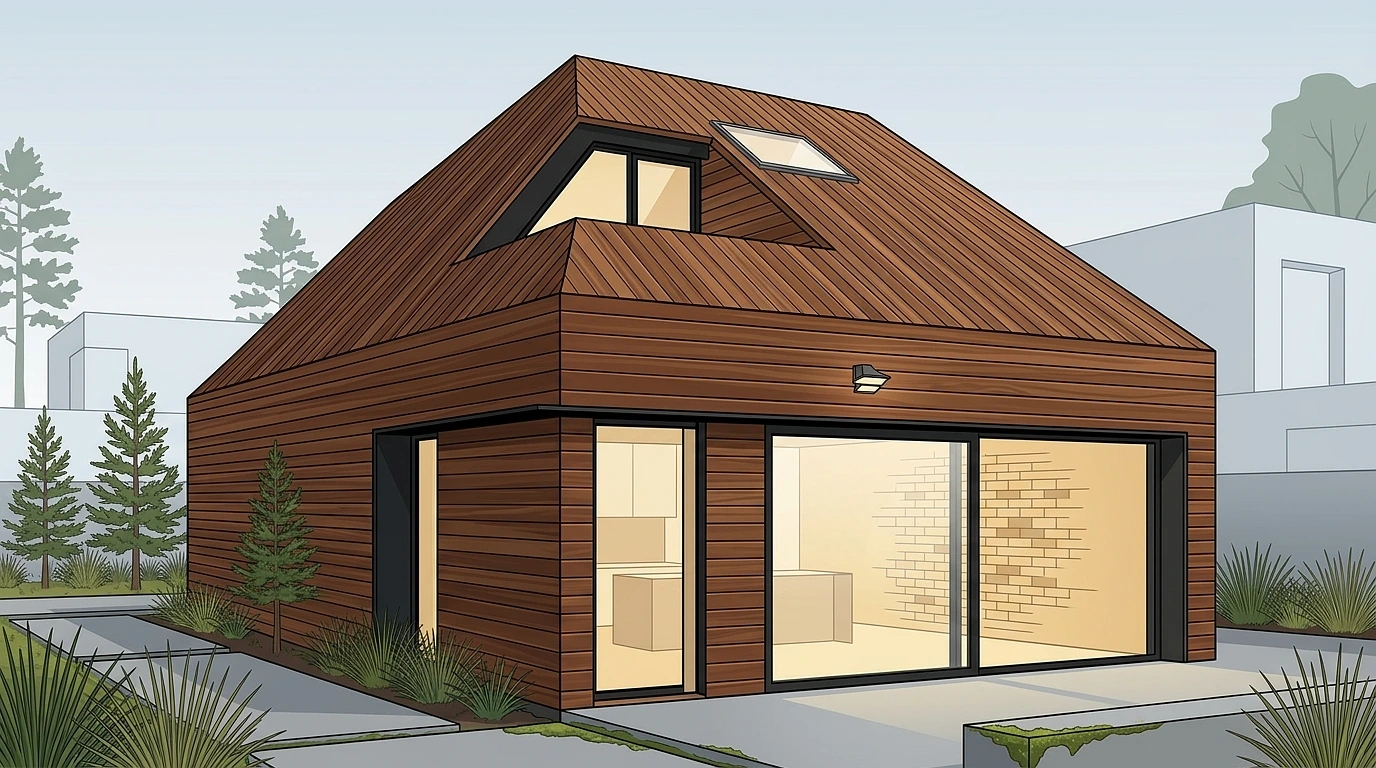
Unlike a typical softwood that can have unpredictable performance on exposed elevations over an entire building life, Thermowood provides consistent and predictable performance. It is this one feature that makes it a constant favorite of architects.
Exterior timber selection doesn’t get a second chance. Once it’s fixed, it’s fixed. If a board warps, greys unevenly, or starts pulling away from junctions by year three, that’s a conversation no architect wants to have with a client. Which is probably why Thermowood keeps appearing on project specs, especially among architects who’ve already been burned by ordinary softwood.
It isn’t a new material either. The thermal modification process has been around long enough for practitioners to have real performance data from real buildings not just manufacturer claims. And the picture that consistently emerges is straightforward: Thermowood behaves. That sounds like a low bar, but for exterior cladding in unpredictable climates, behaving well is the whole argument.
What the Modification Process Actually Does
- The thermal modification process forces moisture content down permanently, which is why the boards remain stable where conventional timber warps, swells, and shifts.
- Regular pine constantly absorbs and releases moisture from the air. That cycle swelling in winter, shrinking in summer is what causes boards to cup, joints to open, and fixings to gradually work loose. Thermal modification changes that equation. The timber is heated to temperatures between 185°C and 215°C using only steam, with no chemicals involved.
- The result is a board with dramatically reduced equilibrium moisture content. It still moves slightly all timber does but the range is narrow enough that architects can detail junctions with confidence rather than designing in oversized tolerances to compensate for unpredictability.
The Colour Question
Thermowood’s signature warm brown tone comes directly from the heat process — not from staining or coatings. But like any unfinished timber, it will silver over time when exposed to UV without protection.
That’s not a defect. It’s simply how timber behaves outdoors. Applied correctly, a UV-stabilising oil extends the original tone for several years. Left untreated, the board weathers gracefully to a consistent silver-grey patina and many architects actually specify this look intentionally.
The key point is: it’s a interior design decision, not a surprise. Suppliers like Ecochoice clearly outline finish options and what each approach means for long-term appearance. Either way, the grain definition stays sharp and readable far removed from composite boards trying to imitate real timber.
This authenticity is why Thermowood works across such varied architectural contexts:
- Contemporary minimalist facades.
- Heritage-sensitive rural projects.
- Civic buildings that need to feel grounded.
- Coastal or alpine homes facing harsh weather.
It doesn’t fight the context it complements it.
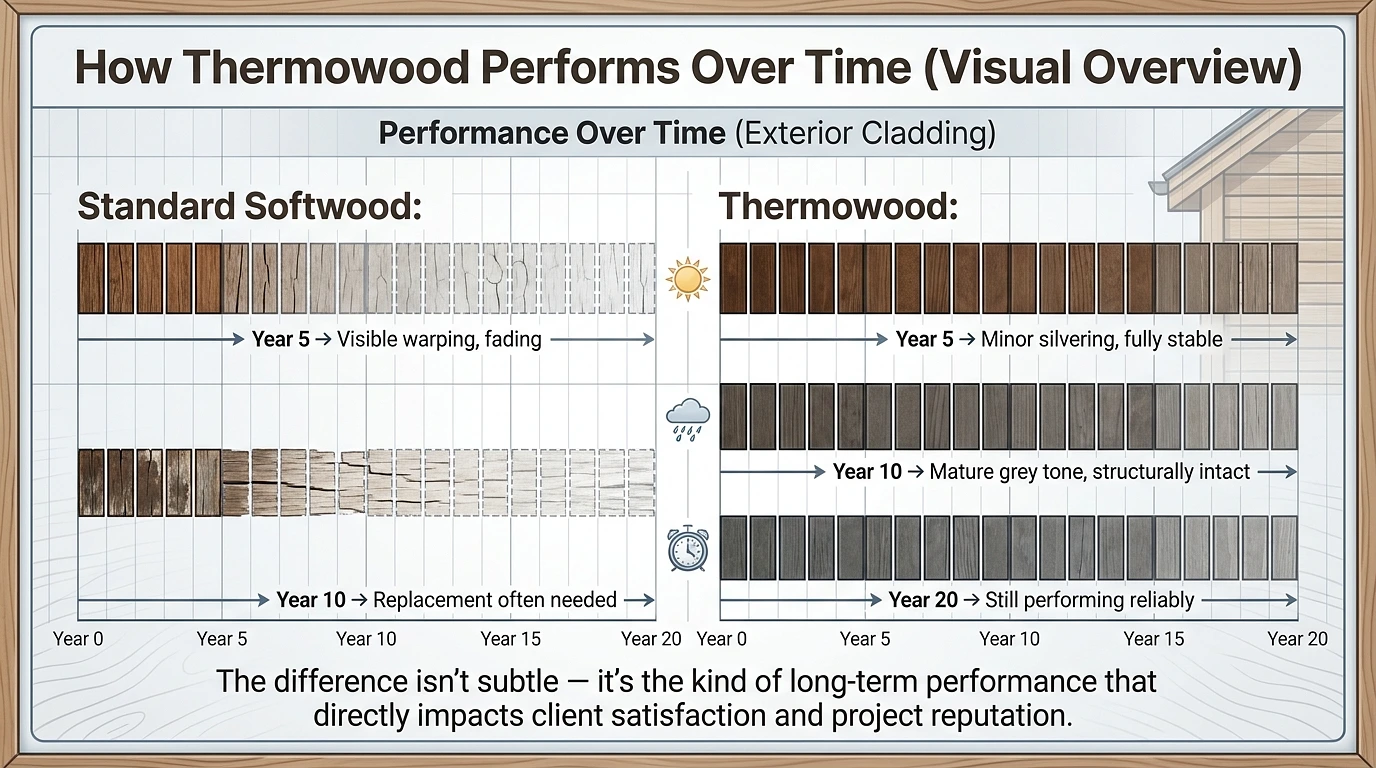
How Thermowood Performs Over Time (Visual Overview)
Here’s a simple representation of how Thermowood compares to standard softwood across a 20-year exterior lifespan:
Maintenance in Practice
Thermowood’s structural performance doesn’t depend on a strict treatment schedule. A periodic clean and occasional UV oil is the full extent of routine care for most installations.
In contrast, standard exterior softwood typically needs retreating every two to three years for painted finishes and even more frequently for bare boards in exposed conditions. That’s ongoing cost, scaffolding, and disruption that clients often don’t fully register at handover.
With Thermowood, the resistance to fungal decay and dimensional stability is built into the material itself, not maintained through applied treatments. For clients who want a facade that looks great without demanding annual attention, that’s a straightforward and convincing case to make.
Real-World Example:
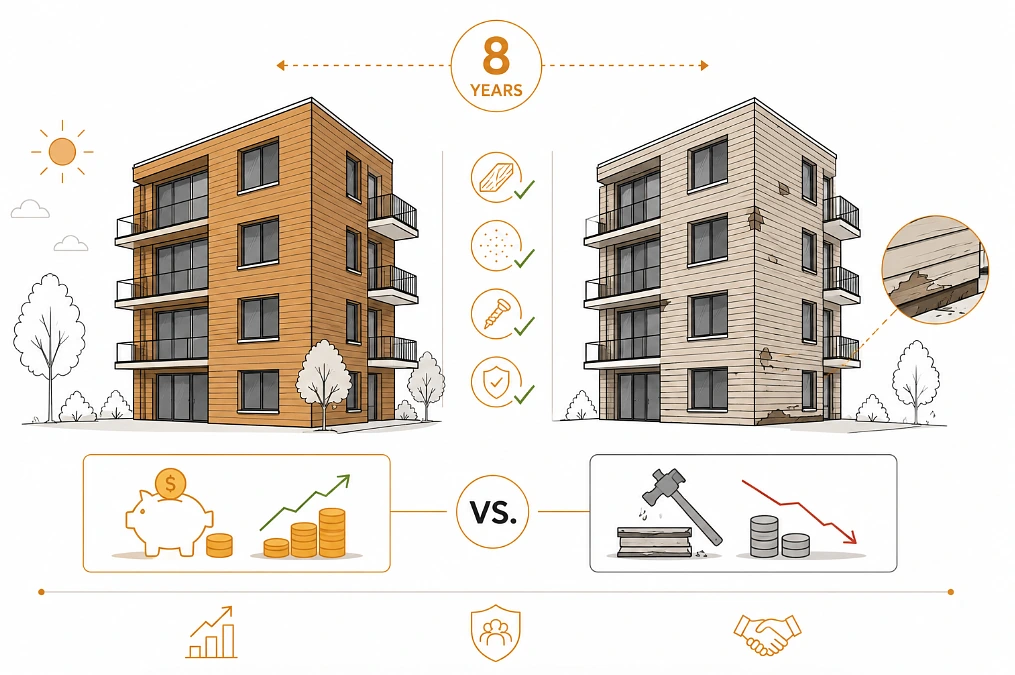
Consider a 4-storey residential project clad with Thermowood on its exposed north and west elevations. After 8 years, a routine inspection found:
- No board warping or cupping
- Even silver patina across the facade
- All fixings still flush and secure
- No fungal staining or decay points
Compared to a similar nearby development clad in standard treated pine which required partial re-cladding at year six the Thermowood project saved tens of thousands in maintenance and replacement costs. Real performance data like this is what builds architect confidence and client trust.
Sustainability on Paper and in Practice
The modification process involves primarily heat and steam only, no chemical additives and no preservative compounds. The wood used is usually FSC and PEFC certified, assuring responsible forestry practices from the source through the supply chain.
For projects pursuing BREEAM credits or where the specification needs to pass a sustainability audit, that clean process story is genuinely valuable in documentation. Ecochoice’s Thermowood carries both FSC and PEFC certification, covering the full chain of custody from forest to supplier.
It’s worth confirming at specification stage that the documentation is formally in order many projects require these as submission requirements, not just general assurances.
Sustainability Highlights
- Zero chemical preservatives only heat and steam used.
- FSC and PEFC certified source timber.
- Lower carbon footprint vs imported tropical hardwoods.
- Recyclable and biodegradable at end of life.
- Supports BREEAM and LEED credit applications.
What It Doesn’t Do
The modification process reduces some of the timber’s natural strength properties, which is why Thermowood is specified for cladding and decking — not as a structural material.
If a project requires timber that’s also load-bearing, that’s a separate conversation involving structural-grade species. The fixing method also matters more than it does with some other materials — board specification, profile, and installation detail all need to be correct from day one.
This is why involving a knowledgeable supplier early in the specification process — not just at procurement — is so valuable. The right guidance prevents avoidable issues and protects long-term performance.
Why It Keeps Getting Specified
Architects who’ve used Thermowood on one project and seen how it performs five years later tend to use it again. The track record does most of the work.
The performance data is real. The sustainability credentials are documented. The aesthetic holds up across a remarkably wide range of architectural contexts. And for exterior cladding that needs to perform in difficult conditions, look right across a long project lifespan, and carry a credible sustainability story, it’s a specification that simply doesn’t need much defending.

 Decor & Improvement Accessories