

Home & Decor Blogs: DIY, Interior Design & Lifestyle Ideas
What Actually Solves the Space Problem in a Small Home

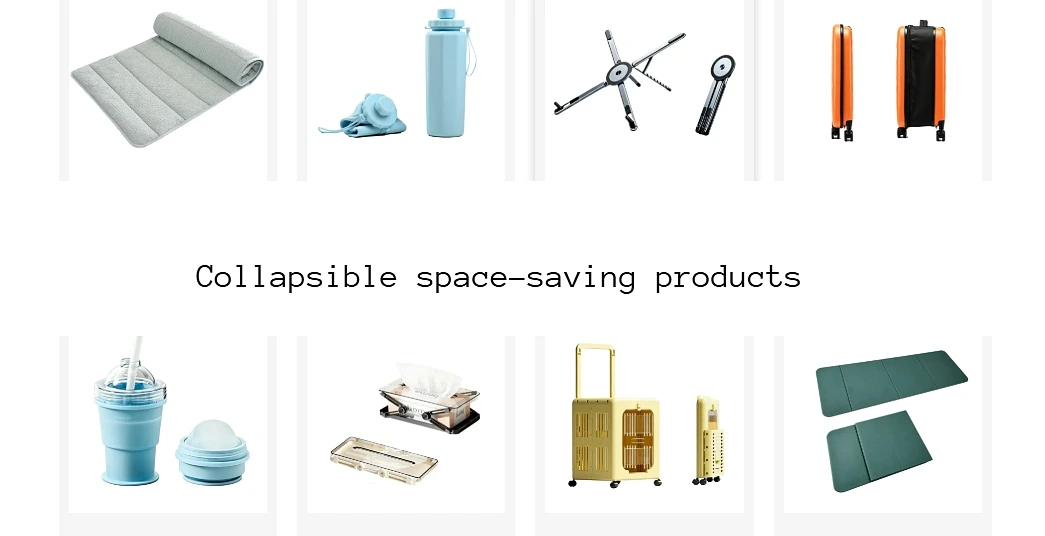
The solutions that actually work in a studio or a tiny house or a compact one-bedroom share one property. They shrink when they’re not in use. Not compress marginally. Actually collapse, fold flat, or disappear. That’s the difference between a space-saving item and a space-organizing item, and most product lists confuse the two.
Here are the items that hold up under that test. Grouped by the room where the space fight is actually happening, because the kitchen problem is a different problem from the storage problem, and both are different from the living-space problem.
The Kitchen Problem: Volume Without Depth
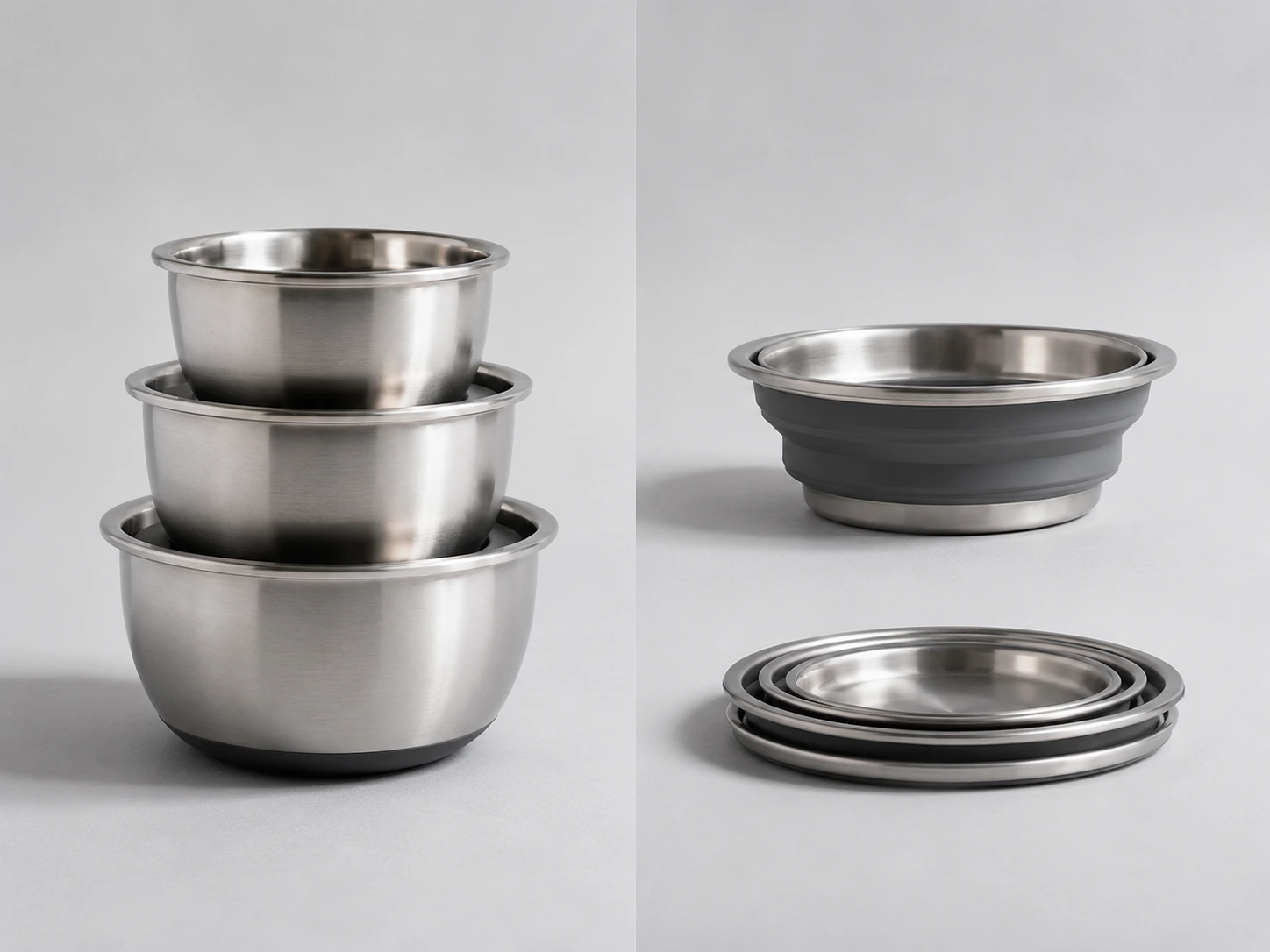
Small kitchens don’t lose to volume of items. They lose to depth. A cabinet 12 inches deep can’t hold a stack of mixing bowls that are also 12 inches deep, because you can’t reach the ones in the back. So the bowls migrate to the counter, the counter fills up, and the kitchen feels twice as small as its actual square footage.
Collapsible silicone bowls solve this problem structurally. A 12-centimeter deep mixing bowl collapses to about 4 centimeters when flat. A three-piece set that would normally take a full shelf reduces to the vertical space of a single plate. Food-grade silicone handles hot food, microwave, dishwasher, freezer. There’s no functional tradeoff for the space you’re getting back.
The version that matters is the one with a rigid rim. Cheaper silicone bowls collapse into shapeless piles because they have no structure at the top. The ones with a hard plastic rim maintain the round shape and stay stable when you’re mixing or pouring. Worth the extra few dollars per bowl.
Beyond mixing bowls, the same logic applies to strainers, colanders, measuring cups, and food storage containers. A full silicone kitchen swap can reduce the volume of your kitchen storage by half. Which sounds like an exaggeration until you actually stack three collapsed bowls next to one rigid one and see what you’re currently giving up.
The Living Space Problem: Furniture That Doesn’t Retreat
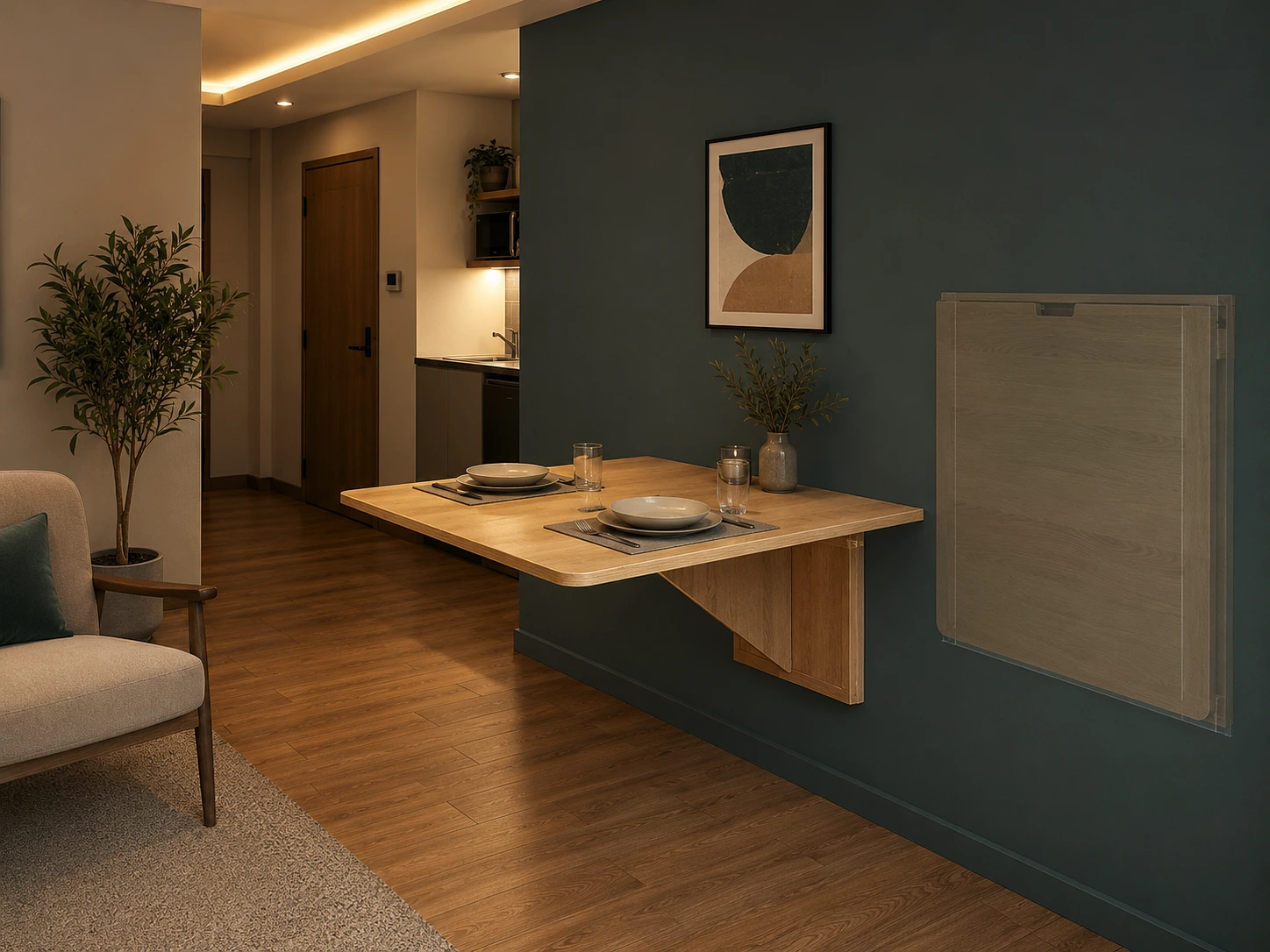
The furniture question in a small home is the biggest lever available. A traditional dining table for four takes 3 by 6 feet of dedicated floor space that has one job. Fold-down or drop-leaf wall-mounted tables do the same job when needed and disappear when not.
The good versions are mounted to studs, hold up to 150 pounds of load when deployed, and fold flat to about 4 inches of wall depth. Set the table for dinner, eat, fold it back up. The wall reads as decorated rather than storing furniture. The floor stays clear.
There’s a category of Murphy bed-style furniture that follows the same principle for larger items. Fold-down desks that convert wall space into a workstation for the four hours you need it, then close back into what looks like a cabinet. Wall-mounted bike storage that lifts the bike vertical and out of the traffic path. The design language is similar across the category. Deploy, use, retract.
The mistake people make with this furniture is treating it as an aesthetic choice rather than a space calculation. If you use a dining table three times a week, that table is genuinely earning its 18 square feet of permanent floor space. If you use it twice a month, you’re carrying a piece of furniture that’s costing you nine percent of a 200 square foot studio for six sessions a year. That math is why fold-down became a category.
The Storage Problem: Things That Live in Your Closet 90 Percent of the Time
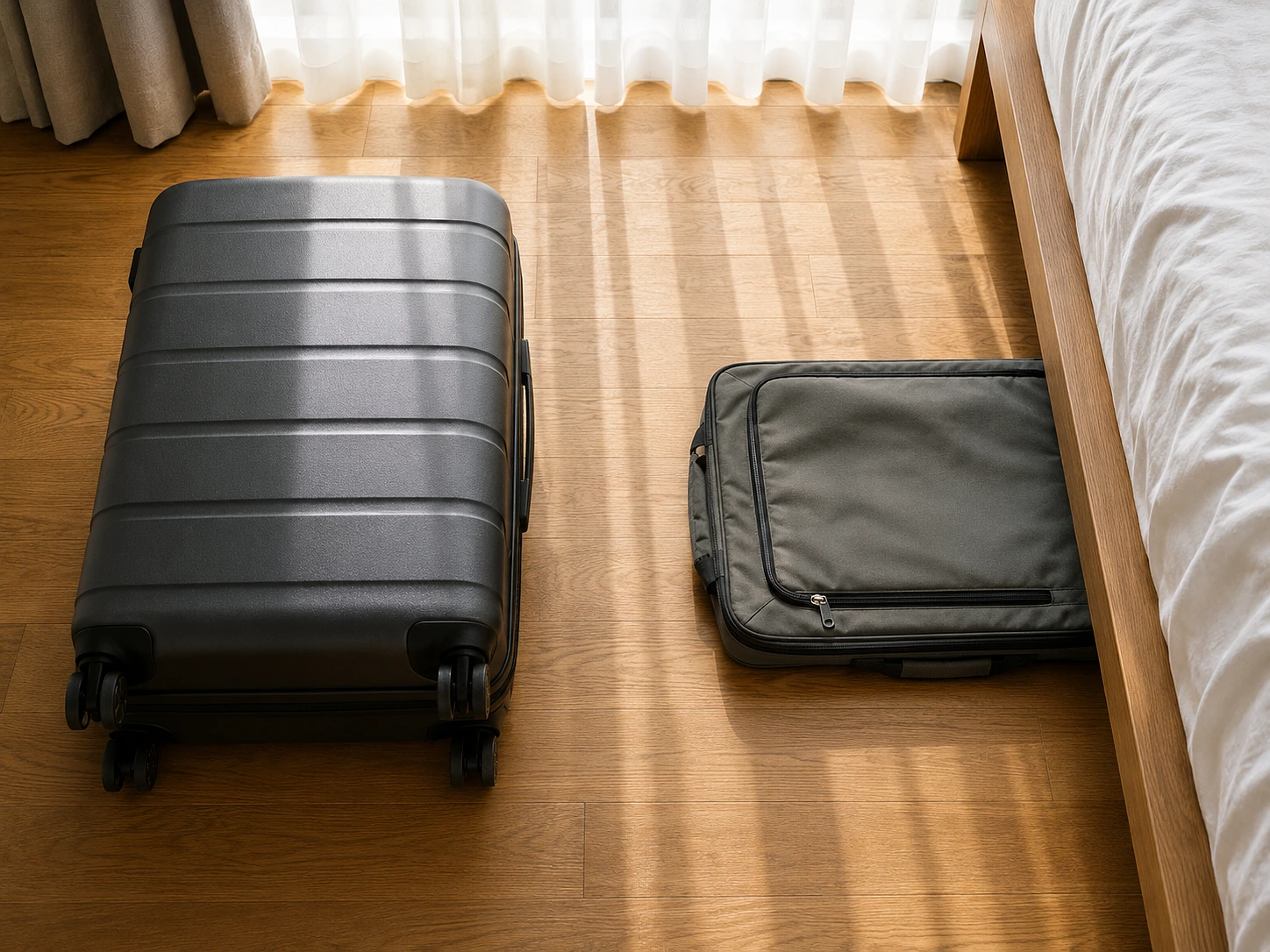
Every small home has this drawer or corner. The one holding items you use occasionally, that you can’t get rid of, that take up meaningful space when they’re just sitting there. Suitcases are the classic example.
An empty suitcase is a rigid rectangular container designed to hold clothes. It has no other function. Sitting on top of a wardrobe or under a bed, it occupies its full deployed volume forever, holding air. A 60-liter suitcase takes roughly the same floor space as a small dresser and delivers zero utility between trips.
Foldable expandable luggage collapses to a few centimeters thick when not in use. Slides behind a door, under a mattress, between other items in a closet. Deploys back to full luggage when you need it. The expandable feature is the useful part on the return trip when you have more than you left with. Unzip the expansion layer and gain another 10 to 15 liters of capacity without having to bring a second bag.
For anyone who travels more than twice a year but less than monthly, this is the storage math that works. The luggage is available when needed and effectively absent when not. Multiplied across two or three suitcases (one large, one carry-on, one weekender), the recovered closet space is significant.
The same principle applies to pet carriers for people who travel with animals. A traditional plastic dog crate is a permanent piece of furniture in most homes with medium-sized dogs. It sits in the corner, dominates the space, becomes wallpaper the owner stops noticing but every guest sees. Collapsible fabric-and-mesh crates fold to the thickness of a large book, deploy in under 30 seconds, and provide the same enclosed space when actually in use. The tradeoff is that they’re less durable than plastic for aggressive chewers, but for calm dogs and cats they solve the problem completely.
The Laundry Problem: Where Wet Clothes Actually Go
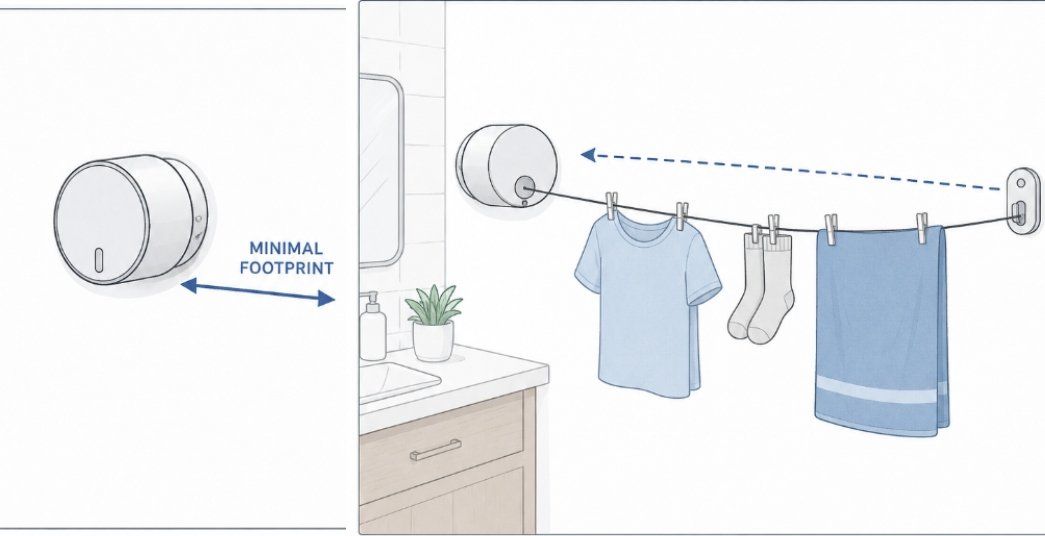
Small homes don’t have laundry rooms. They have a corner of the bathroom, or a stackable unit in a closet, or a laundromat visit that produces a hamper of wet clothes with nowhere to dry. The permanent standing drying rack is the ugly solution most people default to, and it lives in the corner forever taking up floor space.
The collapsible version folds to about 3 inches thick and mounts to the back of a door or hangs from a hook when in use. Some versions extend telescoping rods for full drying capacity and retract completely when the load is done. The rack is deployed twice a week for a few hours. The rest of the time it’s flat against a door or in a closet gap.
Wall-mounted retractable clotheslines are the same concept for outdoor or bathroom use. Pull the line out to the anchor point across the room, hang the clothes, retract the whole system into a wall-mounted spool when done. A 40-foot drying line that occupies less than a coffee cup of space when retracted.
What This Costs and What It Actually Saves
The full swap across kitchen, storage, and laundry using the categories described here runs somewhere between $300 and $800 depending on how many pieces get replaced and the quality tier. Silicone kitchen basics start around $40 for a decent three-piece set. Foldable expandable luggage runs $80 to $200 per piece for durable versions. Wall-mounted drop-leaf tables sit between $100 and $300. Collapsible pet crates are $50 to $150 depending on size. Retractable drying solutions run $30 to $100.
The space recovered is harder to quantify but easier to feel. A studio that felt cluttered before the swap feels different after, in a way that has nothing to do with organization and everything to do with the fact that objects aren’t visible when they aren’t being used. That’s the whole design principle. Everything you own doesn’t have to be looking at you all the time.
Fold Smart, Live Light
Small-space living gets easier once you stop trying to fit everything and start choosing things that shrink. It’s a different mental model than “I need better storage.” It’s “I need less permanent volume.” The organizational hacks that dominate small-space content assume the volume is fixed and you’re just moving it around. The category of items above breaks that assumption.
The home that results feels different because it is different. Fewer objects visible at any given time. More floor space empty by default. The stuff still exists. It’s just not always announcing itself.
 Decor & Improvement Accessories