

Home & Decor Blogs: DIY, Interior Design & Lifestyle Ideas
Widening a Driveway for a Second Car: What It Costs and Where the Price Jumps
So you’ve got a second car, or a teenager with one, and the plan is a simple strip of pavement beside the driveway. Then the quotes come in and a job you guessed at two grand is suddenly five or six. A 10 by 30 foot pad, room for one extra car, typically lands between $1,500 and $5,400 installed. Material decides most of that spread at $2 to $18 a square foot, and the rest comes from three things the quotes rarely explain, the digging, the seam, and the water.
The New Section Needs Everything the Old One Already Has
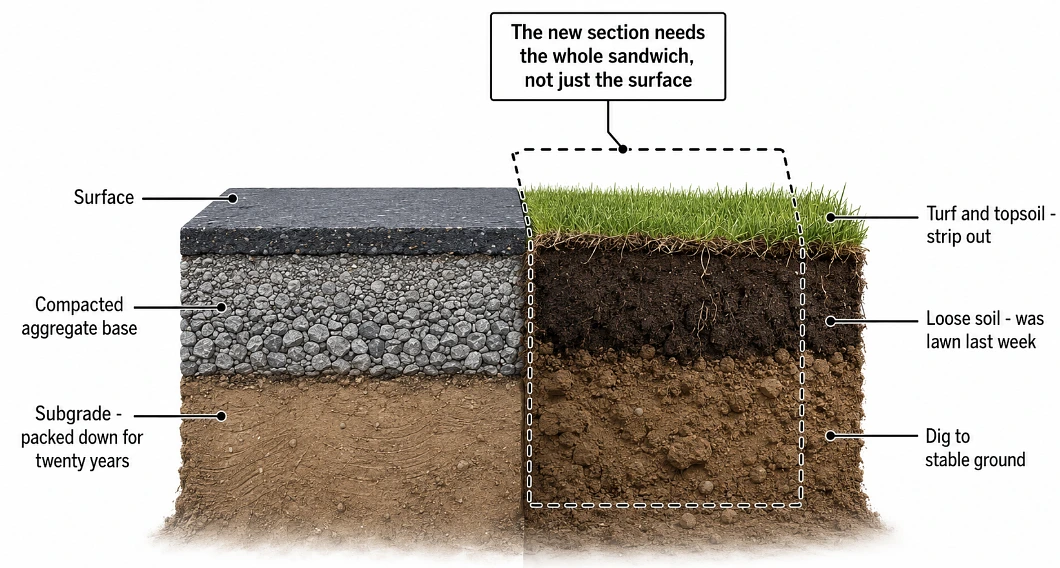
A widening job rebuilds the whole sandwich, not just the surface. The crew strips turf and topsoil, digs to stable ground, hauls in aggregate, compacts it in layers to match the depth under your existing driveway, then pours or paves on top. That base work adds about $2 to $4 a square foot before any finish material shows up, and it’s the part people mentally skip when they estimate by eyeballing concrete. There’s also a scale problem working against you. A 300 square foot pad carries the same mobilization, the same machines, the same crew day as a job twice its size, so small expansions always cost more per foot than full driveways do. And the ground itself argues with you. Your existing driveway sits on dirt that’s been packing down for twenty years, the new section sits on soil that was lawn last week, and if the crew skimps on compaction the new pad settles, tilts, and cracks along its outside edge within a couple of winters.
Then There’s the Seam, Which Is Where These Projects Fail
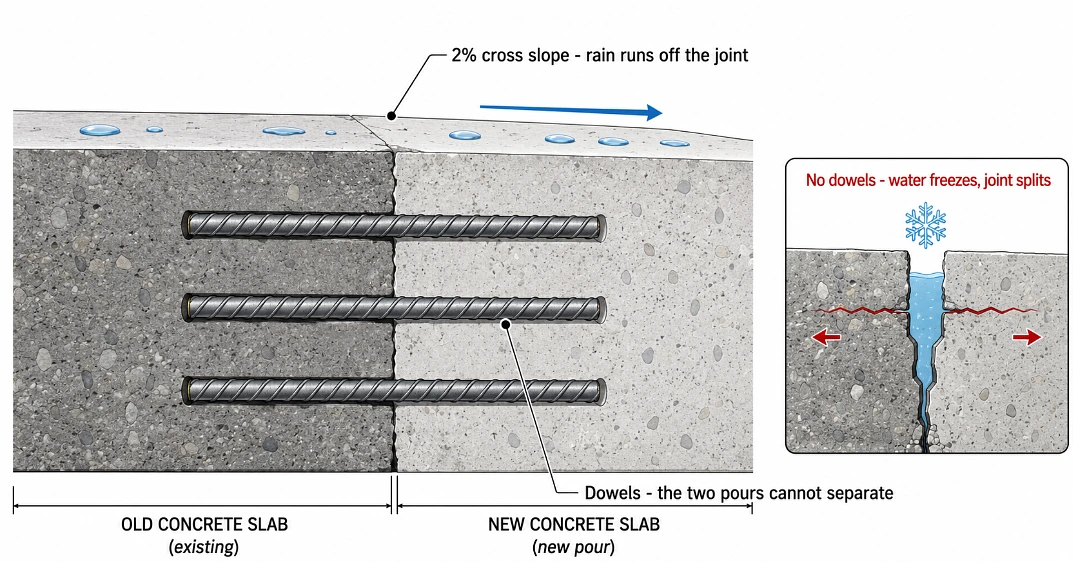
The joint where new meets old is the detail worth interrogating every contractor about. Concrete additions should be doweled, meaning rebar drilled into the old slab so the two pours cannot separate, and even done right the color will never match, new concrete beside a 15 year old slab reads as a patch forever. Asphalt crews have to run a roller along the seam until the two layers fuse, otherwise water gets into the joint, freezes, and splits it open. The new area also needs about a 2 percent cross slope so rain doesn’t sit right on that seam. If your existing surface is already cracked and gray, think hard about paving the extension and then overlaying the whole driveway in one go. It costs more now, and it looks like one driveway instead of a repair.
Your Town May Have Opinions Before Any Digging Starts
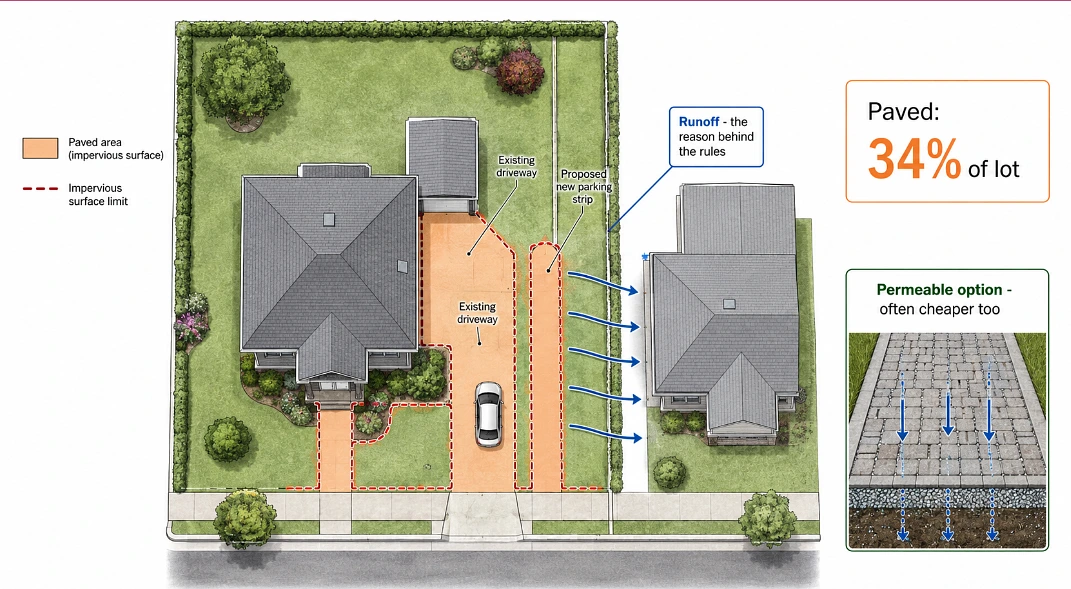
Plenty of municipalities cap how much of a lot you can cover in pavement, the term is impervious surface limits, and a second parking lane is exactly the kind of project that trips them. Anything that touches the street or curb usually needs a permit too. The fee itself is small, the fine for skipping it is not, and a town can make you tear out unpermitted pavement. Runoff is the reason behind all of it, a wider paved area sheds more rain toward somebody’s foundation, so some towns push permeable pavers or gravel for expansions, which conveniently are also the cheaper options.
What the Expansion Costs by Material
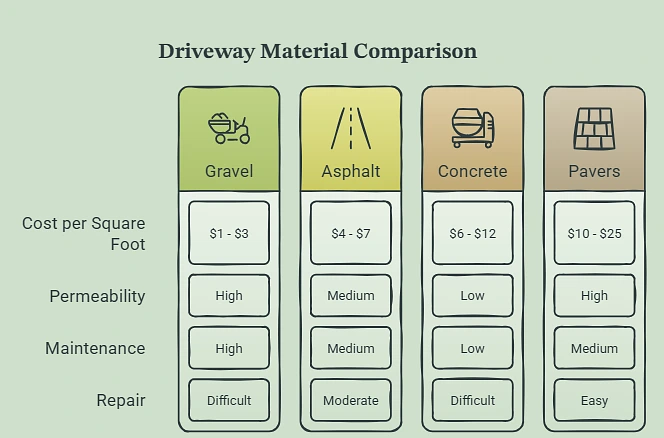
Per square foot, installed, the materials stack like this:
- Gravel runs $1 to $3, cheapest and permeable, but it migrates and wants regrading every year or two.
- Asphalt runs $4 to $7, the value pick when it’s matching an existing asphalt drive.
- Concrete runs $6 to $12, the default for most homes and the slowest to cure.
- Pavers run $10 to $25, the expensive route, though single pavers can be swapped later, which no other surface offers.
- Tearing out old pavement that’s in the way adds $2 to $6 a square foot for demolition and disposal.
Before calling anyone, run your layout through a driveway cost calculator with real measurements, then treat the gap between that number and each quote as your question list. A bid far under the estimate usually left the excavation out, and that money reappears as a change order once the digging starts.
One habit worth stealing from people who have done this twice: get the drainage plan and the seam treatment in writing on the quote. Contractors price what is written down. The stuff that only gets talked about on the driveway has a way of not happening.

 Decor & Improvement Accessories