
Home & Decor Blogs: DIY, Interior Design & Lifestyle Ideas
McNamara TheHomeTrotters: A Journey of Travel and Home

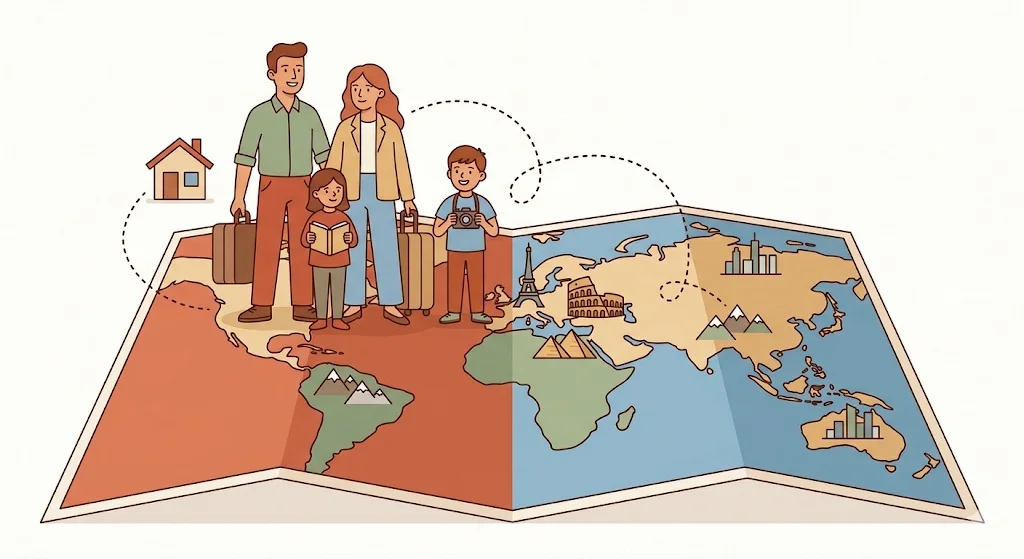
Summary: “In 2019, Dan and Rachel McNamara sold their house, packed two suitcases and hit the road permanently with their kids. What followed became TheHomeTrotters — a family travel brand built around worldschooling, sustainable travel and location-independent income. This article breaks down how they actually pulled it off and what any family can take from it.”
What the McNamaras built instead — TheHomeTrotters — is now one of the most referenced names in the family travel space and honestly, the way they did it is worth understanding properly. Dan and Rachel McNamara sold their house in 2019. Kept two suitcases. Pulled their kids out of conventional school. Most people thought they’d be back in six months. They weren’t.
From Suburban Routine to Leaving Everything Behind
Rachel was a classroom teacher. Dan worked corporate marketing. Weekends they’d disappear on road trips not because they were adventurous types by nature, but because those were the only hours the week actually felt worth something.
That pattern kept repeating. Happy on the road. Restless at home.
At some point that observation became impossible to ignore. What if the trips weren’t the escape from real life, what if they were real life?
The decision wasn’t impulsive. Dan’s background in digital marketing meant he understood, practically, how an online brand could generate income without being location-dependent. Rachel saw the education angle clearly, she’d spent years in a classroom and knew how much of formal schooling is logistics, not actual learning. Together they had the two things most people attempting this life lack: a monetization strategy and a legitimate pedagogy.
They sold roughly 95% of what they owned. The house went. The car payments stopped. What remained fit into luggage.
Was it frightening? Rachel has said publicly, yes. But fear and recklessness aren’t the same thing. These were calculated people making a calculated bet.
The Worldschooling Model McNamara Actually Built
Worldschooling gets used loosely — sometimes it just means “we travel and the kids watch.” The McNamara version is different and it’s worth being specific about how.
Rachel builds location-based lesson plans. Not retroactively, not loosely. When the family was in Peru, the kids were studying Incan civilization before arriving at the ruins, then standing inside them. Iceland meant geothermal energy, studied in the presence of actual geysers. India brought Gandhi’s philosophy into places where that history physically happened.
The HSLDA (Home School Legal Defense Association) tracks compliance standards across jurisdictions a practical reality nomadic families have to navigate constantly, since homeschooling regulations vary sharply between countries and even U.S. states. The McNamaras manage this documentation continuously, which is unglamorous work that rarely makes it into content.
What does make it into content: the kids writing video journals, leading informal explanations of what they’ve learned for their parent’s audience, practicing languages through actual daily conversation rather than apps. These aren’t supplemental activities. They’re the curriculum.
The results hold up against traditional benchmarks and that matters, because worldschooling skeptics (reasonably) ask about measurable outcomes. Research from Stanford’s Center for Opportunity Policy in Education supports experiential and place-based learning as producing stronger retention and critical thinking outcomes than rote instruction. The McNamaras didn’t design their model around that research but it validates the instinct.
One thing that often gets missed in coverage of their education approach: the kids aren’t just passive recipients of this. They’re developing real documentation skills, audience communication, adaptability. These aren’t soft benefits. They’re increasingly what employers and universities actually look for, according to Harvard Business Review’s reporting on 21st-century skill gaps.
How TheHomeTrotters Actually Makes Money
This is the question everyone has and nobody asks directly. Let’s just answer it.
The McNamara income isn’t one thing — it’s layered, which is exactly why it’s stable. Sponsored content and brand partnerships form the visible layer. Tourism boards, family-oriented travel gear companies, accommodation brands. But Dan has been deliberate about which partnerships they take. Brands that conflict with their sustainability stance or feel misaligned with their audience don’t make the cut and that’s cost them money, visibly, in deals they’ve walked away from.
Underneath that: YouTube ad revenue, affiliate commissions through the blog, digital products, travel guides, educational resources built specifically for worldschooling families. Speaking engagements have become a growing slice. Consulting for families trying to replicate the model is another.
The less obvious financial reality — and this is the part that surprises people is that their expenses dropped dramatically after leaving conventional life. No mortgage. No car insurance. No keeping-up-with-the-neighborhood spending. According to Numbeo’s global cost of living data, extended stays in Southeast Asia, parts of Latin America or Eastern Europe can run a family of four at a fraction of equivalent suburban American costs. The McNamaras spend extended time in lower-cost countries deliberately. Slow travel isn’t just a philosophy, it’s a budget strategy.
Points and miles optimization, house-sitting arrangements, cooking instead of eating out constantly, these aren’t hacks, they’re habits. The financial model works because the lifestyle was redesigned from the ground up, not squeezed into the shape of a traditional one.
Sustainability — What They Actually Do vs. What They Say
A lot of travel brands mention sustainability. It lives in a paragraph near the bottom, vague and unverifiable.
The McNamaras have made it structural. Trains over flights when the route allows it. Locally-owned guesthouses over international chains. Markets over supermarkets. Reef-safe products. Reusable everything. These aren’t announcements they show up in the logistics of how they actually move.
The UN World Tourism Organization estimates tourism accounts for roughly 8% of global carbon emissions when full supply chains are counted. For a family that travels this much, that number is a real ethical weight. The McNamaras don’t pretend otherwise they acknowledge the tension and work within it, which is a more honest position than most travel influencers take.
They partner only with brands that clear their values filter. That decision has a cost. It also has an audience loyalty payoff their followers trust the recommendations precisely because they’ve watched the McNamaras say no to things that didn’t fit.
The Harder Parts Nobody Really Covers
Full-time family travel is genuinely difficult in ways that don’t make good content.
Constant movement is physically exhausting. New climates, time zones, unfamiliar food, logistics that never stop it accumulates. The kids, despite everything, occasionally miss having a consistent group of friends in one place. That’s real and Rachel has spoken about it without dressing it up.
Visa logistics across multiple countries is a part-time job. IATA Travel Centre tracks entry requirements globally and they change. Healthcare access in unfamiliar places requires preparation most people don’t think about until they need it. The family carries documented medical records, maintains international health insurance and has had to navigate unexpected health situations far from home.
Internet reliability is a legitimate business risk. Their income depends on uploading content, responding to partners, managing platforms from locations where connectivity isn’t guaranteed. They’ve built redundancies into that system, but it’s a constraint that never fully disappears.
There have been pauses. Family emergencies pulled them back. Health situations required stopping. Those moments forced a real question: what does home actually mean when you don’t have one fixed address?
Their answer became the brand’s core idea. Home isn’t a location. It’s what travels with you the people, the rhythms, the feeling. That might sound like a tagline, but for the McNamaras it came from actual experience of losing the conventional version and discovering something didn’t disappear with it.
What Families Can Actually Take From This
You don’t need to sell the house.
That’s probably the most useful thing the McNamara story offers people who aren’t planning to become full-time nomads, which is most people. The underlying logic scales down. Prioritize experiences over accumulation. Build learning into travel, even weekend travel. Move slowly enough through places to actually absorb them rather than photograph them. These aren’t radical ideas. They’re just consistently deprioritized by how most families structure their time and money.
The American Psychological Association has documented that experiential spending produces longer-lasting wellbeing than material purchases. Most parents already sense this. The McNamaras just built a life around acting on it rather than filing it away as something nice to think about.
A few things worth pulling directly from their model:
- Document as you go. Not for an audience — for the kids, years later. The McNamara children will have a record of their own childhood that most adults would give anything to have of theirs.
- Treat travel as curriculum. Before a trip, spend an hour on the history or ecology of where you’re going. The place lands differently when you know something about it.
- Slow down. Three days in one neighborhood beats one day in three cities. The McNamaras are consistent on this.
- Question fixed costs. Not suggesting everyone sell their house. But the McNamara financial model works partly because they interrogated which expenses were necessary and which were just assumed. That audit is useful for anyone.
Where TheHomeTrotters Is Heading
The content operation keeps expanding — new YouTube series, deeper educational resources aimed specifically at worldschooling families who want a structured framework rather than just inspiration.
There’s a travel accessories line in development, designed from actual experience rather than from a product brief. That distinction matters. Most family travel gear is designed by people who travel occasionally. The McNamaras have friction-tested everything they recommend across years and dozens of countries.
A mentorship program for families trying to build location-independent income is in progress, which is arguably more useful to their audience than any destination guide. Teaching someone to worldschool their kids is one thing. Teaching them to build the financial infrastructure that makes it sustainable is another.
According to Statista’s creator economy projections, the family and parenting content segment continues to grow as audiences shift toward trusted, values-aligned voices over mass-reach accounts. The McNamara positioning — specific, honest, sustainability-forward — fits where platform algorithms and audience preferences are both moving.
TheHomeTrotters FAQs
Former corporate marketer and elementary school teacher who left suburban American life in 2019 to travel full-time with their children, documenting everything through TheHomeTrotters brand.
Brand partnerships, YouTube ad revenue, affiliate marketing, digital products, speaking engagements and consulting — across multiple platforms simultaneously.
A hybrid education model combining structured academic instruction with experiential, location-based learning. UNESCO recognizes experiential learning as a valid and often superior alternative to traditional classroom instruction for developing critical thinking.
For the McNamaras, yes — partly because they eliminated major fixed costs and partly because they spend extended time in lower cost-of-living countries. It’s not cheap, but it often costs less than people assume when the comparison is honest.
YouTube, Instagram, TikTok and their blog — each platform carries different content types, with YouTube handling the deeper educational and destination material.
Honestly — consistency. Consistent friendships for the kids, consistent connectivity for the business, consistent logistics across jurisdictions with different visa and education rules. The glamour is real. So is the administrative grind underneath it.
Key Content Platforms and Their Reach
| Platform | Content Type | Unique Value |
|---|---|---|
| YouTube | Long-form travel videos, destination guides, vlogs | Detailed visual storytelling, educational series |
| Daily photos, stories, real-time updates | Behind-the-scenes access, community connection | |
| Blog | In-depth articles, travel tips, resources | Comprehensive guides, searchable archives |
| Podcast | Interviews, discussions, travel advice | Long-form conversation, expert guests |
| TikTok | Short-form videos, quick tips, trending content | Viral potential, younger audience reach |

 Decor & Improvement Accessories